PROCESS Worldwide brings to you the ‘Top 10 plant engineering projects of October 2026’ from all over the world. Right from Technip Energies developing an integrated petrochemical complex in Türkiye to Siemens digitalizing one of Europe’s largest renewable hydrogen projects, find out all the projects making headlines here.
At a glance: Plant engineering projects from across the globe.
(Source: Unsplash)
1. Technip Energies to Develop Integrated Petrochemical Complex in Türkiye
Technip Energies has been awarded contracts by Petkim, a subsidiary of Socar, in connection with the development of a proposed integrated petrochemical complex in Aliağa, Türkiye.
(Source: Pixabay)
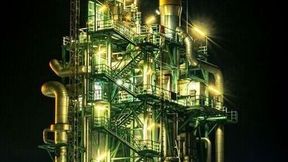
Oct 1 – Technip Energies has been awarded contracts by Petkim, a subsidiary of Socar, in connection with the development of a proposed integrated petrochemical complex in Aliağa, Türkiye. The contracts include the license for a world-scale mixed-feed ethylene cracking unit, as well as the integrated Process Design Package (PDP) and Front-End Engineering Design (Feed) services for the overall complex.
The Feed scope covers the steam cracker designed with an ethylene production capacity of approximately 1,200 kilotons per annum and a propylene production capacity of 550 KTA, together with an 850 KTA HDPE/LLDPE complex (two 425 KTA trains) and a 550 KTA polypropylene plant integrated with the new cracker.
The awarded scope covers the licensing, PDP and Feed phases of the proposed project and constitutes an important step in its technical development prior to any Final Investment Decision (FID) by Petkim.
The planned integrated petrochemical complex is intended to produce key petrochemical building blocks used to manufacture a wide range of everyday products, including packaging materials, consumer goods, automotive components and industrial applications.
2. Bayer to Develop New Pharma Manufacturing Site in USA
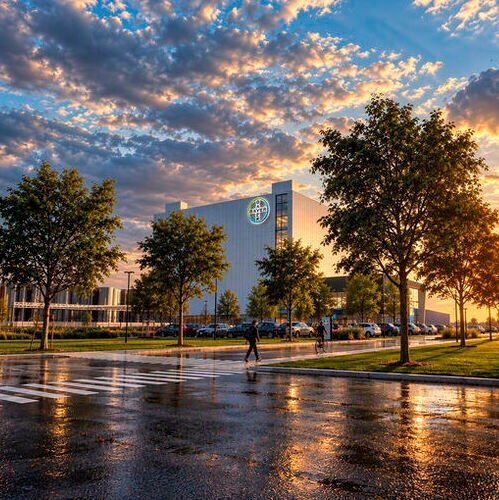
Bayer has plans to invest 2.2 billion dollars in a new pharmaceutical manufacturing site in New Albany, Ohio, U.S.
(Source: Bayer)
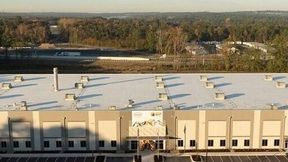
Oct 6 – Bayer has plans to invest 2.2 billion dollars in a new pharmaceutical manufacturing site in New Albany, Ohio, U.S. Building on more than seven billion dollars in U.S. pharma R&D and manufacturing spend over the past five years, the project is a central element of Bayer’s long-term growth strategy and commitment to innovation and patient access in its largest pharmaceuticals market. “Bayer has long seen the United States as a key manufacturing base and innovation hub. This landmark investment underscores our commitment,” said Bayer CEO Bill Anderson. “The new site will be home to manufacturing expertise and a skilled workforce that will strengthen our ability to deliver innovative, high-quality medicines to patients both in the United States and abroad.”
“The United States is a key market for Bayer’s Pharmaceuticals division. This expansion is another important step to grow our pharmaceuticals business and to meet the demand of our customers and patients in the U.S., our fastest-growing pharmaceuticals market, and beyond,” said Sebastian Guth, Global Chief Operating Officer, Bayer Pharmaceuticals and President, Bayer U.S.
Bayer is expected to create around 600 high-value jobs in the New Albany International Business Park and roughly 1,500 construction jobs during the facility’s construction.
3. Siemens to Digitalize One of Europe’s Largest Renewable Hydrogen Projects
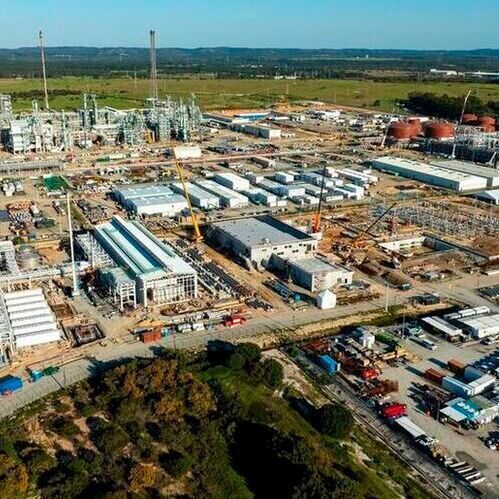
For the 100 MW hydrogen facility of the first project phase, Siemens is deploying its software portfolio for the hydrogen industry, enabling smarter operations and optimizing the value of the plant.
(Source: Siemens)
Oct 13 – Siemens and Portugal-based Galp Energia are collaborating to digitalize GalpH2Park in Sines, Portugal. The plant will be one of Europe's largest renewable hydrogen plants once it starts operating at year-end. For the 100 MW hydrogen facility of the first project phase, Siemens is deploying its software portfolio for the hydrogen industry, enabling smarter operations and optimizing the value of the plant. With this deployment, Galp and Siemens are shaping the future of digitally optimized renewable hydrogen production on an industrial scale.
Central to the collaboration is Siemens' Hydrogen Performance Suite (HPS) – an advanced digital cockpit designed to continuously enhance renewable hydrogen plant operations. At its core lies a predictive Digital Process Twin: a high-fidelity model built on physics-based modeling that delivers operational insights via real-time optimization for faster and data-driven decision-making. To power the digital twin, Siemens deploys an integrated software stack for process modelling, data analytics and real-time visualization – translating complex plant data into clear, actionable insights for operators.
Date: 08.12.2025
Naturally, we always handle your personal data responsibly. Any personal data we receive from you is processed in accordance with applicable data protection legislation. For detailed information please see our privacy policy.
Consent to the use of data for promotional purposes
I hereby consent to Vogel Communications Group GmbH & Co. KG, Max-Planck-Str. 7-9, 97082 Würzburg including any affiliated companies according to §§ 15 et seq. AktG (hereafter: Vogel Communications Group) using my e-mail address to send editorial newsletters. A list of all affiliated companies can be found here
Newsletter content may include all products and services of any companies mentioned above, including for example specialist journals and books, events and fairs as well as event-related products and services, print and digital media offers and services such as additional (editorial) newsletters, raffles, lead campaigns, market research both online and offline, specialist webportals and e-learning offers. In case my personal telephone number has also been collected, it may be used for offers of aforementioned products, for services of the companies mentioned above, and market research purposes.
Additionally, my consent also includes the processing of my email address and telephone number for data matching for marketing purposes with select advertising partners such as LinkedIn, Google, and Meta. For this, Vogel Communications Group may transmit said data in hashed form to the advertising partners who then use said data to determine whether I am also a member of the mentioned advertising partner portals. Vogel Communications Group uses this feature for the purposes of re-targeting (up-selling, cross-selling, and customer loyalty), generating so-called look-alike audiences for acquisition of new customers, and as basis for exclusion for on-going advertising campaigns. Further information can be found in section “data matching for marketing purposes”.
In case I access protected data on Internet portals of Vogel Communications Group including any affiliated companies according to §§ 15 et seq. AktG, I need to provide further data in order to register for the access to such content. In return for this free access to editorial content, my data may be used in accordance with this consent for the purposes stated here. This does not apply to data matching for marketing purposes.
Right of revocation
I understand that I can revoke my consent at will. My revocation does not change the lawfulness of data processing that was conducted based on my consent leading up to my revocation. One option to declare my revocation is to use the contact form found at https://contact.vogel.de. In case I no longer wish to receive certain newsletters, I have subscribed to, I can also click on the unsubscribe link included at the end of a newsletter. Further information regarding my right of revocation and the implementation of it as well as the consequences of my revocation can be found in the data protection declaration, section editorial newsletter.
By seamlessly integrating the digital twin with live plant data and external sources, such as grid operators and energy markets, the HPS gives Galp’s operators end-to-end visibility of their facility. The result is smarter production scheduling, and optimized energy procurement. Siemens estimates that the HPS can deliver energy savings of up to 15 percent – a significant lever for both cost competitiveness and sustainability.
Powered by renewable electricity sourced through long-term supply agreements and Galp's own renewable generation capacity, the GalpH2Park plant is set to produce up to 15,000 tons of renewable hydrogen per year. This is expected to reduce greenhouse gas emissions by approximately 110,000 tons of CO₂ equivalent per year (Scope 1) – a meaningful contribution to Portugal's and Europe's decarbonization targets.
4. Arkema Inaugurates New Acrylic Acid Purification Unit in France
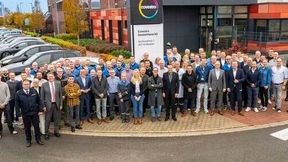
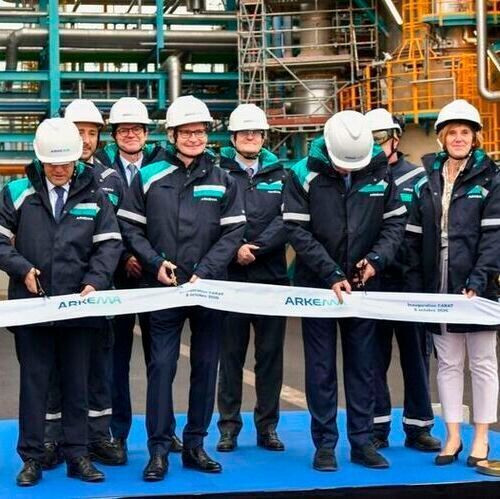
The inauguration ceremony for the new unit was held in the presence of Thierry Le Hénaff, Chairman and Chief Executive Officer of Arkema and Stéphane Séjourné, Executive Vice-President of the European Commission for Prosperity and Industrial Strategy.
(Source: Arkema)
Oct 13 – Arkema has inaugurated a new acrylic acid purification unit featuring an innovative process at its Carling site in France. This facility positions the Group among the most competitive players in Europe and contributes to the decarbonization of the European chemical industry. It is part of Arkema’s decarbonization investment program and supports the implementation of its ambitious climate plan.
The inauguration ceremony for the new unit was held in the presence of Thierry Le Hénaff, Chairman and Chief Executive Officer of Arkema and Stéphane Séjourné, Executive Vice-President of the European Commission for Prosperity and Industrial Strategy.
“With an investment of nearly 150 million euros, this new unit represents one of Arkema’s largest industrial projects in France. It will contribute to the Group’s ambitious climate plan, underpinned by a dedicated investment program supporting Arkema’s decarbonization, with a cumulative amount that could reach 400 million euros over the 2022-2030 period,” shares Thierry Le Hénaff, Chairman and Chief Executive Officer of Arkema.
“Europe must keep its chemical industry. There can be neither industrial sovereignty nor strategic autonomy if we allow the essential building blocks of our economy to leave. Carling is showing the way forward: nearly 150 million euros invested to produce in Europe, using less energy and generating less carbon, while building on decades of industrial know-how. This is exactly the model we want to promote: decarbonizing without deindustrializing, investing in our regions, and making our industrial hubs the driving forces of our future,” adds Stéphane Séjourné, Executive Vice-President of the European Commission for Prosperity and Industrial Strategy.
The new unit improves the energy efficiency of the purification process by 25 % and reduces the carbon intensity of the site’s operations by 20 %. The innovative technology deployed also helps optimize resource and waste management while significantly reducing solvent consumption.
5. MOL Group Inaugurates First Biomethane Plant in Szarvas, Hungary
The investment marks an important milestone in MOL Group’s long-term ‘Shape Tomorrow’ strategy by further expanding the company’s green energy portfolio, strengthening energy security, and contributing to the sustainable energy supply of the region.
(Source: MOL Group)
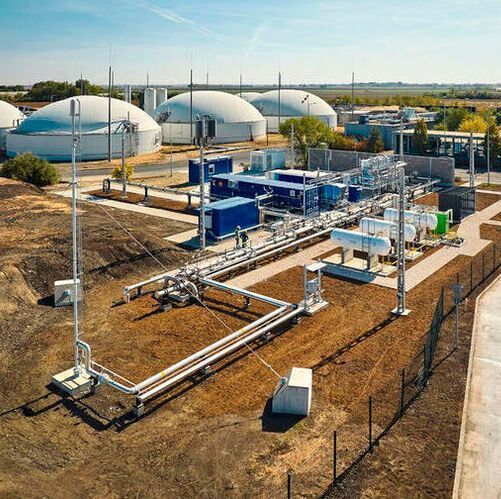
Oct 15 – MOL Group has inaugurated its first biomethane plant in Szarvas, Hungary. As a result of the investment of more than HUF 2.7 billion (8.24 million dollars), the facility can now produce biomethane from biogas of a purity suitable for injection into the national natural gas network. This way, more than 7 million cubic metres of natural gas will be replaced with renewable energy annually. The investment marks an important milestone in MOL Group’s long-term ‘Shape Tomorrow’ strategy by further expanding the company’s green energy portfolio, strengthening energy security, and contributing to the sustainable energy supply of the region.
Locally produced energy is no longer simply an advantage, but a strategic factor. In Central and Eastern Europe, biomethane is considered a promising solution because it can build on a strong agricultural base, an existing gas network and real industrial demand.
"The inauguration of the Szarvas biomethane plant is a strategic milestone for MOL Group. With our first facility of this kind, we are simultaneously strengthening energy security, expanding our sustainable product portfolio and taking another tangible step towards implementing our ‘Shape Tomorrow’ strategy. The investment also demonstrates that, by leveraging the region’s agricultural potential and existing gas infrastructure, we can provide a competitive, locally produced renewable energy source. We are convinced that the green transition and competitiveness are not conflicting objectives, but mutually reinforcing ambitions. Achieving this requires, at the same time, supportive European regulation, a national environment that encourages investment, and industrial innovation.
Over the longer term, MOL can transform biomethane into a large-scale, tradable gas business through its commercial, financing and project implementation capabilities," said Dr. György Bacsa, Group Chief Strategic Officer of MOL Group.
The facility processes more than 40,000 tonnes of waste annually from the region’s meat industry, and an additional 53,000 tonnes of residual waste, such as slurry and turkey manure, sourced from neighboring livestock and meat-processing farms. In addition, approximately 18,000 tonnes of agricultural substrate is used as feedstock for the production of biogas and, now, of biomethane purified from it.
6. BPCL Selects Topsoe’s Kerosene Hydrotreating Technology for SAF Production
Using Topsoe’s kerosene hydrotreating technology, BPCL will produce SAF within its existing refinery infrastructure, without the need for a new dedicated SAF production unit.
(Source: Topsoe)
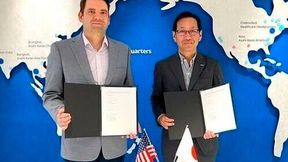
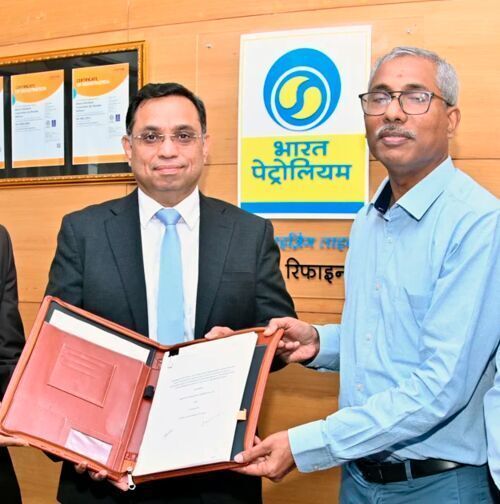
Oct 15 – Topsoe has signed a licensing agreement with Bharat Petroleum Corporation Ltd (BPCL), an Indian public sector oil and gas company, to provide its Kerosene Hydrotreating Technology for co-processing for SAF production at BPCL’s Mumbai Refinery.
Under the agreement, BPCL will revamp its existing 4,000 metric tons per day Kerosene Hydrotreater Unit to co-process 5 % renewable feedstock, in the form of used cooking oil, alongside conventional feedstock. Using Topsoe’s kerosene hydrotreating technology, BPCL will produce SAF within its existing refinery infrastructure, without the need for a new dedicated SAF production unit. The project builds on the two-decade-long relationship between Topsoe and BPCL.
Having achieved final investment decision, the facility revamp is already underway, with commissioning expected by the end of 2026.
The SAF produced will be supplied to airlines refueling international passenger flights at Indian airports, as the nation builds its domestic SAF ecosystem ahead of mandatory compliance with the Carbon Offsetting and Reduction Scheme for International Aviation (Corsia) in 2027. India has committed to SAF blending targets of 1 % for international flights by 2027, 2 % by 2028 and 5 % by 2030.
7. Honeywell Technologies Selected for World’s Largest Single-Train Refinery
The Kenya facility will leverage Honeywell Technologies' refining and petrochemical processing solutions to produce gasoline, diesel, jet fuel and polypropylene.
(Source: Deposit Photos)
Oct 20 – Dangote Petroleum Refinery and Petrochemicals has selected Honeywell Technologies to provide process technologies, licensing, engineering services, proprietary catalysts, equipment and digital solutions for its planned 700,000 barrel-per-day refinery in Kenya. Once complete, the facility is expected to become the world’s largest single-train refinery.
The project builds on nearly a decade of collaboration between the two companies and leverages proven engineering designs that Honeywell Technologies developed for Dangote’s refinery in Lekki, Nigeria. Dangote’s ability to draw upon these established designs will help reduce the development schedule for the new facility by nearly two years – nearly 30 % sooner than typical newly constructed facilities. The Kenya facility will leverage Honeywell Technologies' refining and petrochemical processing solutions to produce gasoline, diesel, jet fuel and polypropylene. The refinery will have the flexibility to process a wide variety of crude oils, from light to heavy grades, enabling the use of feedstocks sourced from multiple regions and reducing reliance on any single supply source.
Similar to the refinery in Lekki, Nigeria, the Honeywell Technologies project scope for the Kenya refinery is expected to be approximately 300 million dollars.
8. UPM Inaugurates Mega Biorefinery in Germany
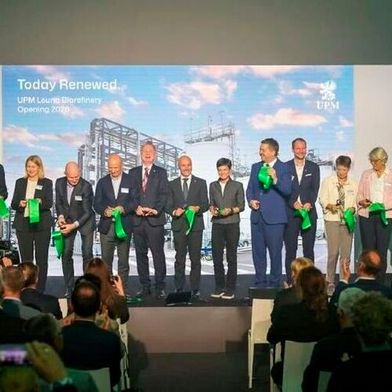
UPM inaugurates its Leuna biorefinery, opening a new industrial platform for renewable chemicals.
(Source: UPM)
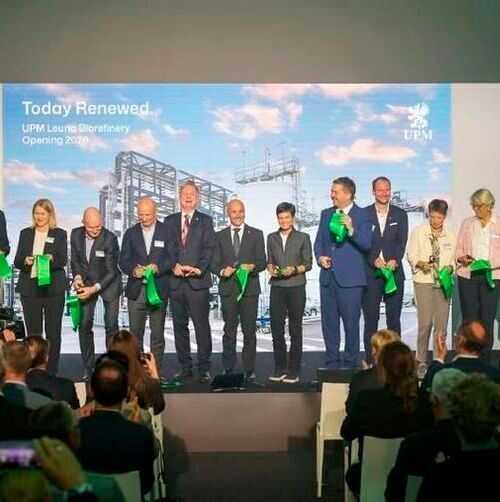
Oct 20 – UPM recently inaugurated its biorefinery in Leuna, Germany, marking the start of a new industrial platform for renewable chemicals made from wood. The biorefinery converts lignocellulosic biomass, primarily wood from sustainably managed forests and sawmill residues, into biochemicals. With an annual capacity of 220,000 tonnes, it is the largest facility of its kind in the world. The ramp-up has progressed further. Enzymatic hydrolysis and the production of lignin-derived specialty chemicals have reached stable operation, and UPM is ramping up sales of these products.
“The Leuna Biorefinery is a transformative investment for UPM and an important milestone in our growth journey. Our high-performance renewable chemicals open new markets for UPM and new opportunities for our customers. Together with our renewable fuels, the Leuna Biorefinery forms a platform for profitable growth and shows the ambition and energy with which UPM innovates,” said Massimo Reynaudo, President and CEO of UPM.
The biochemicals will be used in everyday products, from clothing and packaging to cosmetics, construction materials and tires. Many of these are still made from fossil-based raw materials. Manufacturers and brands look for new ways to innovate and differentiate, and the Leuna plant gives them renewable alternatives with the required performance. At the same time, global warming underlines the need for continued de-fossilization, and a considerable share of consumers looks for products made from renewable materials.
UPM’s Leuna Biorefinery is also a milestone for Europe’s bioeconomy. It shows that renewable carbon-based solutions can move beyond pilot projects into commercial-scale manufacturing, reducing dependence on imported fossil value chains and strengthening supply security.
9. KBR Technology Selected for One of the Largest Fertilizer Complexes in Saudi Arabia
The project supports Saudi Arabia's industrial development objectives under Vision 2030 while strengthening the Kingdom's role in global food security through increased fertilizer production.
(Source: Ayman - stock.adobe.com)
Oct 22 – KBR has recently announced that Sabic Agri-Nutrients (Sabic AN) has selected its Purifier technology for a new grassroots ammonia plant in Jubail, Kingdom of Saudi Arabia. Under the terms of the contract, KBR will provide technology licensing, basic engineering design, proprietary equipment, and catalyst supply for a 3,500 metric tons per day (MTPD) single-train ammonia plant. KBR will work alongside EPC contractor Samsung E&A to deliver the project. The facility will produce 1.2 million metric tons of ammonia annually.
The project is expected to increase Sabic AN's urea production capacity from 4.8 million to 7.4 million metric tons per year, supporting the company's strategy to expand fertilizer production. KBR's Purifier configuration will enable lower carbon intensity per ton of ammonia produced compared with conventional ammonia process designs.
The award represents one of the largest ammonia capacity plants licensed in the Kingdom and KBR's largest ammonia license by capacity in the Middle East and Africa. The project supports Saudi Arabia's industrial development objectives under Vision 2030 while strengthening the Kingdom's role in global food security through increased fertilizer production.
10. Eneos Inaugurates Direct MCH Large Scale Demonstration Plant in Australia
Eneos Corporation has constructed a large scale demonstration plant in Australia, to produce methylcyclohexane using its proprietary low-cost “electrochemical synthesis of organic hydride” method.
(Source: Eneos Corporation)
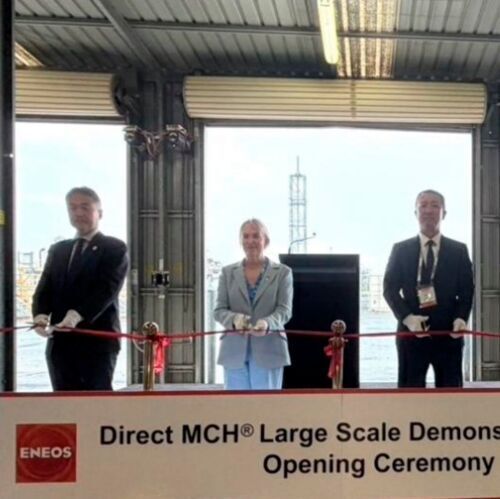
Oct 29 – Eneos Corporation has constructed a large-scale demonstration plant in Queensland, Australia, to produce methylcyclohexane (MCH), a hydrogen carrier, using its proprietary low-cost “electrochemical synthesis of organic hydride” method (Direct MCH). An opening ceremony was held recently. Following trial operations, demonstration operations are scheduled to commence in January 2027.
This demonstration project aims to obtain the technical knowledge required for the commercialization of Direct MCH technology, supporting the future development of large- scale green hydrogen supply chains. Green hydrogen produced from renewable energy is expected to play a key role in achieving a carbon-neutral society. However, reducing production and transportation costs remains a significant challenge.
Eneos is working to lower the overall cost of the green hydrogen supply chain by utilizing Direct MCH technology, which enables the direct, single-step synthesis of MCH. In addition, demonstration operations will be conducted in Australia, one of the world's leading renewable energy-producing regions, to identify and address technical challenges associated with plant operation at an early stage.
Eneos has steadily advanced the development of Direct MCH technology and has now developed a 1.2 MW-class electrolyzer, representing the minimum unit size for commercial deployment.
The demonstration plant will utilize an electrolyzer approximately eight times larger than the unit deployed in a previous demonstration conducted in 2023 and is designed to achieve a maximum MCH production capacity of 9 tons per day. Demonstration operations are expected to continue for approximately two years. Through demonstration operations, Eneos will evaluate performance, degradation behavior, and other operational characteristics while collecting data necessary for commercialization.