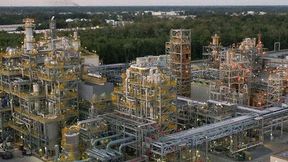
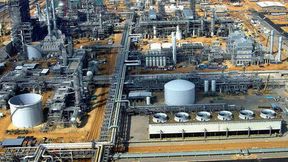
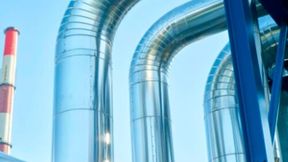
Naphtha cracker of Lonza in Visp  (Picture: Lonza)
Cracker Control

On-Line Process Chromatographs Optimize Fine Chemicals Production

Exact and reliable chemical analysis of feedstocks and products is very important in the manufacture of fine chemicals. Laboratory gas chromatographs are among the techniques traditionally used for this task, but pressure to improve process operations has brought change. Online process gas chromatography now provides significant benefits, as shown on a naphtha cracker.

Read on
Roots pumping stations are used in low and medium vacuum environments and offer high pumping speeds, especially in the transitional range. CombiLine stands for a broad range of Roots pumping stations that feature different backing pumps, pumping speeds and accessories. (Pfeiffer Vacuum)
Milestones in Vacuum Technology

The Perfect Vacuum Solution for Every Challenge

Without the presence of “nothing,” literally nothing goes in many chemical processes. Whether for vaporization, sublimation, rectification, filtration, drying or conveying: Vacuum accelerates these process steps or is required to make them possible in the first place. Pfeiffer Vacuum has embodied a fascination for vacuum technology and its possibilities for more than 125 years.

Read on
Mechanical seal system (Picture: Ekato)
Mechanical Seal Systems

How to Select the Right Seal for Mixing Applications

The basic sealing task in mixing applications is to seal the rotating shaft as it passes through the vessel wall. Depending on the operating conditions — pressure, temperature, agitator speed, etc. — different types of seals are used. As this article shows, mechanical seals offer many advantages over other types of seals. Particularly if hazardous or explosive substances are being mixed, a mechanical seal is mandatory.

Read on
2005: IP 65/67, Ex-proof valve island: Intrinsically safe valve islands from Bürkert can be installed with high-performance I/O systems in ATEX-certified control cabinets close to the process. (Bürkert)
Milestones in Valve Technology/Fluid Control

More than Solenoid Valves: Bürkert Keeps Processes Flowing

Be it individual valves or entire valve islands, revolutionary flow meters or flexible platforms for networking — Bürkert Fluid Control Systems has been keeping media, processes and ideas flowing for over 70 years. How do they do that? At the company's headquarters in Ingelfingen, Germany, one is certain that the key to success is to make sure to never lose sight of the requirements of plant operators …

Read on

In 1894 Linde starts with air liquefaction trials, followed by a patent for the so-called “Linde air” (a 50/50 mix of oxygen and nitrogen) in 1905. (Linde)
Milestones in Technical Gases

Setting the Pace: A Technology Pioneer Steps on the Gas

Ideas in technical gases don’t have to remain pipe dreams. When Carl von Linde invented his air separation process over a century ago, it marked the start of a success story that continues to this day. Technical gases revolutionized entire sectors, and continue to do so today. Just like Linde — the market leader in the gas industry who sets standards for these raw materials supplied in pressure cylinders …

Read on
The advantage of using microorganisms to produce components needed for substances such as polyurethanes is that they rely on biomass such as corn starch or straw as base materials (Picture: Bayer MaterialScience)
Biochemicals

Biochemicals from the Bacterial Factory

Oil as a natural resource is becoming scarcer and more expensive and there is a need to look at eco-friendly ways of extracting it, thereby reducing CO2 emissions. White biotechnology offers a solution: scientists are now using microorganisms such as bacteria to generate substances for the production of polymers. The advantage is that these miniature biochemical factories run on renewable resources or agricultural waste converting it into valuable chemicals.
Read on