PROCESS Worldwide brings to you the ‘Top 10 plant engineering projects of June 2026’ from all over the world. Right from KBR’s technology being selected for Northern Europe’s largest SAF, e-SAF plant to Lubrizol and Grasim inaugurating a world-class CPVC resin plant in India, find out all the projects making headlines here.
Under the agreement, KBR will license the proprietary Pure SAF technology, invented and developed by Swedish Biofuels AB for Norsaf’s new plant.
(Source: KBR)
KBR Technology Selected for Northern Europe’s Largest SAF, e-SAF Plant
Under the agreement, KBR will license the proprietary Pure SAF technology, invented and developed by Swedish Biofuels AB for Norsaf’s new plant.
(Source: KBR)
June 4 – KBR has recently announced that Norsaf, one of the leading sustainable aviation fuels (SAF) producers in the Baltics, has selected KBR’s proprietary Pure SAF technology for what is set to become the largest SAF and e-SAF production plant in Northern Europe.
Under the agreement, KBR will license the proprietary Pure SAF technology, invented and developed by Swedish Biofuels AB for Norsaf’s new plant, which is expected to produce 100,000 tons of sustainable aviation fuel and e-SAF annually. The project is backed by Avia Solutions Group. Production is planned to commence in 2030, and distribution of SAF is planned for aviation companies across the Baltics, Northern Europe, and additional European markets.
Europe has set one of the world’s most ambitious frameworks for aviation decarbonization in pursuit of climate neutrality by 2050. With aviation among the continent’s hardest sectors to abate, binding sustainable aviation fuel mandates are an inevitable path forward. Under EU legislation, minimum SAF blending requirements are established by the Refuel EU Aviation Regulation. Effective January 2025, the European Fit for 55 climate package regulation mandates that aviation fuel supplied at EU airports must contain at least 6 % SAF by 2030, rising progressively to 70 % by 2050.
Sasol Invests 60 Million Euros at German Site Brunsbüttel
Sasol International Chemicals has recently announced a 60-million-euro investment at its Brunsbüttel site to expand its advanced materials and specialty chemicals capabilities.
(Source: Unsplash)
June 8 – Sasol International Chemicals has recently announced a 60-million-euro investment at its Brunsbüttel site to expand its advanced materials and specialty chemicals capabilities, reinforcing the company’s position as a leading global supplier of high‑performance aluminas and related specialty materials.
The project will debottleneck and expand Sasol’s existing Advanced Materials alumina asset base in Brunsbüttel, strengthening its role as a differentiated merchant supplier of spherical alumina supports for advanced catalyst systems and other high‑value applications. The enhanced capability will support customers in sectors where performance, security of supply and technical partnership are key competitive drivers.
The investment marks a significant step in Sasol’s strategy to grow its portfolio of specialty products, deepen long‑term customer relationships and enhance the resilience of its global chemicals business. All required construction approvals have been secured, enabling the project to move into execution. Procurement activities are underway, with selection of the general contractor expected in June and beneficial operation targeted around 2029.
The project design integrates energy optimization and process improvements and is expected to reduce the product carbon footprint by up to 15 % per ton compared to the existing baseline, supporting both Sasol’s and its customers’ sustainability and competitiveness objectives.
Axens, Green Sky Capital to Develop Egypt’s First SAF Production Plant
The project will produce SAF from lipid-based feedstocks using Axens’ leading Vegan Hefa technology.
(Source: Pixabay)
June 8 – Axens has recently announced its collaboration with Green Sky Capital for the development of a 200,000 tonnes per annum (200 KTA) sustainable aviation fuel (SAF) production facility in Egypt, set to become the first SAF production plant in Egypt and across Africa.
The project will produce SAF from lipid-based feedstocks using Axens’ leading Vegan Hefa technology and is being developed on a fast-track basis with targeted production commencement by the end of 2027. The facility will support Egypt’s energy transition ambitions through local sourcing of used cooking oil and contribute to the decarbonization of the aviation sector while positioning Egypt as a strategic renewable fuels hub for the Mediterranean and African markets.
Date: 08.12.2025
Naturally, we always handle your personal data responsibly. Any personal data we receive from you is processed in accordance with applicable data protection legislation. For detailed information please see our privacy policy.
Consent to the use of data for promotional purposes
I hereby consent to Vogel Communications Group GmbH & Co. KG, Max-Planck-Str. 7-9, 97082 Würzburg including any affiliated companies according to §§ 15 et seq. AktG (hereafter: Vogel Communications Group) using my e-mail address to send editorial newsletters. A list of all affiliated companies can be found here
Newsletter content may include all products and services of any companies mentioned above, including for example specialist journals and books, events and fairs as well as event-related products and services, print and digital media offers and services such as additional (editorial) newsletters, raffles, lead campaigns, market research both online and offline, specialist webportals and e-learning offers. In case my personal telephone number has also been collected, it may be used for offers of aforementioned products, for services of the companies mentioned above, and market research purposes.
Additionally, my consent also includes the processing of my email address and telephone number for data matching for marketing purposes with select advertising partners such as LinkedIn, Google, and Meta. For this, Vogel Communications Group may transmit said data in hashed form to the advertising partners who then use said data to determine whether I am also a member of the mentioned advertising partner portals. Vogel Communications Group uses this feature for the purposes of re-targeting (up-selling, cross-selling, and customer loyalty), generating so-called look-alike audiences for acquisition of new customers, and as basis for exclusion for on-going advertising campaigns. Further information can be found in section “data matching for marketing purposes”.
In case I access protected data on Internet portals of Vogel Communications Group including any affiliated companies according to §§ 15 et seq. AktG, I need to provide further data in order to register for the access to such content. In return for this free access to editorial content, my data may be used in accordance with this consent for the purposes stated here. This does not apply to data matching for marketing purposes.
Right of revocation
I understand that I can revoke my consent at will. My revocation does not change the lawfulness of data processing that was conducted based on my consent leading up to my revocation. One option to declare my revocation is to use the contact form found at https://contact.vogel.de. In case I no longer wish to receive certain newsletters, I have subscribed to, I can also click on the unsubscribe link included at the end of a newsletter. Further information regarding my right of revocation and the implementation of it as well as the consequences of my revocation can be found in the data protection declaration, section editorial newsletter.
As part of the collaboration, Axens will provide its proprietary Vegan Hefa technology, integrated catalyst and adsorbent solutions, together with operational support and training services to ensure optimized plant performance and operational reliability.
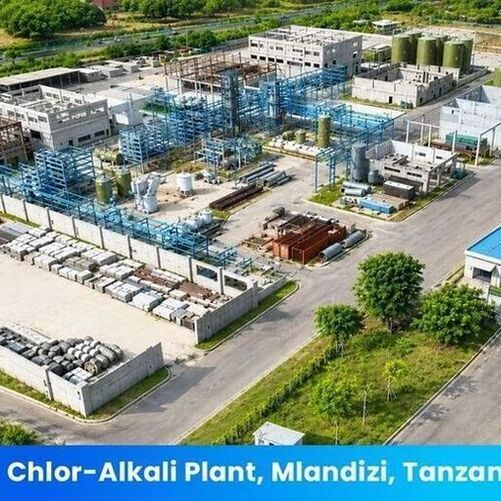
Nuberg EPC to Develop Chlor-Alkali Plant in Tanzania
The project has been awarded by Msufini Tanzania, with commissioning targeted for January 2027.
(Source: Nuberg EPC)
June 11 – Nuberg EPC has secured a prestigious international project for the review, design, procurement, installation, construction, and commissioning of a 45 TPD Chlor-Alkali Plant in the Mlandizi District, Coast Region of Tanzania. The project has been awarded by Msufini Tanzania, with commissioning targeted for January 2027.
The project will be executed using advanced, state-of-the-art process technology, ensuring superior operational efficiency, process reliability, and adherence to stringent global safety and environmental standards. Nuberg EPC will undertake end-to-end execution, supported by robust project management frameworks, rigorous quality assurance protocols, and a strong emphasis on timely delivery.
The project site in Mlandizi District, Coast Region, offers significant logistical advantages, with proximity to key transportation corridors and port infrastructure, enabling efficient supply chain operations. The development is also expected to generate both direct and indirect employment opportunities while catalyzing regional industrial activity.
The plant is designed to produce chlorine and caustic soda as primary products, alongside a diversified portfolio of value-added co-products and derivatives, including hydrogen, hydrochloric acid (HCl), sodium hypochlorite, liquid chlorine, caustic soda lye, and caustic flakes. These products are critical to a wide spectrum of industries such as water treatment, sanitation, pharmaceuticals, textiles, paper & pulp, plastics, and chemical manufacturing, thereby underpinning essential industrial and public utility applications.
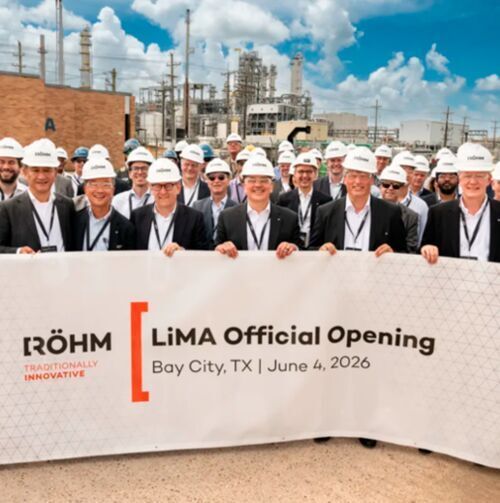
Röhm Inaugurates Bay City MMA Plant in USA
Official opening of Röhm's Bay City MMA Plant.
(Source: Röhm)
June 11 – Röhm is marking a major milestone at its Bay City, Texas methyl methacrylate (MMA) plant, where the company’s proprietary Lima technology has been operating at full industrial scale for the first time worldwide. Following start‑up, the plant underwent a structured ramp‑up phase, successfully reaching and sustaining full‑scale operation in recent months. To recognize this achievement, Röhm hosted customers, partners and elected officials at the Bay City site, offering a behind‑the‑scenes look at the plant’s operations and the Lima technology.
Lima stands for Leading in ‘Leading in Methacrylates.’ MMA is a critical building block for products used in automotive, manufacturing, construction, electronics, and medical applications. The facility is also the first C2‑based MMA production plant in North America, strengthening regional supply chains and domestic manufacturing capacity.
At the event, Röhm CEO Hans Bohnen noted the Bay City plant underscores the company’s broader strategy to lead through technology and long‑term investment. “As the only global producer of both methyl methacrylate and polymethyl methacrylate with production sites in the major regions of Europe, Asia, and North America, we are uniquely positioned to serve our customers worldwide - reliably, locally, and with leading technology,” said Bohnen.
The Bay City plant strengthens supply security for North American customers by relying on readily available raw materials, including ethylene and natural gas, and by anchoring production closer to end markets.
Thyssenkrupp Uhde Secures Pre-Feed Contracts for Green Ammonia Projects in Brazil
Thyssenkrupp Uhde has been awarded the pre-Feed contracts by Fuella for the development of two large-scale green ammonia projects in the Port of Pecém, Brazil and the Port of Açu, Brazil.
(Source: Thyssenkrupp Uhde)
June 15 – Thyssenkrupp Uhde has been awarded the pre-Feed contracts by Fuella for the development of two large-scale green ammonia projects in the Port of Pecém, Brazil and the Port of Açu, Brazil. The Pega and Açuga projects target the production of 400,000 tonnes per annum (tpa) of green ammonia each, powered entirely by renewable energy. The pre-Feed phase will focus on optimizing the technical concept, progressing key engineering activities and maturing the business case for the ammonia facilities.
The pre-Feeds will be based on Thyssenkrupp Uhde’s advanced uhde ammonia synthesis technology, specifically designed to meet the challenges of dynamic, renewable-powered ammonia production. In addition, Thyssenkrupp Uhde will deliver integration engineering across the entire facility, including electrolysis systems, balance of plant, and ammonia offloading infrastructure. As Fuella advances their two first projects in Brazil, these pre-Feeds will enable Fuella to progress through commercial milestones and develop execution approaches, laying the foundation for world-class green ammonia production hubs.
Siegfried Inaugurates API Production Facility in Germany
The facility adds 100 m³ of reactor capacity and strengthens Siegfried’s position as one of the leading global CDMOs for small molecule drug substances.
(Source: Siegfried)
June 16 – Siegfried, a leading global Contract Development and Manufacturing Organization (CDMO) for the pharmaceutical industry headquartered in Zofingen, Switzerland, has recently inaugurated its new large-scale production facility for API manufacturing in Minden, Germany.
The facility adds 100 m³ of reactor capacity and strengthens Siegfried’s position as one of the leading global CDMOs for small molecule drug substances. It enhances the company’s ability to support customers with complex, high-quality and scalable API manufacturing solutions.
The new plant combines advanced process technology, automation, and high-containment capabilities. Features such as gravity-flow processing, RFID-enabled recipe management, and optimized solvent handling contribute to efficient, safe and reliable production. With the new facility, Siegfried further expands its large-scale drug substances offering and reinforces its strategic focus on network strength, operational excellence, and trusted long-term partnerships with pharmaceutical customers.
Johnson Matthey Technologies Selected for E-SAF Facility in South Africa
Phelan Green Hydrogen has announced that it has licensed technologies from Johnson Matthey Catalyst Technologies for its planned electro-sustainable aviation fuel facility in the Western Cape, South Africa.
(Source: Pixabay)
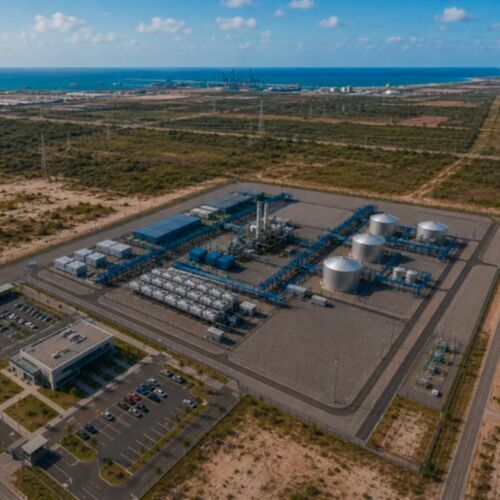
June 18 – Phelan Green Hydrogen has recently announced that it has licensed technologies from Johnson Matthey Catalyst Technologies (JM CT) for its planned electro-sustainable aviation fuel (E-SAF) facility in the Western Cape, South Africa.
Construction of the facility in Saldanha Bay is expected to begin by the end of 2026 and is part of the wider Phelan Green Hydrogen Project which expects investment of R47 billion (more than 2 billion pounds).
The license win represents the first phase of the project, which when completed is expected to be one of the world’s first commercial-scale E-SAF production facilities, able to produce around 35,000 tonnes of E-SAF each year, intended for sale into the EU/UK markets. That will be the equivalent of producing up to 6 % of the EU and UK’s mandated E-SAF volumes for 2030. Once all phases are complete the facility is expected to supply around 140,000 tonnes of E-SAF in total each year.
Johnson Matthey’s Hycogen technology uses a catalyzed process to convert CO2 and electrolytic (green) hydrogen into carbon monoxide (CO). This CO is then combined with additional hydrogen to form syngas. Hycogen technology integrates with FT Cans technology, jointly developed and co-owned by JM and BP, which converts syngas into synthetic crude oil, supporting overall process efficiency. This synthetic crude oil will then be upgraded to produce synthetic paraffinic kerosene.
Nextchem’s Technology Selected for Biomass-to-Syngas Project
Under the agreement, Nextchem will provide the license for its proprietary NX Circular technology for the biomass-to-syngas section of the plant.
(Source: Pixabay)
June 18 – Maire has recently announced that Nextchem, through its subsidiary Myrechemical, has signed a licensing agreement with Sustaero GP in relation to a project for the production of Sustainable Aviation Fuel (SAF) from biomass in Canada. Under the agreement, Nextchem will provide the license for its proprietary NX Circular technology for the biomass-to-syngas section of the plant, representing the first step of production.
The project is aimed at producing purified chemical grade syngas from forest residues, which will then be used for subsequent conversion into SAF. Nextchem’s proprietary NX Circular process covers the high-temperature gasification and melting of wastes and biomass residues to synthetic gas and its further purification.
Set to be operational in 2030, the plant will produce up to 144 thousand tons of SAF annually from residual biomass, with expansion potential of up to four times its initial capacity.
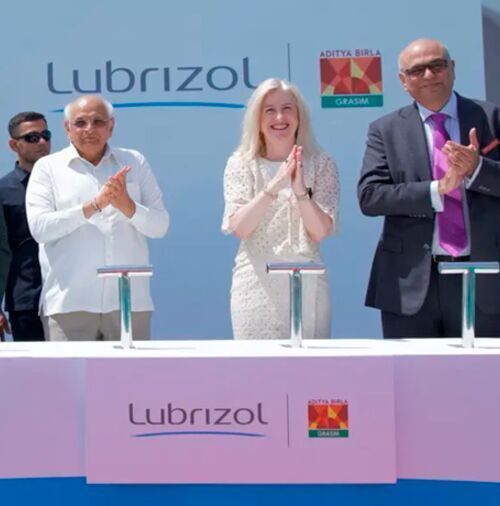
Lubrizol, Grasim Inaugurate World-Class CPVC Resin Plant in Gujarat
Lubrizol, together with Grasim Industries, has recently inaugurated a world-class Chlorinated Polyvinyl Chloride resin manufacturing facility in Vilayat, Gujarat.
(Source: Lubrizol)
June 22 – Lubrizol, together with Grasim Industries, has recently inaugurated a world-class Chlorinated Polyvinyl Chloride (CPVC) resin manufacturing facility in Vilayat, Gujarat. The new plant, along with the recently enhanced CPVC compounding capacity at Lubrizol’s Dahej facility, creates one of India’s most scalable and integrated CPVC manufacturing footprints, reinforcing leadership in high-performance plumbing and piping solutions.
The Vilayat plant expands Lubrizol’s ability to deliver end-to-end CPVC solutions for India’s growing infrastructure needs, ensuring a reliable, high-quality local supply of CPVC resin and compounds used in pipes and fittings across residential, commercial, and industrial applications. This integrated manufacturing footprint reinforces supply chain resilience while supporting the country’s focus on infrastructure development and safe water delivery. Leveraging Lubrizol’s deep global expertise in quality innovation, the company continues to deliver differentiated, high-performance CPVC solutions that provide long-term reliability and value.
The commissioning of this facility marks an important milestone in Lubrizol’s 60-year presence in India and reflects the company’s continued investment in local manufacturing, aligned with the “Make in India” vision.




:quality(80)/p7i.vogel.de/wcms/20/9b/209b81269c3b7255e1f49c5771cfc303/0133747923v2.jpeg "Under the theme \"Step into Cognitive Manufacturing\", Ima will present its vision of a new generation of manufacturing, where Artificial Intelligence, advanced Robotics, Digital Vision Systems and Human Expertise work together to create smarter, more connected and adaptive production environments. (Source: Ima)")
:quality(80)/p7i.vogel.de/wcms/e5/87/e587bb7a91212bcc1ae875ef1bbb6edf/0133471290v2.jpeg "Physical AI marks a shift from machines that follow fixed instructions to embodied systems that perceive, reason, and act autonomously. (Source: Pixabay)")
:quality(80)/p7i.vogel.de/wcms/8b/a5/8ba5d7e346543b30d3066de20e059c59/0133394741v2.jpeg "Currently under construction in Delfzijl, the new SAF facility will support the Netherlands’ efforts to meet the EU’s sustainable aviation fuel mandate. (Source: Emerson )")
:quality(80)/p7i.vogel.de/wcms/6f/90/6f90a6bb14694e7597ec1234110da041/0133293480v2.jpeg "Under the MOU, Aramco will provide domain knowledge, data, and infrastructure to evaluate Sony’s technologies in real-world industrial settings. (Source: Aramco )")
:quality(80)/p7i.vogel.de/wcms/5e/0f/5e0f355d4e90ad6e1af1c997b8789b7d/0133748771v2.jpeg "Elkem Rana’s second furnace will operate as normal during the period. (Source: Elkem )")
:quality(80)/p7i.vogel.de/wcms/c8/30/c830ea0047f500d4c8e9b1a39744d05c/0133653487v2.jpeg "Technip Energies has been awarded contracts by Petkim, a subsidiary of Socar, in connection with the development of a proposed integrated petrochemical complex in Aliağa, Türkiye. (Source: Pixabay)")
:quality(80)/p7i.vogel.de/wcms/56/9d/569db69474e60a709992a9ae5a94ff78/0133613642v2.jpeg "Avantium has successfully produced the first batch of FDCA at its FDCA flagship plant in Delfzijl, the world's first commercial-scale plant for the production of FDCA. (Source: Unsplash)")
:quality(80)/p7i.vogel.de/wcms/2d/ff/2dff64eb5e03d787ed12706e1f344da7/0133613610v2.jpeg "The scope of work includes the development of the engineering design package, the definition of the key technical requirements and the cost estimation for the project. (Source: Pixabay)")
:quality(80)/p7i.vogel.de/wcms/c3/40/c340a3cd06990549f48cf68ae3c5ffff/0133748269v2.jpeg "Bayer has plans to invest 2.2 billion dollars in a new pharmaceutical manufacturing site in New Albany, Ohio, U.S. (Source: Bayer )")
:quality(80)/p7i.vogel.de/wcms/87/4a/874ac98c92c3cab99c0cb57a812caa80/0133555719v2.jpeg "The VPHP Bioindicator is based on spores of Geobacillus stearothermophilus ATCC 12980 and uses packaging permeable to VPHP. (Source: Ima)")
:quality(80)/p7i.vogel.de/wcms/53/a4/53a447ccf82236286a9c98307cd7fa81/0133438889v2.jpeg "The OEB5-contained capsule filling machine is integrated with an isolator and processes solid and liquid oral formulations. (Source: Marchesini)")
:quality(80)/p7i.vogel.de/wcms/02/2c/022cab680492112fbf0ef42892dddd63/0133748297v2.jpeg "In addition to production of green hydrogen, the H2future-Follow-Up project is now increasingly focusing on its treatment and provision for industrial applications. (Source: Verbund)")
:quality(80)/p7i.vogel.de/wcms/54/b9/54b9798cdc66e4aa54009dcd5fd2a682/0133616385v2.jpeg "Hydrogen production plant using water electrolysis powered by renewable energy. (Source: Hyundai E&C/AI-generated image)")
:quality(80)/p7i.vogel.de/wcms/c5/03/c5039bd2b47b209d1112fcc5227d04fc/0133537580v2.jpeg "The facility is expected to strengthen Manatee County’s position as a strategic energy and logistics hub. (Source: Unsplash)")
:quality(80)/p7i.vogel.de/wcms/67/ef/67efeaefe508d0fba36d39f65e0ff406/0133485604v2.jpeg "Once captured, CO₂ is liquefied, delivered by truck to a dedicated CO₂ terminal at Port Esbjerg, shipped aboard Carbon Destroyer 1 - the EU's first purpose-built CO₂ carrier - and injected into the Nini West reservoir. (Source: Ineos Energy )")
:quality(80)/p7i.vogel.de/wcms/7f/1b/7f1b02563e4803ee7f3764ffd1720d8c/0132842468v3.jpeg "The new EZJetFlo™ in-line mixing system solves the production bottleneck using highly efficient Venturi powder induction. (Source: ILC DOver)")
:quality(80)/p7i.vogel.de/wcms/02/fb/02fbe7296b87b2c110ad17e983d7d87a/0132963781v2.jpeg "MAAG’s Extrex6 EC gear pump is specifically designed for the continuous conveying of rigid PVC (polyvinyl chloride). (Bild: Maag)")
:quality(80)/p7i.vogel.de/wcms/69/8c/698c17b920244559c08f28261636fee5/0132816720v2.jpeg "Xylem has entered into an agreement to acquire the Cornell Pump and Roper Pump businesses from Indicor for 1.46 billion dollars. (Source: Pixabay)")
:quality(80)/p7i.vogel.de/wcms/89/47/8947595eafaa6ad27c8552a5f9ad48e1/0129967379v1.jpeg "Biogas and biomethane currently provide approximately 5.5 GW of stable electrical capacity and could be expanded to up to 20 GW without requiring additional land – an enormous potential. (Source: license free via Pixabay)")
:quality(80)/p7i.vogel.de/wcms/fe/5d/fe5d9bb106dfb20c1d69c90d74e78f58/0133648325v2.jpeg "Under the ‘National Water Strategy 2030’, Saudi Arabia is securing sustainable water resources, protecting the natural environment and providing high-quality services. (Source: Malika - stock.adobe.com)")
:quality(80)/p7i.vogel.de/wcms/88/c4/88c457f86fb2842cbcee21c320c44bd9/0133541916v2.jpeg "The RO membrane elements will be used for the Changi Newater Factory (CNF3), a large-scale used water treatment plant in Singapore. (Source: Unsplash)")
:quality(80)/p7i.vogel.de/wcms/1b/2b/1b2b80c989067b50c687314515948806/0133161547v2.jpeg "Acwa has signed a MOU with Veolia, committing the two leading companies to optimizing seawater desalination across the entire value chain. (Source: Acwa)")
:quality(80)/p7i.vogel.de/wcms/21/2e/212e079dcb99d9fd36e85dae0db3141a/0132929532v2.jpeg "Aerial view of the Kawasaki Works. (Source: Asahi Kasei )")
:quality(80)/p7i.vogel.de/wcms/79/31/7931cc94924b4c2ebc7087e9cec2f801/0130490720v2.jpeg "The new Pulsar Model R80 solids antenna delivers improved measurement capability through its high-frequency signal, narrow beam angle, and advanced configuration software. (Source: Ametek )")
:quality(80)/p7i.vogel.de/wcms/6b/cc/6bcc3d26e1c7c74d90a10bc3ca296ae1/0128362351v2.jpeg "A look into Bayer's new tablet production, Solida 1, during construction: The robots and lift columns for material handling are being installed. (Source: Bayer)")
:quality(80)/p7i.vogel.de/wcms/24/c8/24c84ab6b1bcd24468a87820a07a85aa/0128194707v2.jpeg "Ajax Equipment has supplied Binding Solutions with a feed system comprising buffer hopper, screw feeder and agitated screw feeder for a pilot plant handling iron ore and additives. (Source: Ajax Equipment )")
:quality(80)/p7i.vogel.de/wcms/00/17/0017bdaa28fe66816199a4eb71c02e72/0133748786v2.jpeg "Located at the heart of the Rhône-Alpes Research Center, the Battery Center of Excellence is entering a new phase of its development. (Source: Arkema)")
:quality(80)/p7i.vogel.de/wcms/9e/e7/9ee7a88325e1356fd9fc14f3e6074ecb/0133654724v2.jpeg "LG Chem has signed a MOU with the Volkswagen Group to develop and expand the application of next-generation, eco-friendly mobility materials. (Source: LG Chem)")
:quality(80)/p7i.vogel.de/wcms/4f/5a/4f5a1993844fdceffa2539843257241a/0133654083v2.jpeg "The agreement expands the long-standing cooperation between the two companies and combines Sabic’s industry-leading technology with Technip Energies’ extensive experience in Polyolefins. (Source: Technip Energies )")
:quality(80)/p7i.vogel.de/wcms/53/9d/539d2658dc14be6d960b22b2dda224b6/0133618284v2.jpeg "Sulzer has delivered its Devo purification technology to Beyondpoly's Version 2.0, 100,000-ton-per-year polyolefin elastomer plant in China. (Source: Sulzer)")
:quality(80)/p7i.vogel.de/wcms/f8/29/f8298429c1638b949a6f76346f6709c7/0118701710v2.jpeg "Bosch Industrial Heat will be presenting sustainable steam and heat solutions for global industrial use at the Achema trade fair in Frankfurt, Germany. (Source: Bosch Industriekessel)")
:quality(80)/p7i.vogel.de/wcms/07/24/07242664ab2b1c7841c9d9d0a127670c/0116045959.jpeg "A look inside the GEA machine room. (Bild: Magnavale)")
:quality(80)/p7i.vogel.de/wcms/c9/79/c979a20b32395ddfa93fe7ead90578a0/0108386061.jpeg "Production residues, lime, salt and suspended solids quickly clog the pipes. (Source:©Tanakorn - stock.adobe.com)")
:quality(80)/p7i.vogel.de/wcms/9e/5c/9e5c92d942ed046a27562d6e3d730c92/0103483548.jpeg "It is almost ten metres high and extends over three floors: the world's first multiple dividing wall column is located in the new technical centre at the University of Ulm. (Bild: Eberhardt, kiz Universität Ulm)")
:quality(80)/p7i.vogel.de/wcms/90/f3/90f351201dd4ea7e2439ce19019bf318/0133013227v2.jpeg "Adnoc, in collaboration with SLB, has deployed its AI-enabled RTOC platform across its fleet of more than 120 rigs. (Source: Adnoc)")
:quality(80)/p7i.vogel.de/wcms/aa/9d/aa9dc332257fbc96a2d2ec20b40781a5/0132005469v2.jpeg "Qatar Energy would like to emphasize that this was an operational accident and not sabotage or hostile in nature. (Source: Qatar Energy)")
:quality(80)/p7i.vogel.de/wcms/57/da/57da73af9c35d633196afd46348182b2/0130820106v2.jpeg "Today, the world is witnessing a deepening energy crisis. The Iran–US war has exposed the vulnerability of the global oil, gas, and petrochemicals industry. Its impact is not confined to one region—it has triggered a domino effect across continents. (Source: © Rayhan - stock.adobe.com)")
:quality(80)/p7i.vogel.de/wcms/20/36/20366ffa57a841882fd165e4dc885c09/0130491929v2.jpeg "With the US and Israel jointly firing the first shot on Iran, the world is now witnessing major cascading effects—from soaring global oil and gas prices, to industry leaders declaring force majeure, and even predictions that the war could trigger a global economic recession! (Source: © FOYSAL - stock.adobe.com)")
:quality(80)/p7i.vogel.de/wcms/a8/4e/a84e8039a90a5cf4751d01ebcf6ba1a9/0127510172v2.jpeg "After six years, Achemasia, the international trade fair and innovation forum for sustainable chemical production, has returned with renewed vigor, bringing together global expertise, Chinese innovation, and a shared commitment to a greener industrial future—according to the organizers of the fair. (Source:PROCESS China)")
:quality(80)/p7i.vogel.de/wcms/17/c7/17c703445f134eb3d7ecc7918dda2762/0124596096v2.jpeg "Achema Middle East will launch in Saudi Arabia in 2026. (Bild: Dechema/ Hannibal)")
:quality(80)/p7i.vogel.de/wcms/2a/2c/2a2cffc07f51019065387cd63241b5ce/0119463370v1.jpeg "The Injecta 36 fills and seals RTU (Ready-to-Use) syringes at high speed. The image shows the robotic arm. (Source: IMA)")
:quality(80)/p7i.vogel.de/wcms/b1/7e/b17ea8c62ccafad1d1fb072d6199bbd6/0118578446.jpeg "“Star in the ring”: Vegapuls 6X radar level sensors are the solution of choice for Renolit for many applications on the way to the perfect plastic product. (Source: © MR Design - stock.adobe.com; Vega)")
:quality(80)/p7i.vogel.de/wcms/ff/f6/fff6f0d51831655bdd781e08681d74a3/0133747018v2.jpeg "His Excellency Saad Sherida Al-Kaabi, the Minister of State for Energy Affairs, the President and CEO of Qatar Energy at the Qatar Economic Forum Special Edition in New York, USA. (Source: Qatar Energy )")
:quality(80)/p7i.vogel.de/wcms/a4/48/a4483a8e8b44b896e15e44c2fb680cc4/0133647880v2.jpeg "UAE’s industrial strategy – Operation 300bn aims to advance the UAE’s industrial sector and strengthen its role in driving the national economy. (Source: © HISTOCK - stock.adobe.com)")
:quality(80)/p7i.vogel.de/wcms/fb/54/fb54b6f2e394f8278c8ad8f111cba0a0/0133617654v2.jpeg "The partnership was officially launched at UAE University in Al Ain in the presence of key value chain stakeholders, including the Emirates Environmental Group, Hotpack, AW Rostamani Group, Tadweer Group, University of Sharjah, and Pacogreen. (Source: Emirates Biotech)")
:fill(fff,0)/images.vogel.de/vogelonline/companyimg/2000/2093/65.jpg "Glatt_Logo_ND4c-RGB (5x3cm).jpg ()")
:fill(fff,0)/p7i.vogel.de/companies/61/f9/61f9439b7cbe4/logo-edl.png "logo-edl (EDL Anlagenbau Gesellschaft mbH)")
:fill(fff,0)/p7i.vogel.de/companies/66/9f/669f700d3b118/cac-2023-poslogo-idea-ahead.png "cac-2023-poslogo-idea-ahead (CAC ENGINEERING GMBH)")





:quality(80)/p7i.vogel.de/wcms/02/63/02637b965fa8382c311b4a587dbf3199/0131769194v2.jpeg "Official opening of Röhm's Bay City MMA Plant. (Source: Röhm )")
:quality(80)/p7i.vogel.de/wcms/b2/05/b20538f6b825fdc9494324cd51746c96/0131936649v2.jpeg "Lubrizol, together with Grasim Industries, has recently inaugurated a world-class Chlorinated Polyvinyl Chloride resin manufacturing facility in Vilayat, Gujarat. (Source: Lubrizol )")