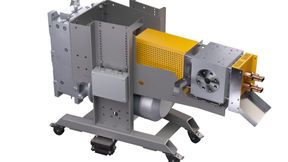
The rotary lobe compressors were successfully tested in a large-scale field trial conducted in a wide variety of industries including milling operations.  (Picture: Aerzener Maschinenfabrik/Fotolia; [M]-Albrecht)
Pneumatic Conveying

Pneumatic Conveying at 1.5 Bar Maximal Pressure to a Height of 65 m

The new Delta Hybrid series of rotary lobe compressors from Aerzener Maschinenfabrik is a world first in creating a symbiosis between rotary lobe blowers (for a lower pressure range) and screw compressors (for a higher pressure range), for the first time ever permitting maximum pressure levels of up to 1.5 bar in pneumatic conveyance. In field trials at a milling operation it was rated “very good”.

Read on

Galleries

 (Picture: Ham-Let/Collage: Vogel Business Media)
Needle Valves

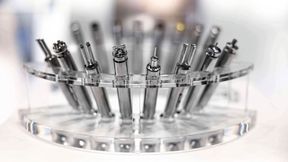
Open the Valves of Performance

Small things make big differences: Although needle valves are comparably simple in construction, the effects of an ill-suited valve selection can be quite drastic. Problems, ranging from issues with standard compliance to contamination or even process failure, are typical consequences of low quality or simply inapt valves. The benefits of needle valves, on the other hand can be quite big — if the proper component is selected.

Read on
The Flexalab capsule filler (Picture: MG2)
Capsule Filler

Low Dosages and Extreme Precision

MG2’s Flexalab is a capsule filler specifically designed for R&D laboratories, clinical trials, small batch outputs and special productions. For productions up to 3000 cps/h, it is based on the same functioning principles as MG2 high speed machines.

Read on

No time to waste: 3035 kilotons of chlorine production in the EU still use mercury. (Source: Eurochlor Graphic: PROCESS)

Chlorine/Mercury Phaseout

No Time to Waste: Europe's Chlorine Industry and the Mercury Challenge

Time runs out for mercury cell technology in chlorine production, and alternatives are in high demand—Although the December 2017 deadline for the prohibition of mercury cell technology in the EU still seems to be quite far away, time is running out for chlorine producers who have yet to start the conversion or closure process. Even though the regulatory pressures hit a struggling industry hard, it is important to start investigating cost-effective solutions.

Read on