Kemira, Cusp AI have utilized the Gen AI technology to design new materials for removing forever chemicals from drinking water and process water at trace concentrations. This is the first commercial partnership to apply generative AI end-to-end to the design of new materials for PFAS remediation.
This is the first commercial partnership to apply generative AI end-to-end to the design of new materials for PFAS remediation.
(Source: Kemira)
Helsinki/Finland – Kemira and Cusp AI, the frontier AI materials science company, recently announced that they have used generative AI to design new materials targeting the removal of PFAS, so-called "forever chemicals," from drinking and process water at trace concentrations, using chemistry that is stable, sustainable, and manufacturable.
The materials discovery project explored a design space of approximately 300 trillion possible material structures and delivered over 5000 novel material designs with full property data for three priority PFAS molecules: GenX, PFBS, and PFOS. This was narrowed to approximately 20 selected priority candidates now advancing to further development. The program reached this stage in six months.
This is the first commercial partnership to apply generative AI end-to-end to the design of new materials for PFAS remediation. While academic groups and technology companies have explored AI for materials screening, no previous collaboration has taken a generative approach, designing entirely new structures from scratch against industrial performance criteria, and delivered candidates at this scale and speed.
"Kemira challenged us with finding new solutions to one of the most pressing environmental problems of our time, and in six months our partnership delivered," said Dr Chad Edwards, CEO and Co-Founder of Cusp AI. "The collaboration is now advancing to its next phase, with further projects already being scoped. We built Cusp AI to compress discovery timelines on problems that matter, and we are delighted to be creating real impact and value this early in our journey."
"This project combined Kemira's deep expertise in water treatment chemistry with Cusp AI's capabilities, and the results speak for themselves," said Sampo Lahtinen, Executive Vice President, Research and Innovation at Kemira. "Our teams worked closely together to ensure that every material candidate was evaluated against real industrial requirements. That rigor is what gives us confidence in taking these candidates forward."
"This partnership has shown us what AI-driven materials design looks like when it meets real industrial requirements," said Antti Salminen, President and CEO of Kemira. "We set a demanding brief: design new materials that can remove forever chemicals from water at trace concentrations, using chemistry that is stable, sustainable, and manufacturable, and speeding up the discovery phase of our discovery process. We now have a credible path toward a next-generation PFAS remediation product, and we look forward to further collaboration with the Cusp AI team."
Stay up to Date
Do you want the latest news, specialist articles and information on new products? Then you can register for our free newsletter:
PFAS (per- and polyfluoroalkyl substances) are persistent synthetic chemicals found in drinking water worldwide. They are subject to tightening regulation, including US EPA maximum contaminant limits in parts per trillion scale (announced 2024) and the EU Drinking Water Directive. Today's leading remediation technology is granular activated carbon (GAC). Kemira, which is already active in the activated carbon regeneration market, initiated this collaboration to explore whether AI-driven design could open a path to more selective and even longer-lasting alternatives.
What was delivered
Kemira defined the brief: discovery phase project of new materials that can remove specific PFAS molecules from water at sub-parts-per-billion concentrations, using chemistry that is water-stable, environmentally compatible, synthesizable, and cost-effective. Cusp AI's platform designed entirely new metal-organic frameworks (MOFs) from scratch, searching approximately 300 trillion possible structures and delivering over 5000 novel potential material designs with property data across all three target molecules, narrowed to selected priority candidates. The speed and scale of this discovery phase was unprecedented: record amount of structures was evaluated and it took 6 months to reach these results.
Date: 08.12.2025
Naturally, we always handle your personal data responsibly. Any personal data we receive from you is processed in accordance with applicable data protection legislation. For detailed information please see our privacy policy.
Consent to the use of data for promotional purposes
I hereby consent to Vogel Communications Group GmbH & Co. KG, Max-Planck-Str. 7-9, 97082 Würzburg including any affiliated companies according to §§ 15 et seq. AktG (hereafter: Vogel Communications Group) using my e-mail address to send editorial newsletters. A list of all affiliated companies can be found here
Newsletter content may include all products and services of any companies mentioned above, including for example specialist journals and books, events and fairs as well as event-related products and services, print and digital media offers and services such as additional (editorial) newsletters, raffles, lead campaigns, market research both online and offline, specialist webportals and e-learning offers. In case my personal telephone number has also been collected, it may be used for offers of aforementioned products, for services of the companies mentioned above, and market research purposes.
Additionally, my consent also includes the processing of my email address and telephone number for data matching for marketing purposes with select advertising partners such as LinkedIn, Google, and Meta. For this, Vogel Communications Group may transmit said data in hashed form to the advertising partners who then use said data to determine whether I am also a member of the mentioned advertising partner portals. Vogel Communications Group uses this feature for the purposes of re-targeting (up-selling, cross-selling, and customer loyalty), generating so-called look-alike audiences for acquisition of new customers, and as basis for exclusion for on-going advertising campaigns. Further information can be found in section “data matching for marketing purposes”.
In case I access protected data on Internet portals of Vogel Communications Group including any affiliated companies according to §§ 15 et seq. AktG, I need to provide further data in order to register for the access to such content. In return for this free access to editorial content, my data may be used in accordance with this consent for the purposes stated here. This does not apply to data matching for marketing purposes.
Right of revocation
I understand that I can revoke my consent at will. My revocation does not change the lawfulness of data processing that was conducted based on my consent leading up to my revocation. One option to declare my revocation is to use the contact form found at https://contact.vogel.de. In case I no longer wish to receive certain newsletters, I have subscribed to, I can also click on the unsubscribe link included at the end of a newsletter. Further information regarding my right of revocation and the implementation of it as well as the consequences of my revocation can be found in the data protection declaration, section editorial newsletter.
The project also uncovered new functional group chemistries with potential for development into broader adsorption products. The project is now moving into its next phase of further development and testing, and further programs across additional material classes are being scoped under the partnership's framework agreement.




:quality(80)/p7i.vogel.de/wcms/46/68/4668c1a83d20864c2af5d0e594148828/0133903971v2.jpeg "The collaborations focus on project support, capacity building and capability development, technology transfer and innovation, and supply chain resilience. (Source: Aramco )")
:quality(80)/p7i.vogel.de/wcms/49/da/49dad8d8a13c0e70277ffa923b71544a/0133891190v2.jpeg "For the 100 MW hydrogen facility of the first project phase, Siemens is deploying its software portfolio for the hydrogen industry, enabling smarter operations and optimizing the value of the plant. (Source: Siemens)")
:quality(80)/p7i.vogel.de/wcms/20/9b/209b81269c3b7255e1f49c5771cfc303/0133747923v2.jpeg "Under the theme \"Step into Cognitive Manufacturing\", Ima will present its vision of a new generation of manufacturing, where Artificial Intelligence, advanced Robotics, Digital Vision Systems and Human Expertise work together to create smarter, more connected and adaptive production environments. (Source: Ima)")
:quality(80)/p7i.vogel.de/wcms/e5/87/e587bb7a91212bcc1ae875ef1bbb6edf/0133471290v2.jpeg "Physical AI marks a shift from machines that follow fixed instructions to embodied systems that perceive, reason, and act autonomously. (Source: Pixabay)")
:quality(80)/p7i.vogel.de/wcms/87/48/8748b7926d353ca46599d85212f2a385/0133962385v2.jpeg "The investment marks an important milestone in MOL Group’s long-term ‘Shape Tomorrow’ strategy by further expanding the company’s green energy portfolio, strengthening energy security, and contributing to the sustainable energy supply of the region. (Source: MOL Group)")
:quality(80)/p7i.vogel.de/wcms/48/a4/48a48092e53bcc7db51b527a98a083ee/0133912333v2.jpeg "At a glance: Plant engineering projects from across the globe. (Source: © suphamit - stock.adobe.com)")
:quality(80)/p7i.vogel.de/wcms/6e/91/6e91403e574040df194cb07fae945f07/0133900692v2.jpeg "The inauguration ceremony for the new unit was held in the presence of Thierry Le Hénaff, Chairman and Chief Executive Officer of Arkema and Stéphane Séjourné, Executive Vice-President of the European Commission for Prosperity and Industrial Strategy. (Source: Arkema)")
:quality(80)/p7i.vogel.de/wcms/4e/21/4e216ce12e862201405cdafa46734ad6/0133894576v2.jpeg "Air Products’ LNG-based ASU in Pengerang will produce more than 600 tonnes of liquid oxygen, nitrogen and argon per day. (Source: Air Products)")
:quality(80)/p7i.vogel.de/wcms/50/95/509548cafc37c66c1f9a6aa00d78a347/0133898207v2.jpeg "Manufactured at Nouryon’s facility in Finland, Cekol CMC-Na is a water-soluble polymer that gives drugmakers a plant-based alternative to synthetic excipients. (Source: Nouryon)")
:quality(80)/p7i.vogel.de/wcms/96/24/9624790c4a1710995de488021bf93c4c/0133846001v1.jpeg "When tableting tools are manufactured closer to the market, supply chains can respond more quickly. With a new production site in Pune, India, Fette Compacting is bringing punches and dies closer to one of the pharmaceutical industry’s fastest-growing markets. (Source: Fette Compacting)")
:quality(80)/p7i.vogel.de/wcms/c3/40/c340a3cd06990549f48cf68ae3c5ffff/0133748269v2.jpeg "Bayer has plans to invest 2.2 billion dollars in a new pharmaceutical manufacturing site in New Albany, Ohio, U.S. (Source: Bayer )")
:quality(80)/p7i.vogel.de/wcms/c1/d0/c1d0ae0beb84f04e001931c639b97285/0133965554v2.jpeg "Using Topsoe’s kerosene hydrotreating technology, BPCL will produce SAF within its existing refinery infrastructure, without the need for a new dedicated SAF production unit. (Source: Topsoe )")
:quality(80)/p7i.vogel.de/wcms/02/2c/022cab680492112fbf0ef42892dddd63/0133748297v2.jpeg "In addition to production of green hydrogen, the H2future-Follow-Up project is now increasingly focusing on its treatment and provision for industrial applications. (Source: Verbund)")
:quality(80)/p7i.vogel.de/wcms/54/b9/54b9798cdc66e4aa54009dcd5fd2a682/0133616385v2.jpeg "Hydrogen production plant using water electrolysis powered by renewable energy. (Source: Hyundai E&C/AI-generated image)")
:quality(80)/p7i.vogel.de/wcms/7f/1b/7f1b02563e4803ee7f3764ffd1720d8c/0132842468v3.jpeg "The new EZJetFlo™ in-line mixing system solves the production bottleneck using highly efficient Venturi powder induction. (Source: ILC DOver)")
:quality(80)/p7i.vogel.de/wcms/02/fb/02fbe7296b87b2c110ad17e983d7d87a/0132963781v2.jpeg "MAAG’s Extrex6 EC gear pump is specifically designed for the continuous conveying of rigid PVC (polyvinyl chloride). (Bild: Maag)")
:quality(80)/p7i.vogel.de/wcms/69/8c/698c17b920244559c08f28261636fee5/0132816720v2.jpeg "Xylem has entered into an agreement to acquire the Cornell Pump and Roper Pump businesses from Indicor for 1.46 billion dollars. (Source: Pixabay)")
:quality(80)/p7i.vogel.de/wcms/89/47/8947595eafaa6ad27c8552a5f9ad48e1/0129967379v1.jpeg "Biogas and biomethane currently provide approximately 5.5 GW of stable electrical capacity and could be expanded to up to 20 GW without requiring additional land – an enormous potential. (Source: license free via Pixabay)")
:quality(80)/p7i.vogel.de/wcms/fe/5d/fe5d9bb106dfb20c1d69c90d74e78f58/0133648325v2.jpeg "Under the ‘National Water Strategy 2030’, Saudi Arabia is securing sustainable water resources, protecting the natural environment and providing high-quality services. (Source: Malika - stock.adobe.com)")
:quality(80)/p7i.vogel.de/wcms/88/c4/88c457f86fb2842cbcee21c320c44bd9/0133541916v2.jpeg "The RO membrane elements will be used for the Changi Newater Factory (CNF3), a large-scale used water treatment plant in Singapore. (Source: Unsplash)")
:quality(80)/p7i.vogel.de/wcms/1b/2b/1b2b80c989067b50c687314515948806/0133161547v2.jpeg "Acwa has signed a MOU with Veolia, committing the two leading companies to optimizing seawater desalination across the entire value chain. (Source: Acwa)")
:quality(80)/p7i.vogel.de/wcms/21/2e/212e079dcb99d9fd36e85dae0db3141a/0132929532v2.jpeg "Aerial view of the Kawasaki Works. (Source: Asahi Kasei )")
:quality(80)/p7i.vogel.de/wcms/79/31/7931cc94924b4c2ebc7087e9cec2f801/0130490720v2.jpeg "The new Pulsar Model R80 solids antenna delivers improved measurement capability through its high-frequency signal, narrow beam angle, and advanced configuration software. (Source: Ametek )")
:quality(80)/p7i.vogel.de/wcms/6b/cc/6bcc3d26e1c7c74d90a10bc3ca296ae1/0128362351v2.jpeg "A look into Bayer's new tablet production, Solida 1, during construction: The robots and lift columns for material handling are being installed. (Source: Bayer)")
:quality(80)/p7i.vogel.de/wcms/24/c8/24c84ab6b1bcd24468a87820a07a85aa/0128194707v2.jpeg "Ajax Equipment has supplied Binding Solutions with a feed system comprising buffer hopper, screw feeder and agitated screw feeder for a pilot plant handling iron ore and additives. (Source: Ajax Equipment )")
:quality(80)/p7i.vogel.de/wcms/0d/74/0d740641b4bace22f52f54ffde65e7b5/0133965905v2.jpeg "Evonik's pilot plant for PU recycling in Hanau, Germany. (Source: Evonik)")
:quality(80)/p7i.vogel.de/wcms/fa/d3/fad368bdbaaa561f5383f31ab78d4891/0133899730v2.jpeg "Established with support from the Singapore Economic Development Board, Lubrizol's Southeast Asia Innovation Center in Jurong serves as a regional platform for customer collaboration, scientific innovation and technical advancement. (Source: Lubrizol )")
:quality(80)/p7i.vogel.de/wcms/7f/1b/7f1b4ca96036a50d211eefe39a52e3d5/0133896780v2.jpeg "At Borouge International Niedergebra, annual output of recycled mixed polyolefin materials will increase by close to 9 kilo tonnes. (Source: Unsplash)")
:quality(80)/p7i.vogel.de/wcms/00/17/0017bdaa28fe66816199a4eb71c02e72/0133748786v2.jpeg "Located at the heart of the Rhône-Alpes Research Center, the Battery Center of Excellence is entering a new phase of its development. (Source: Arkema)")
:quality(80)/p7i.vogel.de/wcms/f8/29/f8298429c1638b949a6f76346f6709c7/0118701710v2.jpeg "Bosch Industrial Heat will be presenting sustainable steam and heat solutions for global industrial use at the Achema trade fair in Frankfurt, Germany. (Source: Bosch Industriekessel)")
:quality(80)/p7i.vogel.de/wcms/07/24/07242664ab2b1c7841c9d9d0a127670c/0116045959.jpeg "A look inside the GEA machine room. (Bild: Magnavale)")
:quality(80)/p7i.vogel.de/wcms/c9/79/c979a20b32395ddfa93fe7ead90578a0/0108386061.jpeg "Production residues, lime, salt and suspended solids quickly clog the pipes. (Source:©Tanakorn - stock.adobe.com)")
:quality(80)/p7i.vogel.de/wcms/9e/5c/9e5c92d942ed046a27562d6e3d730c92/0103483548.jpeg "It is almost ten metres high and extends over three floors: the world's first multiple dividing wall column is located in the new technical centre at the University of Ulm. (Bild: Eberhardt, kiz Universität Ulm)")
:quality(80)/p7i.vogel.de/wcms/90/f3/90f351201dd4ea7e2439ce19019bf318/0133013227v2.jpeg "Adnoc, in collaboration with SLB, has deployed its AI-enabled RTOC platform across its fleet of more than 120 rigs. (Source: Adnoc)")
:quality(80)/p7i.vogel.de/wcms/aa/9d/aa9dc332257fbc96a2d2ec20b40781a5/0132005469v2.jpeg "Qatar Energy would like to emphasize that this was an operational accident and not sabotage or hostile in nature. (Source: Qatar Energy)")
:quality(80)/p7i.vogel.de/wcms/57/da/57da73af9c35d633196afd46348182b2/0130820106v2.jpeg "Today, the world is witnessing a deepening energy crisis. The Iran–US war has exposed the vulnerability of the global oil, gas, and petrochemicals industry. Its impact is not confined to one region—it has triggered a domino effect across continents. (Source: © Rayhan - stock.adobe.com)")
:quality(80)/p7i.vogel.de/wcms/20/36/20366ffa57a841882fd165e4dc885c09/0130491929v2.jpeg "With the US and Israel jointly firing the first shot on Iran, the world is now witnessing major cascading effects—from soaring global oil and gas prices, to industry leaders declaring force majeure, and even predictions that the war could trigger a global economic recession! (Source: © FOYSAL - stock.adobe.com)")
:quality(80)/p7i.vogel.de/wcms/a8/4e/a84e8039a90a5cf4751d01ebcf6ba1a9/0127510172v2.jpeg "After six years, Achemasia, the international trade fair and innovation forum for sustainable chemical production, has returned with renewed vigor, bringing together global expertise, Chinese innovation, and a shared commitment to a greener industrial future—according to the organizers of the fair. (Source:PROCESS China)")
:quality(80)/p7i.vogel.de/wcms/17/c7/17c703445f134eb3d7ecc7918dda2762/0124596096v2.jpeg "Achema Middle East will launch in Saudi Arabia in 2026. (Bild: Dechema/ Hannibal)")
:quality(80)/p7i.vogel.de/wcms/2a/2c/2a2cffc07f51019065387cd63241b5ce/0119463370v1.jpeg "The Injecta 36 fills and seals RTU (Ready-to-Use) syringes at high speed. The image shows the robotic arm. (Source: IMA)")
:quality(80)/p7i.vogel.de/wcms/b1/7e/b17ea8c62ccafad1d1fb072d6199bbd6/0118578446.jpeg "“Star in the ring”: Vegapuls 6X radar level sensors are the solution of choice for Renolit for many applications on the way to the perfect plastic product. (Source: © MR Design - stock.adobe.com; Vega)")
:quality(80)/p7i.vogel.de/wcms/e0/95/e095767c9e3dc27fc37d5e635ef85303/0133843743v1.jpeg "The Strait of Hormuz crisis has shown how a single chokepoint can turn an energy shock into a manufacturing and food shock. (Source: © Gowrob - stock.adobe.com)")
:quality(80)/p7i.vogel.de/wcms/ff/f6/fff6f0d51831655bdd781e08681d74a3/0133747018v2.jpeg "His Excellency Saad Sherida Al-Kaabi, the Minister of State for Energy Affairs, the President and CEO of Qatar Energy at the Qatar Economic Forum Special Edition in New York, USA. (Source: Qatar Energy )")
:fill(fff,0)/p7i.vogel.de/companies/68/07/6807ad98568ce/logo-elementar-rgb.jpeg "logo-elementar-rgb (Elementar Analysensysteme GmbH)")
:fill(fff,0)/images.vogel.de/vogelonline/companyimg/2000/2093/65.jpg "Glatt_Logo_ND4c-RGB (5x3cm).jpg ()")
:fill(fff,0)/images.vogel.de/vogelonline/companyimg/101800/101879/65.jpg "ITV_LogoOrizzontale-per-il-web.jpg ()")
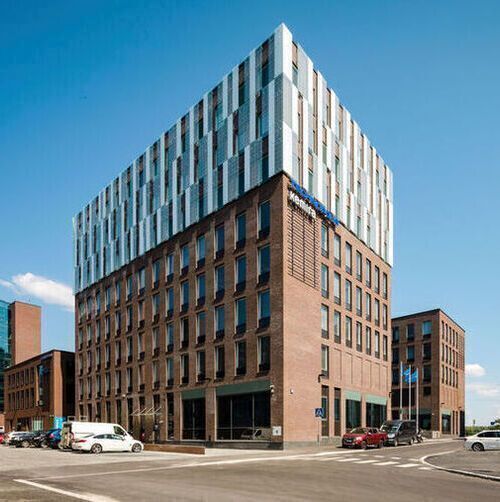
:quality(80)/p7i.vogel.de/wcms/0a/1c/0a1c5f661e1df4b35d4cd8e4901e4035/0129624833v2.jpeg "The new plant would add significant capacity to reactivate activated carbon for the region’s drinking water and wastewater market. (Source: Kemira )")
:quality(80)/p7i.vogel.de/wcms/c2/08/c2089104ef8928a971945a0197f3b372/0130079797v2.jpeg "Valued at nearly 100 million dollars, the investment will add approximately 27 million pounds of annual drinking water carbon reactivation capacity, with operations expected to begin in 2028. (Source: Pixabay)")