




























Nov 17, 2026
Why cyberattacks on cooling systems are a structural problem
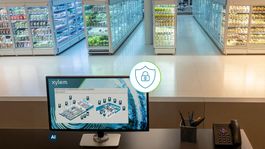
Most cooling systems report their temperature through their own controller. But what happens when that very controller is compromised? An independent monitoring layer provides confidence — independent of the system's control software.
Most cooling systems report their temperature through their own controller. But what happens when that very controller is compromised?
Modern cooling systems are managed through control software that maintenance service providers access remotely. Practical for maintenance — but also the entry point for cyberattacks. If attackers gain access to the service provider's system, they reach every system managed from there.
The consequence: the cooling system's controller itself is compromised. Its readings are no longer trustworthy at that moment. Anyone relying solely on the system's controller will only learn about the manipulation when the temperature is checked on site — or when the goods are visibly spoiled.
The immediate consequence is food spoilage. What is not detected in time must be destroyed. If spoiled goods are sold unnoticed, there is a risk to food safety.
The way out lies in a second, independent monitoring layer: wireless data loggers capture the temperature continuously and directly on site — independent of the cooling system's controller. They report limit violations quickly, acoustically on site and via email.
Such a system cannot identify the exact cause of a fault. But it reports in time that something has happened. And that time advantage is critical.
One example of such an independent measuring and alarm system is the EBI 25 system from Xylem's ebro®: wireless data loggers, radio transmission to a central software, acoustic and email alerting, internal memory in case of server failure.
More information here: Cyberattacks on cooling systems: Independent monitoring and alarm systems prevent undetected food spoilage
This article informs about a structural risk in temperature monitoring and presents a possible solution.