

































Nov 24, 2026
Relative viscosity of polyamides according to ASTM D789: where practice fails
Relative viscosity according to ASTM D789 correlates directly with molecular weight - and with processing behavior, mechanical performance and product quality. But measuring concentrated polymer solutions in aggressive solvents places specific demands on system design, safety and reproducibility. A new technical guide from SI Analytics shows where practice fails - and how to control the critical success factors.
Relative viscosity according to ASTM D789 is a critical quality parameter in polyamide production. Because it correlates with molecular weight and polymer chain integrity, it directly influences processing behavior, mechanical performance and product quality. Implementing the standard in the laboratory, however, brings specific challenges.
ASTM D789 versus ISO 307 - two approaches, different requirements
Both standards use capillary viscometry, but their scope differs fundamentally. ASTM D789 determines relative viscosity using concentrated polymer solutions, while ISO 307 measures viscosity number using dilute solutions. This seemingly small difference affects sample preparation, cleaning procedure and solvent handling.
The solvents also diverge: ASTM D789 primarily uses 90 percent formic acid, with m-cresol specified for certain polymer grades. ISO 307 permits a broader range - 96 percent sulfuric acid, 90 percent formic acid and/or m-cresol, depending on the polyamide type. Both standards refer to Ubbelohde viscometers as the preferred geometry and specify a measuring temperature of 25 °C with a constant temperature bath.
Where practice fails
The largest contributions to total measurement uncertainty come from two sources:
Sample preparation: Concentration accuracy is critical for the final result. Poor comparability between laboratories can frequently be traced back to differences in sample preparation.
Cleaning: Concentrated polymer solutions leave residues. If formic acid evaporates, dissolved polyamide precipitates and adheres to capillaries, funnels or tubing. Incomplete cleaning leads to carryover and poor reproducibility.
The solvent itself adds another layer: 90 percent formic acid is volatile and corrosive, must be handled in a hood and requires closed liquid handling and effective exhaust.
System design as a success factor
ASTM D789 requires more than accurate flow time measurement. The method uses concentrated polymer solutions in aggressive solvents - system design is critical to reproducibility, safety and long-term reliability. Critical success factors include:
Stable temperature control
Accurate and reproducible sample concentration
Effective and consistent cleaning procedures
Controlled handling of 90 percent formic acid
Chemically resistant components
Minimal downtime in QC environments
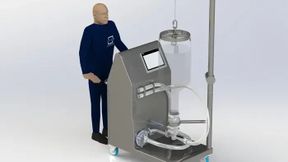
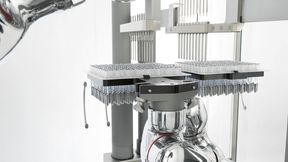
Automated viscometry systems can address these requirements - from vacuum-based waste handling to solvent-resistant materials, flexible rinsing strategies and modular serviceability. Which system properties are relevant for which application, and how to control the critical success factors in practice, is covered in detail in the technical guide.
All practical details, system comparisons and method recommendations are available in the new technical guide from SI Analytics: