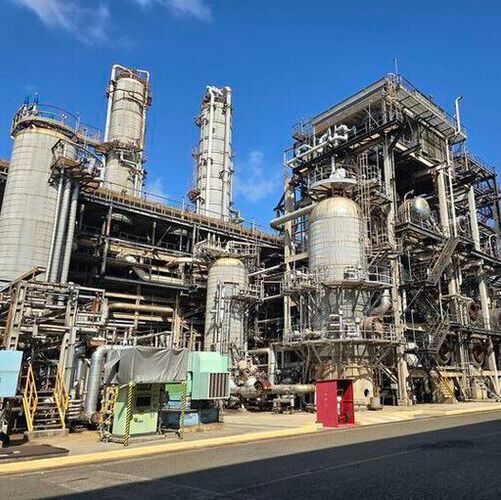
PROCESS Worldwide brings to you the ‘Top 10 plant engineering projects of September 2024’ from all over the world. Right from Adnoc deploying AI-based process optimization technology at a unit to developing the world's largest carbon negative ultra-green hydrogen plant, find out all the projects making headlines here.
At a glance: Plant engineering projects from across the globe.
(Source: serperm73 - stock.adobe.com)
Lummus Technology Chosen for Kazakhstan’s First Polyethylene Plant
Lummus Technology has announced a contract award from Silleno for an ethylene unit, which will be part of the first polyethylene plant to be built in the Republic of Kazakhstan.
(Source: Pixabay)
September 02 – Lummus Technology has recently announced a contract award from Silleno for an ethylene unit, which will be part of the first polyethylene plant to be built in the Republic of Kazakhstan. Strategically located at the National Industrial Petrochemical Technopark in the Kazakhstan’s Atyrau Region, the plant will play a pivotal role in Kazakhstan’s economy by increasing gross domestic product, creating jobs during the construction and operations phases, and generating other indirect business opportunities for the local economy.
“It is an honor to collaborate with Silleno and be part of such an important petrochemical project that is a major investment and growth driver for the Republic of Kazakhstan,” said Leon de Bruyn, President and Chief Executive Officer, Lummus Technology. “We have executed several projects recently in Kazakhstan, so this builds on our experience and growth in the country. It also gives us the unique opportunity to provide our leading technology to help advance Kazakhstan’s energy and petrochemicals industry.”
Lummus’ ethylene technology will be critical in producing polyethylene, a process that will consist of two stages: 1) converting ethane to ethylene and 2) producing polyethylene directly from ethylene.
Lummus’ scope includes the technology license, basic engineering and training for the new plant, which will convert ethane from the Tengiz oil field into 1.3 million tons per year of ethylene. The ethylene unit will also leverage Lummus’ Short Residence Time (SRT) heaters and incorporate Lummus’ olefins recovery system. These heaters will optimize product yield and the recovery system reduces equipment by up to 25 percent compared to conventional systems, which will increase energy efficiency, lower capital costs and decrease CO2 emissions.
Motiva Selects Honeywell Technologies for New World-Scale Aromatics Unit
Motiva has advanced its aromatics project by executing a license for Honeywell UOP's aromatics technologies and is now undertaking engineering and design work.
(Source: Pixabay)
September 04 – Motiva has advanced its aromatics project by executing a license for HoneywellHoneywell UOP's aromatics technologies and is now undertaking engineering and design work. The project, planned for construction at Motiva's Manufacturing Complex in Port Arthur, Texas, will develop a world-scale aromatics unit to produce benzene and paraxylene, which are key building blocks for medical supplies, fabrics, and many other products common to daily life.
"The demand growth for petrochemical feedstocks is expected to continue to outpace that of gasoline and diesel, and assessing opportunities to expand our product portfolio is essential for addressing the world's future energy and petrochemical needs," said Jeff Rinker, Motiva President and CEO. "I'm pleased to announce that Motiva has begun the capital work necessary to expand our chemical footprint to enable Motiva to be an integral part of this growing market."
Rinker added that a final investment decision on the aromatics project will be dependent on final economics and regulatory approvals.
Evonik Inaugurates New Plant for Cosmetic Emollients in Germany
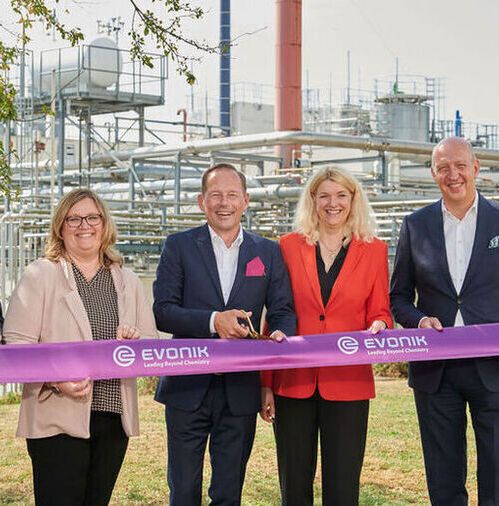
Evonik has officially inaugurated its new production plant for cosmetic emollients at its site in Steinau, Germany.
(Source: Evonik)
September 06 – Evonik has officially inaugurated its new production plant for cosmetic emollients at its site in Steinau, Germany. These esters are manufactured using an enzymatic process. The double-digit million-euro plant will significantly increase Evonik’s production capacity which will cater to the growing customer demand for sustainable cosmetic emollients. This investment will help reduce the climate footprint of Evonik and the cosmetic formulations of its customers.
Evonik leverages its biotechnology platform to produce emollients via enzymatic esterification. This helps to boost the biosolutions portfolio of the company’s life sciences division, Nutrition & Care, while enabling the beauty and personal care industry to create solutions with a superior sustainability profile.
“Emollients are no longer just about performance, they also need to have a robust sustainability profile. This investment helps us lower our footprint, while supporting the beauty industry in its transformation – meeting the demand for more responsible, eco-friendly solutions,” said Johann-Caspar Gammelin, president of the Nutrition & Care division at Evonik.
Emollients are cosmetic oils and waxes that make up 10 to 25 percent of cosmetic emulsions. However, currently emollients account for 70 to 80 percent of a product’s climate footprint. Switching from a chemical to an enzymatic esterification process when manufacturing emollients can reduce the climate footprint by more than 60 percent. All Care Solutions production sites are powered exclusively by renewable energy. Therefore, the climate footprint at this new production plant in Steinau drops to virtually zero from a gate-to-gate perspective.
Date: 08.12.2025
Naturally, we always handle your personal data responsibly. Any personal data we receive from you is processed in accordance with applicable data protection legislation. For detailed information please see our privacy policy.
Consent to the use of data for promotional purposes
I hereby consent to Vogel Communications Group GmbH & Co. KG, Max-Planck-Str. 7-9, 97082 Würzburg including any affiliated companies according to §§ 15 et seq. AktG (hereafter: Vogel Communications Group) using my e-mail address to send editorial newsletters. A list of all affiliated companies can be found here
Newsletter content may include all products and services of any companies mentioned above, including for example specialist journals and books, events and fairs as well as event-related products and services, print and digital media offers and services such as additional (editorial) newsletters, raffles, lead campaigns, market research both online and offline, specialist webportals and e-learning offers. In case my personal telephone number has also been collected, it may be used for offers of aforementioned products, for services of the companies mentioned above, and market research purposes.
Additionally, my consent also includes the processing of my email address and telephone number for data matching for marketing purposes with select advertising partners such as LinkedIn, Google, and Meta. For this, Vogel Communications Group may transmit said data in hashed form to the advertising partners who then use said data to determine whether I am also a member of the mentioned advertising partner portals. Vogel Communications Group uses this feature for the purposes of re-targeting (up-selling, cross-selling, and customer loyalty), generating so-called look-alike audiences for acquisition of new customers, and as basis for exclusion for on-going advertising campaigns. Further information can be found in section “data matching for marketing purposes”.
In case I access protected data on Internet portals of Vogel Communications Group including any affiliated companies according to §§ 15 et seq. AktG, I need to provide further data in order to register for the access to such content. In return for this free access to editorial content, my data may be used in accordance with this consent for the purposes stated here. This does not apply to data matching for marketing purposes.
Right of revocation
I understand that I can revoke my consent at will. My revocation does not change the lawfulness of data processing that was conducted based on my consent leading up to my revocation. One option to declare my revocation is to use the contact form found at https://contact.vogel.de. In case I no longer wish to receive certain newsletters, I have subscribed to, I can also click on the unsubscribe link included at the end of a newsletter. Further information regarding my right of revocation and the implementation of it as well as the consequences of my revocation can be found in the data protection declaration, section editorial newsletter.
Esters manufactured by enzyme catalysis have been part of Evonik's portfolio for almost 25 years. Produced from vegetable oils, they act as emollients in skin care products, making the skin soft and supple. Up to now, they have been produced at Evonik's sites in Duisburg, Germany and Shanghai, China. Evonik’s Steinau site is a stronghold for innovation for the cosmetics industry, as well as biodegradable specialty surfactants and active substances. Steinau manufactures a diverse portfolio of over 200 products.
Adnoc Deploys AI-Based Process Optimization Technology at Unit
Neuron 5 was developed by Adnoc and has been initially deployed at Adnoc Onshore’s Northeast Bab field and Adnoc Gas’ Taweelah gas compression plant across hundreds of pieces of equipment.
(Source: Adnoc)
September 09 – Adnoc has recently announced the deployment of an industry leading artificial intelligence (AI)-enabled process optimization technology. Neuron 5 was developed by Adnoc and has been initially deployed at Adnoc Onshore’s Northeast Bab (NEB) field and Adnoc Gas’ Taweelah gas compression plant across hundreds of pieces of equipment.
The innovative solution autonomously monitors performance of critical equipment, enabling process optimization and preventative maintenance, reducing operational downtime, boosting efficiency and reducing the need for time-consuming manual inspections. Neuron 5 uses advanced AI models and deep learning algorithms to predict maintenance needs and monitor equipment performance by interpreting data, such as pressure, temperature and vibration, received from sensors on critical equipment.
Following the successful initial deployment, Neuron 5 will now be rolled out in all Adnoc facilities across thousands of critical pieces of equipment essential for production, including compressors, valves and generators.
Abdulmunim Saif Al Kindy, Adnoc Upstream Executive Director, said: “Adnoc is placing AI at the heart of its operations and leveraging industry leading advanced technologies to help responsibly meet the world’s growing energy demand. The development and deployment of Neuron 5 across our upstream and downstream facilities demonstrates this strategy in action and highlights our continued progress towards our vision to become the world’s most AI-enabled energy company.”
Adnoc Gas has initially deployed Neuron 5 at the Taweelah plant, supporting its efforts to provide a reliable, uninterrupted gas supply to major industries in Abu Dhabi and the Northern Emirates.
The pilot phase of Neuron 5 indicated that the technology has the potential to cut the number of unplanned shutdowns by 50 % and enhance planned maintenance intervals across operations by 20 %, while freeing AdnoC operators for more productive activities. Neuron 5 was developed by Adnoc’s Thamama Excellence Center, AIQ and Aveva.
KBR Technology Chosen for China’s Largest SDA Unit
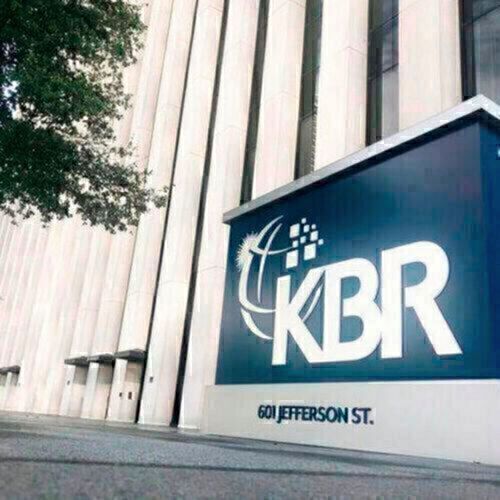
Under the terms of the contract, KBR will provide technology licensing and proprietary engineering design to ZPC, the operator of China's largest refinery.
(Source: KBR)
September 10 – KBR has been awarded a contract for its Rose supercritical Solvent De-Asphalting (SDA) technology from Zhejiang Petroleum & Chemical Co. (ZPC), a subsidiary of Rongsheng Petrochemical Co. in China. Under the terms of the contract, KBR will provide technology licensing and proprietary engineering design to ZPC, the operator of China's largest refinery.
"We are looking forward to working with ZPC on this unit, which will be the largest SDA unit in China deploying KBR's energy-efficient Rose process," said Jay Ibrahim, KBR President, Sustainable Technology Solutions. "Rose is an innovative supercritical extraction technology, globally recognized for its energy-efficient approach to bottom-of-the-barrel processing. This relatively simple process is designed for safe start-up and reliable performance, significantly improving the carbon footprint for refiners. Our solution is intended to enable ZPC to upgrade its residue conversion for higher profitability and operational sustainability."
KBR is a global leader in SDA technology with the largest installed base and has been involved in the licensing, design, engineering, and commissioning of 72 Rose units worldwide with a combined licensed capacity of nearly 1.66 million barrels per day. In 2024, KBR is celeb
rating 100 years of offering refining and clean fuel solutions.
Hycamite Inaugurates Europe’s Largest Methane-Splitting Plant
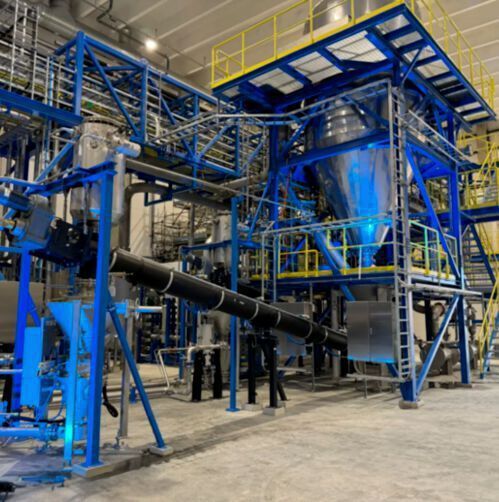
Once fully operational, the nominal capacity of Hycamite’s Customer Sample Facility will reach 2,000 tonnes of low-carbon hydrogen and 6,000 tonnes of high-quality carbon annually.
(Source: Hycamite TCD Technologies)
September 11 – Hycamite TCD Technologies, a leader in emissions-free methane-splitting technology, opens Europe’s largest methane-splitting plant in Kokkola, Finland. Once fully operational, the nominal capacity of Hycamite’s Customer Sample Facility (CSF) will reach 2,000 tonnes of low-carbon hydrogen and 6,000 tonnes of high-quality carbon annually.
The decarbonization capacity of the CSF can be up to 18,000 tonnes of carbon dioxide (CO2) per year when liquefied natural gas (LNG) is used. With biomethane, the produced hydrogen is carbon negative.
“Hycamite’s CSF demonstrates the viability of the new methane-splitting technology. Hycamite will open several other methane-splitting plants in other parts of the world in the future,” says Hycamite CEO Laura Rahikka.
Hycamite’s technology decomposes large volumes of methane into its component elements, hydrogen and carbon while avoiding the release of greenhouse gases into the atmosphere. Clean hydrogen can be used as either an industrial raw material or fuel. The company’s technology requires only 13 % of the energy needed to produce hydrogen via electrolysis. Using a methane feedstock, whether from geologic natural gas, biomethane or synthetic natural gas, allows production to scale up rapidly.
The new CSF is near the Hycamite headquarters and the small test facility in Kokkola Industrial Park (KIP). KIP is northern Europe’s largest ecosystem of the inorganic chemical industry, where several companies leading in the chemical and metal processing industries operate.
Hycamite uses innovative carbon capture, utilization and storage (CCUS) technology to capture the carbon in a solid form and provide it to customers as graphite and other high-value industrial-quality products. Hycamite offers a diverse and environmentally friendly carbon product portfolio, including battery-grade graphite. They provide scalable plants for large volumes and offer custom solutions tailored to specific needs, helping clients reduce emissions. Furthermore, Hycamite’s catalysts are sustainable as they are recyclable and can be produced from industrial side streams.
BP, Iberdrola to Develop Largest Green Hydrogen Plant in Spain
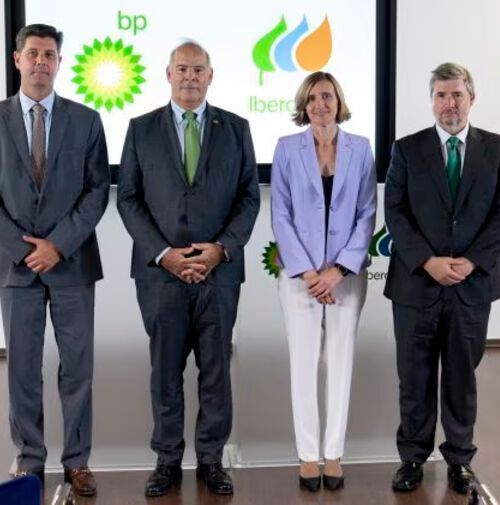
BP and Iberdrola have given the green light for construction of a 25 MW green hydrogen project at BP's Castellón refinery which is expected to be operational in the second half of 2026.
(Source: BP)
September 13 – BP and Iberdrola have given the green light for construction of a 25 MW green hydrogen project at BP's Castellón refinery which is expected to be operational in the second half of 2026. This is the first hydrogen project jointly undertaken by BP and Iberdrola through Castellón Green Hydrogen, a joint venture equally owned by both companies. The project was presented at an official event to publicly celebrate the signing in July 2024 of the final investment decision between BP and Iberdrola.
This initiative, which includes the participation of the Technology Institute of Energy (ITE), has been awarded funding of 15 million euros from the Innovative Value Chain and Renewable Hydrogen Knowledge call of the Spanish Recovery, Transformation, and Resilience Plan, with funding allocated by Nextgeneration EU of the European Union.
“BP’s first investment decision for an industrial scale project is an important step forward for our hydrogen business. We are focused on value, progressing only the best projects in our portfolio that can create additional value through integration and fully meet our investment hurdles. This also demonstrates the strength of partners combining their strengths to advance a nascent energy source that has the potential to play a meaningful role in decarbonizing the industry. Castellón refinery can lead the way with its transformation,” shares Felipe Arbelaez, BP’s senior vice president, hydrogen & CCS.
Millán Garcia-Tola, Global Director of Hydrogen in Iberdrola said, “This partnership with BP and our project is another step in Iberdrola's firm and real commitment to promote green hydrogen as a key vector for industrial decarbonization. The plant will convert 200 GWh/yr of Iberdrola’s renewable energy into green hydrogen that will contribute to BP’s decarbonization strategy, in another example of close collaboration between both companies, reliable partners that share values as long term decarbonization commitment. Iberdrola will apply all the experience of its existing green hydrogen plants to optimize and accelerate the development of this project”.
“This project marks a milestone in our strategy and reflects the importance of collaboration, both with other companies that share our vision, such as Iberdrola, and in the public-private sphere. In this way, we not only advance the transformation of our infrastructure in Castellón, but also aim to strengthen the economic fabric and industrial capacity of the entire Valencia region,” said Olvido Moraleda, President of BP Energía España.
The 25 MW electrolyzer will be powered by renewable electricity through a power purchase agreement (PPA) signed with Iberdrola that will supply 200GWh/year coming from Iberdrola’s photovoltaic and wind projects. The electrolyzer will include 5 modules of 5 MW containerized proton exchange membrane (PEM) technology, which will be supplied by Plug Power, a leading manufacturer of green hydrogen solutions. The green hydrogen produced by the electrolysis of water powered by renewable electricity will comply with European requirements to produce green hydrogen (Renewable Fuels of Non-Biological Origin, RFNBO) and will support the transition of BP’s Castellón refinery into an integrated energy hub.
It’s expected around 2,800 annual tons of green hydrogen could substitute part of the grey hydrogen currently used by the refinery – currently produced from natural gas – and as such is expected to result in avoiding the emission of 23,000 tons of CO2 per year, equivalent to the emissions of 5,000 cars over the same period. This plant could create up to 500 new direct jobs during its construction.
SK Energy Completes South Korea’s First SAF Production Line
Panoramic view of SK Energy’s facility for continuous SAF production via co-processing, using bio-feedstocks delivered through newly invested dedicated tanks and pipelines.
(Source: SK Innovation)
September 17 – On September 11, SK Energy, the largest refiner in South Korea and a subsidiary of SK Innovation, announced the completion of the nation’s first dedicated Sustainable Aviation Fuel (SAF) production line. The new facility, which leverages advanced co-processing technology, is set to commence commercial production next month. This marks a significant milestone in the company’s ongoing efforts to lead the rapidly expanding SAF market, a burgeoning field within the refining industry.
SAF is a type of aviation biofuel with similar chemical properties to jet fuels but a smaller carbon footprint. The co-processing method-based SAF production line integrates bio-feedstocks with traditional oil production processes, allowing simultaneous production of petroleum and low-carbon products. A dedicated five-kilometer pipeline is installed to feed bio-feedstocks continuously into the oil product manufacturing process, enabling continuous SAF production.
Once commercial production starts, SK Energy will complete a value chain encompassing raw material procurement, production, and sales for the SAF business. Last year, SK Trading International, another SK Innovation subsidiary, invested in waste-based raw material suppliers to ensure a consistent supply of bio-feedstocks. Furthermore, SK Energy is collaborating with Infinium to develop e-fuel technologies that utilize green hydrogen and carbon dioxide.
In June, SK Energy achieved multiple critical certifications to support SAF production and sales, including ISCC Corsia, which officially recognizes SAF production for the international aviation sector. The company also secured ISCC EU certification under the European Union’s Renewable Energy Directive (RED) and ISCC Plus certification for environmentally friendly products in the voluntary market.
Starting early next year, SK Energy will supply SAF to Korean Air passenger flights, a pivotal move that aligns with the company’s broader strategy for market expansion. This initiative follows a recent event on August 30 at Incheon International Airport where SK Energy, the Ministry of Trade, Industry and Energy, the Ministry of Land, Infrastructure and Transport, Incheon International Airport Corporation, and Korean Air celebrated the commercial operation of domestically produced SAF.
The global SAF market is poised for tremendous growth. According to the International Air Transport Association (IATA), global SAF demand is projected to increase nearly 70-fold, from 240,000 tons in 2022 to 18.35 million tons by 2030. Domestically, the Korean Government plans to mandate SAF blending in all international flights departing from Korea starting in 2027.
“As the first company in Korea to achieve continuous SAF production through co-processing, we are well-prepared to meet the upcoming mandatory SAF blending requirements,” said Hong Kwang-pyo, Head of Strategy Division at SK Energy. “We will continue to monitor both domestic and international SAF policies and market conditions closely to explore further expansion of our SAF production capabilities.”
World's Largest Carbon Negative Ultra-Green Hydrogen Plant Coming Soon
Phase 1 of this project is the largest carbon negative renewable natural gas facility globally. Phase 2 is the world's largest carbon negative ultra-green hydrogen plant.
(Source: Pcess609 - stock.adobe.com)
September 25 – Woodland Biofuels has recently announced a planned 1.35 billion-dollar investment at the Port of South Louisiana to establish the world's largest carbon negative renewable natural gas plant / ultra-green hydrogen facility. Phase 1 of this project is the largest carbon negative renewable natural gas facility globally. Phase 2 is the world's largest carbon negative ultra-green hydrogen plant. The Toronto-based company will utilize waste biomass to produce sustainable biofuel used in transportation, heating and electricity generation.
In Phase 1 alone the company expects to create approximately 500 construction jobs and 110 high-paying, permanent, direct new jobs. Louisiana Economic Development estimates that the project will result in 259 indirect new jobs for a total of 869 jobs, 369 of which are
permanent.
The new facility will be located at the Globalplex multimodal facility at the Port of South Louisiana. The company expects to permanently remove hundreds of thousands of tons of carbon dioxide from the atmosphere annually and store it safely underground. Phase 1 is expected to permanently remove 210,000 tonnes of CO2 annually. Phase 2 will remove approximately 660,000 tonnes of CO2 annually. Ultimately, the project is expected to be one of the largest carbon dioxide removal projects globally – permanently removing millions of tonnes of CO2 from the ecosystem.
"Woodland is thrilled to announce that we plan to build, right here at the Port of South Louisiana, the world's largest carbon negative RNG facility, followed by the world's largest carbon negative ultra-green hydrogen plant. Our sustainable biofuel plant will be an economic driver for St. John Parish and beyond," Woodland Biofuels CEO Greg Nuttall said. "We look forward to establishing deep ties with the local community, drawing on the existing world-class workforce and utilizing Louisiana's exceptional infrastructure to execute on our project."
Commercial operations for the first phase are projected to start in 2028.
"With a multigenerational skilled workforce and abundant natural resources, there is no place in the world better positioned to help energy companies grow and thrive," Secretary of Economic Development Susan Bourgeois said. "Woodland Biofuels' project would bring high-paying jobs to the great people of St. John the Baptist Parish for years to come. The state looks forward to working with the company to bring this project to completion."
"Port of South Louisiana is the second ranked port in the nation for energy transfer," Port of South Louisiana CEO Paul Matthews said. "This significant investment by Woodland Biofuels to construct the world's largest carbon negative renewable natural gas plant and a large-scale green hydrogen facility at our Globalplex Intermodal Terminal proves that Port SL and the state of Louisiana are leading the way in diversifying our energy industry, which will result in the creation of hundreds of high-paying jobs for River Region families."
To support the project in Reserve, LED offered Woodland Biofuels a competitive incentives package that the Company values at more than 250 million dollars, including performance-based grants, other economic development programs for infrastructure improvements and the comprehensive workforce development solutions of LED Faststart. The company is expected to participate in the state's Quality Jobs and Industrial Tax Exemption programs.
Italy’s First Carbon Capture and Storage Plant Completed
This project is the first carbon capture plant in Italy and, by supporting the phase 1 of Ravenna CCS, it represents a milestone to consolidate the complete CCS value chain.
(Source: Pixabay)
September 26 – Maire, through its subsidiaries Nextchem (Sustainable Technology Solutions) and KT (Integrated E&C Solutions), acted as technology integrator and completed the full Engineering, Procurement and Construction works for a carbon plant at the Eni natural gas treatment plant of Casalborsetti, near Ravenna, Italy.
The facility, which has just started up its operations, is designed to separate, purify and compress a CO2 emissions volume estimated at approximately 25,000 tons per year. The project is delivering a reduction of over 90 % of CO₂ emissions, which would otherwise be released into the atmosphere. Operating at carbon concentration lower than 3 % and at atmospheric pressure, making the facility the world’s first industrial-scale project with such high levels of carbon capture efficiency.
This project is the first carbon capture plant in Italy and, by supporting the phase 1 of Ravenna CCS, it represents a milestone to consolidate the complete CCS value chain, from capture to sequestration, which is a decarbonization solution of growing importance playing a critical role in environmental sustainability.
As a technology provider, Nextchem has developed its own innovative process design to integrate a third-party technology, effectively enabling CO2 capture from emissions gasses with high efficiency and low power consumption even at extremely low concentrations. With this project, Nextchem strengthens its track record in CO₂ capture solutions, which are now part of the NX Decarb technology aiming at enhancing the efficiency of carbon capture by optimizing heat management and energy use.
Alessandro Bernini, CEO of Maire, said: “As a Group, we are dedicated to the development of new high-performance solutions which help decarbonize the hard-to-abate industries. This project is a recognition of our technology offering for prominent market players and our role in boosting the Italian industrial supply chain.”




:quality(80)/p7i.vogel.de/wcms/54/f4/54f4b4e2a86b203e0dfd84221602bdb5/0130367283v2.jpeg "Anybotics' Anymal robot combines depth cameras, LiDAR, thermal imaging, acoustic sensors, and gas detectors into a single inspection round. (Source: Anybotics)")
:quality(80)/p7i.vogel.de/wcms/e9/64/e964996410967c124c2cf01a8623068e/0130285341v1.jpeg "Geht unter die Oberfläche: Die Offshore-Ölförderung erfordert hochenergetische Pumpen – doch diese sind im Wesentlichen eine Black Box. Bisher zumindest. (Source: Kistler Group)")
:quality(80)/p7i.vogel.de/wcms/54/ae/54aece5dff672ce1651470eecd9f2589/0130138090v2.jpeg "The new Ionchromatograph “Nexera IC“ (Source: Shimadzu)")
:quality(80)/p7i.vogel.de/wcms/49/5c/495c651fabd24a437c98bde6a3d71ecc/0130060419v2.jpeg "Enfinium has successfully piloted Wasteer’s groundbreaking visual AI technology at its Ferrybridge 2 facility in West Yorkshire and Parc Adfer facility in North Wales. (Source: Chris Parkes Photographer Ltd.)")
:quality(80)/p7i.vogel.de/wcms/1e/15/1e15b0e20cf5ede83e0749260dfda733/0130465044v2.jpeg "Energy X has recently announced the successful commissioning of a first-of-its-kind, U.S.-based lithium production facility at Project Lonestar, marking a major milestone toward commercial-scale domestic lithium production. (Source: Pixabay)")
:quality(80)/p7i.vogel.de/wcms/36/36/36369e6e59d4c660893cc04a4d257cfc/0130465035v2.jpeg "Wacker has successfully completed the second expansion phase at its production site in Panagarh, India. In addition to silicone rubber, the site now also operates a production complex (left) for silicone emulsions. (Source: Wacker)")
:quality(80)/p7i.vogel.de/wcms/1f/1e/1f1eba3731af22e1d9946e2897f134da/0130464799v2.jpeg "Aerial view of the BASF production site in Zhanjiang, China. (Source: BASF )")
:quality(80)/p7i.vogel.de/wcms/64/bb/64bb4812390b6491ce0bd4fe53597086/0130333812v2.jpeg "The solar power plant produces 30 GWh per year of renewable electricity, which is self-consumed by Holcim’s industrial facilities, making it the largest floating solar power plant in Europe dedicated to self-consumption. (Source: Pixabay)")
:quality(80)/p7i.vogel.de/wcms/41/c9/41c96e0244221ad38daa73bdd8231477/0130477173v2.jpeg "The „ORBITA‑L“-system is designed for filling and capping non‑injectable liquid products. (Source: Marchesini)")
:quality(80)/p7i.vogel.de/wcms/7a/50/7a501f6d8f87a4524dc3aaceb04eacb4/0130333829v2.jpeg "The Clear Lake facility represents Clariant's first U.S. manufacturing site dedicated to producing pharmaceutical-grade PEG excipients, marking a pivotal milestone in the company's healthcare growth strategy. (Source: Clariant)")
:quality(80)/p7i.vogel.de/wcms/26/12/261210e5920899e5c35c4f905d3be8bd/0129399814v2.jpeg "Powders used in DPI formulations are often highly potent and administered in very low doses. (Source: Ima)")
:quality(80)/p7i.vogel.de/wcms/6b/3f/6b3f057c83c494e4732337d870d52b21/0130006927v2.jpeg "Lonza will realize upfront cash proceeds of 2.2 billion dollars and retain a 40 % stake in the business, with additional preferential participation in its future exit. (Source: Lonza)")
:quality(80)/p7i.vogel.de/wcms/df/35/df3526a6f7aba41fdd2bb2051954e0d8/0130163620v2.jpeg "The SPA, valued at more than 3 billion dollars, is one of the largest binding long-term green ammonia off-take agreements globally. (Source: Pixabay)")
:quality(80)/p7i.vogel.de/wcms/af/73/af7394d9f8900024c5ee7fca459c4eeb/0130080328v2.jpeg "Axens has signed a MOU with Airbus to strengthen their cooperation in the development and deployment of SAF, a key pillar for decarbonizing the aviation sector. (Source: Pixabay)")
:quality(80)/p7i.vogel.de/wcms/0e/19/0e19f0cf0379c3af4c2fe02629db63f1/0130079229v2.jpeg "Thyssenkrupp Uhde has been selected by CSBP to deliver its patented Envinox technology for two nitric acid plants at CSBP’s Kwinana site in Western Australia. (Source: Thyssenkrupp Uhde)")
:quality(80)/p7i.vogel.de/wcms/a6/84/a68477d4ef879cc9cedeae332ca57c49/0129893677v2.jpeg "Siemens and Caphenia sign the partnership agreement. From left to right: Nicky Ahnert, Jürgen Giegerich, Frank Knauf (all Siemens), Dr. Mark Misselhorn, Dr. Andreas Waibel (both Caphenia) (Source: Siemens)")
:quality(80)/p7i.vogel.de/wcms/1c/39/1c39433f4bb4de2e5e6c5311c3236d09/0130110254v2.jpeg "The new pumps of the Omega type series have been designed for handling water and fluids with a low solids content efficiently. (Source: KSB)")
:quality(80)/p7i.vogel.de/wcms/be/e1/bee13b8d51a419b9b8f0685e2b9d47bf/0128917673v1.jpeg "The Centerwave 6000 measures pipes from 32 to 1,600 mm. (Source: Maag Group)")
:quality(80)/p7i.vogel.de/wcms/51/7a/517a4e83c5827663b4839f5ddb98f434/0128872953v1.jpeg "The Tigron in SIL version can be flexibly configured for different safety requirements. (Source: Auma)")
:quality(80)/p7i.vogel.de/wcms/60/ef/60efa975d1dd123c1afbfb6ccc060461/0130263955v2.jpeg "Aquaclean (Source: Oko-tech)")
:quality(80)/p7i.vogel.de/wcms/07/62/0762f20b1821ee2724c97989374d6397/0130257651v2.jpeg "Oleksandr Sadchykov in front of the water treatment unit (Source: Grundfos)")
:quality(80)/p7i.vogel.de/wcms/98/98/989863664c7b65e87caf74a08239d487/0130167217v2.jpeg "Keller 26KyX Level Probe (Source: © Keller Pressure)")
:quality(80)/p7i.vogel.de/wcms/64/4e/644e22b71e8d35a63f051f781eb13886/0130163451v2.jpeg "Vega will present level and pressure measurement technology for the water industry at Ifat 2026. (Source: Vega)")
:quality(80)/p7i.vogel.de/wcms/6b/cc/6bcc3d26e1c7c74d90a10bc3ca296ae1/0128362351v2.jpeg "A look into Bayer's new tablet production, Solida 1, during construction: The robots and lift columns for material handling are being installed. (Source: Bayer)")
:quality(80)/p7i.vogel.de/wcms/24/c8/24c84ab6b1bcd24468a87820a07a85aa/0128194707v2.jpeg "Ajax Equipment has supplied Binding Solutions with a feed system comprising buffer hopper, screw feeder and agitated screw feeder for a pilot plant handling iron ore and additives. (Source: Ajax Equipment )")
:quality(80)/p7i.vogel.de/wcms/1d/3e/1d3e2788eb37c1e974f36337c8d33cb5/0128191010v2.jpeg "Ajax Equipment has supplied IGI Systems with a stainless-steel conical hopper with gas purge capability, as part of a prototype Sublimation System for a low-pressure chemical vapour deposition application. (Source: Ajax Equipment)")
:quality(80)/p7i.vogel.de/wcms/19/76/1976928d7d0a2ed7c1eeba7ade8552c8/0126365603v1.jpeg "Detail of Valvedesign: It has an aktiv amd passive part (Bild: Italvacuum)")
:quality(80)/p7i.vogel.de/wcms/0c/a1/0ca135e0486c9af90a0552aea85de88c/0130439525v2.jpeg "Qatar Energy expects the damage to its Ras Laffan Industrial City caused by missile strikes, which occurred on Wednesday 18 March 2026, and in the early hours of Thursday 19 March 2026, to cost about 20 billion dollars a year in lost revenue. (Source: Pixabay)")
:quality(80)/p7i.vogel.de/wcms/d0/f7/d0f7d560dfce37c8371442d5b6120e3c/0130182478v1.jpeg "The Gelsenkirchen refinery primarily manufactures fuels for vehicles and aircraft, processing roughly 12 million tonnes of crude oil per year. (Source: BP)")
:quality(80)/p7i.vogel.de/wcms/7f/96/7f9628e43c99564fa6dfd8e76149425d/0130165852v2.jpeg "Pure titanium recycling process for chlor-alkali electrolysis cells. (Source: Asahi Kasei)")
:quality(80)/p7i.vogel.de/wcms/f8/29/f8298429c1638b949a6f76346f6709c7/0118701710v2.jpeg "Bosch Industrial Heat will be presenting sustainable steam and heat solutions for global industrial use at the Achema trade fair in Frankfurt, Germany. (Source: Bosch Industriekessel)")
:quality(80)/p7i.vogel.de/wcms/07/24/07242664ab2b1c7841c9d9d0a127670c/0116045959.jpeg "A look inside the GEA machine room. (Bild: Magnavale)")
:quality(80)/p7i.vogel.de/wcms/c9/79/c979a20b32395ddfa93fe7ead90578a0/0108386061.jpeg "Production residues, lime, salt and suspended solids quickly clog the pipes. (Source:©Tanakorn - stock.adobe.com)")
:quality(80)/p7i.vogel.de/wcms/9e/5c/9e5c92d942ed046a27562d6e3d730c92/0103483548.jpeg "It is almost ten metres high and extends over three floors: the world's first multiple dividing wall column is located in the new technical centre at the University of Ulm. (Bild: Eberhardt, kiz Universität Ulm)")
:quality(80)/p7i.vogel.de/wcms/7c/77/7c77e24fdcc9e1511e8e711eff161e28/0130175489v2.jpeg "The milestone confirms the fast pace of development of Eni’s deep water gas projects offshore East Kalimantan. (Source: Unsplash )")
:quality(80)/p7i.vogel.de/wcms/b3/2f/b32fb9f5aa54e9cb6c92e4b6c8665263/0130163018v2.jpeg "The decision to take emergency collective action was made following an extraordinary meeting of IEA Member governments, convened by the IEA Executive Director to assess market conditions amid the conflict in the Middle East and consider the options to address supply disruptions. (Source: © Sashkin - stock.adobe.com)")
:quality(80)/p7i.vogel.de/wcms/85/d2/85d2cb02c4ae45a99454b5405b0f2489/0130149909v2.jpeg "IEA Executive Director Fatih Birol issued a statement on the meeting of G7 Energy Ministers at its IEA headquarters in Paris. (Source: © Marko - stock.adobe.com)")
:quality(80)/p7i.vogel.de/wcms/a8/4e/a84e8039a90a5cf4751d01ebcf6ba1a9/0127510172v2.jpeg "After six years, Achemasia, the international trade fair and innovation forum for sustainable chemical production, has returned with renewed vigor, bringing together global expertise, Chinese innovation, and a shared commitment to a greener industrial future—according to the organizers of the fair. (Source:PROCESS China)")
:quality(80)/p7i.vogel.de/wcms/17/c7/17c703445f134eb3d7ecc7918dda2762/0124596096v2.jpeg "Achema Middle East will launch in Saudi Arabia in 2026. (Bild: Dechema/ Hannibal)")
:quality(80)/p7i.vogel.de/wcms/2a/2c/2a2cffc07f51019065387cd63241b5ce/0119463370v1.jpeg "The Injecta 36 fills and seals RTU (Ready-to-Use) syringes at high speed. The image shows the robotic arm. (Source: IMA)")
:quality(80)/p7i.vogel.de/wcms/b1/7e/b17ea8c62ccafad1d1fb072d6199bbd6/0118578446.jpeg "“Star in the ring”: Vegapuls 6X radar level sensors are the solution of choice for Renolit for many applications on the way to the perfect plastic product. (Source: © MR Design - stock.adobe.com; Vega)")
:quality(80)/p7i.vogel.de/wcms/09/e3/09e378194b496921d2a267a6752322eb/0130333473v2.jpeg "Under the terms of the contract, KBR will provide contract management, project management and supporting technical services throughout the EPC phases of the project. (Source: KBR)")
:quality(80)/p7i.vogel.de/wcms/77/9d/779db435e7f9d79bafe16101008a9cfa/0130263548v2.jpeg "The Kingdom of Saudi Arabia, the UAE and Turkey are three core countries in the region that are actively incorporating the plastics circular economy with the assistance of the chemical recycling technology. (Source: © Anastasiia - stock.adobe.com)")
:fill(fff,0)/p7i.vogel.de/companies/61/f9/61f9439b7cbe4/logo-edl.png "logo-edl (EDL Anlagenbau Gesellschaft mbH)")
:fill(fff,0)/p7i.vogel.de/companies/66/9f/669f700d3b118/cac-2023-poslogo-idea-ahead.png "cac-2023-poslogo-idea-ahead (CAC ENGINEERING GMBH)")
:fill(fff,0)/images.vogel.de/vogelonline/companyimg/103000/103097/65.jpg "Pörner Gruppe mit Rand.jpg ()")





:quality(80)/p7i.vogel.de/wcms/5a/9b/5a9b35f4e65032393b47f46c3c58c4e8/0126548983v2.jpeg "At a glance: Plant engineering projects from across the globe. (Source: © Prasanth - stock.adobe.com)")
:quality(80)/p7i.vogel.de/wcms/9f/bc/9fbcff62c6ca8d6b26e74aa896df834b/0124467383v2.jpeg "At a glance: Plant engineering projects from across the globe. (Source: Pixabay)")