PROCESS Worldwide brings to you the ‘Top 10 plant engineering projects of March 2026’ from all over the world. Right from Aramco commencing operations at one of the largest gas plants in the world to Trump announcing a 300-billion-dollar deal for the first new U.S. oil refinery in 50 years, find out all the projects making headlines here.
At a glance: Plant engineering projects from across the globe.
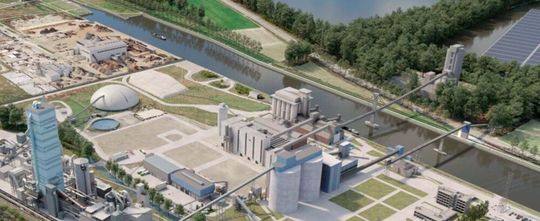
Air Liquide, Holcim to Develop Carbon Capture Project in Belgium
Under the agreement, Air Liquide will supply the necessary oxygen for Holcim’s oxyfuel-ready clinker production line, as well as provide its innovative and proprietary Cryocap Oxy technology to enable the capture of CO₂ emissions with high efficiency.
(Source: Air Liquide)
March 3 – Air Liquide and Holcim reach a new stage in their collaboration with the signing of an agreement to develop a state-of-the-art carbon capture solution for Holcim’s near-zero cement plant at Obourg in Belgium. Air Liquide has been pioneering industry decarbonization by developing carbon capture technologies and solutions enabling CCS (Carbon Capture and Storage). Today, this partnership demonstrates the Group’s ability to innovate and provide efficient solutions at scale, adapted to the needs of its customers.
Under the agreement, Air Liquide will supply the necessary oxygen for Holcim’s oxyfuel-ready clinker production line, as well as provide its innovative and proprietary Cryocap Oxy technology to enable the capture of CO₂ emissions with high efficiency. The captured CO₂ is then intended to be transported via pipelines to a CO₂ Export Hub, such as Antwerp@C, for subsequent shipment to permanent offshore storage in the North Sea.
This new strategic agreement, which aims to transform the Obourg plant into a leading large-scale near-zero cement production facility is a significant milestone for the project. The Final Investment Decision (FID) remains subject to additional effective partnerships across the value chain, as well as public sector support including for regulation of infrastructure and the provision of derisking mechanisms.
Aiming to capture 1.1 million tons of CO₂ per year, this collaboration is part of Go4Zero, Holcim's investment program that will enable the company to achieve carbon neutrality in Belgium by the end of the decade. The initiative would significantly contribute to the European Union 2050 net zero target.
Aramco Commences Operations at One of the Largest Gas Plants in the World
This will contribute to Aramco’s plan to increase sales gas production capacity by approximately 80 % by 2030, over 2021 production levels.
(Source: Aramco)
March 6 – Aramco has recently announced major progress in its ambitious gas expansion strategy, with the start of production at Jafurah, the Middle East’s largest unconventional gas field, and the commencement of operations at Tanajib Gas Plant, one of the largest gas plants in the world.
This will contribute to Aramco’s plan to increase sales gas production capacity by approximately 80 % by 2030, over 2021 production levels, reaching approximately 6 million barrels of oil equivalent per day of total gas and associated liquids production. This is expected to generate incremental operating cash flows of 12 billion dollars to 15 billion dollars in 2030, subject to future sales gas demand and liquids prices.
Nextchem Wins 485 Million Euro Contract for Three World-Scale Complexes in West Africa
March 10 – Maire has recently announced that Nextchem, through its subsidiaries Stamicarbon and KT Tech, has been awarded licensing, process design package (PDP) and critical equipment supply contracts for the development of three world-scale complexes, two of them dedicated to urea granules production and one integrating ammonia and methanol co-production, for a major client in West Africa. The contracts are all based on Nextchem’s proprietary technologies.
The overall package is worth 485 million euros, of which 10 million euros related to engineering activities already started will be recognized in the pre-FID phase, while the remaining part at Final Investment Decision.
The two large-scale nitrogen fertilizers plants will consist of four hydrogen units based on the NX Adwinhydrogen technology, four ammonia units based on the NX Stami Ammonia technology, four urea-melt trains and six urea-granulation units based on the NX Stami Urea technology for an overall urea production above 3 million tons per annum.
The NX Adwinhydrogen autothermal reforming (ATR) is a technology to efficiently produce syngas at the scale needed for downstream plants. Ammonia units will utilize the NX Stami Ammonia technology for efficient, reliable and flexible large-scale production. The NX Stami Urea technology is aimed at reducing steam consumption and improving energy efficiency while producing high-quality urea granules.
Date: 08.12.2025
Naturally, we always handle your personal data responsibly. Any personal data we receive from you is processed in accordance with applicable data protection legislation. For detailed information please see our privacy policy.
Consent to the use of data for promotional purposes
I hereby consent to Vogel Communications Group GmbH & Co. KG, Max-Planck-Str. 7-9, 97082 Würzburg including any affiliated companies according to §§ 15 et seq. AktG (hereafter: Vogel Communications Group) using my e-mail address to send editorial newsletters. A list of all affiliated companies can be found here
Newsletter content may include all products and services of any companies mentioned above, including for example specialist journals and books, events and fairs as well as event-related products and services, print and digital media offers and services such as additional (editorial) newsletters, raffles, lead campaigns, market research both online and offline, specialist webportals and e-learning offers. In case my personal telephone number has also been collected, it may be used for offers of aforementioned products, for services of the companies mentioned above, and market research purposes.
Additionally, my consent also includes the processing of my email address and telephone number for data matching for marketing purposes with select advertising partners such as LinkedIn, Google, and Meta. For this, Vogel Communications Group may transmit said data in hashed form to the advertising partners who then use said data to determine whether I am also a member of the mentioned advertising partner portals. Vogel Communications Group uses this feature for the purposes of re-targeting (up-selling, cross-selling, and customer loyalty), generating so-called look-alike audiences for acquisition of new customers, and as basis for exclusion for on-going advertising campaigns. Further information can be found in section “data matching for marketing purposes”.
In case I access protected data on Internet portals of Vogel Communications Group including any affiliated companies according to §§ 15 et seq. AktG, I need to provide further data in order to register for the access to such content. In return for this free access to editorial content, my data may be used in accordance with this consent for the purposes stated here. This does not apply to data matching for marketing purposes.
Right of revocation
I understand that I can revoke my consent at will. My revocation does not change the lawfulness of data processing that was conducted based on my consent leading up to my revocation. One option to declare my revocation is to use the contact form found at https://contact.vogel.de. In case I no longer wish to receive certain newsletters, I have subscribed to, I can also click on the unsubscribe link included at the end of a newsletter. Further information regarding my right of revocation and the implementation of it as well as the consequences of my revocation can be found in the data protection declaration, section editorial newsletter.
The third plant combines ammonia, for above 900 thousand tons per annum, and methanol, for above 600 thousand tons per annum production. One of the units will be designed to co-produce methanol and ammonia thanks to Nextchem’s ATR-based NX Adwin Combined technology. NX Adwin Combined is a large-scale high-pressure ATR technology for sequential/parallel methanol and ammonia production.
The NX Adwinhydrogen and the NX Adwin Combined technologies are both developed by Gascontec, Nextchem’s subsidiary dedicated to low-carbon hydrogen and methanol solutions.
Trump Announces 300 Billion Dollar Deal for First New U.S. Oil Refinery in 50 Years
Reliance Industries, one of India’s largest energy companies, will be investing in the new refinery at the Port of Brownsville in Texas, USA, according to Trump’s post.
(Source: Unsplash)
March 12 – US President Donald Trump has recently announced on social media that thecountry is opening the first new U.S. Oil Refinery in 50 years. Reliance Industries, one of India’s largest energy companies, will be investing in the new refinery at the Port of Brownsville in Texas, USA, according to Trump’s post. Calling it a historic 300-billion-dollar deal and the biggest in U.S. history, Trump mentions that it will be the cleanest refinery in the world.
“Today I am proud to announce that America First Refining is opening the FIRST new U.S. Oil Refinery in 50 YEARS in Brownsville, Texas. THIS IS A HISTORIC $300 BILLION DOLLAR DEAL — THE BIGGEST IN U.S. HISTORY, A MASSIVE WIN for American Workers, Energy, and the GREAT People of South Texas! Thank you to our partners in India, and their largest privately held Energy Company, Reliance, for this tremendous Investment,” Trump said in the post.
“A new Refinery at the Port of Brownsville, will fuel U.S. Markets, strengthen our National Security, boost American Energy production, deliver Billions of Dollars in Economic impact, and will be THE CLEANEST REFINERY IN THE WORLD,” Trump added.
Reliance has not yet made any formal announcements regarding the deal.
Enfinium Rolls Out AI Technology Across All its UK Energy-From-Waste Facilities
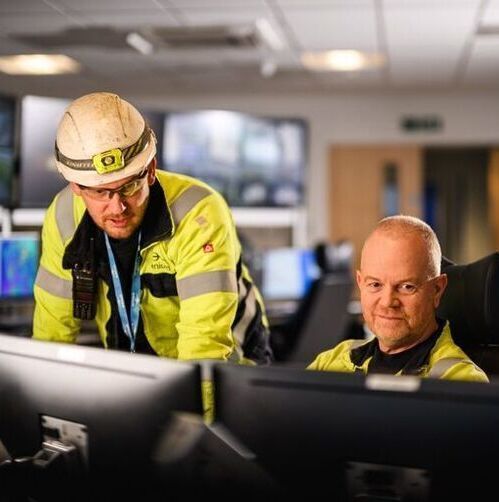
Enfinium has successfully piloted Wasteer’s groundbreaking visual AI technology at its Ferrybridge 2 facility in West Yorkshire and Parc Adfer facility in North Wales.
(Source: Chris Parkes Photographer Ltd.)
March 13 – Enfinium has recently announced the expansion of advanced visual artificial intelligence (AI) technology across all operational facilities. Supplied by German software specialist Wasteer, the system uses cutting-edge analytics to identify non-conforming waste entering the processing facilities. Following installation and machine learning calibration, the technology will help to process waste more efficiently by removing contaminants from the waste feed, preventing avoidable plant downtime and driving greater operational efficiency across its fleet.
Enfinium has successfully piloted Wasteer’s groundbreaking visual AI technology at its Ferrybridge 2 facility in West Yorkshire and Parc Adfer facility in North Wales. At both plants, the system delivered outstanding results in identifying contaminants entering the waste stream and helped to improve overall performance. Following the success of these pilots, Wasteer will also be commissioned to operate at Enfinium’s Ferrybridge 1, Kemsley, Kelvin and Skelton Grange facilities, with rollout expected throughout 2026.
The advanced, AI-powered camera technology will automatically analyze incoming waste to detect contaminants (non-conforming waste products) before they cause operational problems. The integrated system will issue real-time alerts and record data on all waste streams, alerting plant staff when non-conforming waste is present and enabling its effective removal and disposal.
The automation is expected to cut plant downtime by up to 30 % and increase output by around 2 %, delivering measurable performance gains across the fleet. In addition, Wasteer’s systems will generate data insights that can be shared with fuel suppliers, supporting improved contaminant removal before waste reaches site and enhancing waste management efficiency for local communities.
CBSP Selects Thyssenkrupp Uhde Technology for Nitric Acid Plants
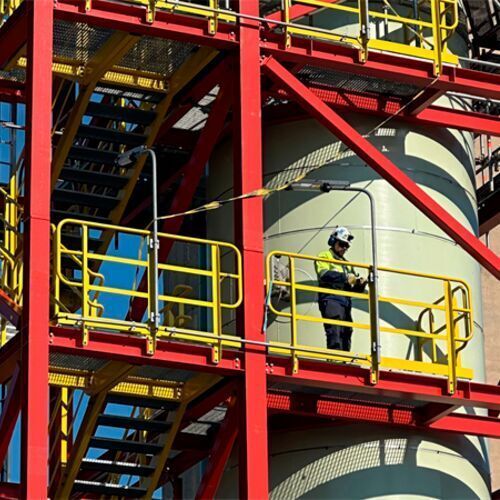
Thyssenkrupp Uhde has been selected by CSBP to deliver its patented Envinox technology for two nitric acid plants at CSBP’s Kwinana site in Western Australia.
(Source: Thyssenkrupp Uhde)
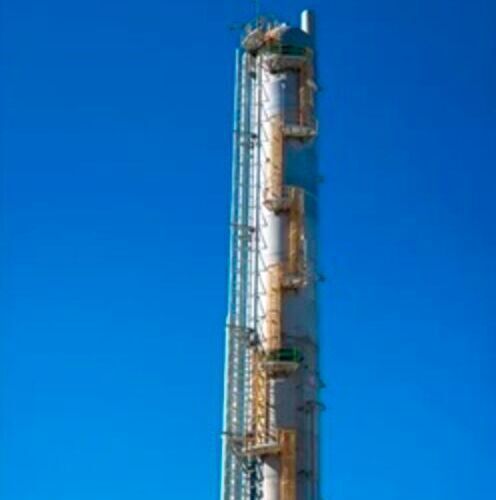
March 16 – Thyssenkrupp Uhde has been selected by CSBP – a chemicals and fertilizers business that forms part of Wesfarmers Chemicals, Energy & Fertilisers (Wescef) – to deliver its patented Envinox technology for two nitric acid plants at CSBP’s Kwinana site in Western Australia.
This follows the successful delivery of the Envinox technology in CSBP’s Nitric Acid Ammonium Nitrate 3 (Naan3) plant in 2025, with the signing of the new contract meaning Thyssenkrupp Uhde will integrate all three of CSBP’s nitric acid production facilities – Naan1, Naan2 and Naan3 – with the proven Envinox technology for NOx and nitrous oxide (N2O) emission reduction with Thyssenkrupp Uhde’s improved Envinox catalyst manufactured by Thyssenkrupp Uhde’s partner BASF.
The Envinox system marks a major milestone for industrial emissions reduction, with the system now eliminating more than 98 % of all N2O emissions from CSBP’s Naan3 plant, that corresponds to N2O outlet concentrations below 1 ppmv. N2O is a highly potent greenhouse gas with a global warming potential more than 270 times greater than carbon dioxide, making its reduction critical to achieving meaningful climate impact.
Reducing more than 60,000 tons of CO2-equivalent emissions per year, the projects in CSBP’s Naan1 and Naan2 plants will significantly contribute to delivering Wescef’s target to reduce scope 1 and 2 emissions by 30 % by 2030 from a 2020 baseline, and assist on its journey to net zero. With the completion of the new abatement systems, Thyssenkrupp Uhde will support the decarbonization of agricultural and mining sectors, providing low-emissions products while supporting climate goals.
Indorama Ventures, Partners to Develop One of Africa’s Largest Rpet Production Units
Yash Lohia, Executive President of Petchem and Chairman of the ESG Council, Indorama Ventures.
(Source: Indorama Ventures)
March 18 – Indorama Ventures together with Nigerian Breweries and Genesis Power & Energy Solutions have entered a strategic partnership to establish one of Africa’s largest state-of-the-art recycled Pet (rpet) production facilities in Nigeria, based on planned production capacity. The landmark collaboration marks a significant step toward strengthening circular economy infrastructure and sustainable packaging value chains across the region.
Located in Lagos, the site represents an investment to develop a facility capable of producing up to 45,000 tons of food grade rpet resin annually, with start up targeted in the first half of 2027. By converting post consumer Pet bottles into high quality recycled material for packaging applications, the initiative aims to meet fast rising demand for recycled content, reduce plastic waste, and create local value through improved collection systems, job creation, and increased participation across the recycling value chain.
The partnership brings together complementary strengths across the Pet value chain. Indorama Ventures contributes expertise in sustainable materials development. Nigerian Breweries provides strong local market insight and engagement across Nigeria’s beverage ecosystem, while Genesis Energy supports the initiative with sustainable infrastructure and energy expertise. The project is expected to support recycling capacity in Nigeria, subject to regulatory approvals, technical validation, and operational implementation. Together, the partners aim to establish commercially viable rpet operations that enable responsible growth and long-term environmental impact.
Neste Commissions World’s Largest Upgrading Facility for Liquefied Waste Plastic
Neste’s new facility to upgrade liquefied waste plastic into high-quality petrochemical feedstock is located at the company’s existing refinery in Porvoo, Finland.
(Source: Neste)
March 19 – Neste has successfully commissioned its new upgrading facility for liquefied waste plastic (LWP) at its Porvoo refinery in Finland. This 111-million-euro investment marks a major milestone in the scale-up of chemical recycling, enabling the production of high-quality feedstock for the plastics and chemicals industry. With an annual capacity to process up to 150,000 tons of liquefied waste plastic, the facility is the world’s largest LWP upgrading facility, and processing will be gradually ramped up.
The new facility allows Neste to close the quality gap between crude liquefied plastic waste and the high-quality drop-in raw materials required by the petrochemical industry. While mechanical recycling remains essential, it is often limited by the quality of the waste. Neste’s new facility is specifically designed to process oils derived from challenging waste plastic streams – such as multi-layer packaging, mixed plastic waste, and contaminated plastics.
In the new upgrading facility, Neste processes liquefied waste plastic together with crude oil. A mass balance approach is applied to attribute the recycled raw materials used in the process to the recycled Neste RE product. With the use of recycled Neste RE, a reduction of over 70 %* in virgin fossil resource consumption (abiotic depletion) and a reduction of over 35 %* in greenhouse gas (GHG) emissions can be achieved when plastic waste is chemically recycled instead of incinerated and then used to replace fossil feedstock in plastics manufacturing.
To advance the circularity of plastics, Neste, together with its partners Alterra and Technip Energies, also licenses liquefaction technology for chemical recycling of hard-to-recycle plastics.
*) Life Cycle Assessment on Environmental Impacts of Chemical recycling of waste plastic – Case Neste (October 2022).
Total Energies Launches France’s First Advanced Plastic Recycling Plant
Total Energies has launched France’s first advanced plastics recycling plant, with an annual capacity of 15,000 tons, at its Grandpuits site southeast of Paris.
(Source: Pixabay)
March 25 – Total Energies has launched France’s first advanced plastics recycling plant, with an annual capacity of 15,000 tons, at its Grandpuits site southeast of Paris. This start-up marks another step in the conversion of the refinery into a zero-crude platform.
The new plant uses innovative recycling technology supplied by our partner Plastic Energy. It transforms hard-to-recycle plastic waste from French households, which is currently sent to landfill or incineration, into a synthetic oil through a pyrolysis process, involving heating the waste to high temperatures in an oxygen-free environment and under pressure. This advanced recycling process makes it possible to recycle waste that cannot be recycled mechanically.
The synthetic oil is then treated as petrochemical feedstock, as a substitute for fossil fuels. It contributes to producing recycled plastics of the same quality as virgin plastics, compatible with the strictest requirements for food contact and medical applications. Total Energies signed an agreement with two French partners in 2023: Citeo and Paprec, to secure the plant’s long-term supply of plastic waste.
BASF Introduces World’s First Production Plant for 3D Printed Catalysts
March 25 – BASF has recently started up the world’s first production plant for catalysts based on the X3D technology at its Ludwigshafen site. With the commissioning of this facility, BASF is scaling the additive manufacturing of catalysts to an industrial level and strengthening its leading role in innovative solutions for the chemical industry.
Utilizing X3D technology, catalysts can be produced with optimally designed geometries that combine high mechanical stability with an open structure. This significantly reduces pressure drop in reactors while simultaneously increasing the catalytically active surface area. As a result, customers achieve higher reactor throughput and improved product quality at substantially lower energy consumption compared to conventional catalysts.
BASF has been supplying X3D catalysts to production plants for several internal and external customers for many years. The technology is highly versatile and can be applied to a broad range of catalyst materials, including precious and base metal catalysts as well as various support materials. The new production plant in Ludwigshafen provides the foundation for making this technology more widely available and for further shortening development and market introduction timelines.




:quality(80)/p7i.vogel.de/wcms/e5/87/e587bb7a91212bcc1ae875ef1bbb6edf/0133471290v2.jpeg "Physical AI marks a shift from machines that follow fixed instructions to embodied systems that perceive, reason, and act autonomously. (Source: Pixabay)")
:quality(80)/p7i.vogel.de/wcms/8b/a5/8ba5d7e346543b30d3066de20e059c59/0133394741v2.jpeg "Currently under construction in Delfzijl, the new SAF facility will support the Netherlands’ efforts to meet the EU’s sustainable aviation fuel mandate. (Source: Emerson )")
:quality(80)/p7i.vogel.de/wcms/6f/90/6f90a6bb14694e7597ec1234110da041/0133293480v2.jpeg "Under the MOU, Aramco will provide domain knowledge, data, and infrastructure to evaluate Sony’s technologies in real-world industrial settings. (Source: Aramco )")
:quality(80)/p7i.vogel.de/wcms/d3/d3/d3d35ace50cb3b0fcd075baa25e84884/0133106707v2.jpeg "Flyability’s Elios 2 is a drone used for internal inspection of tanks or boilers. (Source: Flyability )")
:quality(80)/p7i.vogel.de/wcms/c8/30/c830ea0047f500d4c8e9b1a39744d05c/0133653487v2.jpeg "Technip Energies has been awarded contracts by Petkim, a subsidiary of Socar, in connection with the development of a proposed integrated petrochemical complex in Aliağa, Türkiye. (Source: Pixabay)")
:quality(80)/p7i.vogel.de/wcms/56/9d/569db69474e60a709992a9ae5a94ff78/0133613642v2.jpeg "Avantium has successfully produced the first batch of FDCA at its FDCA flagship plant in Delfzijl, the world's first commercial-scale plant for the production of FDCA. (Source: Unsplash)")
:quality(80)/p7i.vogel.de/wcms/2d/ff/2dff64eb5e03d787ed12706e1f344da7/0133613610v2.jpeg "The scope of work includes the development of the engineering design package, the definition of the key technical requirements and the cost estimation for the project. (Source: Pixabay)")
:quality(80)/p7i.vogel.de/wcms/4a/3a/4a3a71f1101e4ef921d9f83c3462c222/0133613115v2.jpeg "To be co-located with the CWRP, the new facilities will boost Singapore's waste treatment capabilities while harnessing synergies from co-digesting greasy waste, food waste and used water sludge to increase biogas yield. (Source: Jacobs)")
:quality(80)/p7i.vogel.de/wcms/87/4a/874ac98c92c3cab99c0cb57a812caa80/0133555719v2.jpeg "The VPHP Bioindicator is based on spores of Geobacillus stearothermophilus ATCC 12980 and uses packaging permeable to VPHP. (Source: Ima)")
:quality(80)/p7i.vogel.de/wcms/53/a4/53a447ccf82236286a9c98307cd7fa81/0133438889v2.jpeg "The OEB5-contained capsule filling machine is integrated with an isolator and processes solid and liquid oral formulations. (Source: Marchesini)")
:quality(80)/p7i.vogel.de/wcms/4a/ff/4aff5dd041a8038e27ac80de15072290/0133349979v2.jpeg "From left to right: Heiko Mennerich (Head of Next Generation Technologies at Evonik); Marco Trisciuzzi (Managing Director of the German-Slovak Chamber of Commerce); Guido Skudlarek (Head of Evonik Health Care Business Line); Lauren Kjeldsen (Member of the Executive Board of Evonik and Chief Operating Officer Custom Solutions); Ondrej Lunter (Regional President of the Banská Bystrica Self-Governing Region); Miroslav Havlik (General Manager of Evonik Fermas s.r.o).; and Roland Lamper (Mayor of Slovenská Ľupča) (Source: Evonik)")
:quality(80)/p7i.vogel.de/wcms/80/ab/80abf829caefbaf16132122c8a8985b3/0133154853v2.jpeg "Under the terms of the agreement, Lilly will acquire Merida and pay up to 2.875 billion dollars in cash, inclusive of an upfront payment, and contingent milestone payments. (Source: Pixabay)")
:quality(80)/p7i.vogel.de/wcms/54/b9/54b9798cdc66e4aa54009dcd5fd2a682/0133616385v2.jpeg "Hydrogen production plant using water electrolysis powered by renewable energy. (Source: Hyundai E&C/AI-generated image)")
:quality(80)/p7i.vogel.de/wcms/c5/03/c5039bd2b47b209d1112fcc5227d04fc/0133537580v2.jpeg "The facility is expected to strengthen Manatee County’s position as a strategic energy and logistics hub. (Source: Unsplash)")
:quality(80)/p7i.vogel.de/wcms/67/ef/67efeaefe508d0fba36d39f65e0ff406/0133485604v2.jpeg "Once captured, CO₂ is liquefied, delivered by truck to a dedicated CO₂ terminal at Port Esbjerg, shipped aboard Carbon Destroyer 1 - the EU's first purpose-built CO₂ carrier - and injected into the Nini West reservoir. (Source: Ineos Energy )")
:quality(80)/p7i.vogel.de/wcms/59/de/59de9947b3231c56827bd27116b2c1a0/0133401833v2.jpeg "The facility will produce about one million metric tons of green ammonia annually for supply to domestic and international markets. (Source: AA+W - stock.adobe.com)")
:quality(80)/p7i.vogel.de/wcms/7f/1b/7f1b02563e4803ee7f3764ffd1720d8c/0132842468v3.jpeg "The new EZJetFlo™ in-line mixing system solves the production bottleneck using highly efficient Venturi powder induction. (Source: ILC DOver)")
:quality(80)/p7i.vogel.de/wcms/02/fb/02fbe7296b87b2c110ad17e983d7d87a/0132963781v2.jpeg "MAAG’s Extrex6 EC gear pump is specifically designed for the continuous conveying of rigid PVC (polyvinyl chloride). (Bild: Maag)")
:quality(80)/p7i.vogel.de/wcms/69/8c/698c17b920244559c08f28261636fee5/0132816720v2.jpeg "Xylem has entered into an agreement to acquire the Cornell Pump and Roper Pump businesses from Indicor for 1.46 billion dollars. (Source: Pixabay)")
:quality(80)/p7i.vogel.de/wcms/89/47/8947595eafaa6ad27c8552a5f9ad48e1/0129967379v1.jpeg "Biogas and biomethane currently provide approximately 5.5 GW of stable electrical capacity and could be expanded to up to 20 GW without requiring additional land – an enormous potential. (Source: license free via Pixabay)")
:quality(80)/p7i.vogel.de/wcms/fe/5d/fe5d9bb106dfb20c1d69c90d74e78f58/0133648325v2.jpeg "Under the ‘National Water Strategy 2030’, Saudi Arabia is securing sustainable water resources, protecting the natural environment and providing high-quality services. (Source: Malika - stock.adobe.com)")
:quality(80)/p7i.vogel.de/wcms/88/c4/88c457f86fb2842cbcee21c320c44bd9/0133541916v2.jpeg "The RO membrane elements will be used for the Changi Newater Factory (CNF3), a large-scale used water treatment plant in Singapore. (Source: Unsplash)")
:quality(80)/p7i.vogel.de/wcms/1b/2b/1b2b80c989067b50c687314515948806/0133161547v2.jpeg "Acwa has signed a MOU with Veolia, committing the two leading companies to optimizing seawater desalination across the entire value chain. (Source: Acwa)")
:quality(80)/p7i.vogel.de/wcms/21/2e/212e079dcb99d9fd36e85dae0db3141a/0132929532v2.jpeg "Aerial view of the Kawasaki Works. (Source: Asahi Kasei )")
:quality(80)/p7i.vogel.de/wcms/79/31/7931cc94924b4c2ebc7087e9cec2f801/0130490720v2.jpeg "The new Pulsar Model R80 solids antenna delivers improved measurement capability through its high-frequency signal, narrow beam angle, and advanced configuration software. (Source: Ametek )")
:quality(80)/p7i.vogel.de/wcms/6b/cc/6bcc3d26e1c7c74d90a10bc3ca296ae1/0128362351v2.jpeg "A look into Bayer's new tablet production, Solida 1, during construction: The robots and lift columns for material handling are being installed. (Source: Bayer)")
:quality(80)/p7i.vogel.de/wcms/24/c8/24c84ab6b1bcd24468a87820a07a85aa/0128194707v2.jpeg "Ajax Equipment has supplied Binding Solutions with a feed system comprising buffer hopper, screw feeder and agitated screw feeder for a pilot plant handling iron ore and additives. (Source: Ajax Equipment )")
:quality(80)/p7i.vogel.de/wcms/9e/e7/9ee7a88325e1356fd9fc14f3e6074ecb/0133654724v2.jpeg "LG Chem has signed a MOU with the Volkswagen Group to develop and expand the application of next-generation, eco-friendly mobility materials. (Source: LG Chem)")
:quality(80)/p7i.vogel.de/wcms/4f/5a/4f5a1993844fdceffa2539843257241a/0133654083v2.jpeg "The agreement expands the long-standing cooperation between the two companies and combines Sabic’s industry-leading technology with Technip Energies’ extensive experience in Polyolefins. (Source: Technip Energies )")
:quality(80)/p7i.vogel.de/wcms/53/9d/539d2658dc14be6d960b22b2dda224b6/0133618284v2.jpeg "Sulzer has delivered its Devo purification technology to Beyondpoly's Version 2.0, 100,000-ton-per-year polyolefin elastomer plant in China. (Source: Sulzer)")
:quality(80)/p7i.vogel.de/wcms/89/72/8972cb334baa518929da52ac0f34cea1/0133544514v2.jpeg "Praj Industries and Gevo have recently announced the signing of a Development & Commercialization Agreement for Bio-Isobutanol technology in India. (Source: Unsplash)")
:quality(80)/p7i.vogel.de/wcms/f8/29/f8298429c1638b949a6f76346f6709c7/0118701710v2.jpeg "Bosch Industrial Heat will be presenting sustainable steam and heat solutions for global industrial use at the Achema trade fair in Frankfurt, Germany. (Source: Bosch Industriekessel)")
:quality(80)/p7i.vogel.de/wcms/07/24/07242664ab2b1c7841c9d9d0a127670c/0116045959.jpeg "A look inside the GEA machine room. (Bild: Magnavale)")
:quality(80)/p7i.vogel.de/wcms/c9/79/c979a20b32395ddfa93fe7ead90578a0/0108386061.jpeg "Production residues, lime, salt and suspended solids quickly clog the pipes. (Source:©Tanakorn - stock.adobe.com)")
:quality(80)/p7i.vogel.de/wcms/9e/5c/9e5c92d942ed046a27562d6e3d730c92/0103483548.jpeg "It is almost ten metres high and extends over three floors: the world's first multiple dividing wall column is located in the new technical centre at the University of Ulm. (Bild: Eberhardt, kiz Universität Ulm)")
:quality(80)/p7i.vogel.de/wcms/90/f3/90f351201dd4ea7e2439ce19019bf318/0133013227v2.jpeg "Adnoc, in collaboration with SLB, has deployed its AI-enabled RTOC platform across its fleet of more than 120 rigs. (Source: Adnoc)")
:quality(80)/p7i.vogel.de/wcms/aa/9d/aa9dc332257fbc96a2d2ec20b40781a5/0132005469v2.jpeg "Qatar Energy would like to emphasize that this was an operational accident and not sabotage or hostile in nature. (Source: Qatar Energy)")
:quality(80)/p7i.vogel.de/wcms/57/da/57da73af9c35d633196afd46348182b2/0130820106v2.jpeg "Today, the world is witnessing a deepening energy crisis. The Iran–US war has exposed the vulnerability of the global oil, gas, and petrochemicals industry. Its impact is not confined to one region—it has triggered a domino effect across continents. (Source: © Rayhan - stock.adobe.com)")
:quality(80)/p7i.vogel.de/wcms/20/36/20366ffa57a841882fd165e4dc885c09/0130491929v2.jpeg "With the US and Israel jointly firing the first shot on Iran, the world is now witnessing major cascading effects—from soaring global oil and gas prices, to industry leaders declaring force majeure, and even predictions that the war could trigger a global economic recession! (Source: © FOYSAL - stock.adobe.com)")
:quality(80)/p7i.vogel.de/wcms/a8/4e/a84e8039a90a5cf4751d01ebcf6ba1a9/0127510172v2.jpeg "After six years, Achemasia, the international trade fair and innovation forum for sustainable chemical production, has returned with renewed vigor, bringing together global expertise, Chinese innovation, and a shared commitment to a greener industrial future—according to the organizers of the fair. (Source:PROCESS China)")
:quality(80)/p7i.vogel.de/wcms/17/c7/17c703445f134eb3d7ecc7918dda2762/0124596096v2.jpeg "Achema Middle East will launch in Saudi Arabia in 2026. (Bild: Dechema/ Hannibal)")
:quality(80)/p7i.vogel.de/wcms/2a/2c/2a2cffc07f51019065387cd63241b5ce/0119463370v1.jpeg "The Injecta 36 fills and seals RTU (Ready-to-Use) syringes at high speed. The image shows the robotic arm. (Source: IMA)")
:quality(80)/p7i.vogel.de/wcms/b1/7e/b17ea8c62ccafad1d1fb072d6199bbd6/0118578446.jpeg "“Star in the ring”: Vegapuls 6X radar level sensors are the solution of choice for Renolit for many applications on the way to the perfect plastic product. (Source: © MR Design - stock.adobe.com; Vega)")
:quality(80)/p7i.vogel.de/wcms/a4/48/a4483a8e8b44b896e15e44c2fb680cc4/0133647880v2.jpeg "UAE’s industrial strategy – Operation 300bn aims to advance the UAE’s industrial sector and strengthen its role in driving the national economy. (Source: © HISTOCK - stock.adobe.com)")
:quality(80)/p7i.vogel.de/wcms/fb/54/fb54b6f2e394f8278c8ad8f111cba0a0/0133617654v2.jpeg "The partnership was officially launched at UAE University in Al Ain in the presence of key value chain stakeholders, including the Emirates Environmental Group, Hotpack, AW Rostamani Group, Tadweer Group, University of Sharjah, and Pacogreen. (Source: Emirates Biotech)")
:quality(80)/p7i.vogel.de/wcms/30/8d/308d155447665e72b8c7500f2bd8afcb/0133185520v2.jpeg "Alesya Deyanova, Show Manager of Achema Middle East at Messe Frankfurt Middle East (Source: Copyright: Marc Jacquemin | www.marc-jacquemin.com)")
:fill(fff,0)/images.vogel.de/vogelonline/companyimg/2000/2093/65.jpg "Glatt_Logo_ND4c-RGB (5x3cm).jpg ()")
:fill(fff,0)/p7i.vogel.de/companies/61/f9/61f9439b7cbe4/logo-edl.png "logo-edl (EDL Anlagenbau Gesellschaft mbH)")
:fill(fff,0)/images.vogel.de/vogelonline/companyimg/103000/103097/65.jpg "Pörner Gruppe mit Rand.jpg ()")




:quality(80)/p7i.vogel.de/wcms/0e/19/0e19f0cf0379c3af4c2fe02629db63f1/0130079229v2.jpeg "Thyssenkrupp Uhde has been selected by CSBP to deliver its patented Envinox technology for two nitric acid plants at CSBP’s Kwinana site in Western Australia. (Source: Thyssenkrupp Uhde)")
:quality(80)/p7i.vogel.de/wcms/76/fe/76fe84a799d68423b1649020bb7b66b5/0128258448v3.jpeg "At a glance: Plant engineering projects from across the globe. (Source: © EUT - stock.adobe.com)")