PROCESS Worldwide brings to you the ‘Top 10 plant engineering projects of December 2023’ from all over the world. Right from Ørsted starting work on Denmark’s first carbon capture project to Fluor securing two contracts for the world’s first net-zero ethylene cracker and derivatives complex, find out all the projects making headlines here
At a glance: Plant engineering projects from across the globe.
(Source: FutureStock - stock.adobe.com)
Ørsted Commences Work on Denmark’s First Carbon Capture Project
This project represents Denmark's first full-scale carbon capture project and signals the dawn of a new era for carbon capture and storage in the country.
(Source: Pixabay)
Dec 04 – Ørsted is embarking on the construction of two carbon capture (CCS) facilities designed to capture and store carbon emissions from the woodchip-fired Asnæs Power Station in Kalundborg and the straw-fired unit at Avedøre Power Station in Greater Copenhagen. This project represents Denmark's first full-scale carbon capture project and signals the dawn of a new era for carbon capture and storage in the country.
It is expected that the carbon capture project, which was awarded a 20-year contract by the Danish Energy Agency in May 2023, will capture 430,000 tonnes of biogenic CO2 annually from the two combined heat and power plants starting from early 2026. The capture and storage of carbon from straw- and woodchip-fired power stations remove CO2 from the atmosphere, making a substantial contribution to Denmark's climate targets for 2025 and 2030.
Ørsted will host a groundbreaking ceremony on December 4 at Avedøre Power Station to celebrate the commencement of construction of Denmark's first full-scale carbon capture project.
Covestro to Modernize Toluene Diisocyanate Production Plant in Germany
With an annual capacity of 300,000 metric tons, Covestro has the largest TDI production plant in Europe.
(Source: Covestro)
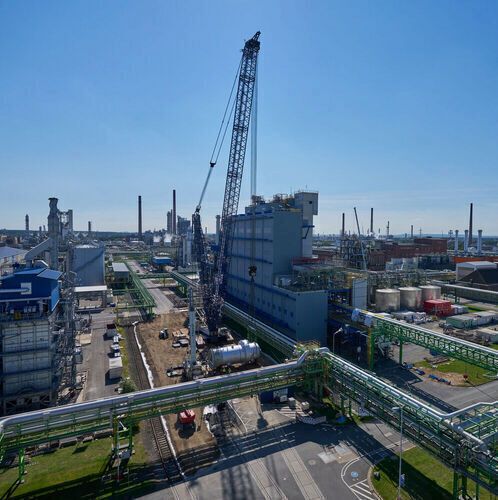
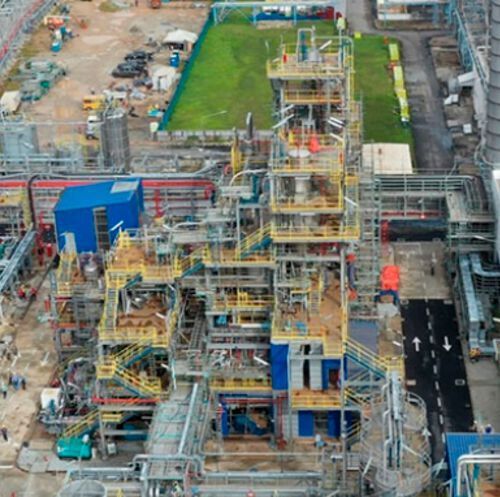
Dec 06 – To further strengthen the sustainability and competitiveness of TDI (toluene diisocyanate) production for the manufacture of flexible foams in Europe, Covestro is investing a mid to high double-digit million-euro amount in the modernization of its production plant in Dormagen by 2025. The plant was commissioned in early 2015 and is considered one of the most advanced TDI production facilities in the world due to the use of the gas phase technology developed by Covestro. The work will include the installation of a modern reactor that will enable the reaction energy to be used for energy-efficient steam generation in the future.
The modernization will significantly improve the plant's energy efficiency and thereby reduce CO2 emissions. After the modernization, the plant will consume up to 80 percent less energy than conventional processes for the production of TDI, and greenhouse gas emissions will be reduced by a further 22,000 tons per year. This not only makes a significant contribution to achieving the company's climate targets and safeguarding European TDI production in the face of sharply increased energy costs, but also improves the sustainability performance of the customer industries. The first phase of the project has now been successfully completed with the lifting of the equipment into the plant. All further measures will be implemented gradually until spring 2025. This will ensure a continuous supply of TDI to customers.
The TDI plant in Dormagen has an annual capacity of 300,000 tons. It uses the gas phase technology developed by Covestro, which even before modernization required up to 60 percent less energy and up to 80 percent less solvent than conventional processes. The current investment will significantly increase the efficiency and therefore sustainability of the plant even further. TDI is an important raw material for soft foams, which provide comfort in mattresses and upholstered furniture as well as car seats, for example. The material will continue to play an important role for Covestro and the processing industries in the future.
Fluor Secures Two Contracts for World’s First Net-Zero Ethylene Cracker and Derivatives Complex
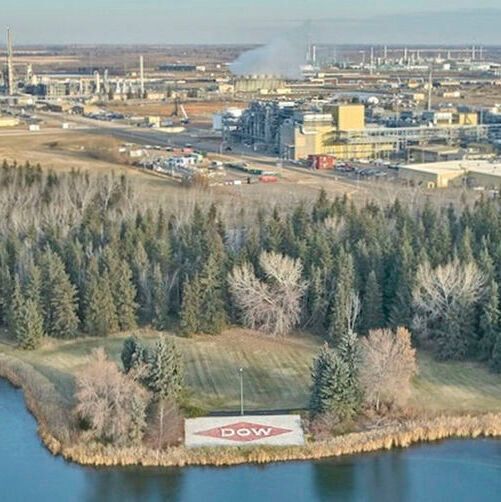
The world’s first net-zero scope 1 and 2 emissions integrated ethylene cracker and derivatives complex in Fort Saskatchewan, Alberta, Canada.
(Source: Business Wire)
Dec 06 – As previously announced and recognized in the third quarter on a confidential basis, Fluor Corporation was awarded two contracts from Dow for the construction of the world’s first net-zero scope 1 and 2 emissions integrated ethylene cracker and derivatives complex in Fort Saskatchewan, Alberta, Canada.
The reimbursable services contracts represent a total value of more than 3 billion dollars and consist of engineering, procurement and construction management for a new ethylene cracker unit and for the associated utilities, power and infrastructure facilities. The overall program also includes the expansion and retrofit of Dow’s existing manufacturing facilities.
Dow announced in November that its board of directors declared the Final Investment Decision for the project, which is part of Dow’s Path2Zero program, intended to lower the greenhouse gas emissions of its manufacturing facilities while growing capacity and delivering low-emissions products to customers.
Date: 08.12.2025
Naturally, we always handle your personal data responsibly. Any personal data we receive from you is processed in accordance with applicable data protection legislation. For detailed information please see our privacy policy.
Consent to the use of data for promotional purposes
I hereby consent to Vogel Communications Group GmbH & Co. KG, Max-Planck-Str. 7-9, 97082 Würzburg including any affiliated companies according to §§ 15 et seq. AktG (hereafter: Vogel Communications Group) using my e-mail address to send editorial newsletters. A list of all affiliated companies can be found here
Newsletter content may include all products and services of any companies mentioned above, including for example specialist journals and books, events and fairs as well as event-related products and services, print and digital media offers and services such as additional (editorial) newsletters, raffles, lead campaigns, market research both online and offline, specialist webportals and e-learning offers. In case my personal telephone number has also been collected, it may be used for offers of aforementioned products, for services of the companies mentioned above, and market research purposes.
Additionally, my consent also includes the processing of my email address and telephone number for data matching for marketing purposes with select advertising partners such as LinkedIn, Google, and Meta. For this, Vogel Communications Group may transmit said data in hashed form to the advertising partners who then use said data to determine whether I am also a member of the mentioned advertising partner portals. Vogel Communications Group uses this feature for the purposes of re-targeting (up-selling, cross-selling, and customer loyalty), generating so-called look-alike audiences for acquisition of new customers, and as basis for exclusion for on-going advertising campaigns. Further information can be found in section “data matching for marketing purposes”.
In case I access protected data on Internet portals of Vogel Communications Group including any affiliated companies according to §§ 15 et seq. AktG, I need to provide further data in order to register for the access to such content. In return for this free access to editorial content, my data may be used in accordance with this consent for the purposes stated here. This does not apply to data matching for marketing purposes.
Right of revocation
I understand that I can revoke my consent at will. My revocation does not change the lawfulness of data processing that was conducted based on my consent leading up to my revocation. One option to declare my revocation is to use the contact form found at https://contact.vogel.de. In case I no longer wish to receive certain newsletters, I have subscribed to, I can also click on the unsubscribe link included at the end of a newsletter. Further information regarding my right of revocation and the implementation of it as well as the consequences of my revocation can be found in the data protection declaration, section editorial newsletter.
Dow’s net-zero scope 1 and 2 emissions integrated ethylene cracker and derivatives complex is projected to decarbonize approximately 20 % of the company’s global ethylene capacity while growing its polyethylene capacity by approximately two million metric tonnes per annum.
In February, Fluor was awarded the front-end engineering and design contract for the project. Construction began in July on early works and the program is expected to come online in phases, with the first phase starting up in 2027 and the second phase starting up in 2029.
Solvay to Build First Carbon-Neutral Soda Ash Plant in Saudi Arabia
Solvay and Enowa plan to build first carbon-neutral soda ash plant in Neom before 2030.
(Source: Pixabay)
Dec 12 – To establish the world’s first carbon-neutral soda ash production facility in Neom, Saudi Arabia, Solvay is partnering with Enowa, Neom’s energy and water company, Pending the results of an in-depth feasibility study and customary regulatory approvals, the companies plan to begin operation of the groundbreaking plant by 2030. The state-of-the-art facility will serve as a vital component in Enowa's Water Sustainability Strategy and is in line with Neom's plans to develop a zero-liquid discharge water management system.
Strategically located off of the Red Sea coast to support access to markets across the Middle East, Africa and Southeast Asia, the renewable-powered plant will convert seawater brine into soda ash and integrate the e.Solvay process for sustainable and carbon-neutral soda ash production. The partners aim to start 500,000 tons soda ash nameplate capacity by 2030 which would gradually increase up to 1.5 million tons by 2035, with the potential addition of sodium bicarbonate production.
Earlier this year, the e.Solvay pilot production process began operations in Europe. Designed to evaluate the viability of a more sustainable and competitive soda ash production technology, the pilot has yielded positive results, showcasing potential for low emissions, reduced resource and energy consumption, and complete removal of limestone residues. The next two-year pilot phase will set the stage for industrial-scale production to begin in the latter half of the decade, aligning with the Neom implementation timeline.
Neste Refinery in Porvoo is Preparing for Major Turnaround
The next major turnaround at Neste’s refinery in Porvoo, Finland, is scheduled for April-June in 2024.
(Source: Neste)
Dec 14 – Scheduled to take place from April to June 2024, the major turnaround at Neste’s Porvoo refinery involves the temporary shutdown of the entire refinery. The primary objectives of this shutdown are to facilitate regulatory inspections, perform essential maintenance work, and undertake selected asset improvement initiatives. The estimated duration of this turnaround is approximately nine weeks.
Sami Wasström, Head of Turnarounds at Oil Products, Neste, emphasized the significance of this undertaking, stating, "The major turnaround is an investment in securing safety, availability, and competitiveness of the refinery. In addition, the turnaround will contribute to Neste’s ambition to make the Porvoo refinery the most sustainable refinery in Europe by 2030 and to reach carbon-neutral production by 2035. Together with our audited contractors, we are committed to creating a safe working environment at the Porvoo refinery and a successful turnaround."
One notable aspect of Neste's approach to the major turnaround is its emphasis on ethical and responsible practices. All contractors participating in the turnaround are required to commit to Neste's Supplier Code of Conduct, which covers various crucial areas, including human and labor rights, occupational health and safety, climate responsibility, environmental stewardship, and ethical business conduct. This commitment reflects Neste's dedication to upholding high standards throughout the duration of the turnaround.
Importantly, the company’s harbor and distribution terminal at the refinery will continue to operate normally during the major turnaround. This means that product deliveries to customers will proceed without disruptions.
Aker Carbon Capture Wins Feasibility Study for New Waste-to-Energy Plant
Aker Carbon Capture has been awarded a feasibility study by Limeco, a Swiss company that is planning to construct a new waste-to-energy plant in Dietikon, in the canton of Zurich.
(Source: Pixabay)
Dec 18 – Aker Carbon Capture has been awarded a feasibility study by Limeco, a Swiss company that is planning to construct a new waste-to-energy plant in Dietikon, in the canton of Zurich. Carbon Capture and Storage is expected to be mandatory for future waste-to-energy plants in Switzerland.
The new waste incineration plant will consist of two identical incineration lines. Aker Carbon Capture’s standardized and modularized Just Catch carbon capture units are developed for this volume of CO2 and will be able to provide a perfect fit with Limeco’s requirements. The CO2 will be liquified for transport by truck or train. Since Limeco’s waste-to-energy plant is a greenfield project to produce district heating, heat integration between the incineration plant and the carbon capture plant can be used to maximize the district heat production. This will provide an overall attractive business case for Limeco, while at the same time contributing to Switzerland’s national ambitions for reduction of greenhouse emissions.
Switzerland currently has 29 waste-to-energy plants that emit a total of 4.5 million tonnes of CO2 per year. Approximately 50 % of the CO2 emissions are biogenic, while the other 50 % are of fossil origin.
Ineos Phenol Begins Production at Europe’s Largest Cumene Facility
The world scale 750,000 kt/a plant reduces CO2 emissions by 50 % per tonne.
(Source: Ineos Phenol)
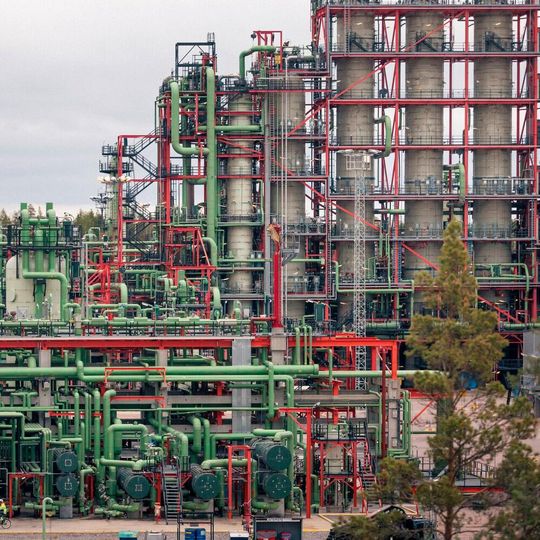
Dec 19 – The world scale 750,000 tonne facility produces up to 50 % lower CO2 emissions per tonne of product. The significant reduction in emissions is enabled by pioneering cumene technology in combination with unique heat integration at the Marl Chemical Park in Germany.
The well-located plant will use existing pipeline connections between Ineos’ phenol and acetone production sites in Gladbeck, the Evonik Chempark in Marl, and the BP refinery and cracker complex in Gelsenkirchen. The site also benefits from the nearby Marl harbour waterway connection. Most of the waste heat from the plant is used for a district heating circle further reducing the carbon footprint of the site.
Cumene is an essential raw material in the production of phenol and acetone, which are used in a wide variety of applications including medical applications ranging from aspirin to throat lozenges and sprays. Their derivatives are also used in contact lenses, artificial joints, dentures and dental fillings, as well as many other applications.
Ineos is the world’s largest producer of phenol and acetone, and the largest consumer of cumene.
The plant was constructed in association with CAC Engineering, who managed the project under an EPCM model. CAC work included Feed verification, detail engineering, procurement, construction and pre-commissioning of the plant.
Topsoe Secures Hefty Grant for Developing Solid Oxide Electrolyzer Cells Factory
Topsoe's SOEC manufacturing facility.
(Source: Topsoe)
Dec 19 – Topsoe has signed a grant agreement with EU’s Innovation Fund for a total of 94 million euros. The grant is a recognition of Topsoe’s state-of-the art SOEC electrolysis technology and the innovation inherent in building this first of its kind SOEC factory. The factory is Topsoe’s single biggest investment to date.
The factory will manufacture advanced, energy efficient Solid Oxide Electrolyzer Cells (SOEC) that are essential in the production of green hydrogen and its derivatives. Electrolyzers are key for decarbonizing energy-intensive industries like steel, mining, and long-distance transportation that account for approximately 30 % of global greenhouse gas emissions and cannot easily be electrified. In Europe, the EU Commission has announced a proposal to deploy 40 GW of hydrogen electrolyzer installation and 10 million tonnes of green hydrogen production.
When used to produce green hydrogen, electrolyzers from Topsoe’s factory will reduce emissions by approximately 7.5 million tonnes of CO2 equivalent over the first ten years of operation when compared to hydrogen produced from natural gas.
Idemitsu Kosan Builds Second Syndiotactic Polystyrene Production Plant in Malaysia
The production capacity of this plant is 9,000 tons per year.
(Source: Idemitsu Kosan)
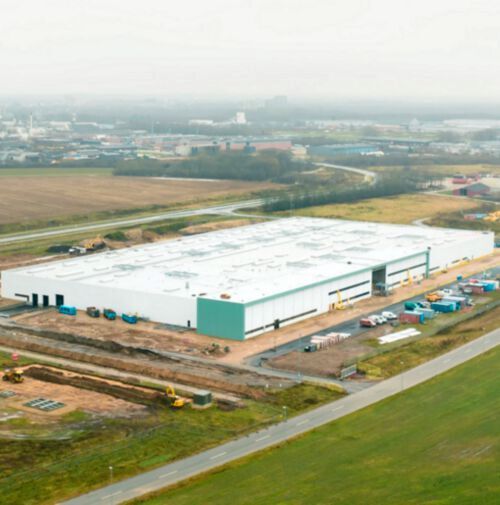
Dec 20 – Idemitsu Advanced Materials (Malaysia), a subsidiary of Idemitsu Kosan Co., has newly constructed a second SPS (syndiotactic polystyrene) production plant in Pasir Gudang, Johor, Malaysia, and launched commercial operation in November 2023.
The production capacity of this plant is 9,000 tons per year, and with the second SPS production plant in operation, the production scale of SPS resin, our proprietary material, will be doubled. The new two-location system with the first SPS production plant at the Chiba Complex has realized a more stable production and supply system.
Pasir Gudang, Malaysia, where the second SPS production plant has been constructed, is one of our key manufacturing sites for petrochemical products. The construction of the plant has been promoted because it is located in Southeast Asia, where demand is expected to grow, and it is possible to procure SM (styrene monomer), the raw material for SPS, from Idemitsu SM (Malaysia) which is located next to the SPS plant.
LG Chem Breaks Ground for New Cathode Plant in U.S.
The facility will locally produce cathode materials optimized for North American EVs and collaborate with key partners from development to supply chain.
(Source: LG Chem)
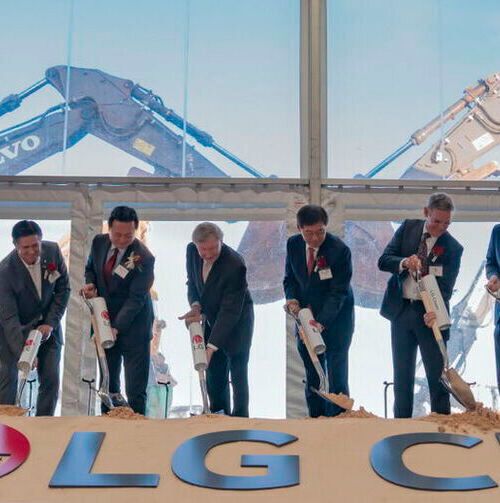
Dec 22 – LG Chem has commenced the construction of a cathode plant in the U.S., intending to establish a production hub for the global battery material market. The facility, located in Montgomery County, Clarksville, Tennessee, will locally produce cathode materials optimized for North American electric vehicles (EVs) and collaborate with key partners from development to supply chain.
On December 20, LG Chem held the groundbreaking ceremony for its cathode plant in Tennessee. The event was attended by guests including Tennessee Governor Bill Lee, Commissioner Stuart McWhorter, Senator Marsha Blackburn, Korean Ambassador to the United States Cho Hyun-dong, Clarksville City Mayor Joe Pitts and Montgomery County Mayor Wes Golden. Key attendees from LG Chem were CEO Shin Hak-cheol, President of Advanced Materials Company Nam Chul and Head of Battery Materials Business Unit Lee Hyang-mok.
LG Chem will invest around KRW 2 trillion (1.6 billion dollars) in the first phase to build a cathode plant with an annual capacity of 60,000 tons on a 1.7 million square meter site in Clarksville, Tennessee. The plant is expected to be the largest cathode material facility in the United States, capable of producing cathode materials for approximately 600,000 high-performance pure electric vehicles with a range of 500 km annually.
Starting from 2026, the Tennessee cathode plant will mass-produce NCMA (Nickel, Cobalt, Manganese, Aluminum) cathode materials. LG Chem plans to diversify its product portfolio through future-generation cathode material products and expand production capacity in response to increasing demand. LG Chem previously signed a comprehensive agreement for the long-term supply of 950,000 tons of cathode materials with General Motors (GM) last year and a North American cathode material supply contract worth KRW 2.9 trillion (2.5 billion dollars) with Toyota in October this year.




:quality(80)/p7i.vogel.de/wcms/54/f4/54f4b4e2a86b203e0dfd84221602bdb5/0130367283v2.jpeg "Anybotics' Anymal robot combines depth cameras, LiDAR, thermal imaging, acoustic sensors, and gas detectors into a single inspection round. (Source: Anybotics)")
:quality(80)/p7i.vogel.de/wcms/e9/64/e964996410967c124c2cf01a8623068e/0130285341v1.jpeg "Geht unter die Oberfläche: Die Offshore-Ölförderung erfordert hochenergetische Pumpen – doch diese sind im Wesentlichen eine Black Box. Bisher zumindest. (Source: Kistler Group)")
:quality(80)/p7i.vogel.de/wcms/54/ae/54aece5dff672ce1651470eecd9f2589/0130138090v2.jpeg "The new Ionchromatograph “Nexera IC“ (Source: Shimadzu)")
:quality(80)/p7i.vogel.de/wcms/49/5c/495c651fabd24a437c98bde6a3d71ecc/0130060419v2.jpeg "Enfinium has successfully piloted Wasteer’s groundbreaking visual AI technology at its Ferrybridge 2 facility in West Yorkshire and Parc Adfer facility in North Wales. (Source: Chris Parkes Photographer Ltd.)")
:quality(80)/p7i.vogel.de/wcms/1e/15/1e15b0e20cf5ede83e0749260dfda733/0130465044v2.jpeg "Energy X has recently announced the successful commissioning of a first-of-its-kind, U.S.-based lithium production facility at Project Lonestar, marking a major milestone toward commercial-scale domestic lithium production. (Source: Pixabay)")
:quality(80)/p7i.vogel.de/wcms/36/36/36369e6e59d4c660893cc04a4d257cfc/0130465035v2.jpeg "Wacker has successfully completed the second expansion phase at its production site in Panagarh, India. In addition to silicone rubber, the site now also operates a production complex (left) for silicone emulsions. (Source: Wacker)")
:quality(80)/p7i.vogel.de/wcms/1f/1e/1f1eba3731af22e1d9946e2897f134da/0130464799v2.jpeg "Aerial view of the BASF production site in Zhanjiang, China. (Source: BASF )")
:quality(80)/p7i.vogel.de/wcms/64/bb/64bb4812390b6491ce0bd4fe53597086/0130333812v2.jpeg "The solar power plant produces 30 GWh per year of renewable electricity, which is self-consumed by Holcim’s industrial facilities, making it the largest floating solar power plant in Europe dedicated to self-consumption. (Source: Pixabay)")
:quality(80)/p7i.vogel.de/wcms/41/c9/41c96e0244221ad38daa73bdd8231477/0130477173v2.jpeg "The „ORBITA‑L“-system is designed for filling and capping non‑injectable liquid products. (Source: Marchesini)")
:quality(80)/p7i.vogel.de/wcms/7a/50/7a501f6d8f87a4524dc3aaceb04eacb4/0130333829v2.jpeg "The Clear Lake facility represents Clariant's first U.S. manufacturing site dedicated to producing pharmaceutical-grade PEG excipients, marking a pivotal milestone in the company's healthcare growth strategy. (Source: Clariant)")
:quality(80)/p7i.vogel.de/wcms/26/12/261210e5920899e5c35c4f905d3be8bd/0129399814v2.jpeg "Powders used in DPI formulations are often highly potent and administered in very low doses. (Source: Ima)")
:quality(80)/p7i.vogel.de/wcms/6b/3f/6b3f057c83c494e4732337d870d52b21/0130006927v2.jpeg "Lonza will realize upfront cash proceeds of 2.2 billion dollars and retain a 40 % stake in the business, with additional preferential participation in its future exit. (Source: Lonza)")
:quality(80)/p7i.vogel.de/wcms/df/35/df3526a6f7aba41fdd2bb2051954e0d8/0130163620v2.jpeg "The SPA, valued at more than 3 billion dollars, is one of the largest binding long-term green ammonia off-take agreements globally. (Source: Pixabay)")
:quality(80)/p7i.vogel.de/wcms/af/73/af7394d9f8900024c5ee7fca459c4eeb/0130080328v2.jpeg "Axens has signed a MOU with Airbus to strengthen their cooperation in the development and deployment of SAF, a key pillar for decarbonizing the aviation sector. (Source: Pixabay)")
:quality(80)/p7i.vogel.de/wcms/0e/19/0e19f0cf0379c3af4c2fe02629db63f1/0130079229v2.jpeg "Thyssenkrupp Uhde has been selected by CSBP to deliver its patented Envinox technology for two nitric acid plants at CSBP’s Kwinana site in Western Australia. (Source: Thyssenkrupp Uhde)")
:quality(80)/p7i.vogel.de/wcms/a6/84/a68477d4ef879cc9cedeae332ca57c49/0129893677v2.jpeg "Siemens and Caphenia sign the partnership agreement. From left to right: Nicky Ahnert, Jürgen Giegerich, Frank Knauf (all Siemens), Dr. Mark Misselhorn, Dr. Andreas Waibel (both Caphenia) (Source: Siemens)")
:quality(80)/p7i.vogel.de/wcms/1c/39/1c39433f4bb4de2e5e6c5311c3236d09/0130110254v2.jpeg "The new pumps of the Omega type series have been designed for handling water and fluids with a low solids content efficiently. (Source: KSB)")
:quality(80)/p7i.vogel.de/wcms/be/e1/bee13b8d51a419b9b8f0685e2b9d47bf/0128917673v1.jpeg "The Centerwave 6000 measures pipes from 32 to 1,600 mm. (Source: Maag Group)")
:quality(80)/p7i.vogel.de/wcms/51/7a/517a4e83c5827663b4839f5ddb98f434/0128872953v1.jpeg "The Tigron in SIL version can be flexibly configured for different safety requirements. (Source: Auma)")
:quality(80)/p7i.vogel.de/wcms/60/ef/60efa975d1dd123c1afbfb6ccc060461/0130263955v2.jpeg "Aquaclean (Source: Oko-tech)")
:quality(80)/p7i.vogel.de/wcms/07/62/0762f20b1821ee2724c97989374d6397/0130257651v2.jpeg "Oleksandr Sadchykov in front of the water treatment unit (Source: Grundfos)")
:quality(80)/p7i.vogel.de/wcms/98/98/989863664c7b65e87caf74a08239d487/0130167217v2.jpeg "Keller 26KyX Level Probe (Source: © Keller Pressure)")
:quality(80)/p7i.vogel.de/wcms/64/4e/644e22b71e8d35a63f051f781eb13886/0130163451v2.jpeg "Vega will present level and pressure measurement technology for the water industry at Ifat 2026. (Source: Vega)")
:quality(80)/p7i.vogel.de/wcms/6b/cc/6bcc3d26e1c7c74d90a10bc3ca296ae1/0128362351v2.jpeg "A look into Bayer's new tablet production, Solida 1, during construction: The robots and lift columns for material handling are being installed. (Source: Bayer)")
:quality(80)/p7i.vogel.de/wcms/24/c8/24c84ab6b1bcd24468a87820a07a85aa/0128194707v2.jpeg "Ajax Equipment has supplied Binding Solutions with a feed system comprising buffer hopper, screw feeder and agitated screw feeder for a pilot plant handling iron ore and additives. (Source: Ajax Equipment )")
:quality(80)/p7i.vogel.de/wcms/1d/3e/1d3e2788eb37c1e974f36337c8d33cb5/0128191010v2.jpeg "Ajax Equipment has supplied IGI Systems with a stainless-steel conical hopper with gas purge capability, as part of a prototype Sublimation System for a low-pressure chemical vapour deposition application. (Source: Ajax Equipment)")
:quality(80)/p7i.vogel.de/wcms/19/76/1976928d7d0a2ed7c1eeba7ade8552c8/0126365603v1.jpeg "Detail of Valvedesign: It has an aktiv amd passive part (Bild: Italvacuum)")
:quality(80)/p7i.vogel.de/wcms/0c/a1/0ca135e0486c9af90a0552aea85de88c/0130439525v2.jpeg "Qatar Energy expects the damage to its Ras Laffan Industrial City caused by missile strikes, which occurred on Wednesday 18 March 2026, and in the early hours of Thursday 19 March 2026, to cost about 20 billion dollars a year in lost revenue. (Source: Pixabay)")
:quality(80)/p7i.vogel.de/wcms/d0/f7/d0f7d560dfce37c8371442d5b6120e3c/0130182478v1.jpeg "The Gelsenkirchen refinery primarily manufactures fuels for vehicles and aircraft, processing roughly 12 million tonnes of crude oil per year. (Source: BP)")
:quality(80)/p7i.vogel.de/wcms/7f/96/7f9628e43c99564fa6dfd8e76149425d/0130165852v2.jpeg "Pure titanium recycling process for chlor-alkali electrolysis cells. (Source: Asahi Kasei)")
:quality(80)/p7i.vogel.de/wcms/f8/29/f8298429c1638b949a6f76346f6709c7/0118701710v2.jpeg "Bosch Industrial Heat will be presenting sustainable steam and heat solutions for global industrial use at the Achema trade fair in Frankfurt, Germany. (Source: Bosch Industriekessel)")
:quality(80)/p7i.vogel.de/wcms/07/24/07242664ab2b1c7841c9d9d0a127670c/0116045959.jpeg "A look inside the GEA machine room. (Bild: Magnavale)")
:quality(80)/p7i.vogel.de/wcms/c9/79/c979a20b32395ddfa93fe7ead90578a0/0108386061.jpeg "Production residues, lime, salt and suspended solids quickly clog the pipes. (Source:©Tanakorn - stock.adobe.com)")
:quality(80)/p7i.vogel.de/wcms/9e/5c/9e5c92d942ed046a27562d6e3d730c92/0103483548.jpeg "It is almost ten metres high and extends over three floors: the world's first multiple dividing wall column is located in the new technical centre at the University of Ulm. (Bild: Eberhardt, kiz Universität Ulm)")
:quality(80)/p7i.vogel.de/wcms/7c/77/7c77e24fdcc9e1511e8e711eff161e28/0130175489v2.jpeg "The milestone confirms the fast pace of development of Eni’s deep water gas projects offshore East Kalimantan. (Source: Unsplash )")
:quality(80)/p7i.vogel.de/wcms/b3/2f/b32fb9f5aa54e9cb6c92e4b6c8665263/0130163018v2.jpeg "The decision to take emergency collective action was made following an extraordinary meeting of IEA Member governments, convened by the IEA Executive Director to assess market conditions amid the conflict in the Middle East and consider the options to address supply disruptions. (Source: © Sashkin - stock.adobe.com)")
:quality(80)/p7i.vogel.de/wcms/85/d2/85d2cb02c4ae45a99454b5405b0f2489/0130149909v2.jpeg "IEA Executive Director Fatih Birol issued a statement on the meeting of G7 Energy Ministers at its IEA headquarters in Paris. (Source: © Marko - stock.adobe.com)")
:quality(80)/p7i.vogel.de/wcms/a8/4e/a84e8039a90a5cf4751d01ebcf6ba1a9/0127510172v2.jpeg "After six years, Achemasia, the international trade fair and innovation forum for sustainable chemical production, has returned with renewed vigor, bringing together global expertise, Chinese innovation, and a shared commitment to a greener industrial future—according to the organizers of the fair. (Source:PROCESS China)")
:quality(80)/p7i.vogel.de/wcms/17/c7/17c703445f134eb3d7ecc7918dda2762/0124596096v2.jpeg "Achema Middle East will launch in Saudi Arabia in 2026. (Bild: Dechema/ Hannibal)")
:quality(80)/p7i.vogel.de/wcms/2a/2c/2a2cffc07f51019065387cd63241b5ce/0119463370v1.jpeg "The Injecta 36 fills and seals RTU (Ready-to-Use) syringes at high speed. The image shows the robotic arm. (Source: IMA)")
:quality(80)/p7i.vogel.de/wcms/b1/7e/b17ea8c62ccafad1d1fb072d6199bbd6/0118578446.jpeg "“Star in the ring”: Vegapuls 6X radar level sensors are the solution of choice for Renolit for many applications on the way to the perfect plastic product. (Source: © MR Design - stock.adobe.com; Vega)")
:quality(80)/p7i.vogel.de/wcms/09/e3/09e378194b496921d2a267a6752322eb/0130333473v2.jpeg "Under the terms of the contract, KBR will provide contract management, project management and supporting technical services throughout the EPC phases of the project. (Source: KBR)")
:quality(80)/p7i.vogel.de/wcms/77/9d/779db435e7f9d79bafe16101008a9cfa/0130263548v2.jpeg "The Kingdom of Saudi Arabia, the UAE and Turkey are three core countries in the region that are actively incorporating the plastics circular economy with the assistance of the chemical recycling technology. (Source: © Anastasiia - stock.adobe.com)")
:fill(fff,0)/images.vogel.de/vogelonline/companyimg/2000/2093/65.jpg "Glatt_Logo_ND4c-RGB (5x3cm).jpg ()")
:fill(fff,0)/p7i.vogel.de/companies/61/f9/61f9439b7cbe4/logo-edl.png "logo-edl (EDL Anlagenbau Gesellschaft mbH)")
:fill(fff,0)/images.vogel.de/vogelonline/companyimg/103000/103097/65.jpg "Pörner Gruppe mit Rand.jpg ()")



:quality(80)/p7i.vogel.de/wcms/5b/e1/5be15b3ec731f81589ae9b16a43ac54c/0129243604v2.jpeg "At a glance: Plant engineering projects from across the globe. (Source: Pixabay)")
:quality(80)/p7i.vogel.de/wcms/d5/0a/d50a48ba8079516a21b5ed40f882f7de/0124001601v2.jpeg "At a glance: Plant engineering projects from across the globe. (Source: Sasint - stock.adobe.com)")