PROCESS Worldwide brings to you the ‘Top 10 plant engineering projects of April 2026’ from all over the world. Right from BASF inaugurating a 8.7 billion euro Verbund site in China to Fluor Corporation securing a contract for USA’s first new refinery, find out all the projects making headlines here.
At a glance: Plant engineering projects from across the globe.
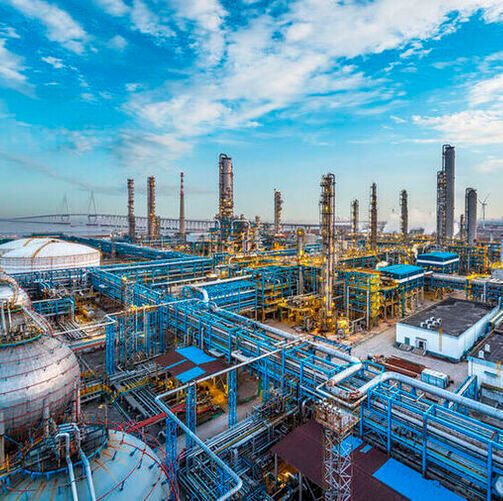
BASF Inaugurates 8.7 Billion Euro Verbund Site in China
Aerial view of the BASF production site in Zhanjiang, China.
(Source: BASF)
April 2 – BASF recently celebrated the official inauguration of its newly built, world-scale Verbund site in Zhanjiang, Guangdong Province in southern China. Covering an area of around four square kilometers, it is more than a major BASF project in the chemical growth market of China. “Zhanjiang shows what the future of chemistry looks like: efficient, digital and sustainable by design. The site showcases a smart integrated Verbund structure on an industrial scale,” said Dr. Markus Kamieth, CEO of BASF, at the ceremony attended by representatives from government, customers, business partners and employees.
At the Zhanjiang site, BASF employs over 2,000 people and will produce a diversified portfolio that includes basic chemicals, intermediates and specialty chemicals for the transportation, consumer goods, electronics, home care and personal care industries.
The majority of the products manufactured in Zhanjiang will directly serve customers in China, fully aligning with BASF’s global “local for local” approach. The project was completed on schedule and well below the original budget, with an investment of around 8.7 billion euros.
By using Verbund integration, process innovations and renewable energy, CO₂ emissions at the site can be reduced by up to 50 percent compared with a conventional petrochemical site. Long-term green power purchase agreements and investments in an offshore wind farm enable the site’s electricity supply to be 100 percent renewable.
The Zhanjiang integrated site is BASF’s seventh Verbund site worldwide and the third largest after Ludwigshafen, Germany, and Antwerp, Belgium. It will be operated solely under BASF’s responsibility.
Energy X Commissions Largest DLE Lithium Production Plant in USA
Energy X has recently announced the successful commissioning of a first-of-its-kind, U.S.-based lithium production facility at Project Lonestar, marking a major milestone toward commercial-scale domestic lithium production.
(Source: Pixabay)
April 2 – Energy Exploration Technologies (Energy X) has recently announced the successful commissioning of a first-of-its-kind, U.S.-based lithium production facility at Project Lonestar, marking a major milestone toward commercial-scale domestic lithium production.
The Lonestar demonstration plant, using industrial-grade equipment, is operational and will be producing approximately 250 metric tons per year of battery-grade lithium carbonate equivalent (LCE). Using Energy X’s patented Get-Lit direct lithium extraction and refining technologies, this milestone represents the first direct lithium extraction facility operating in Texas processing local Smackover brine, and serves as a critical validation of Energy X’s extraction efficiency, recovery rates, and cost profile.
The Project Lonestar Lithium demonstration facility enables Energy X to further optimize system design, validate process economics, and provide 5-25 ton samples of battery grade lithium to customers for qualification. The facility is the last step before commercial expansion across the company’s growing U.S. lithium footprint while advancing national goals around critical mineral security and supply chain resilience.
Phelan Green Chooses Honeywell Technology for Landmark eSAF Facility
Phelan efuels will deploy Honeywell UOP’s Fischer Tropsch Unicracking process technology, which uses FT liquids and waxes made from CO2 to create eSAF that complies with aviation industry standards.
(Source: Pixabay)
April 8 – Phelan Green, through its clean fuels subsidiary Phelan efuels, has recently announced that it has selected Honeywell’s renewable fuel process technology for its planned electro sustainable aviation fuel (eSAF) facility in Saldanha Bay, Western Cape, South Africa. Phelan efuels will deploy Honeywell UOP’s Fischer Tropsch (FT) Unicracking process technology, which uses FT liquids and waxes made from CO2 to create eSAF that complies with aviation industry standards.
The new facility forms a core part of the Phelan Green Hydrogen Project, a R47 billion (approximately 2.5 billion dollar) private investment that has been formally recognized by the South African Government as a nationally strategic green industrial development. Once operational, the project will be one of the world’s first commercial-scale eSAF production facilities supplying more than 140,000 tons of eSAF to the EU and UK markets.
Date: 08.12.2025
Naturally, we always handle your personal data responsibly. Any personal data we receive from you is processed in accordance with applicable data protection legislation. For detailed information please see our privacy policy.
Consent to the use of data for promotional purposes
I hereby consent to Vogel Communications Group GmbH & Co. KG, Max-Planck-Str. 7-9, 97082 Würzburg including any affiliated companies according to §§ 15 et seq. AktG (hereafter: Vogel Communications Group) using my e-mail address to send editorial newsletters. A list of all affiliated companies can be found here
Newsletter content may include all products and services of any companies mentioned above, including for example specialist journals and books, events and fairs as well as event-related products and services, print and digital media offers and services such as additional (editorial) newsletters, raffles, lead campaigns, market research both online and offline, specialist webportals and e-learning offers. In case my personal telephone number has also been collected, it may be used for offers of aforementioned products, for services of the companies mentioned above, and market research purposes.
Additionally, my consent also includes the processing of my email address and telephone number for data matching for marketing purposes with select advertising partners such as LinkedIn, Google, and Meta. For this, Vogel Communications Group may transmit said data in hashed form to the advertising partners who then use said data to determine whether I am also a member of the mentioned advertising partner portals. Vogel Communications Group uses this feature for the purposes of re-targeting (up-selling, cross-selling, and customer loyalty), generating so-called look-alike audiences for acquisition of new customers, and as basis for exclusion for on-going advertising campaigns. Further information can be found in section “data matching for marketing purposes”.
In case I access protected data on Internet portals of Vogel Communications Group including any affiliated companies according to §§ 15 et seq. AktG, I need to provide further data in order to register for the access to such content. In return for this free access to editorial content, my data may be used in accordance with this consent for the purposes stated here. This does not apply to data matching for marketing purposes.
Right of revocation
I understand that I can revoke my consent at will. My revocation does not change the lawfulness of data processing that was conducted based on my consent leading up to my revocation. One option to declare my revocation is to use the contact form found at https://contact.vogel.de. In case I no longer wish to receive certain newsletters, I have subscribed to, I can also click on the unsubscribe link included at the end of a newsletter. Further information regarding my right of revocation and the implementation of it as well as the consequences of my revocation can be found in the data protection declaration, section editorial newsletter.
Construction of the Saldanha Bay facility will commence in Q4 2026 and will support thousands of local jobs across multiple phases, helping to position the country as a competitive export hub for next-generation aviation fuels.
Eni Secures 500 Million Euro Loan for New Biorefinery in Italy
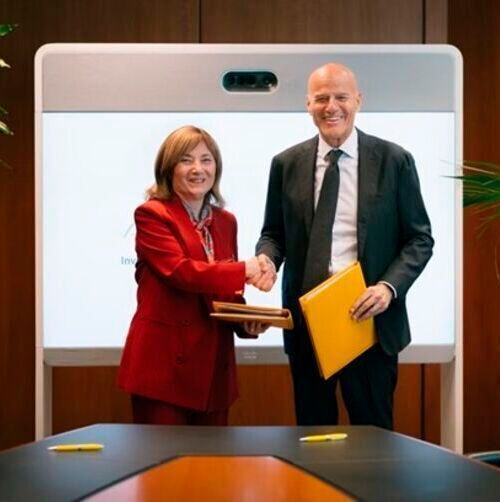
The agreement was signed by EIB Vice-President Gelsomina Vigliotti and Eni CEO Claudio Descalzi.
(Source: Eni)
April 13 – Recently the European Investment Bank (EIB) and Eni have signed a 15-year loan for 500 million euros to convert selected units of Eni’s Sannazzaro de’ Burgondi refinery, located in the Italian province of Pavia, into a biorefinery. The agreement was signed by EIB Vice-President Gelsomina Vigliotti and Eni CEO Claudio Descalzi.
The project involves converting the refinery’s Hydrocracker (HDC2) unit using Ecofining technology, and building a pre-treatment plant for waste materials like used cooking oils and animal fats, as well as waste from the agri-food industry, which comprise the main feedstock used by Enilive (Eni’s company devoted to achieving more sustainable mobility) to produce hydrotreated vegetable oil (HVO) biofuels.
With its proprietary Ecofining technology, Enilive produces HVO – a biofuel made from renewable feedstocks (pursuant to the EU Renewable Energy Directive) such as used cooking oils and waste from the agri-food industry. Pure HVO can be used in approved engines, and is already available at more than 1,600 Enilive service stations across Europe. From 2028, the Sannazzaro plant will start producing HVO diesel biofuels and the sustainable aviation fuel (SAF) biojet, with a production capacity of around 550,000 tons per year.
Building on existing utilities and infrastructure, the project will complement conventional fuel production with HVO diesel biofuels and SAF, helping reduce the carbon footprint of transport and decarbonize the aviation sector, for which SAF is currently the only available solution. By diversifying the product offering on the market, the project will also strengthen Italian and EU energy security, and serve the objectives of RE Power EU by expanding Europe’s biofuel production capacity.
Fluor Corporation Wins Contract for USA’s First New Refinery
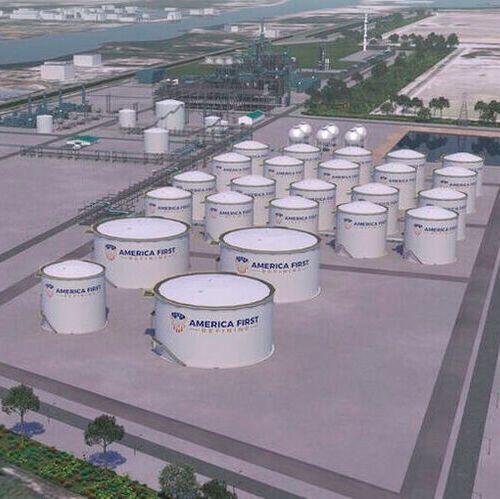
An artist rendering of the America First Refining large-scale refining facility in Brownsville, Texas, the first new refinery to be constructed in the United States in more than 50 years.
(Source: Fluor Corporation)
April 13 – Fluor Corporation recently announced that it has been selected by America First Refining (AFR) to execute the front-end engineering and design (Feed) for their large-scale refining facility in Brownsville, Texas. The AFR facility is the first new refinery to be constructed in the United States in more than 50 years.
Fluor will recognize the undisclosed contract value in the first quarter of 2026.
The facility will leverage commercially proven technologies to cleanly and efficiently process American shale oil into gasoline, diesel and jet fuel. Upon completion, the refinery is expected to process more than 60 million barrels per year of domestic crude, supporting domestic energy resilience and cleaner fuel innovation.
“We are honored to partner with America First Refining on this landmark U.S. project,” said Pierre Bechelany, Fluor’s Business Group President of Energy Solutions. “Together, AFR and Fluor bring deep technical expertise and proven project delivery capabilities, positioning the project for successful execution. This collaboration reflects both companies’ commitment to advancing the nation’s refining infrastructure.”
Topsoe Signs Feed Contract for Green Ammonia Project in Jordan
Hynfra intends to export the green ammonia to the international fertilizer markets.
(Source: Topsoe)
April 16 – Topsoe has signed a Feed agreement for Hynfra’s green ammonia project located in the port of Aqaba, Jordan. The Feed is the detailed engineering and design of the plant and Topsoe’s ammonia synthesis technology will be part of this design. The synthesis technology will convert the facility’s green hydrogen to ammonia based on Topsoe’s Modulite platform – a reliable concept that enables fast deployment and scalable production.
Kim Hedegaard, CEO Power-to-X at Topsoe, said: “We’re proud to bring our ammonia expertise to Hynfra’s visionary project. Together, we’re helping to position Jordan as an important market for green ammonia in the Middle East. Green ammonia is key to cutting emissions across energy-intensive industries such as heavy industry and agriculture. That’s why scaling up green ammonia production matters.”
Tomoho Umeda, CEO at Hynfra, said: “The events of the past weeks confirm one thing: green ammonia is no longer just an environmental goal, but a geopolitical necessity. Our partnership with Topsoe on the Jordan Green Ammonia project is a direct response to the fragility of global trade and the volatility of gas prices. By utilizing Topsoe’s proven technology and our scalable, off-grid modules, we are decoupling essential supply chains from unstable energy markets and vulnerable infrastructure. We are providing off-takers with a strategic alternative – one that secures low-carbon fertilizers and industrial feedstock while insulating them from the shocks of global instability.”
The project, Jordan Green Ammonia, has been established as a joint venture between Hynfra and Fidelity Group, an industrial development company. It is Hynfra’s first project in the Middle East.
Hynfra intends to export the green ammonia to the international fertilizer markets.
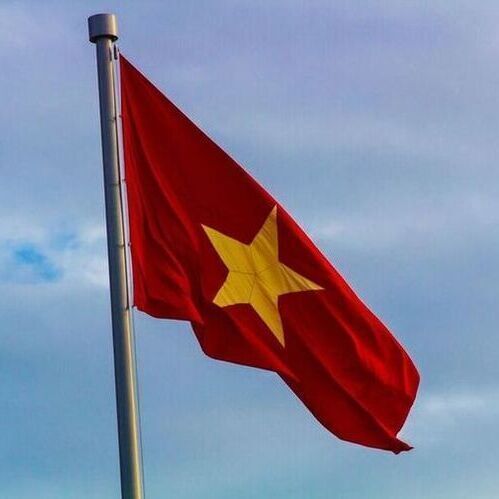
Technip Energies awarded contract for Long Son Petrochemicals enhancement project in Vietnam
Technip Energies has been awarded a contract by Long Son Petrochemicals for its Long Son Petrochemicals Enhancement project, located on Long Son Island, Vietnam.
(Source: Unsplash)
April 16 – Technip Energies has been awarded a contract by Long Son Petrochemicals (LSP) for its Long Son Petrochemicals Enhancement (LSPE) project, located on Long Son Island, Vietnam. The contract covers engineering and procurement services, site assistance, and the supply of proprietary burners for the plant’s cracking furnaces. The project will convert the existing steam cracker from naphtha to ethane feedstock using Technip Energies’ proprietary ethylene technologies, including its Ultra Selective Conversion (USC) furnace design and Heat-Integrated Rectifier System (HRS), delivering high selectivity, enhanced energy efficiency and optimized ethylene recovery.
This strategic initiative will incorporate large quantities of ethane into the existing naphtha and propane feedstock mix, aiming to optimize feedstock efficiency, achieve substantial cost reduction, significantly reduce carbon footprint intensity, and strengthen long-term strategic resilience amidst global market volatility. This project is among the first worldwide in recent years to convert a naphtha-based steam cracker to ethane, as forward-looking petrochemical producers prioritize feedstock diversification and the adoption of lower-carbon inputs to ensure supply chain security.
This new project builds on the long-standing collaboration between Technip Energies and Long Son Petrochemicals. Technip Energies previously delivered the engineering, procurement and construction (EPC) of the complex’s cracker unit between 2018 and 2023.
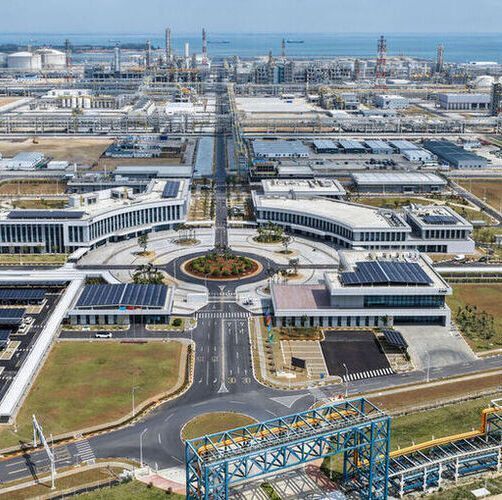
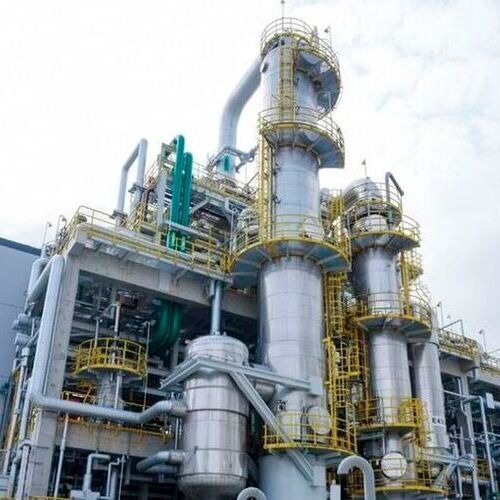
BASF’s Aroma Ingredients Business Launches Three New World-Scale Plants
The new citral plant in Zhanjiang, China.
(Source: BASF)
April 29 – BASF's Aroma Ingredients business unit recently announced the official launch of three newly built world-scale plants – menthol and linalool in Ludwigshafen, Germany, and citral in Zhanjiang, China. This announcement follows the inauguration ceremony of BASF’s Zhanjiang Verbund site held on March 26, 2026. In Ludwigshafen, the investment is in the triple-digit million-euro range.
The citral plant in Zhanjiang will supply the local market as well as the expanded downstream production, including menthol and linalool in Ludwigshafen. Menthol is an indispensable mint ingredient used in numerous products for oral and body care, in flavor compounds for confectionary and in the pharmaceutical industry. Linalool is a lavender aroma ingredient widely used in a broad range of applications – one of the largest areas of use for linalool is laundry care, but it is also a popular ingredient in other home, personal care and fine fragrance applications.
The integration of the new menthol and linalool downstream capacities into the Ludwigshafen Verbund site enables BASF to use resources, expertise and advanced production technologies based on the already existing assets at the site in the most efficient way.
With the full integration of the new capacities into the Verbund sites in China and Germany, BASF will use resources optimally and create synergies efficiently, thereby contributing to the company’s ambitious sustainability goals.
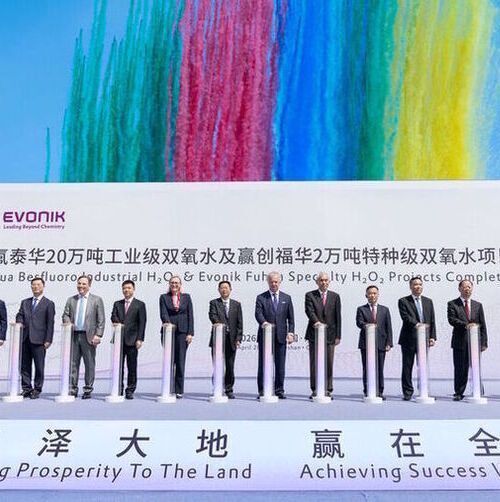
Evonik, Fuhua Successfully Complete Construction of H2O2 Facility in China
Evonik Fuhua New Materials has completed construction of its hydrogen peroxide facility in Leshan, Sichuan Province, China.
(Source: Evonik)
April 29 – Evonik Fuhua New Materials has completed construction of its hydrogen peroxide facility in Leshan, Sichuan Province, China. The joint venture between Evonik and Fuhua Tongda Chemicals Company (Fuhua) will purify industrial-grade H2O2 into specialty grades to serve high-growth markets in the region. The plant is now preparing to enter trial production, with the first commercial volumes expected in Q2 2026.
Based on technology licensed from Evonik’s Active Oxygens business line, the facility utilizes industrial-grade H2O2 produced by Fuhua as a feedstock. The resulting specialty grades will be offered to meet growing regional demand for high-end applications such as solar cell production, semiconductor manufacturing, food packaging, cosmetics, and pharmaceuticals. The plant is designed with an annual production capacity of 20,000 tons.
Hydrogen peroxide is a versatile chemical needed for a wide array of industries. It plays an essential role in applications ranging from electronics to renewable energy and aseptic packaging. Yet after use, the chemical breaks down into only oxygen and water – giving it a particularly beneficial environmental handprint.
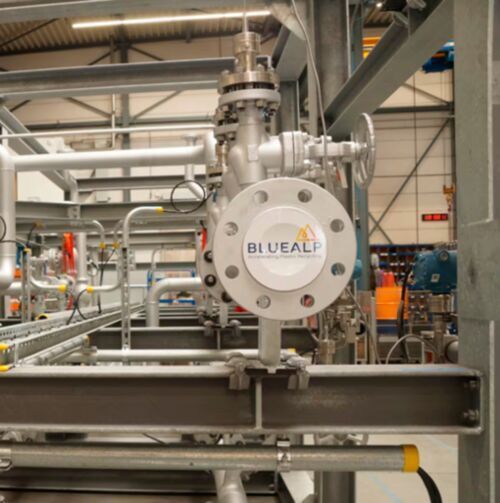
Bluealp Chosen as Technology Partner for Biobtx Project in Netherlands
Dutch technology companies Bluealp and Biobtx announce that Bluealp has been selected as technology partner for the Biobtx project in Delfzijl, The Netherlands.
(Source: Bluealp)
April 29 – Dutch technology companies BlueAlp and Biobtx announce that Bluealp has been selected as technology partner for the Biobtx project in Delfzijl. The goal is to combine the technologies in the Biobtx plant in Delfzijl to convert hard-to-recycle mixed plastic waste into high-value circular aromatics.
Bluealp’s patented pyrolysis technology will convert post-consumer mixed plastic waste into a gas-phase by gradually heating the plastic waste via pyrolysis. Biobtx will then convert via its proprietary catalytic process these vapours into circular aromatics – key chemical building blocks used in industries such as automotive and advanced materials.
The integrated technology will be implemented at Biobtx’s plant in Delfzijl, where Bluealp has been selected as the technology partner following a thorough technology evaluation process. Bluealp will provide Biobtx with a license to its technology and will be responsible for the detailed engineering, design, and fabrication of the pyrolysis unit, which will be integrated into the larger Biobtx facility.
The Biobtx plant will have an intake capacity of approximately 20 kilotonnes per year (kta) of mixed plastic waste. The pyrolysis unit is currently being fabricated at Bluealp’s headquarters in Eindhoven and the modules will be transported and integrated at the Delfzijl site from December 2026 onwards.




:quality(80)/p7i.vogel.de/wcms/46/68/4668c1a83d20864c2af5d0e594148828/0133903971v2.jpeg "The collaborations focus on project support, capacity building and capability development, technology transfer and innovation, and supply chain resilience. (Source: Aramco )")
:quality(80)/p7i.vogel.de/wcms/49/da/49dad8d8a13c0e70277ffa923b71544a/0133891190v2.jpeg "For the 100 MW hydrogen facility of the first project phase, Siemens is deploying its software portfolio for the hydrogen industry, enabling smarter operations and optimizing the value of the plant. (Source: Siemens)")
:quality(80)/p7i.vogel.de/wcms/20/9b/209b81269c3b7255e1f49c5771cfc303/0133747923v2.jpeg "Under the theme \"Step into Cognitive Manufacturing\", Ima will present its vision of a new generation of manufacturing, where Artificial Intelligence, advanced Robotics, Digital Vision Systems and Human Expertise work together to create smarter, more connected and adaptive production environments. (Source: Ima)")
:quality(80)/p7i.vogel.de/wcms/e5/87/e587bb7a91212bcc1ae875ef1bbb6edf/0133471290v2.jpeg "Physical AI marks a shift from machines that follow fixed instructions to embodied systems that perceive, reason, and act autonomously. (Source: Pixabay)")
:quality(80)/p7i.vogel.de/wcms/87/48/8748b7926d353ca46599d85212f2a385/0133962385v2.jpeg "The investment marks an important milestone in MOL Group’s long-term ‘Shape Tomorrow’ strategy by further expanding the company’s green energy portfolio, strengthening energy security, and contributing to the sustainable energy supply of the region. (Source: MOL Group)")
:quality(80)/p7i.vogel.de/wcms/48/a4/48a48092e53bcc7db51b527a98a083ee/0133912333v2.jpeg "At a glance: Plant engineering projects from across the globe. (Source: © suphamit - stock.adobe.com)")
:quality(80)/p7i.vogel.de/wcms/6e/91/6e91403e574040df194cb07fae945f07/0133900692v2.jpeg "The inauguration ceremony for the new unit was held in the presence of Thierry Le Hénaff, Chairman and Chief Executive Officer of Arkema and Stéphane Séjourné, Executive Vice-President of the European Commission for Prosperity and Industrial Strategy. (Source: Arkema)")
:quality(80)/p7i.vogel.de/wcms/4e/21/4e216ce12e862201405cdafa46734ad6/0133894576v2.jpeg "Air Products’ LNG-based ASU in Pengerang will produce more than 600 tonnes of liquid oxygen, nitrogen and argon per day. (Source: Air Products)")
:quality(80)/p7i.vogel.de/wcms/50/95/509548cafc37c66c1f9a6aa00d78a347/0133898207v2.jpeg "Manufactured at Nouryon’s facility in Finland, Cekol CMC-Na is a water-soluble polymer that gives drugmakers a plant-based alternative to synthetic excipients. (Source: Nouryon)")
:quality(80)/p7i.vogel.de/wcms/96/24/9624790c4a1710995de488021bf93c4c/0133846001v1.jpeg "When tableting tools are manufactured closer to the market, supply chains can respond more quickly. With a new production site in Pune, India, Fette Compacting is bringing punches and dies closer to one of the pharmaceutical industry’s fastest-growing markets. (Source: Fette Compacting)")
:quality(80)/p7i.vogel.de/wcms/c3/40/c340a3cd06990549f48cf68ae3c5ffff/0133748269v2.jpeg "Bayer has plans to invest 2.2 billion dollars in a new pharmaceutical manufacturing site in New Albany, Ohio, U.S. (Source: Bayer )")
:quality(80)/p7i.vogel.de/wcms/c1/d0/c1d0ae0beb84f04e001931c639b97285/0133965554v2.jpeg "Using Topsoe’s kerosene hydrotreating technology, BPCL will produce SAF within its existing refinery infrastructure, without the need for a new dedicated SAF production unit. (Source: Topsoe )")
:quality(80)/p7i.vogel.de/wcms/02/2c/022cab680492112fbf0ef42892dddd63/0133748297v2.jpeg "In addition to production of green hydrogen, the H2future-Follow-Up project is now increasingly focusing on its treatment and provision for industrial applications. (Source: Verbund)")
:quality(80)/p7i.vogel.de/wcms/54/b9/54b9798cdc66e4aa54009dcd5fd2a682/0133616385v2.jpeg "Hydrogen production plant using water electrolysis powered by renewable energy. (Source: Hyundai E&C/AI-generated image)")
:quality(80)/p7i.vogel.de/wcms/7f/1b/7f1b02563e4803ee7f3764ffd1720d8c/0132842468v3.jpeg "The new EZJetFlo™ in-line mixing system solves the production bottleneck using highly efficient Venturi powder induction. (Source: ILC DOver)")
:quality(80)/p7i.vogel.de/wcms/02/fb/02fbe7296b87b2c110ad17e983d7d87a/0132963781v2.jpeg "MAAG’s Extrex6 EC gear pump is specifically designed for the continuous conveying of rigid PVC (polyvinyl chloride). (Bild: Maag)")
:quality(80)/p7i.vogel.de/wcms/69/8c/698c17b920244559c08f28261636fee5/0132816720v2.jpeg "Xylem has entered into an agreement to acquire the Cornell Pump and Roper Pump businesses from Indicor for 1.46 billion dollars. (Source: Pixabay)")
:quality(80)/p7i.vogel.de/wcms/89/47/8947595eafaa6ad27c8552a5f9ad48e1/0129967379v1.jpeg "Biogas and biomethane currently provide approximately 5.5 GW of stable electrical capacity and could be expanded to up to 20 GW without requiring additional land – an enormous potential. (Source: license free via Pixabay)")
:quality(80)/p7i.vogel.de/wcms/fe/5d/fe5d9bb106dfb20c1d69c90d74e78f58/0133648325v2.jpeg "Under the ‘National Water Strategy 2030’, Saudi Arabia is securing sustainable water resources, protecting the natural environment and providing high-quality services. (Source: Malika - stock.adobe.com)")
:quality(80)/p7i.vogel.de/wcms/88/c4/88c457f86fb2842cbcee21c320c44bd9/0133541916v2.jpeg "The RO membrane elements will be used for the Changi Newater Factory (CNF3), a large-scale used water treatment plant in Singapore. (Source: Unsplash)")
:quality(80)/p7i.vogel.de/wcms/1b/2b/1b2b80c989067b50c687314515948806/0133161547v2.jpeg "Acwa has signed a MOU with Veolia, committing the two leading companies to optimizing seawater desalination across the entire value chain. (Source: Acwa)")
:quality(80)/p7i.vogel.de/wcms/21/2e/212e079dcb99d9fd36e85dae0db3141a/0132929532v2.jpeg "Aerial view of the Kawasaki Works. (Source: Asahi Kasei )")
:quality(80)/p7i.vogel.de/wcms/79/31/7931cc94924b4c2ebc7087e9cec2f801/0130490720v2.jpeg "The new Pulsar Model R80 solids antenna delivers improved measurement capability through its high-frequency signal, narrow beam angle, and advanced configuration software. (Source: Ametek )")
:quality(80)/p7i.vogel.de/wcms/6b/cc/6bcc3d26e1c7c74d90a10bc3ca296ae1/0128362351v2.jpeg "A look into Bayer's new tablet production, Solida 1, during construction: The robots and lift columns for material handling are being installed. (Source: Bayer)")
:quality(80)/p7i.vogel.de/wcms/24/c8/24c84ab6b1bcd24468a87820a07a85aa/0128194707v2.jpeg "Ajax Equipment has supplied Binding Solutions with a feed system comprising buffer hopper, screw feeder and agitated screw feeder for a pilot plant handling iron ore and additives. (Source: Ajax Equipment )")
:quality(80)/p7i.vogel.de/wcms/0d/74/0d740641b4bace22f52f54ffde65e7b5/0133965905v2.jpeg "Evonik's pilot plant for PU recycling in Hanau, Germany. (Source: Evonik)")
:quality(80)/p7i.vogel.de/wcms/fa/d3/fad368bdbaaa561f5383f31ab78d4891/0133899730v2.jpeg "Established with support from the Singapore Economic Development Board, Lubrizol's Southeast Asia Innovation Center in Jurong serves as a regional platform for customer collaboration, scientific innovation and technical advancement. (Source: Lubrizol )")
:quality(80)/p7i.vogel.de/wcms/7f/1b/7f1b4ca96036a50d211eefe39a52e3d5/0133896780v2.jpeg "At Borouge International Niedergebra, annual output of recycled mixed polyolefin materials will increase by close to 9 kilo tonnes. (Source: Unsplash)")
:quality(80)/p7i.vogel.de/wcms/00/17/0017bdaa28fe66816199a4eb71c02e72/0133748786v2.jpeg "Located at the heart of the Rhône-Alpes Research Center, the Battery Center of Excellence is entering a new phase of its development. (Source: Arkema)")
:quality(80)/p7i.vogel.de/wcms/f8/29/f8298429c1638b949a6f76346f6709c7/0118701710v2.jpeg "Bosch Industrial Heat will be presenting sustainable steam and heat solutions for global industrial use at the Achema trade fair in Frankfurt, Germany. (Source: Bosch Industriekessel)")
:quality(80)/p7i.vogel.de/wcms/07/24/07242664ab2b1c7841c9d9d0a127670c/0116045959.jpeg "A look inside the GEA machine room. (Bild: Magnavale)")
:quality(80)/p7i.vogel.de/wcms/c9/79/c979a20b32395ddfa93fe7ead90578a0/0108386061.jpeg "Production residues, lime, salt and suspended solids quickly clog the pipes. (Source:©Tanakorn - stock.adobe.com)")
:quality(80)/p7i.vogel.de/wcms/9e/5c/9e5c92d942ed046a27562d6e3d730c92/0103483548.jpeg "It is almost ten metres high and extends over three floors: the world's first multiple dividing wall column is located in the new technical centre at the University of Ulm. (Bild: Eberhardt, kiz Universität Ulm)")
:quality(80)/p7i.vogel.de/wcms/90/f3/90f351201dd4ea7e2439ce19019bf318/0133013227v2.jpeg "Adnoc, in collaboration with SLB, has deployed its AI-enabled RTOC platform across its fleet of more than 120 rigs. (Source: Adnoc)")
:quality(80)/p7i.vogel.de/wcms/aa/9d/aa9dc332257fbc96a2d2ec20b40781a5/0132005469v2.jpeg "Qatar Energy would like to emphasize that this was an operational accident and not sabotage or hostile in nature. (Source: Qatar Energy)")
:quality(80)/p7i.vogel.de/wcms/57/da/57da73af9c35d633196afd46348182b2/0130820106v2.jpeg "Today, the world is witnessing a deepening energy crisis. The Iran–US war has exposed the vulnerability of the global oil, gas, and petrochemicals industry. Its impact is not confined to one region—it has triggered a domino effect across continents. (Source: © Rayhan - stock.adobe.com)")
:quality(80)/p7i.vogel.de/wcms/20/36/20366ffa57a841882fd165e4dc885c09/0130491929v2.jpeg "With the US and Israel jointly firing the first shot on Iran, the world is now witnessing major cascading effects—from soaring global oil and gas prices, to industry leaders declaring force majeure, and even predictions that the war could trigger a global economic recession! (Source: © FOYSAL - stock.adobe.com)")
:quality(80)/p7i.vogel.de/wcms/a8/4e/a84e8039a90a5cf4751d01ebcf6ba1a9/0127510172v2.jpeg "After six years, Achemasia, the international trade fair and innovation forum for sustainable chemical production, has returned with renewed vigor, bringing together global expertise, Chinese innovation, and a shared commitment to a greener industrial future—according to the organizers of the fair. (Source:PROCESS China)")
:quality(80)/p7i.vogel.de/wcms/17/c7/17c703445f134eb3d7ecc7918dda2762/0124596096v2.jpeg "Achema Middle East will launch in Saudi Arabia in 2026. (Bild: Dechema/ Hannibal)")
:quality(80)/p7i.vogel.de/wcms/2a/2c/2a2cffc07f51019065387cd63241b5ce/0119463370v1.jpeg "The Injecta 36 fills and seals RTU (Ready-to-Use) syringes at high speed. The image shows the robotic arm. (Source: IMA)")
:quality(80)/p7i.vogel.de/wcms/b1/7e/b17ea8c62ccafad1d1fb072d6199bbd6/0118578446.jpeg "“Star in the ring”: Vegapuls 6X radar level sensors are the solution of choice for Renolit for many applications on the way to the perfect plastic product. (Source: © MR Design - stock.adobe.com; Vega)")
:quality(80)/p7i.vogel.de/wcms/e0/95/e095767c9e3dc27fc37d5e635ef85303/0133843743v1.jpeg "The Strait of Hormuz crisis has shown how a single chokepoint can turn an energy shock into a manufacturing and food shock. (Source: © Gowrob - stock.adobe.com)")
:quality(80)/p7i.vogel.de/wcms/ff/f6/fff6f0d51831655bdd781e08681d74a3/0133747018v2.jpeg "His Excellency Saad Sherida Al-Kaabi, the Minister of State for Energy Affairs, the President and CEO of Qatar Energy at the Qatar Economic Forum Special Edition in New York, USA. (Source: Qatar Energy )")
:fill(fff,0)/images.vogel.de/vogelonline/companyimg/2000/2093/65.jpg "Glatt_Logo_ND4c-RGB (5x3cm).jpg ()")
:fill(fff,0)/p7i.vogel.de/companies/61/f9/61f9439b7cbe4/logo-edl.png "logo-edl (EDL Anlagenbau Gesellschaft mbH)")
:fill(fff,0)/images.vogel.de/vogelonline/companyimg/103000/103097/65.jpg "Pörner Gruppe mit Rand.jpg ()")



:quality(80)/p7i.vogel.de/wcms/9d/c1/9dc1459abca8c6eee52e304ae7125740/0131002528v2.jpeg "The new citral plant in Zhanjiang, China. (Source: BASF)")
:quality(80)/p7i.vogel.de/wcms/2e/c9/2ec993dc8f88d8f4ce78410d164c141e/0131003660v2.jpeg "Dutch technology companies Bluealp and Biobtx announce that Bluealp has been selected as technology partner for the Biobtx project in Delfzijl, The Netherlands. (Source: Bluealp)")