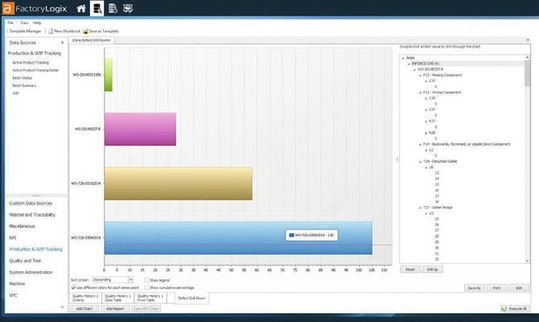
Figure 3: Navigating historical data should be graphical and intuitive so that minor edits and changes to analytics can be put into the hands of the people who need the data.
(Images: Aegis Software)
As well as those reports that are generated on demand, the system should have the ability to provide automated scheduled reports. Many of those in the enterprise who need or are able to make use of data do not have the time or the inclination to go into a system and generate a report. Systems should auto-generate reports on a regular basis and distribute that report to the parties who will obtain value from it. These auto-generated reports might be for a single shift, daily, weekly or even monthly, highlighting key data as well as trends that allow better decisions to be made. Some users might even play an entirely passive role in the ecosystem while benefiting from the reported data.
Again: this user configuration and flexibility must apply regardless of the display device. Most important: the same data and same customizable nature should apply to mobile devices. Being able to build a dashboard for the smartphone or tablet as well as the desktop or shop-floor based display is essential to allow the on-the-move user to access the data they need, particularly when emergency analysis and reaction is required. As mentioned above, auto-generated reports should be made available on mobile devices and notifications sent when necessary.
As well as considering a mobile workforce it is also important to consider a data ecosystem that operates beyond a single facility and a single geography. With businesses and supply chains operating on an increasingly global basis, reporting tools must have the means for groups of staff to interrogate and traverse large data sets across multiple facilities in multiple geographies and perhaps through multiple vendors when a partially or fully outsourced model is deployed.
Collaborative data mining can be extremely valuable in a team meeting where the root cause of problem is not fully understood. Flat static reports are rarely conclusive in themselves and the ability to drill into data in real-time can quickly reveal causes inevitably leading to solutions.
Two solutions, two outcomes
When it comes to resolving all the issues that the transparent factory generates, there are two opposite approaches. One solution is customization, the other is empowerment.
While the customization model may appeal at first, offering multiple solutions that deliver a unique dashboard or report for every eventuality perceived during the installation of the solution, it will clearly be the most rigid in the long term, and as a result the one that requires the most interaction with IT, the integrator and the vendor.
The approach of empowerment of the factory personnel to create their own data outputs and dashboards delivers more than the custom or tailored solutions. Firstly, it does not require a detailed plan that needs to be applied without deviation, which in itself takes time and resource to research and build. That plan can only reflect the demands of that moment, regardless of how detailed and complete it is.
Secondly, by empowering those using the system to configure the system buy in from the operator is obtained. They each have their own version of the system, on their own platform and they are invested into its successful deployment. Thirdly, the system is as dynamic as your business is, changing when business or customer demand dictates.
The latter, more empowered approach doesn’t make great demands on the IT team and does not expect coding or SQL skills from the user.
It is not reasonable to consider both options without weighing the costs of deployment. A custom solution may initially seem to offer the best value, but it is without doubt a path to endless costs of additional customization and update. This may mean the loss of time and agility to the business way beyond the basic cost of programing time.
Date: 08.12.2025
Naturally, we always handle your personal data responsibly. Any personal data we receive from you is processed in accordance with applicable data protection legislation. For detailed information please see our privacy policy.
Consent to the use of data for promotional purposes
I hereby consent to Vogel Communications Group GmbH & Co. KG, Max-Planck-Str. 7-9, 97082 Würzburg including any affiliated companies according to §§ 15 et seq. AktG (hereafter: Vogel Communications Group) using my e-mail address to send editorial newsletters. A list of all affiliated companies can be found here
Newsletter content may include all products and services of any companies mentioned above, including for example specialist journals and books, events and fairs as well as event-related products and services, print and digital media offers and services such as additional (editorial) newsletters, raffles, lead campaigns, market research both online and offline, specialist webportals and e-learning offers. In case my personal telephone number has also been collected, it may be used for offers of aforementioned products, for services of the companies mentioned above, and market research purposes.
Additionally, my consent also includes the processing of my email address and telephone number for data matching for marketing purposes with select advertising partners such as LinkedIn, Google, and Meta. For this, Vogel Communications Group may transmit said data in hashed form to the advertising partners who then use said data to determine whether I am also a member of the mentioned advertising partner portals. Vogel Communications Group uses this feature for the purposes of re-targeting (up-selling, cross-selling, and customer loyalty), generating so-called look-alike audiences for acquisition of new customers, and as basis for exclusion for on-going advertising campaigns. Further information can be found in section “data matching for marketing purposes”.
In case I access protected data on Internet portals of Vogel Communications Group including any affiliated companies according to §§ 15 et seq. AktG, I need to provide further data in order to register for the access to such content. In return for this free access to editorial content, my data may be used in accordance with this consent for the purposes stated here. This does not apply to data matching for marketing purposes.
Right of revocation
I understand that I can revoke my consent at will. My revocation does not change the lawfulness of data processing that was conducted based on my consent leading up to my revocation. One option to declare my revocation is to use the contact form found at https://contact.vogel.de. In case I no longer wish to receive certain newsletters, I have subscribed to, I can also click on the unsubscribe link included at the end of a newsletter. Further information regarding my right of revocation and the implementation of it as well as the consequences of my revocation can be found in the data protection declaration, section editorial newsletter.
The empowered solution delivers user-customizable dashboards and reports as well as intuitive data mining. It offers a system that is as flexible and agile as any enterprise and reacts to changes in the same way a successful enterprise does.




:quality(80)/p7i.vogel.de/wcms/d3/d3/d3d35ace50cb3b0fcd075baa25e84884/0133106707v2.jpeg "Flyability’s Elios 2 is a drone used for internal inspection of tanks or boilers. (Source: Flyability )")
:quality(80)/p7i.vogel.de/wcms/90/f3/90f351201dd4ea7e2439ce19019bf318/0133013227v2.jpeg "Adnoc, in collaboration with SLB, has deployed its AI-enabled RTOC platform across its fleet of more than 120 rigs. (Source: Adnoc)")
:quality(80)/p7i.vogel.de/wcms/2c/8f/2c8f5994fde6636d3ab1dc1e6f93d8d7/0132613246v2.jpeg "Dinnissen supplied a complete process line with bag emptying systems, rotary valves, pneumatic conveying, receiving hoppers, vibrating sieves, magnets, central dust extraction, platforms, a Big Bag filling station and a 3,000-liter Pegasus Mixer with retractable mixing shafts. (Source: Dinnissen)")
:quality(80)/p7i.vogel.de/wcms/76/ae/76ae14e52f34f3ad8b3250265b7c5840/0132596877v2.jpeg "The initiative comes at a time when digital infrastructure is playing an increasingly strategic role, becoming ever more central to industrial competitiveness and data sovereignty. (Source: Pixabay)")
:quality(80)/p7i.vogel.de/wcms/55/c5/55c5dedd6dc131eab576a6686d869c80/0133152325v2.jpeg "KBR has been selected by Live Oak consortium to provide feed services for the proposed Live Oak project in Norfolk, Nebraska. (Source: Unsplash)")
:quality(80)/p7i.vogel.de/wcms/7f/1b/7f1b02563e4803ee7f3764ffd1720d8c/0132842468v3.jpeg "The new EZJetFlo™ in-line mixing system solves the production bottleneck using highly efficient Venturi powder induction. (Source: ILC DOver)")
:quality(80)/p7i.vogel.de/wcms/a1/aa/a1aa80c10395d2908eee6bf4ddf323ce/0133094782v2.jpeg "Attendees participate in a ribbon-cutting ceremony to celebrate the completion of the facility. (Source: Asahi Kasei )")
:quality(80)/p7i.vogel.de/wcms/fc/96/fc96e896f549e6917ba6352fea21e67d/0133051280v2.jpeg "Axens and Raízen have announced the successful start-up of a Prime-G+ FCC gasoline desulfurization unit at Raízen’s refinery in Argentina. (Source: Unsplash )")
:quality(80)/p7i.vogel.de/wcms/2b/ab/2bab200ad69c5a306a5d2ca4cb5b303c/0132881895v2.jpeg "Novo Nordisk has selected AWS as its preferred cloud provider and strategic AI partner. (Source: Pixabay)")
:quality(80)/p7i.vogel.de/wcms/bd/fb/bdfb78b9ec65a6b310ddf35692ebc9a7/0132873434v2.jpeg "The microbiology business generated 645 million dollars in revenue in 2025 and was part of Thermo Fisher's Specialty Diagnostics segment. (Source: Thermo Fisher Scientific )")
:quality(80)/p7i.vogel.de/wcms/8f/a8/8fa875479f0eb1a4c3ae16fcf3f4c675/0132829441v2.jpeg "Coesia addresses production efficiency, product customization, quality, sustainability, and digitalization across injectables, medical devices, optical products, OTC products, and nutraceuticals. (Source: Coesia)")
:quality(80)/p7i.vogel.de/wcms/f2/f3/f2f342148fc985c05c02c1317a3e6fd5/0133144319v2.jpeg "The second last module transported weighs 6,920 tonnes and is 55 metres high. (Source: Ineos)")
:quality(80)/p7i.vogel.de/wcms/93/9b/939b4ca6969859a7487f02e55c587c9c/0133092690v2.jpeg "From left to right: Anne Francken, Kaufmännische Geschäftsführerin BASF InfraService & Solutions Lausitz; Jürgen Fuchs, Vorsitzender der Geschäftsführung BASF InfraService & Solutions Lausitz; Nils Aldag, CEO Sunfire; and Christian von Olshausen, CTO Sunfire. (Source: © BASF InfraService & Solutions Lausitz )")
:quality(80)/p7i.vogel.de/wcms/12/4b/124b01e1632eadfd8081acc069824d72/0133013384v2.jpeg "Once at full operational scale, Project Lion has the potential to produce up to 125,000 tonnes of sustainable aviation fuel per year. (Source: Pixabay)")
:quality(80)/p7i.vogel.de/wcms/02/fb/02fbe7296b87b2c110ad17e983d7d87a/0132963781v2.jpeg "MAAG’s Extrex6 EC gear pump is specifically designed for the continuous conveying of rigid PVC (polyvinyl chloride). (Bild: Maag)")
:quality(80)/p7i.vogel.de/wcms/69/8c/698c17b920244559c08f28261636fee5/0132816720v2.jpeg "Xylem has entered into an agreement to acquire the Cornell Pump and Roper Pump businesses from Indicor for 1.46 billion dollars. (Source: Pixabay)")
:quality(80)/p7i.vogel.de/wcms/89/47/8947595eafaa6ad27c8552a5f9ad48e1/0129967379v1.jpeg "Biogas and biomethane currently provide approximately 5.5 GW of stable electrical capacity and could be expanded to up to 20 GW without requiring additional land – an enormous potential. (Source: license free via Pixabay)")
:quality(80)/p7i.vogel.de/wcms/21/2e/212e079dcb99d9fd36e85dae0db3141a/0132929532v2.jpeg "Aerial view of the Kawasaki Works. (Source: Asahi Kasei )")
:quality(80)/p7i.vogel.de/wcms/c0/49/c04967ef45d44bc86baaa3326f05acd2/0132883356v2.jpeg "Dupont has recently announced that a MBR system has been selected to support the upgrade of the Lower Molonglo Water Quality Control Centre in Canberra, Australia. (Source: Dupont )")
:quality(80)/p7i.vogel.de/wcms/01/36/0136c4034940da6e27e2efc39d3a3a00/0132413178v2.jpeg "Aquatech has announced that it will acquire Metichem, a UAE-based leader in advanced water-treatment chemicals and O&M services across industrial, municipal, and institutional markets in the Middle East, North Africa and Southeast Asia. (Source: Unsplash)")
:quality(80)/p7i.vogel.de/wcms/40/b7/40b7cfff60e644ba4b8a1a1d1fcfac09/0131991659v2.jpeg "AI as a technology is constantly evolving and its role in transforming the wastewater and water treatment industry is huge. (Source: © Malika - stock.adobe.com)")
:quality(80)/p7i.vogel.de/wcms/79/31/7931cc94924b4c2ebc7087e9cec2f801/0130490720v2.jpeg "The new Pulsar Model R80 solids antenna delivers improved measurement capability through its high-frequency signal, narrow beam angle, and advanced configuration software. (Source: Ametek )")
:quality(80)/p7i.vogel.de/wcms/6b/cc/6bcc3d26e1c7c74d90a10bc3ca296ae1/0128362351v2.jpeg "A look into Bayer's new tablet production, Solida 1, during construction: The robots and lift columns for material handling are being installed. (Source: Bayer)")
:quality(80)/p7i.vogel.de/wcms/24/c8/24c84ab6b1bcd24468a87820a07a85aa/0128194707v2.jpeg "Ajax Equipment has supplied Binding Solutions with a feed system comprising buffer hopper, screw feeder and agitated screw feeder for a pilot plant handling iron ore and additives. (Source: Ajax Equipment )")
:quality(80)/p7i.vogel.de/wcms/69/94/69947f21ed8aa8e49e96da653c8e6348/0133096674v2.jpeg "Xanadu has announced the next phase of its collaboration with Mitsubishi Chemical to advance semiconductor fabrication technologies using quantum computing algorithms. (Source: Pixabay)")
:quality(80)/p7i.vogel.de/wcms/70/6b/706bcef51b681c119d899e1bee62dbe2/0133052762v2.jpeg "Lonza has recently announced the appointment of Samanta Cimitan as CCO, Senior Vice President and Member of the Extended Executive Committee. (Source: Lonza)")
:quality(80)/p7i.vogel.de/wcms/7b/a9/7ba921a8fc85e39a64246e963f034b05/0133052182v2.jpeg "Orlen has secured certification under the Oil and Gas Institute’s KZR Inig sustainability scheme for the co-hydrotreatment of bio-based feedstocks at its Płock refinery in Poland. (Source: © Unsplash )")
:quality(80)/p7i.vogel.de/wcms/60/a1/60a1d1562d15cf64fdf1db8b0ca475db/0133051140v2.jpeg "LG Chem has begun mass production and supply of semiconductor strippers to Amkor Technology, marking the company’s first entry into the semiconductor stripper market. (Source: LG Chem )")
:quality(80)/p7i.vogel.de/wcms/f8/29/f8298429c1638b949a6f76346f6709c7/0118701710v2.jpeg "Bosch Industrial Heat will be presenting sustainable steam and heat solutions for global industrial use at the Achema trade fair in Frankfurt, Germany. (Source: Bosch Industriekessel)")
:quality(80)/p7i.vogel.de/wcms/07/24/07242664ab2b1c7841c9d9d0a127670c/0116045959.jpeg "A look inside the GEA machine room. (Bild: Magnavale)")
:quality(80)/p7i.vogel.de/wcms/c9/79/c979a20b32395ddfa93fe7ead90578a0/0108386061.jpeg "Production residues, lime, salt and suspended solids quickly clog the pipes. (Source:©Tanakorn - stock.adobe.com)")
:quality(80)/p7i.vogel.de/wcms/9e/5c/9e5c92d942ed046a27562d6e3d730c92/0103483548.jpeg "It is almost ten metres high and extends over three floors: the world's first multiple dividing wall column is located in the new technical centre at the University of Ulm. (Bild: Eberhardt, kiz Universität Ulm)")
:quality(80)/p7i.vogel.de/wcms/aa/9d/aa9dc332257fbc96a2d2ec20b40781a5/0132005469v2.jpeg "Qatar Energy would like to emphasize that this was an operational accident and not sabotage or hostile in nature. (Source: Qatar Energy)")
:quality(80)/p7i.vogel.de/wcms/57/da/57da73af9c35d633196afd46348182b2/0130820106v2.jpeg "Today, the world is witnessing a deepening energy crisis. The Iran–US war has exposed the vulnerability of the global oil, gas, and petrochemicals industry. Its impact is not confined to one region—it has triggered a domino effect across continents. (Source: © Rayhan - stock.adobe.com)")
:quality(80)/p7i.vogel.de/wcms/20/36/20366ffa57a841882fd165e4dc885c09/0130491929v2.jpeg "With the US and Israel jointly firing the first shot on Iran, the world is now witnessing major cascading effects—from soaring global oil and gas prices, to industry leaders declaring force majeure, and even predictions that the war could trigger a global economic recession! (Source: © FOYSAL - stock.adobe.com)")
:quality(80)/p7i.vogel.de/wcms/a8/4e/a84e8039a90a5cf4751d01ebcf6ba1a9/0127510172v2.jpeg "After six years, Achemasia, the international trade fair and innovation forum for sustainable chemical production, has returned with renewed vigor, bringing together global expertise, Chinese innovation, and a shared commitment to a greener industrial future—according to the organizers of the fair. (Source:PROCESS China)")
:quality(80)/p7i.vogel.de/wcms/17/c7/17c703445f134eb3d7ecc7918dda2762/0124596096v2.jpeg "Achema Middle East will launch in Saudi Arabia in 2026. (Bild: Dechema/ Hannibal)")
:quality(80)/p7i.vogel.de/wcms/2a/2c/2a2cffc07f51019065387cd63241b5ce/0119463370v1.jpeg "The Injecta 36 fills and seals RTU (Ready-to-Use) syringes at high speed. The image shows the robotic arm. (Source: IMA)")
:quality(80)/p7i.vogel.de/wcms/b1/7e/b17ea8c62ccafad1d1fb072d6199bbd6/0118578446.jpeg "“Star in the ring”: Vegapuls 6X radar level sensors are the solution of choice for Renolit for many applications on the way to the perfect plastic product. (Source: © MR Design - stock.adobe.com; Vega)")
:quality(80)/p7i.vogel.de/wcms/dc/5f/dc5f56ec161d3bc7f434e4a84e380dd1/0133000164v2.jpeg "Saipem’s scope encompasses the Engineering, Procurement, Construction and Installation of offshore and subsea facilities. (Source: Pixabay)")
:quality(80)/p7i.vogel.de/wcms/e4/af/e4af1b0a0b4eeb5aa37f35d3ebefeb82/0132727431v2.jpeg "The World Bank’s 'Global Gas Flaring Tracker Report' shares that global gas flaring increased from 157 bcm in 2024 to 167 bcm in 2025, a 6 % increase. (Source: © JAYDA RIN - stock.adobe.com)")
:quality(80)/p7i.vogel.de/wcms/95/d3/95d3d3b5b6041379e63577d6f9ce3b78/0132582839v2.jpeg "Left to right: Lakshmi Narayanan, Vice Chair of Patel Family Office; Marc W. Gunderson, Founder of MWG Enterprises; and Abdulmalik Alqahtani, Group Chief Executive Officer of AHQ Group. (Source: Mera Oil)")
:quality(80)/p7i.vogel.de/wcms/f3/5e/f35e7bd21b0b0ac8e75b49d95fd53081/0132466659v2.jpeg "The GPIC complex in Sitra, Kingdom of Bahrain. (Source: GPIC)")
:fill(fff,0)/images.vogel.de/vogelonline/companyimg/107800/107832/65.jpg "logoDueperthal.jpg ()")
:fill(fff,0)/p7i.vogel.de/companies/61/f9/61f9439b7cbe4/logo-edl.png "logo-edl (EDL Anlagenbau Gesellschaft mbH)")
:fill(fff,0)/images.vogel.de/vogelonline/companyimg/64500/64561/65.jpg "Frewitt_Logo.jpg ()")
:quality(80)/p7i.vogel.de/wcms/d5/ce/d5ce45c8d9155eaa968b7786eea90c2c/0127610689v2.jpeg "Edge Process Management dashboard view. (Source: Watlow)")
:quality(80)/p7i.vogel.de/wcms/73/3c/733c2055d52f2804877f8fa1f7abf9d6/0128662422v2.jpeg "Emerson’s Rosemount 2405 Monitoring Hub integrates a display, communication unit, and data concentrator into a single device to deliver full inventory control and multi-tank inventory insights. (Source: Emerson )")