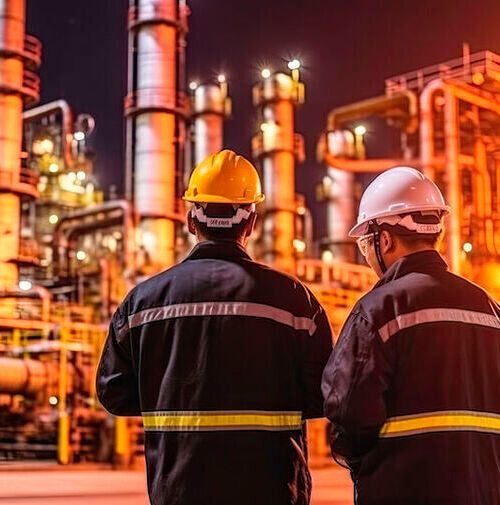
PROCESS Worldwide brings to you the ‘Top 10 plant engineering projects of March 2024’ from all over the world. Right from the world’s largest ‘ammonia to hydrogen’ modular cracker demo in operation to Akzonobel investing 30 million plus dollars at its powder coatings sites, find out all the projects making headlines here.
At a glance: Plant engineering projects from across the globe.
(Source: Sasint - stock.adobe.com)
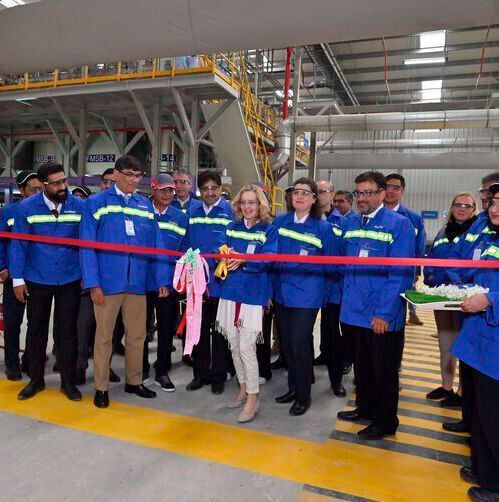
Akzonobel Inaugurates New Manufacturing Plant in Pakistan
A new 26-million-euro manufacturing plant with its own forest has been opened by Akzonobel in Faisalabad – the company’s largest investment in Pakistan to date.
(Source: Akzonobel)
March 01 – A new 26-million-euro manufacturing plant with its own forest has been opened by Akzonobel in Faisalabad – the company’s largest investment in Pakistan to date.
The 25-acre site, which has facilities for making decorative paint, wood finishes, automotive and specialty coatings, coil coatings and protective coatings, will help to meet increasing customer demand across a variety of markets.
Also incorporated into the Faisalabad location is a forest spanning an area of 5,450 square feet. More than 1,400 native trees and shrubs – planted using the Japanese Miyawaki gardening technique – are expected to grow into a flourishing self-sustaining ecosystem over the next two years.
“Our investment in this greenfield site reaffirms our commitment to grow in Pakistan,” says Mubbasher Omar, CEO of Akzonobel Pakistan. “It will fuel our ambition to diversify with sustainable innovations and enter new segments in the domestic market, while also providing new opportunities to delight customers beyond Pakistan.”
The site, which employs nearly 200 people, has been constructed to comply with the company’s strict environmental standards and includes a series of sustainability features, such as renewable energy generation and energy efficient design.
“We’ve also integrated agile manufacturing to accommodate future expansion in production volumes, thereby allowing Akzonobel to be more competitive in the market,” continues Omar. “It’s the next step in continuing to build on the company’s 60-year track record of delighting paints and coatings customers in Pakistan with world class solutions.”
The inauguration ceremony was attended by several guests of honor, including Henny de Vries, Ambassador of the Kingdom of the Netherlands in Pakistan.
World’s Largest ‘Ammonia to Hydrogen’ Modular Cracker Demo in Operation
The demonstration will be the world’s largest ‘ammonia to hydrogen’ modular cracker demonstration in operation with the system designed to deliver 140 tonnes of fuel cell grade hydrogen per annum.
(Source: Pixabay)
March 06 – The demonstration will be the world’s largest ‘ammonia to hydrogen’ modular cracker demonstration in operation with the system designed to deliver 140 tonnes of fuel cell grade hydrogen per annum (400kg/day). OCI will supply ammonia via its Rotterdam terminal, where it imports from its facilities in the US and Mena enabling a tangible demonstration of ammonia’s role in supporting global hydrogen trade.
AFC Energy’s cracker system consumes a small fraction of the power consumed by electrolyzers, highlighting an ideal distributed hydrogen source potential, whether for use in stationary (including motive refueling) or maritime applications. Hydrogen produced from the plant could be supplied to customers of the Company’s H-Power Generators (including Speedy Hydrogen Solutions) and third-party customers.
The cracker demonstration plant has been designed, built and commissioned by AFC Energy over the course of 2023, leading to the successful first production of cracked hydrogen. The demonstration plant, including purification technology, will now be operated and validated over several months with targeted fuel cell grade hydrogen production. Engineering will start in 2024 to containerize the ammonia cracker platform, including purification technology, to enable mobile, distributed hydrogen production at the point of consumption with an initial focus on European and Asian markets.
AFC Energy has signed its first Letter of Intent with the trading arm of one of Europe’s largest energy companies to market the potential for ammonia as a hydrogen carrier fuel to its customers, and is currently in dialogue with multiple European project partners, demonstrating the high growth potential of its modular, scalable cracker technology.
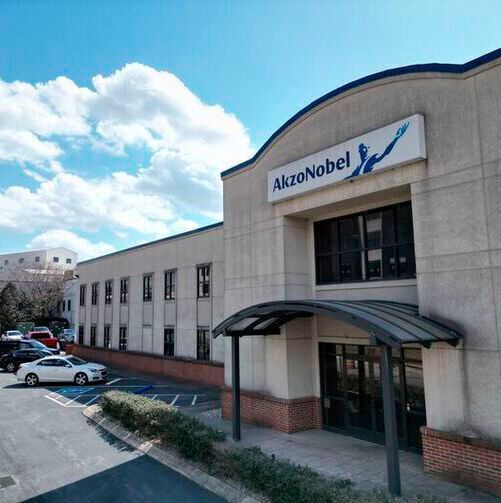
Akzonobel Invests 30 Million Plus Dollars at Powder Coatings Sites
More than 30 million dollars is being invested by Akzonobel to install advanced technologies and increase total manufacturing capacity at its four powder coatings sites in North America.
(Source: Akzonobel)
March 18 – More than 30 million dollars is being invested by Akzonobel to install advanced technologies and increase total manufacturing capacity at its four powder coatings sites in North America.
The company is incorporating new extruders, thermoplastics and bonding processes at its facilities in Reading, Pennsylvania; Warsaw, Indiana; Nashville, Tennessee; and Monterrey, Mexico. It will unlock numerous benefits, such as increased production efficiency and expanded application capabilities.
Date: 08.12.2025
Naturally, we always handle your personal data responsibly. Any personal data we receive from you is processed in accordance with applicable data protection legislation. For detailed information please see our privacy policy.
Consent to the use of data for promotional purposes
I hereby consent to Vogel Communications Group GmbH & Co. KG, Max-Planck-Str. 7-9, 97082 Würzburg including any affiliated companies according to §§ 15 et seq. AktG (hereafter: Vogel Communications Group) using my e-mail address to send editorial newsletters. A list of all affiliated companies can be found here
Newsletter content may include all products and services of any companies mentioned above, including for example specialist journals and books, events and fairs as well as event-related products and services, print and digital media offers and services such as additional (editorial) newsletters, raffles, lead campaigns, market research both online and offline, specialist webportals and e-learning offers. In case my personal telephone number has also been collected, it may be used for offers of aforementioned products, for services of the companies mentioned above, and market research purposes.
Additionally, my consent also includes the processing of my email address and telephone number for data matching for marketing purposes with select advertising partners such as LinkedIn, Google, and Meta. For this, Vogel Communications Group may transmit said data in hashed form to the advertising partners who then use said data to determine whether I am also a member of the mentioned advertising partner portals. Vogel Communications Group uses this feature for the purposes of re-targeting (up-selling, cross-selling, and customer loyalty), generating so-called look-alike audiences for acquisition of new customers, and as basis for exclusion for on-going advertising campaigns. Further information can be found in section “data matching for marketing purposes”.
In case I access protected data on Internet portals of Vogel Communications Group including any affiliated companies according to §§ 15 et seq. AktG, I need to provide further data in order to register for the access to such content. In return for this free access to editorial content, my data may be used in accordance with this consent for the purposes stated here. This does not apply to data matching for marketing purposes.
Right of revocation
I understand that I can revoke my consent at will. My revocation does not change the lawfulness of data processing that was conducted based on my consent leading up to my revocation. One option to declare my revocation is to use the contact form found at https://contact.vogel.de. In case I no longer wish to receive certain newsletters, I have subscribed to, I can also click on the unsubscribe link included at the end of a newsletter. Further information regarding my right of revocation and the implementation of it as well as the consequences of my revocation can be found in the data protection declaration, section editorial newsletter.
The enhancements – which will help to maximize the versatility and long-term sustainability performance of Akzonobel’s powder coatings portfolio – follow on from recent investments in powder manufacturing at Como in Italy and the multi-site in Bac Ninh, near Hanoi, Vietnam, to support the company’s growth ambitions in Europe and Asia respectively.
“As customers continue to prioritize sustainability, durability and performance, the demand for powder coatings is projected to escalate,” explains Jeff Jirak, Global Director of Akzonobel’s Powder Coatings business. “By staying ahead of the curve and investing in these advanced technologies, we’re positioning ourselves as a leader in this thriving market, driving innovation and delivering value to customers in North America and around the globe.”
Installing innovative thermoplastic materials in the powder coatings formulation will open up new possibilities for diverse applications and performance enhancements. Effective bonding between pigment particles and resin matrix is crucial for achieving durable and aesthetically pleasing powder coatings, while the advanced extruders will enable real-time adjustments and maintain precise control over the extrusion process.
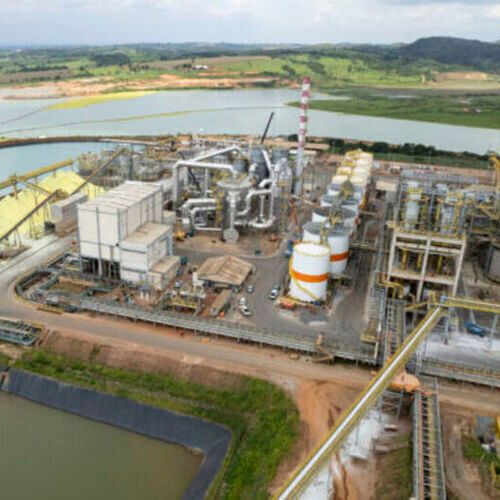
Eurochem Inaugurates New Phosphate Fertilizer Production Unit
Eurochem recently celebrated the opening of its new phosphate fertilizer production facility in Serra do Salitre, State of Minas Gerais, Brazil.
(Source: Eurochem)
March 15 – Eurochem recently celebrated the opening of its new phosphate fertilizer production facility in Serra do Salitre, State of Minas Gerais, Brazil. With a total project investment of nearly 1 billion dollars, the new phosphate mine and plant complex was constructed in record-breaking time and will have an annual production capacity of 1 million tonnes of advanced phosphate fertilizers, significantly increasing the reliability of domestic phosphate fertilizer supplies to Brazilian farmers.
The facility offers state-of-the-art integrated phosphate fertilizer production, with low water consumption, a fully closed water circuit, and a clean energy generation system that re-uses its own steam and generates up to 40 % of the entire facility’s energy needs.
“Eurochem has a long-standing and successful history in South America, a key growth market for us, where there is a high demand for our products,” said Eurochem Group President Oleg Shiryaev. “The launch of our new facility moves us one step closer to our customers and allows us to provide Brazilian farmers with access to the highest quality fertilizers via our well-established distribution network in this important global breadbasket. Eurochem operates on a mine-to-farm basis, ensuring reliability and quality across the entire fertilizer supply chain, from raw material extraction to production and delivery to the end consumer.”
India’s First Bioplastics Plant to Use Sulzer’s PLA Technology
Sulzer will supply its cutting-edge polylactic acid production technologies to Balrampur Chini Mills to support the construction of India’s first bioplastics plant.
(Source: Sulzer)
March 20 – Sulzer will supply its cutting-edge polylactic acid (PLA) production technologies to Balrampur Chini Mills (BCML) to support the construction of India’s first bioplastics plant. The new state-of-the-art bioplastics plant will produce 75'000 tonnes of compostable, wholly recyclable bioplastic per year using sugarcane as a feedstock. It will be located adjacent to one of BCML’s sugar cane processing facilities, enabling BCML to use the country’s main agricultural crop to make a major contribution to the nation’s sustainability aims.
Balrampur Chini Mills is one of India’s leading sugar producers with a crushing capacity of 80’000 tonnes per day spread across ten plants. The company has a strong sustainability ethos; they are already the largest producer of bioethanol for fuel in India and they also use waste products from the sugar mills for power generation. The introduction of this new bioplastic manufacturing capability is the next step in the company’s journey to Net Zero. In essence, it will strengthen the company’s efforts to continuously improve its resource efficiency and environmental footprint.
Playing a key role in the realization of the plant, Sulzer will deliver the manufacturing technologies for the key process stages including lactide synthesis, lactide purification and polymerization. As the leading global supplier of key equipment for bioplastics production, Sulzer’s expertise is used in most PLA manufacturing plants in the world. Once this latest plant is complete, the company’s field service experts will also be on-hand to support the commissioning and start-up procedures.
Clariant, Lummus to Deliver Catalyst Technology to Isobutane Dehydrogenation Unit
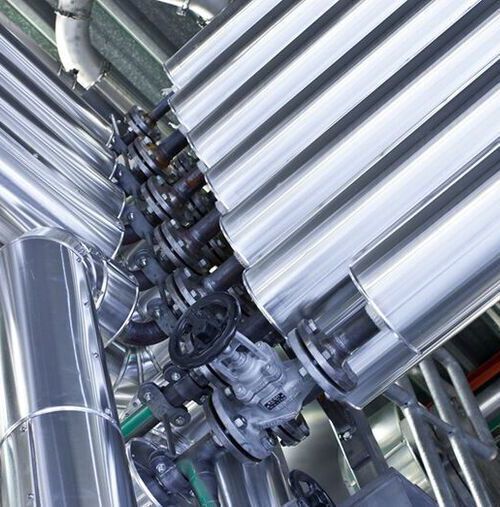
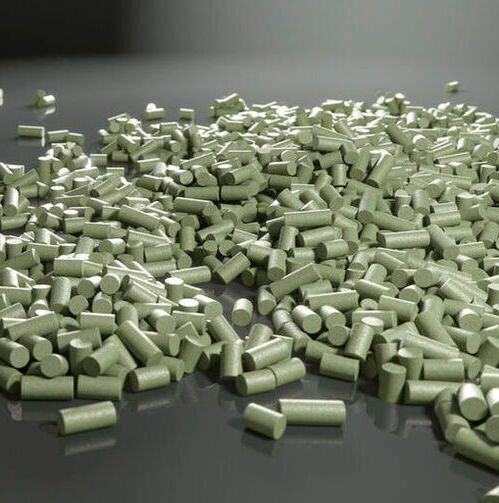
Clariant and its process partner Lummus Technology have been selected by Huizhou Boeko Materials Co., to provide their Catofin catalyst and process technology for the dehydrogenation of isobutane at the new plant in China.
(Source: Clariant)
March 21 – Clariant and its process partner Lummus Technology have been selected by Huizhou Boeko Materials Co., to provide their Catofin catalyst and process technology for the dehydrogenation of isobutane at the new plant in Huizhou City, China. The process technology is exclusively licensed by Lummus Technology, while the tailor-made catalyst is supplied by Clariant. It is the first time Huizhou Boeko will license the Catofin technology at one of their sites.
The scope of the current award includes the technology license and basic engineering. Once complete, the plant will produce 550,000 metric tons per annum (MTA) of net isobutylene, which will serve as feedstock for the downstream production of methyl tertiary butyl ether (MTBE). The highly efficient Catofin process uses fixed-bed reactors and operates at optimum reactor pressure and temperature to maximize catalytic dehydrogenation of isobutane for high yields of isobutylene at low investment and operating costs.
BASF Breaks Ground on Methyl Glycols Plant at Verbund Site in China
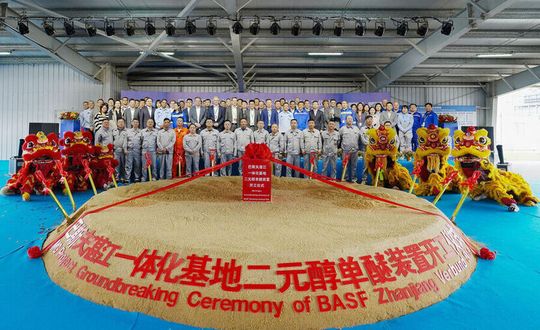
BASF has broken ground on a methyl glycols plant at its Verbund site in Zhanjiang, China.
(Source: BASF)
March 22 – BASF has broken ground on a methyl glycols (MG) plant at its Verbund site in Zhanjiang, China. The new facility is designed with an annual capacity of 46,000 metric tons and aims to meet the rapidly growing demand for brake fluids in the region. The plant is scheduled to commence operations by the end of 2025.
“The new facility will be the only fully backward integrated methyl glycols plant into a steam cracker in China, serving the fast-growing brake fluids market,” said Bir Darbar Mehta, Senior Vice President, Petrochemicals Asia Pacific, BASF. “Utilizing BASF's unique process technology, the plant will deliver reliable, competitive and high-quality products to cater to the needs of our downstream business and customers.”
“As a strong player in the automotive fluids industry, BASF built a reputation for delivering high-performance products and exceptional services to our valued partners in the brake fluid industry,” said Matthias Lang, Vice President, Business Management Fuel & Lubricant Solutions Asia Pacific and Performance Chemicals Greater China, BASF. “The capacity expansion demonstrates our commitment to the emerging Asian automotive industry, especially in China, where the demand for high-quality products is continuously increasing.”
The new methyl glycols plant will produce methyl diglycol (MDG), methyl triglycol (MTG), and methyl tetraglycol (MTEG) from methanol and purified ethylene oxide (PEO). Methyl triglycol is the primary raw material for the production of modern brake fluids used in the automotive industry.
Sandoz Inaugurates New Antibiotic Production Plant in Austria
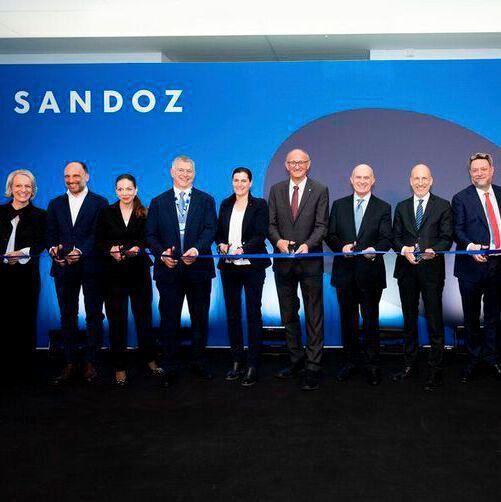
Sandoz has opened a new production facility in Kundl, Austria, to serve more patients with affordable life-saving drugs produced entirely in Europe.
(Source: Sandoz)
March 26 – Sandoz has opened a new production facility in Kundl, Austria, to serve more patients with affordable life-saving drugs produced entirely in Europe. The new facility and automated production lines will increase production capacity by 20 % compared to the current capacity of 200 million packages per year. The expansion in finished dosage forms means that Kundl now has a production capacity of 240 million packages per year, more than a doubling from 2021 output levels.
Gilbert Ghostine, Chairman Sandoz, said: "Antibiotics are the backbone of modern medicine and Kundl is a testament to the resilience of European manufacturing. We are proud to further strengthen our manufacturing capabilities in Austria. This allows us to address growing demand and further strengthens our commitment to our unique European-based antibiotic production network."
With a manufacturing area of 3,000m2, innovative technologies enable the production of one billion additional penicillin tablets and a doubling of the quantity of powder oral suspensions (POS), which are mainly used in pediatric medicines.
This project is another step in the Sandoz commitment to Austria as an integral part of its sustainable and high-quality European-based production network.
Sandoz has the only major remaining vertically integrated production network for penicillin in Europe. From active pharmaceutical ingredients (API) to finished dosage forms (FDF), Sandoz produces penicillin—the leading category of antibiotics worldwide—in Austria.
The opening of the new facility is part of a 200-million-euro investment into the site in Kundl, to significantly upgrade penicillin API manufacturing and increase output of finished products, in order to better serve patients in more than 100 countries worldwide.
Richard Saynor, CEO Sandoz, said: "Kundl, as the hub and center of our antibiotic production, is a true lighthouse project when it comes to security of antibiotic supply. This investment is our contribution to fighting shortages and increasing access for patients. To be successful in the future, we need to join forces across healthcare systems and build a sustainable market environment for generic medicines, focused on what is best for patients."
Total Energies, Sinopec to Develop SAF Unit in China
Total Energies and Sinopec to jointly develop a Sustainable Aviation Fuel production unit at a Sinopec refinery in China.
(Source: Pixabay)
March 27 – Total Energies and China Petroleum and Chemical Corporation (Sinopec) have signed a Heads of Agreement (HOA) to jointly develop a Sustainable Aviation Fuel (SAF) production unit at a Sinopec refinery in China.
The planned unit, jointly owned by Sinopec and Total Energies, will have the capacity to produce 230,000 tons of SAF per year, and will process local waste or residues from the circular economy (cooking oils and animal fats).
Sinopec has developed its own SAF production technology, called SRJET. Total Energies, already one of Europe's leading SAF producers, will bring its experience and expertise in the technical, operational and distribution fields.
Yongsheng Ma, Sinopec Group Chairman, said: “This milestone collaboration with Total Energies is in line with our strategy in the development of low carbon solutions for China and the world. Sinopec is committed to providing green and low-carbon energy solutions while improving quality and efficiency of its asset portfolio.”
Eastman to Develop New Molecular Recycling Facility in Texas, USA
The Longview molecular recycling facility will have the capacity to recycle approximately 110,000 metric tonnes of hard-to-recycle plastic waste.
(Source: Eastman Chemical Company)
March 29 – Eastman's second U.S. molecular recycling project has been selected by the Department of Energy (DOE) to begin award negotiations for up to 375 million dollars in Bipartisan Infrastructure Law and Inflation Reduction Act funding as part of the Industrial Demonstrations Program (IDP). The DOE announcement led to Eastman announcing the intent to build a second U.S. molecular recycling facility at its location in Longview, Texas.
The company selected the Longview site due to synergies with existing infrastructure and operations, favorable energy supply and footprint, and access to western and central U.S. feedstock pools. The location also provides enough space for onsite renewable energy. The investment includes operations that will prepare mixed plastic waste for processing, Eastman's next-generation molecular recycling unit to depolymerize waste, and a polymer facility to create virgin-quality materials for packaging and textiles. The Longview molecular recycling facility will have the capacity to recycle approximately 110,000 metric tonnes of hard-to-recycle plastic waste.
The investment is expected to bring over 200 full-time, high-paying jobs to the Longview community in addition to approximately 1,000 temporary construction jobs during site development and building of the facility. Eastman has operated in the Longview community for over 70 years and currently has over 1,500 team members at the location.
The company was selected by the DOE to accelerate the demonstration of industry-leading low-carbon intensity recycled PET with this project. Reaching a collaborative agreement with the DOE enables expanding the project to include the deployment of thermal heat batteries and onsite solar power. This, combined with Eastman's next-generation methanolysis technology, achieves a step-change improvement in decarbonizing PET production resulting in recycled PET with greater than 70 percent reduced carbon emissions compared to fossil virgin production, and approximately 90 percent reduced carbon emissions when including avoided emissions.




:quality(80)/p7i.vogel.de/wcms/54/f4/54f4b4e2a86b203e0dfd84221602bdb5/0130367283v2.jpeg "Anybotics' Anymal robot combines depth cameras, LiDAR, thermal imaging, acoustic sensors, and gas detectors into a single inspection round. (Source: Anybotics)")
:quality(80)/p7i.vogel.de/wcms/e9/64/e964996410967c124c2cf01a8623068e/0130285341v1.jpeg "Geht unter die Oberfläche: Die Offshore-Ölförderung erfordert hochenergetische Pumpen – doch diese sind im Wesentlichen eine Black Box. Bisher zumindest. (Source: Kistler Group)")
:quality(80)/p7i.vogel.de/wcms/54/ae/54aece5dff672ce1651470eecd9f2589/0130138090v2.jpeg "The new Ionchromatograph “Nexera IC“ (Source: Shimadzu)")
:quality(80)/p7i.vogel.de/wcms/49/5c/495c651fabd24a437c98bde6a3d71ecc/0130060419v2.jpeg "Enfinium has successfully piloted Wasteer’s groundbreaking visual AI technology at its Ferrybridge 2 facility in West Yorkshire and Parc Adfer facility in North Wales. (Source: Chris Parkes Photographer Ltd.)")
:quality(80)/p7i.vogel.de/wcms/1e/15/1e15b0e20cf5ede83e0749260dfda733/0130465044v2.jpeg "Energy X has recently announced the successful commissioning of a first-of-its-kind, U.S.-based lithium production facility at Project Lonestar, marking a major milestone toward commercial-scale domestic lithium production. (Source: Pixabay)")
:quality(80)/p7i.vogel.de/wcms/36/36/36369e6e59d4c660893cc04a4d257cfc/0130465035v2.jpeg "Wacker has successfully completed the second expansion phase at its production site in Panagarh, India. In addition to silicone rubber, the site now also operates a production complex (left) for silicone emulsions. (Source: Wacker)")
:quality(80)/p7i.vogel.de/wcms/1f/1e/1f1eba3731af22e1d9946e2897f134da/0130464799v2.jpeg "Aerial view of the BASF production site in Zhanjiang, China. (Source: BASF )")
:quality(80)/p7i.vogel.de/wcms/64/bb/64bb4812390b6491ce0bd4fe53597086/0130333812v2.jpeg "The solar power plant produces 30 GWh per year of renewable electricity, which is self-consumed by Holcim’s industrial facilities, making it the largest floating solar power plant in Europe dedicated to self-consumption. (Source: Pixabay)")
:quality(80)/p7i.vogel.de/wcms/41/c9/41c96e0244221ad38daa73bdd8231477/0130477173v2.jpeg "The „ORBITA‑L“-system is designed for filling and capping non‑injectable liquid products. (Source: Marchesini)")
:quality(80)/p7i.vogel.de/wcms/7a/50/7a501f6d8f87a4524dc3aaceb04eacb4/0130333829v2.jpeg "The Clear Lake facility represents Clariant's first U.S. manufacturing site dedicated to producing pharmaceutical-grade PEG excipients, marking a pivotal milestone in the company's healthcare growth strategy. (Source: Clariant)")
:quality(80)/p7i.vogel.de/wcms/26/12/261210e5920899e5c35c4f905d3be8bd/0129399814v2.jpeg "Powders used in DPI formulations are often highly potent and administered in very low doses. (Source: Ima)")
:quality(80)/p7i.vogel.de/wcms/6b/3f/6b3f057c83c494e4732337d870d52b21/0130006927v2.jpeg "Lonza will realize upfront cash proceeds of 2.2 billion dollars and retain a 40 % stake in the business, with additional preferential participation in its future exit. (Source: Lonza)")
:quality(80)/p7i.vogel.de/wcms/80/ae/80ae5dcaef8b78989454ddba5eb2f6a7/0130485693v2.jpeg "The Global Impact Coalition has recently announced that Siemens has joined the coalition as a member. (Source: Siemens)")
:quality(80)/p7i.vogel.de/wcms/df/35/df3526a6f7aba41fdd2bb2051954e0d8/0130163620v2.jpeg "The SPA, valued at more than 3 billion dollars, is one of the largest binding long-term green ammonia off-take agreements globally. (Source: Pixabay)")
:quality(80)/p7i.vogel.de/wcms/af/73/af7394d9f8900024c5ee7fca459c4eeb/0130080328v2.jpeg "Axens has signed a MOU with Airbus to strengthen their cooperation in the development and deployment of SAF, a key pillar for decarbonizing the aviation sector. (Source: Pixabay)")
:quality(80)/p7i.vogel.de/wcms/0e/19/0e19f0cf0379c3af4c2fe02629db63f1/0130079229v2.jpeg "Thyssenkrupp Uhde has been selected by CSBP to deliver its patented Envinox technology for two nitric acid plants at CSBP’s Kwinana site in Western Australia. (Source: Thyssenkrupp Uhde)")
:quality(80)/p7i.vogel.de/wcms/1c/39/1c39433f4bb4de2e5e6c5311c3236d09/0130110254v2.jpeg "The new pumps of the Omega type series have been designed for handling water and fluids with a low solids content efficiently. (Source: KSB)")
:quality(80)/p7i.vogel.de/wcms/be/e1/bee13b8d51a419b9b8f0685e2b9d47bf/0128917673v1.jpeg "The Centerwave 6000 measures pipes from 32 to 1,600 mm. (Source: Maag Group)")
:quality(80)/p7i.vogel.de/wcms/51/7a/517a4e83c5827663b4839f5ddb98f434/0128872953v1.jpeg "The Tigron in SIL version can be flexibly configured for different safety requirements. (Source: Auma)")
:quality(80)/p7i.vogel.de/wcms/60/ef/60efa975d1dd123c1afbfb6ccc060461/0130263955v2.jpeg "Aquaclean (Source: Oko-tech)")
:quality(80)/p7i.vogel.de/wcms/07/62/0762f20b1821ee2724c97989374d6397/0130257651v2.jpeg "Oleksandr Sadchykov in front of the water treatment unit (Source: Grundfos)")
:quality(80)/p7i.vogel.de/wcms/98/98/989863664c7b65e87caf74a08239d487/0130167217v2.jpeg "Keller 26KyX Level Probe (Source: © Keller Pressure)")
:quality(80)/p7i.vogel.de/wcms/64/4e/644e22b71e8d35a63f051f781eb13886/0130163451v2.jpeg "Vega will present level and pressure measurement technology for the water industry at Ifat 2026. (Source: Vega)")
:quality(80)/p7i.vogel.de/wcms/6b/cc/6bcc3d26e1c7c74d90a10bc3ca296ae1/0128362351v2.jpeg "A look into Bayer's new tablet production, Solida 1, during construction: The robots and lift columns for material handling are being installed. (Source: Bayer)")
:quality(80)/p7i.vogel.de/wcms/24/c8/24c84ab6b1bcd24468a87820a07a85aa/0128194707v2.jpeg "Ajax Equipment has supplied Binding Solutions with a feed system comprising buffer hopper, screw feeder and agitated screw feeder for a pilot plant handling iron ore and additives. (Source: Ajax Equipment )")
:quality(80)/p7i.vogel.de/wcms/1d/3e/1d3e2788eb37c1e974f36337c8d33cb5/0128191010v2.jpeg "Ajax Equipment has supplied IGI Systems with a stainless-steel conical hopper with gas purge capability, as part of a prototype Sublimation System for a low-pressure chemical vapour deposition application. (Source: Ajax Equipment)")
:quality(80)/p7i.vogel.de/wcms/19/76/1976928d7d0a2ed7c1eeba7ade8552c8/0126365603v1.jpeg "Detail of Valvedesign: It has an aktiv amd passive part (Bild: Italvacuum)")
:quality(80)/p7i.vogel.de/wcms/0f/11/0f11c60729f25db0ca0d301d9d4ca0ee/0130485703v2.jpeg "The signatories of the Joint Biomethane Declaration, leading European industry associations, are calling to scale biomethane as an important building block of the EU’s reindustrialization, energy security, and transition to climate neutrality. (Source: Pixabay)")
:quality(80)/p7i.vogel.de/wcms/0c/a1/0ca135e0486c9af90a0552aea85de88c/0130439525v2.jpeg "Qatar Energy expects the damage to its Ras Laffan Industrial City caused by missile strikes, which occurred on Wednesday 18 March 2026, and in the early hours of Thursday 19 March 2026, to cost about 20 billion dollars a year in lost revenue. (Source: Pixabay)")
:quality(80)/p7i.vogel.de/wcms/d0/f7/d0f7d560dfce37c8371442d5b6120e3c/0130182478v1.jpeg "The Gelsenkirchen refinery primarily manufactures fuels for vehicles and aircraft, processing roughly 12 million tonnes of crude oil per year. (Source: BP)")
:quality(80)/p7i.vogel.de/wcms/f8/29/f8298429c1638b949a6f76346f6709c7/0118701710v2.jpeg "Bosch Industrial Heat will be presenting sustainable steam and heat solutions for global industrial use at the Achema trade fair in Frankfurt, Germany. (Source: Bosch Industriekessel)")
:quality(80)/p7i.vogel.de/wcms/07/24/07242664ab2b1c7841c9d9d0a127670c/0116045959.jpeg "A look inside the GEA machine room. (Bild: Magnavale)")
:quality(80)/p7i.vogel.de/wcms/c9/79/c979a20b32395ddfa93fe7ead90578a0/0108386061.jpeg "Production residues, lime, salt and suspended solids quickly clog the pipes. (Source:©Tanakorn - stock.adobe.com)")
:quality(80)/p7i.vogel.de/wcms/9e/5c/9e5c92d942ed046a27562d6e3d730c92/0103483548.jpeg "It is almost ten metres high and extends over three floors: the world's first multiple dividing wall column is located in the new technical centre at the University of Ulm. (Bild: Eberhardt, kiz Universität Ulm)")
:quality(80)/p7i.vogel.de/wcms/7c/77/7c77e24fdcc9e1511e8e711eff161e28/0130175489v2.jpeg "The milestone confirms the fast pace of development of Eni’s deep water gas projects offshore East Kalimantan. (Source: Unsplash )")
:quality(80)/p7i.vogel.de/wcms/b3/2f/b32fb9f5aa54e9cb6c92e4b6c8665263/0130163018v2.jpeg "The decision to take emergency collective action was made following an extraordinary meeting of IEA Member governments, convened by the IEA Executive Director to assess market conditions amid the conflict in the Middle East and consider the options to address supply disruptions. (Source: © Sashkin - stock.adobe.com)")
:quality(80)/p7i.vogel.de/wcms/85/d2/85d2cb02c4ae45a99454b5405b0f2489/0130149909v2.jpeg "IEA Executive Director Fatih Birol issued a statement on the meeting of G7 Energy Ministers at its IEA headquarters in Paris. (Source: © Marko - stock.adobe.com)")
:quality(80)/p7i.vogel.de/wcms/a8/4e/a84e8039a90a5cf4751d01ebcf6ba1a9/0127510172v2.jpeg "After six years, Achemasia, the international trade fair and innovation forum for sustainable chemical production, has returned with renewed vigor, bringing together global expertise, Chinese innovation, and a shared commitment to a greener industrial future—according to the organizers of the fair. (Source:PROCESS China)")
:quality(80)/p7i.vogel.de/wcms/17/c7/17c703445f134eb3d7ecc7918dda2762/0124596096v2.jpeg "Achema Middle East will launch in Saudi Arabia in 2026. (Bild: Dechema/ Hannibal)")
:quality(80)/p7i.vogel.de/wcms/2a/2c/2a2cffc07f51019065387cd63241b5ce/0119463370v1.jpeg "The Injecta 36 fills and seals RTU (Ready-to-Use) syringes at high speed. The image shows the robotic arm. (Source: IMA)")
:quality(80)/p7i.vogel.de/wcms/b1/7e/b17ea8c62ccafad1d1fb072d6199bbd6/0118578446.jpeg "“Star in the ring”: Vegapuls 6X radar level sensors are the solution of choice for Renolit for many applications on the way to the perfect plastic product. (Source: © MR Design - stock.adobe.com; Vega)")
:quality(80)/p7i.vogel.de/wcms/09/e3/09e378194b496921d2a267a6752322eb/0130333473v2.jpeg "Under the terms of the contract, KBR will provide contract management, project management and supporting technical services throughout the EPC phases of the project. (Source: KBR)")
:quality(80)/p7i.vogel.de/wcms/77/9d/779db435e7f9d79bafe16101008a9cfa/0130263548v2.jpeg "The Kingdom of Saudi Arabia, the UAE and Turkey are three core countries in the region that are actively incorporating the plastics circular economy with the assistance of the chemical recycling technology. (Source: © Anastasiia - stock.adobe.com)")
:fill(fff,0)/images.vogel.de/vogelonline/companyimg/2000/2093/65.jpg "Glatt_Logo_ND4c-RGB (5x3cm).jpg ()")
:fill(fff,0)/p7i.vogel.de/companies/61/f9/61f9439b7cbe4/logo-edl.png "logo-edl (EDL Anlagenbau Gesellschaft mbH)")
:fill(fff,0)/images.vogel.de/vogelonline/companyimg/103000/103097/65.jpg "Pörner Gruppe mit Rand.jpg ()")

:quality(80)/p7i.vogel.de/wcms/d7/be/d7bebf7da3856811a5102997c7181c93/0124059245v2.jpeg "The grand construction project was launched by Serik Shapkenov, akim of Atyrau region; Askhаt Khasenov, Chairman of the Board of JSC NC \"Kazmunaygas\" (KMG); Kudaibergen Arymbek, Vice Minister of Energy of Kazakhstan; Pavel Lyakhovich, Member of the Management Board and Managing Director of Sibur; and Wan Tao, Senior Vice President of Sinopec. (Source: Kazmunaygas)")
:quality(80)/p7i.vogel.de/wcms/9f/bc/9fbcff62c6ca8d6b26e74aa896df834b/0124467383v2.jpeg "At a glance: Plant engineering projects from across the globe. (Source: Pixabay)")