PROCESS Worldwide brings to you the ‘Top 10 plant engineering projects of September 2026’ from all over the world. Right from Europe’s largest carbon capture facility being inaugurated in the Netherlands to Emirates Biotech and the UAEU developing UAE’s first organic-waste valorization pilot plant, find out all the projects making headlines here.
At a glance: Plant engineering projects from across the globe.
KBR Wins Feed Contract for Large-Scale Electric Natural Gas Project in USA
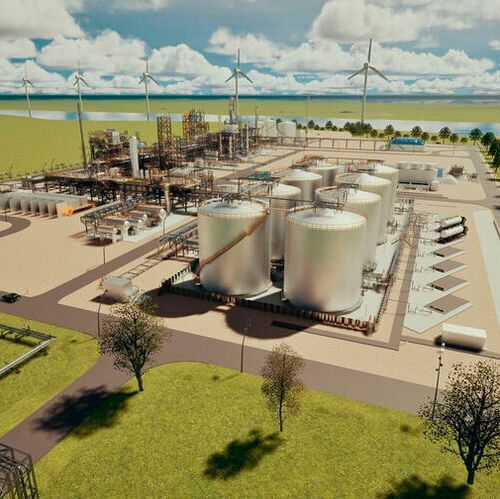
KBR has been selected by Live Oak consortium to provide feed services for the proposed Live Oak project in Norfolk, Nebraska.
(Source: Unsplash)
September 3 – KBR has recently been selected by Live Oak consortium to provide front-end engineering design (Feed) services for the proposed Live Oak project in Norfolk, Nebraska. The Live Oak consortium is an international partnership comprising Total Energies, Osaka Gas, Toho Gas, Itochu Corporation and Tree Energy Solutions (TES). The project represents a significant step forward in the development of large-scale electric natural gas (e-NG), also known as e-methane, production in the United States.
Subject to a Final Investment Decision in 2027, the project is scheduled to begin commercial operations by 2030, with plans to export e-NG to Japan.
KBR will execute the Feed scope for the facility, which is expected to produce e-NG using renewable hydrogen generated through approximately 250 MW of water electrolysis and biogenic carbon dioxide. The hydrogen and captured biogenic CO₂ will be combined to produce synthetic methane, supporting the growing demand for lower-carbon energy solutions. Chemically identical to conventional natural gas, e-NG can be seamlessly integrated into existing LNG infrastructure, including liquefaction, transportation, regasification, and distribution, without any alterations to consumer equipment.
Uniper to Begin Next Development Phase for E-Methanol Facility in Sweden
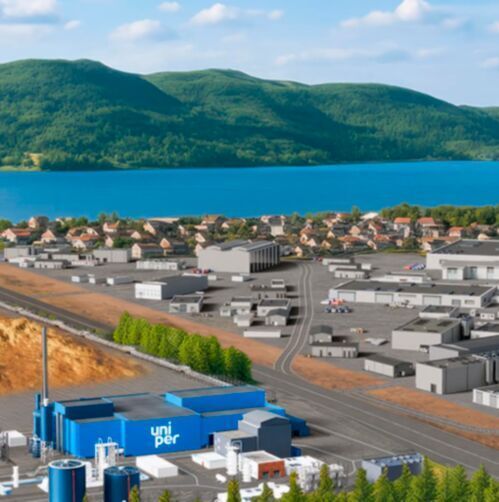
Uniper and its suppliers will now, during the so-called Feed phase, define the plant’s technical design and prepare the project for construction.
(Source: Uniper)
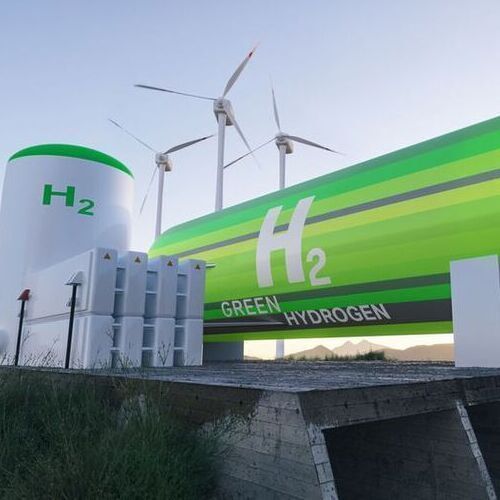
September 3 – Uniper has signed contracts with Afry, Carbon Clean, Siemens Energy and Topsoe to begin the next development phase for NorthStarH2, a planned e-methanol production facility in Östersund aimed at helping decarbonize sectors such as transport and the chemical industry. The work will run for approximately one year. The contracts are worth more than SEK 100 million in total.
“NorthStarH2 is an important project in Uniper’s energy transition portfolio. These contracts allow us to move from early project development into basic engineering and take another important step towards assessing the project’s technical and commercial feasibility,” shares Johan Svenningsson, CEO of Uniper Sweden.
Uniper and its suppliers will now, during the so-called Feed phase (Front-End Engineering Design), define the plant’s technical design and prepare the project for construction.
“With these contracts in place, we can now develop the plant design in much greater detail and define how NorthStarH2 will be built. Östersund offers strong conditions
for producing electro fuels,” mentions Broghan Helgeson, NorthStarH2’s project manager at Uniper.
Uniper plans to make the final investment decision for NorthStarH2 in 2028. Commissioning is currently scheduled to begin in 2031.
Novonesis to Develop Mega Enzyme Production Facility in India
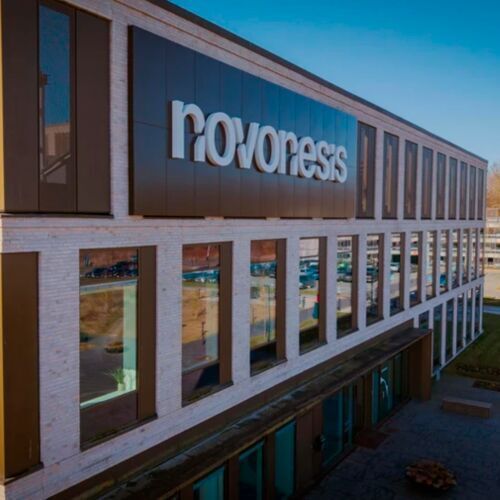
The 600-million-euro investment will increase Novonesis’ production capacity to meet rising worldwide demand for the company’s biosolutions and strengthen the flexibility and resilience of its global supply network.
(Source: Novonesis)
September 8 – Novonesis will expand its facility in Patalganga and build one of the world’s most advanced enzyme production facilities. The 600-million-euro investment will increase Novonesis’ production capacity to meet rising worldwide demand for the company’s biosolutions and strengthen the flexibility and resilience of its global supply network.
The Patalganga expansion is a milestone in Novonesis’ strategy and key to achieving the company’s growth ambitions. The facility, which is expected to be fully operational in 2030, will produce enzymes for a broad range of industries, including biofuels, household care, and food and beverages.
Ester Baiget, President & CEO: “This is an important step in executing our strategy and reflects our continued commitment to investing for sustainable growth. The expansion strengthens our ability to support customers around the world and enables us to continue screating long-term value for our shareholders.”
Date: 08.12.2025
Naturally, we always handle your personal data responsibly. Any personal data we receive from you is processed in accordance with applicable data protection legislation. For detailed information please see our privacy policy.
Consent to the use of data for promotional purposes
I hereby consent to Vogel Communications Group GmbH & Co. KG, Max-Planck-Str. 7-9, 97082 Würzburg including any affiliated companies according to §§ 15 et seq. AktG (hereafter: Vogel Communications Group) using my e-mail address to send editorial newsletters. A list of all affiliated companies can be found here
Newsletter content may include all products and services of any companies mentioned above, including for example specialist journals and books, events and fairs as well as event-related products and services, print and digital media offers and services such as additional (editorial) newsletters, raffles, lead campaigns, market research both online and offline, specialist webportals and e-learning offers. In case my personal telephone number has also been collected, it may be used for offers of aforementioned products, for services of the companies mentioned above, and market research purposes.
Additionally, my consent also includes the processing of my email address and telephone number for data matching for marketing purposes with select advertising partners such as LinkedIn, Google, and Meta. For this, Vogel Communications Group may transmit said data in hashed form to the advertising partners who then use said data to determine whether I am also a member of the mentioned advertising partner portals. Vogel Communications Group uses this feature for the purposes of re-targeting (up-selling, cross-selling, and customer loyalty), generating so-called look-alike audiences for acquisition of new customers, and as basis for exclusion for on-going advertising campaigns. Further information can be found in section “data matching for marketing purposes”.
In case I access protected data on Internet portals of Vogel Communications Group including any affiliated companies according to §§ 15 et seq. AktG, I need to provide further data in order to register for the access to such content. In return for this free access to editorial content, my data may be used in accordance with this consent for the purposes stated here. This does not apply to data matching for marketing purposes.
Right of revocation
I understand that I can revoke my consent at will. My revocation does not change the lawfulness of data processing that was conducted based on my consent leading up to my revocation. One option to declare my revocation is to use the contact form found at https://contact.vogel.de. In case I no longer wish to receive certain newsletters, I have subscribed to, I can also click on the unsubscribe link included at the end of a newsletter. Further information regarding my right of revocation and the implementation of it as well as the consequences of my revocation can be found in the data protection declaration, section editorial newsletter.
This state-of-the-art facility will be integrated into the company’s global production footprint and bring Novonesis closer to customers across the Middle East, India, and Africa. These markets represent an important and growing part of the company’s business and are expected to grow faster than developed markets in the coming years.
Patalganga is part of a series of investments Novonesis has made to strengthen its global production setup and serve customers more effectively. Facilities in Rayong, Thailand; Franklinton, North Carolina; Taicang, China; Araucaria, Brazil; and West Allis, Wisconsin, have also been expanded as part of this effort. The investments align with the company’s strategy and previously communicated capital expenditure plans.
The Patalganga facility will be built to use less water and energy. Freshwater recycling will reduce the amount of water the site draws, while integrated heat pumps will lower the energy required to operate it. Together, these measures will put the facility on a path toward lower Scope 1 and 2 emissions.
Europe’s Largest Carbon Capture Facility Inaugurated in the Netherlands
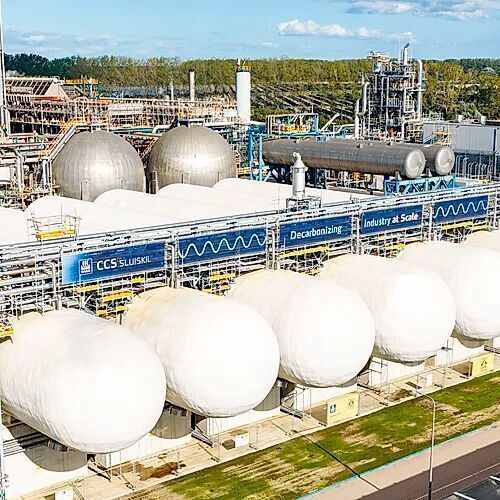
Europe’s largest industrial carbon capture facility was recently inaugurated at Yara’s plant in Sluiskil, the Netherlands.
(Source: Yara International)
September 10 – Europe’s largest industrial carbon capture facility was recently inaugurated at Yara’s plant in Sluiskil, the Netherlands. The project establishes the first complete cross-border value chain for capturing, transporting and permanently storing CO₂ (CCS).
The inauguration was marked by the presence of Norwegian Prime Minister Jonas Gahr Støre, Dutch Prime Minister Rob Jetten, European Commissioner for Climate, Net Zero and Clean Growth Wopke Hoekstra, and President and CEO of Yara International, Svein Tore Holsether.
“This is an important day for Yara and for the European industry. The carbon capture facility in Sluiskil proves that large-scale industrial decarbonization is possible today. As global competition intensifies, Europe must find ways to cut emissions while keeping industry, jobs and critical value chains in Europe. That is exactly what this project is about,” says Svein Tore Holsether, President and CEO of Yara International.
Yara Sluiskil, Europe’s largest ammonia and fertilizer plant can capture and liquefy up to 800,000 tons of CO₂ annually from ammonia production thereby avoiding carbon taxation on these volumes. The CO₂ will be transported by ship to Norway, where it will be permanently stored beneath the seabed by Northern Lights. With the right framework conditions in place, the project is expected to capture and store around 12 million tons of CO₂ over the next 15 years, making a significant contribution to European climate goals and industrial transformation.
The project demonstrates how cooperation across value chains and national borders can unlock substantial emissions reductions in the European industry. It also shows how shared infrastructure can help accelerate industrial decarbonization by enabling companies across Europe to access permanent CO₂ storage solutions.
Evonik Breaks Ground on New Biotechnology Expansion Project in Slovakia
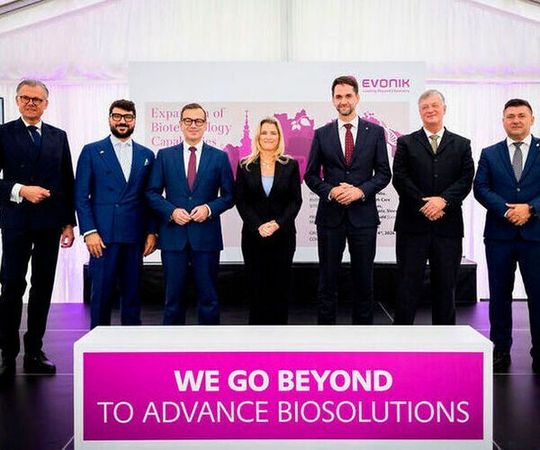
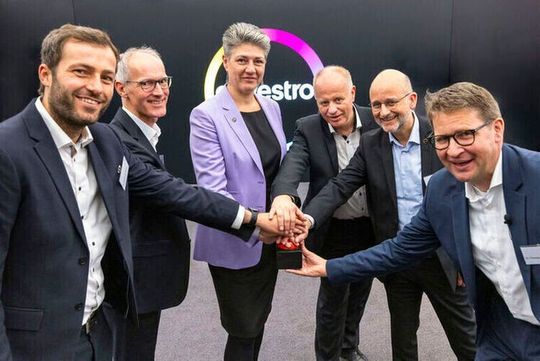
From left to right: Heiko Mennerich (Head of Next Generation Technologies at Evonik); Marco Trisciuzzi (Managing Director of the German-Slovak Chamber of Commerce); Guido Skudlarek (Head of Evonik Health Care Business Line); Lauren Kjeldsen (Member of the Executive Board of Evonik and Chief Operating Officer Custom Solutions); Ondrej Lunter (Regional President of the Banská Bystrica Self-Governing Region); Miroslav Havlik (General Manager of Evonik Fermas s.r.o).; and Roland Lamper (Mayor of Slovenská Ľupča).
(Source: Evonik)
September 15 – Evonik has broken ground on a new biotechnology expansion project at its Fermas site in Slovenská Ľupča, Slovakia. This marks the next major milestone in the approximately 80-million-euro investment to expand Evonik’s biotechnology capabilities and strengthen its contract manufacturing services for the company’s drug substance business. The project is expected to be completed in early 2028.
The investment will add state-of-the-art downstream fermentation technology to the site, increasing capacity for the development and manufacture of complex pharmaceutical intermediates. Creating approximately 50 new jobs, the expansion will further reinforce the Fermas site as one of Evonik’s key biotechnology hubs.
Biotechnology is playing an increasingly important role in pharmaceutical manufacturing, enabling the production of complex molecules through advanced fermentation processes. Compared with conventional chemical synthesis, fermentation-based processes can offer a more sustainable route to selected intermediates by reducing the need for organic solvents and minimizing process-related waste. The Fermas site already operates on 100 percent green electricity, and uses renewable and certified raw materials in selected production processes.
Emerson to Automate Europe’s First Greenfield SAF Facility
Currently under construction in Delfzijl, the new SAF facility will support the Netherlands’ efforts to meet the EU’s sustainable aviation fuel mandate.
(Source: Emerson)
September 17 – Emerson has been awarded a contract by Technip Energies to provide automation technologies for the Sky NRG sustainable aviation fuel (SAF) plant – the first dedicated greenfield SAF production facility in Europe. Emerson’s Delta V integrated control and safety system (ICSS) will help ensure safe, reliable start-up and long-term operational performance, while reducing project risk for this first-of-its-kind facility.
Currently under construction in Delfzijl, the new SAF facility will support the Netherlands’ efforts to meet the EU’s sustainable aviation fuel mandate. Once fully operational in 2028, the facility is expected to produce approximately 100,000 tonnes of SAF annually. The plant will convert residual fats and greases into a sustainable ‘drop-in’ fuel that can be blended with conventional jet fuel without requiring modifications to aircraft or fuelling infrastructure. The project will also support compliance with the Refuel EU Aviation Regulation, which requires all jet fuel supplied at EU airports to contain a minimum of 2 % SAF from 2025, rising to 70 % by 2050.
“Developing Europe’s first dedicated sustainable aviation fuel facility is a major step in scaling SAF production and supporting aviation decarbonization,” said Bart Rosendaal, site director of DSL-01 at Sky NRG. “Working with experienced partners like Technip Energies and Emerson helps ensure we can deliver a safe, reliable and future-ready plant from day one.”
As a greenfield facility, the plant will be born digital, with advanced automation technologies implemented from the outset to ensure efficient, reliable and safe operations. The ICSS will include Emerson’s Delta V Distributed Control System and Delta V Safety Instrumented System, providing process control, safety shutdown, and fire and gas detection. Emerson’s AMS Device Manager plant asset management software will support efficient commissioning and ongoing maintenance by delivering device data, health insights and advanced diagnostics from intelligent field devices.
These systems will manage all process units, including the hydroprocessed esters and fatty acids process to produce SAF, an advanced feedstock pre-treatment unit and an on-site hydrogen plant based on Technip Energies’ proprietary high-efficiency steam methane reforming technology. Together, they will provide real-time visibility and stable, consistent operation of the facility, helping to improve reliability and optimize throughput.
Técnicas Reunidas Wins Contract for Mega Green Hydrogen, Ammonia Plant
The facility will produce about one million metric tons of green ammonia annually for supply to domestic and international markets.
September 17 – Hive Hydrogen South Africa (HHSA) has awarded Técnicas Reunidas the design engineering services, through a Feed (front-end engineering design) contract, for a large green hydrogen and ammonia production plant. The facility, which will produce about one million metric tons of green ammonia annually for supply to domestic and international markets, is being developed in the Coega Special Economic Zone, adjacent to the Port of Ngqura, in Nelson Mandela Bay (Eastern Cape Province, South Africa).
HHSA has announced this contract award during the Africa Green Hydrogen Summit, which was recently held in Cape Town (South Africa). In a press release, the company noted that Técnicas Reunidas was selected to carry out this project “after a long and in-depth period of World Leading EPC proposal evaluations,” which took into account that the Spanish company “brings extensive international experience in the engineering and delivery of large-scale energy, hydrogen, ammonia and complex industrial process facilities.”
The South African company also emphasized that “a key feature of Hive Hydrogen South Africa’s project execution strategy is the intention for the successful Ammonia Production Plant Feed contractor to roll over from Feed into the full Engineering, Procurement and Construction (EPC) phase for the green ammonia production plant, subject to the successful completion of Feed, achievement of the required technical and commercial outcomes, project approvals, financing and Final Investment Decision”. According to HHSA, the projected investment for the green ammonia production plant would reach 1.8 billion dollars.
The scope of work that Técnicas Reunidas will carry out under the Feed contract includes hydrogen production electrolyzers, air separation units, and the green ammonia production loop; a desalination plant; storage systems with a capacity of over 100,000 metric tons; pipelines to the port of Ngqura; and auxiliary facilities. This contract award is fully aligned with the strong growth in service contracts that Técnicas
Covestro Launches New Pilot Plant in Leverkusen, Germany
Covestro opens its new pilot plant for elastomer recycling in Leverkusen, Germany. From left to right: Dr. Lennart Sandbrink, Project Lead Elastomer Recycling; Dr. Bastian Mahr, Engineering Lead Pilot Plant; Monique Buch, Chief Commercial Officer; Dr. Michael Traving, Plant Manager Piloting; Dr. Markus Dugal, Head of Process Technology; and Dr. Thomas Braig, Head of the Business Entity Elastomers.
(Source: Covestro)
September 17 – Covestro has opened a new pilot plant for the chemical recycling of high-performance elastomers at its Leverkusen site. The double-digit million-euro project moves a novel recycling process for Vulkollan from laboratory development into pilot operation.
As one of the first installations of its kind worldwide for this material class, the pilot plant marks a pioneering step toward future-proof circular solutions for high-performance elastomers. The project draws on Germany’s strong chemical and engineering expertise and underscores Covestro’s commitment to Leverkusen as a location for industrial innovation.
“Turning circularity into technically robust and commercially viable solutions is central to Covestro’s strategy,” said Monique Buch, Chief Commercial Officer of Covestro. “With this pilot plant, we are bringing innovative chemistry closer to industrial application and responding to our customers’ growing demand for circular solutions. At the same time, the project demonstrates the contribution that Germany’s industrial and engineering expertise can make to more resilient and circular value chains in Europe.”
At the heart of the project is Vulkollan, a high-performance polyurethane elastomer used in forklift wheels, railway buffer elements, automotive jounce bumpers, and vibration control components. Often invisible, these materials are essential to the safe, reliable and long-lasting operation of vehicles and industrial equipment.
Covestro’s chemical recycling process breaks selected end-of-life Vulkollan material down into purified building blocks for reuse. It enables more than 90 percent of the material by mass to be recycled and can reduce the carbon footprint by up to two thirds compared with fossil-based virgin material.
The new pilot plant takes the technology beyond the laboratory, enabling Covestro to test different waste streams, refine the process and generate the data needed for future industrial scale-up.
Ina Starts Up New Delayed Coker Unit at Rijeka Refinery in Croatia
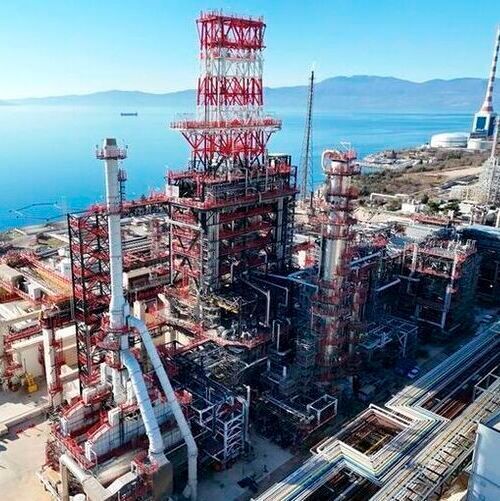
With the start-up of the Delayed Coker Unit, the refinery is now capable of processing heavy residues into higher-value products.
(Source: MOL Group)
September 24 – The Rijeka Refinery Upgrade Project has reached another major milestone. Following the successful achievement of Mechanical Completion and commissioning, the new Delayed Coker Unit (DCU) has successfully achieved start-up.
Following the transfer of operational responsibility to Ina, feedstock was introduced into the unit on 1 September 2026, marking the beginning of production. Since then, the unit has been operating continuously, reaching approximately 70 % of its design capacity. All key products have already been successfully produced at required quality, confirming the successful start-up.
With the start-up of the Delayed Coker Unit, the refinery is now capable of processing heavy residues into higher-value products. The same amount of crude oil is expected to yield up to 30 % more diesel. The refinery can now process heavier grades, which makes crude sourcing far more flexible, broadening the pool of potential suppliers. The unit also entirely eliminates the need to import vacuum gas oil (VGO). With this major investment, Ina and MOL Group have delivered a project that makes crude processing significantly more flexible, further reinforcing supply security for Ina and the wider region.
The Rijeka Refinery Upgrade Project, which includes the new DCU unit, represents an investment of nearly 700 million euros. Over the past 12 years, Ina and MOL Group have invested a total of 1.3 billion euros in the modernization of refining and logistics infrastructure.
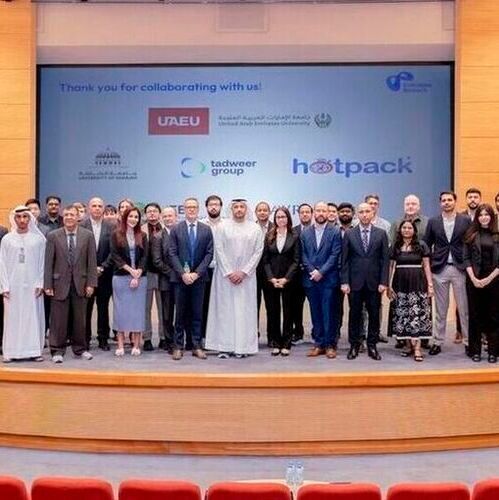
Emirates Biotech, UAEU to Develop UAE’s First Organic-Waste Valorization Pilot Plant
The partnership was officially launched at UAE University in Al Ain in the presence of key value chain stakeholders, including the Emirates Environmental Group, Hotpack, AW Rostamani Group, Tadweer Group, University of Sharjah, and Pacogreen.
(Source: Emirates Biotech)
September 29 – Emirates Biotech and United Arab Emirates University (UAEU) have launched a joint research project to design, build, and operate the UAE’s first integrated organic-waste valorization pilot plant. Mixed food waste streams containing compostable packaging will be converted to renewable biogas and nutrient-rich compost.
The partnership was officially launched at UAE University in Al Ain in the presence of key value chain stakeholders, including the Emirates Environmental Group, Hotpack, AW Rostamani Group (Verrapak), Tadweer Group, University of Sharjah, and Pacogreen.
Located near the UAEU campus in Al Ain, the pilot plant will process up to 40 kg of organic waste per day. The project will develop technical and operating guidance to support the potential scale-up of the model in the UAE and beyond.
In the UAE, food waste accounts for nearly 40 % of daily municipal solid waste, with much of it disposed of in landfills. At the same time, traditional plastic packaging heavily contaminated with food residues can be more difficult to recycle. The project will explore how food waste and compostable packaging can be processed together to recover valuable resources, while helping divert waste from landfill.
The pilot plant will integrate anaerobic digestion and composting, producing renewable biogas and nutrient-rich compost. Over the two-year project, from August 2026 to August 2028, researchers will evaluate the performance, environmental and economic potential of the integrated process, with installation and commissioning expected to be completed by August 2027.
Students and researchers will contribute to the project, gaining hands-on research and technical training, while a laboratory-scale assessment will also explore the potential to convert the biogas into renewable hydrogen.




:quality(80)/p7i.vogel.de/wcms/46/68/4668c1a83d20864c2af5d0e594148828/0133903971v2.jpeg "The collaborations focus on project support, capacity building and capability development, technology transfer and innovation, and supply chain resilience. (Source: Aramco )")
:quality(80)/p7i.vogel.de/wcms/49/da/49dad8d8a13c0e70277ffa923b71544a/0133891190v2.jpeg "For the 100 MW hydrogen facility of the first project phase, Siemens is deploying its software portfolio for the hydrogen industry, enabling smarter operations and optimizing the value of the plant. (Source: Siemens)")
:quality(80)/p7i.vogel.de/wcms/20/9b/209b81269c3b7255e1f49c5771cfc303/0133747923v2.jpeg "Under the theme \"Step into Cognitive Manufacturing\", Ima will present its vision of a new generation of manufacturing, where Artificial Intelligence, advanced Robotics, Digital Vision Systems and Human Expertise work together to create smarter, more connected and adaptive production environments. (Source: Ima)")
:quality(80)/p7i.vogel.de/wcms/e5/87/e587bb7a91212bcc1ae875ef1bbb6edf/0133471290v2.jpeg "Physical AI marks a shift from machines that follow fixed instructions to embodied systems that perceive, reason, and act autonomously. (Source: Pixabay)")
:quality(80)/p7i.vogel.de/wcms/48/a4/48a48092e53bcc7db51b527a98a083ee/0133912333v2.jpeg "At a glance: Plant engineering projects from across the globe. (Source: © suphamit - stock.adobe.com)")
:quality(80)/p7i.vogel.de/wcms/6e/91/6e91403e574040df194cb07fae945f07/0133900692v2.jpeg "The inauguration ceremony for the new unit was held in the presence of Thierry Le Hénaff, Chairman and Chief Executive Officer of Arkema and Stéphane Séjourné, Executive Vice-President of the European Commission for Prosperity and Industrial Strategy. (Source: Arkema)")
:quality(80)/p7i.vogel.de/wcms/4e/21/4e216ce12e862201405cdafa46734ad6/0133894576v2.jpeg "Air Products’ LNG-based ASU in Pengerang will produce more than 600 tonnes of liquid oxygen, nitrogen and argon per day. (Source: Air Products)")
:quality(80)/p7i.vogel.de/wcms/5e/0f/5e0f355d4e90ad6e1af1c997b8789b7d/0133748771v2.jpeg "Elkem Rana’s second furnace will operate as normal during the period. (Source: Elkem )")
:quality(80)/p7i.vogel.de/wcms/50/95/509548cafc37c66c1f9a6aa00d78a347/0133898207v2.jpeg "Manufactured at Nouryon’s facility in Finland, Cekol CMC-Na is a water-soluble polymer that gives drugmakers a plant-based alternative to synthetic excipients. (Source: Nouryon)")
:quality(80)/p7i.vogel.de/wcms/96/24/9624790c4a1710995de488021bf93c4c/0133846001v1.jpeg "When tableting tools are manufactured closer to the market, supply chains can respond more quickly. With a new production site in Pune, India, Fette Compacting is bringing punches and dies closer to one of the pharmaceutical industry’s fastest-growing markets. (Source: Fette Compacting)")
:quality(80)/p7i.vogel.de/wcms/c3/40/c340a3cd06990549f48cf68ae3c5ffff/0133748269v2.jpeg "Bayer has plans to invest 2.2 billion dollars in a new pharmaceutical manufacturing site in New Albany, Ohio, U.S. (Source: Bayer )")
:quality(80)/p7i.vogel.de/wcms/02/2c/022cab680492112fbf0ef42892dddd63/0133748297v2.jpeg "In addition to production of green hydrogen, the H2future-Follow-Up project is now increasingly focusing on its treatment and provision for industrial applications. (Source: Verbund)")
:quality(80)/p7i.vogel.de/wcms/54/b9/54b9798cdc66e4aa54009dcd5fd2a682/0133616385v2.jpeg "Hydrogen production plant using water electrolysis powered by renewable energy. (Source: Hyundai E&C/AI-generated image)")
:quality(80)/p7i.vogel.de/wcms/c5/03/c5039bd2b47b209d1112fcc5227d04fc/0133537580v2.jpeg "The facility is expected to strengthen Manatee County’s position as a strategic energy and logistics hub. (Source: Unsplash)")
:quality(80)/p7i.vogel.de/wcms/7f/1b/7f1b02563e4803ee7f3764ffd1720d8c/0132842468v3.jpeg "The new EZJetFlo™ in-line mixing system solves the production bottleneck using highly efficient Venturi powder induction. (Source: ILC DOver)")
:quality(80)/p7i.vogel.de/wcms/02/fb/02fbe7296b87b2c110ad17e983d7d87a/0132963781v2.jpeg "MAAG’s Extrex6 EC gear pump is specifically designed for the continuous conveying of rigid PVC (polyvinyl chloride). (Bild: Maag)")
:quality(80)/p7i.vogel.de/wcms/69/8c/698c17b920244559c08f28261636fee5/0132816720v2.jpeg "Xylem has entered into an agreement to acquire the Cornell Pump and Roper Pump businesses from Indicor for 1.46 billion dollars. (Source: Pixabay)")
:quality(80)/p7i.vogel.de/wcms/89/47/8947595eafaa6ad27c8552a5f9ad48e1/0129967379v1.jpeg "Biogas and biomethane currently provide approximately 5.5 GW of stable electrical capacity and could be expanded to up to 20 GW without requiring additional land – an enormous potential. (Source: license free via Pixabay)")
:quality(80)/p7i.vogel.de/wcms/fe/5d/fe5d9bb106dfb20c1d69c90d74e78f58/0133648325v2.jpeg "Under the ‘National Water Strategy 2030’, Saudi Arabia is securing sustainable water resources, protecting the natural environment and providing high-quality services. (Source: Malika - stock.adobe.com)")
:quality(80)/p7i.vogel.de/wcms/88/c4/88c457f86fb2842cbcee21c320c44bd9/0133541916v2.jpeg "The RO membrane elements will be used for the Changi Newater Factory (CNF3), a large-scale used water treatment plant in Singapore. (Source: Unsplash)")
:quality(80)/p7i.vogel.de/wcms/1b/2b/1b2b80c989067b50c687314515948806/0133161547v2.jpeg "Acwa has signed a MOU with Veolia, committing the two leading companies to optimizing seawater desalination across the entire value chain. (Source: Acwa)")
:quality(80)/p7i.vogel.de/wcms/21/2e/212e079dcb99d9fd36e85dae0db3141a/0132929532v2.jpeg "Aerial view of the Kawasaki Works. (Source: Asahi Kasei )")
:quality(80)/p7i.vogel.de/wcms/79/31/7931cc94924b4c2ebc7087e9cec2f801/0130490720v2.jpeg "The new Pulsar Model R80 solids antenna delivers improved measurement capability through its high-frequency signal, narrow beam angle, and advanced configuration software. (Source: Ametek )")
:quality(80)/p7i.vogel.de/wcms/6b/cc/6bcc3d26e1c7c74d90a10bc3ca296ae1/0128362351v2.jpeg "A look into Bayer's new tablet production, Solida 1, during construction: The robots and lift columns for material handling are being installed. (Source: Bayer)")
:quality(80)/p7i.vogel.de/wcms/24/c8/24c84ab6b1bcd24468a87820a07a85aa/0128194707v2.jpeg "Ajax Equipment has supplied Binding Solutions with a feed system comprising buffer hopper, screw feeder and agitated screw feeder for a pilot plant handling iron ore and additives. (Source: Ajax Equipment )")
:quality(80)/p7i.vogel.de/wcms/fa/d3/fad368bdbaaa561f5383f31ab78d4891/0133899730v2.jpeg "Established with support from the Singapore Economic Development Board, Lubrizol's Southeast Asia Innovation Center in Jurong serves as a regional platform for customer collaboration, scientific innovation and technical advancement. (Source: Lubrizol )")
:quality(80)/p7i.vogel.de/wcms/7f/1b/7f1b4ca96036a50d211eefe39a52e3d5/0133896780v2.jpeg "At Borouge International Niedergebra, annual output of recycled mixed polyolefin materials will increase by close to 9 kilo tonnes. (Source: Unsplash)")
:quality(80)/p7i.vogel.de/wcms/00/17/0017bdaa28fe66816199a4eb71c02e72/0133748786v2.jpeg "Located at the heart of the Rhône-Alpes Research Center, the Battery Center of Excellence is entering a new phase of its development. (Source: Arkema)")
:quality(80)/p7i.vogel.de/wcms/9e/e7/9ee7a88325e1356fd9fc14f3e6074ecb/0133654724v2.jpeg "LG Chem has signed a MOU with the Volkswagen Group to develop and expand the application of next-generation, eco-friendly mobility materials. (Source: LG Chem)")
:quality(80)/p7i.vogel.de/wcms/f8/29/f8298429c1638b949a6f76346f6709c7/0118701710v2.jpeg "Bosch Industrial Heat will be presenting sustainable steam and heat solutions for global industrial use at the Achema trade fair in Frankfurt, Germany. (Source: Bosch Industriekessel)")
:quality(80)/p7i.vogel.de/wcms/07/24/07242664ab2b1c7841c9d9d0a127670c/0116045959.jpeg "A look inside the GEA machine room. (Bild: Magnavale)")
:quality(80)/p7i.vogel.de/wcms/c9/79/c979a20b32395ddfa93fe7ead90578a0/0108386061.jpeg "Production residues, lime, salt and suspended solids quickly clog the pipes. (Source:©Tanakorn - stock.adobe.com)")
:quality(80)/p7i.vogel.de/wcms/9e/5c/9e5c92d942ed046a27562d6e3d730c92/0103483548.jpeg "It is almost ten metres high and extends over three floors: the world's first multiple dividing wall column is located in the new technical centre at the University of Ulm. (Bild: Eberhardt, kiz Universität Ulm)")
:quality(80)/p7i.vogel.de/wcms/90/f3/90f351201dd4ea7e2439ce19019bf318/0133013227v2.jpeg "Adnoc, in collaboration with SLB, has deployed its AI-enabled RTOC platform across its fleet of more than 120 rigs. (Source: Adnoc)")
:quality(80)/p7i.vogel.de/wcms/aa/9d/aa9dc332257fbc96a2d2ec20b40781a5/0132005469v2.jpeg "Qatar Energy would like to emphasize that this was an operational accident and not sabotage or hostile in nature. (Source: Qatar Energy)")
:quality(80)/p7i.vogel.de/wcms/57/da/57da73af9c35d633196afd46348182b2/0130820106v2.jpeg "Today, the world is witnessing a deepening energy crisis. The Iran–US war has exposed the vulnerability of the global oil, gas, and petrochemicals industry. Its impact is not confined to one region—it has triggered a domino effect across continents. (Source: © Rayhan - stock.adobe.com)")
:quality(80)/p7i.vogel.de/wcms/20/36/20366ffa57a841882fd165e4dc885c09/0130491929v2.jpeg "With the US and Israel jointly firing the first shot on Iran, the world is now witnessing major cascading effects—from soaring global oil and gas prices, to industry leaders declaring force majeure, and even predictions that the war could trigger a global economic recession! (Source: © FOYSAL - stock.adobe.com)")
:quality(80)/p7i.vogel.de/wcms/a8/4e/a84e8039a90a5cf4751d01ebcf6ba1a9/0127510172v2.jpeg "After six years, Achemasia, the international trade fair and innovation forum for sustainable chemical production, has returned with renewed vigor, bringing together global expertise, Chinese innovation, and a shared commitment to a greener industrial future—according to the organizers of the fair. (Source:PROCESS China)")
:quality(80)/p7i.vogel.de/wcms/17/c7/17c703445f134eb3d7ecc7918dda2762/0124596096v2.jpeg "Achema Middle East will launch in Saudi Arabia in 2026. (Bild: Dechema/ Hannibal)")
:quality(80)/p7i.vogel.de/wcms/2a/2c/2a2cffc07f51019065387cd63241b5ce/0119463370v1.jpeg "The Injecta 36 fills and seals RTU (Ready-to-Use) syringes at high speed. The image shows the robotic arm. (Source: IMA)")
:quality(80)/p7i.vogel.de/wcms/b1/7e/b17ea8c62ccafad1d1fb072d6199bbd6/0118578446.jpeg "“Star in the ring”: Vegapuls 6X radar level sensors are the solution of choice for Renolit for many applications on the way to the perfect plastic product. (Source: © MR Design - stock.adobe.com; Vega)")
:quality(80)/p7i.vogel.de/wcms/e0/95/e095767c9e3dc27fc37d5e635ef85303/0133843743v1.jpeg "The Strait of Hormuz crisis has shown how a single chokepoint can turn an energy shock into a manufacturing and food shock. (Source: © Gowrob - stock.adobe.com)")
:quality(80)/p7i.vogel.de/wcms/ff/f6/fff6f0d51831655bdd781e08681d74a3/0133747018v2.jpeg "His Excellency Saad Sherida Al-Kaabi, the Minister of State for Energy Affairs, the President and CEO of Qatar Energy at the Qatar Economic Forum Special Edition in New York, USA. (Source: Qatar Energy )")
:fill(fff,0)/images.vogel.de/vogelonline/companyimg/2000/2093/65.jpg "Glatt_Logo_ND4c-RGB (5x3cm).jpg ()")
:fill(fff,0)/p7i.vogel.de/companies/61/f9/61f9439b7cbe4/logo-edl.png "logo-edl (EDL Anlagenbau Gesellschaft mbH)")
:fill(fff,0)/p7i.vogel.de/companies/66/9f/669f700d3b118/cac-2023-poslogo-idea-ahead.png "cac-2023-poslogo-idea-ahead (CAC ENGINEERING GMBH)")


:quality(80)/p7i.vogel.de/wcms/3d/f7/3df79420b0ddfbca8f8d270df9bc22aa/0133152888v2.jpeg "Uniper and its suppliers will now, during the so-called Feed phase, define the plant’s technical design and prepare the project for construction. (Source: Uniper )")
:quality(80)/p7i.vogel.de/wcms/fb/54/fb54b6f2e394f8278c8ad8f111cba0a0/0133617654v2.jpeg "The partnership was officially launched at UAE University in Al Ain in the presence of key value chain stakeholders, including the Emirates Environmental Group, Hotpack, AW Rostamani Group, Tadweer Group, University of Sharjah, and Pacogreen. (Source: Emirates Biotech)")