PROCESS Worldwide brings to you the ‘Top 10 plant engineering projects of November 2025’ from all over the world. Right from Topsoe inaugurating Europe’s largest SOEC manufacturing facility in Denmark to Air Liquide’s technology converting ammonia into hydrogen at industrial scale, find out all the projects making headlines here.
At a glance: Plant engineering projects from across the globe.
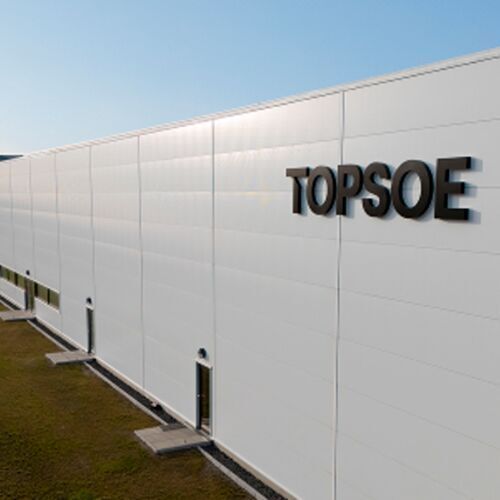
Topsoe Inaugurates Europe’s Largest SOEC Manufacturing Facility in Denmark
The factory is initially designed to manufacture 500 MW of electrolyzers per year.
(Source: Topsoe)
November 04 – Topsoe has recently inaugurated its first – and Europe’s largest – Solid Oxide Electrolyzer Cell (SOEC) stack manufacturing facility in Denmark. The electrolyzer stacks will be used to produce green hydrogen, which can be converted into ammonia and methanol essential for industrial decarbonization. The factory is initially designed to manufacture 500 MW of electrolyzers per year. When fully loaded, after ten years, the factory can service up to 10 GW of installed capacity at customer sites, enabling the reduction of 15 million metric tons of CO₂ annually, compared to hydrogen produced from natural gas. This is equivalent to the annual emissions of nearly 3.5 million gasoline-powered passenger vehicles.
By scaling advanced, high-efficiency electrolyzer technology, Topsoe contributes to enhancing Europe’s energy competitiveness in cleantech, while supporting both European and global efforts to decarbonize energy-intensive industries such as steel, cement, chemicals and long-distance transportation that account for approximately 30 % of global CO₂ emissions (WEF).
Morten Bødskov, the Danish Minister for Industry, Business and Financial Affairs, said: “This is a big day for Topsoe, for Herning and for Denmark. Topsoe turns knowledge into action and complex chemistry into real change – and their technologies make industries cleaner. Investments like this show what’s possible. They create jobs, growth and a greener future. This new factory is an example of what we need – Danish and European investments in green technology.”
Roeland Baan, Chief Executive Officer at Topsoe, said: "Our SOEC facility will be a game-changer for the energy transition. The technology’s unmatched efficiency is pivotal for scaling green hydrogen production for industrial decarbonization. With this facility, we are moving SOEC technology and Power-to-X from ambition to reality – at a scale and speed that’s urgently needed. This achievement is a testament to Topsoe’s world-class innovation, determination and ability to transform advanced, science-based solutions into industrial impact.”
Topsoe has signed offtake agreements with First Ammonia for their green ammonia project in Texas, US, and with Forestal for their e-methanol project in Spain. Both agreements include a 10-year service warranty program.
The inauguration was attended by Morten Bødskov, Danish Minister for Industry, Business and Financial Affairs and state representatives. Also, customers, business partners and organizations such as European Innovation Fund, Cinea, Hydrogen Council, Confederation of Danish Industry, Hydrogen Denmark and Green Power Denmark attended the ceremony in Herning, Denmark. Wopke Hoekstra, European Commissioner for Climate, Net Zero and Clean Growth, and Dan Jørgensen, European Commissioner for Energy and Housing, delivered video addresses during the ceremony.
Europe’s First Waste-to-Methanol Plant to Use Clariant Catalysts
Clariant will supply catalysts for feed purification and its highly active Megamax for methanol synthesis.
(Source: Clariant)
November 11 – Clariant has recently announced its collaboration in Repsol’s pioneering methanol plant in El Morell near Tarragona, Spain. The Ecoplanta project will be the first of its kind in Europe to convert municipal waste into renewable methanol. The facility will operate using Enerkem’s advanced waste gasification process, supported by a range of Clariant’s syngas purification catalysts and its highly active Megamax methanol synthesis catalysts. Scheduled for completion in 2029, the plant will use 400,000 tons of non-recyclable solid municipal waste annually to produce 240,000 tons of methanol.
Georg Anfang, Vice President Syngas and Fuels at Clariant Catalysts, commented, “We are proud to collaborate with Repsol and Enerkem in the prestigious Ecoplanta project to support Europe’s energy transition. Leveraging our decades of innovations in methanol synthesis catalysts, Clariant is uniquely positioned to drive the large-scale deployment of low-carbon methanol technologies that will play a decisive role in decarbonizing hard-to-abate industries.”
Date: 08.12.2025
Naturally, we always handle your personal data responsibly. Any personal data we receive from you is processed in accordance with applicable data protection legislation. For detailed information please see our privacy policy.
Consent to the use of data for promotional purposes
I hereby consent to Vogel Communications Group GmbH & Co. KG, Max-Planck-Str. 7-9, 97082 Würzburg including any affiliated companies according to §§ 15 et seq. AktG (hereafter: Vogel Communications Group) using my e-mail address to send editorial newsletters. A list of all affiliated companies can be found here
Newsletter content may include all products and services of any companies mentioned above, including for example specialist journals and books, events and fairs as well as event-related products and services, print and digital media offers and services such as additional (editorial) newsletters, raffles, lead campaigns, market research both online and offline, specialist webportals and e-learning offers. In case my personal telephone number has also been collected, it may be used for offers of aforementioned products, for services of the companies mentioned above, and market research purposes.
Additionally, my consent also includes the processing of my email address and telephone number for data matching for marketing purposes with select advertising partners such as LinkedIn, Google, and Meta. For this, Vogel Communications Group may transmit said data in hashed form to the advertising partners who then use said data to determine whether I am also a member of the mentioned advertising partner portals. Vogel Communications Group uses this feature for the purposes of re-targeting (up-selling, cross-selling, and customer loyalty), generating so-called look-alike audiences for acquisition of new customers, and as basis for exclusion for on-going advertising campaigns. Further information can be found in section “data matching for marketing purposes”.
In case I access protected data on Internet portals of Vogel Communications Group including any affiliated companies according to §§ 15 et seq. AktG, I need to provide further data in order to register for the access to such content. In return for this free access to editorial content, my data may be used in accordance with this consent for the purposes stated here. This does not apply to data matching for marketing purposes.
Right of revocation
I understand that I can revoke my consent at will. My revocation does not change the lawfulness of data processing that was conducted based on my consent leading up to my revocation. One option to declare my revocation is to use the contact form found at https://contact.vogel.de. In case I no longer wish to receive certain newsletters, I have subscribed to, I can also click on the unsubscribe link included at the end of a newsletter. Further information regarding my right of revocation and the implementation of it as well as the consequences of my revocation can be found in the data protection declaration, section editorial newsletter.
Michel Chornet, CEO of Enerkem, added, “We are excited to contribute to the Ecoplanta project and set an inspiring example for others on the path to decarbonization. Our technology not only enables large-scale production of low-carbon methanol and the reduction of waste in landfills but also avoids substantial greenhouse gas emissions. According to estimates, abatement will be equivalent to 3.4 million tons of CO2 in the first 10 years of operation.”
Clariant’s catalytic technologies are perfectly suited to the Ecoplanta process. After gasification of municipal waste, the trap and guard catalysts will be used to efficiently remove all types of impurities, such as metals, halogens, and sulfur species. The purified syngas will then be converted to methanol using the Megamax series catalysts. Due to its high activity, the catalyst can optimize methanol yield while significantly reducing operating costs. Megamax also offers enhanced selectivity, which greatly reduces the formation of by-products and thus improves the sustainability and economics of bio-methanol production.
Renewable methanol offers a highly adaptable pathway to support decarbonization across a broad range of industries. It can be utilized as a drop-in fuel for maritime and road transportation and as a feedstock for chemical and sustainable aviation fuel production.
MHI to Develop Large-Scale Ammonia and Urea Fertilizer Production Complex
MHI has signed an EPC contract with SC Turkmenhimiya for the construction of a large-scale ammonia and urea fertilizer production complex in Turkmenistan.
November 11 – Mitsubishi Heavy Industries (MHI) has signed an EPC (Engineering, Procurement and Construction) contract with SC Turkmenhimiya, the state-owned chemical company of Turkmenistan, for the construction of a large-scale ammonia and urea fertilizer production complex. The contract was concluded in partnership with Gap Insaat Yatirim ve Dis Ticaret (Gap), a leading Turkish contractor. The groundbreaking ceremony was held on November 2, 2025, attended by the President of Turkmenistan, His Excellency Serdar Berdimuhamedov. The plant is scheduled to begin operations in 2030.
The project involves the construction of the largest ammonia and urea fertilizer production plant in Turkmenistan. Located on the coastline of the Caspian Sea at Kiyanly in the Balkan province in northwestern Turkmenistan, the project covers basic and detailed design, equipment procurement, construction works, and commissioning of the plant.
In addition to the ammonia and urea fertilizer production plant with its associated utilities and offsite facilities, the scope also includes peripheral infrastructure such as temporary piers and product shipment facilities. The planned daily production capacity is 2,000 metric tons of ammonia and 3,500 metric tons of urea. MHI will be responsible for the basic and detailed design, procurement, and commissioning of the ammonia and urea fertilizer plant, and will collaborate closely with Gap and Mitsubishi Corporation to execute the project.
Turkmenistan is one of the world's leading countries in natural gas reserves and has prioritized the production of high value-added products using its abundant natural resources and the diversification of export products as key pillars of its national strategy. The fertilizers produced at this plant are expected to greatly contribute to the country's economic growth and enhancement of international competitiveness. Additionally, the plant will be equipped with a CO2 capture facility applying MHI's proprietary "Advanced KM CDR Process", developed jointly with Kansai Electric Power Co. This facility will improve plant efficiency and reduce environmental impact, thereby contributing to the realization of a sustainable society.
Rockwell Automation to Develop New Greenfield Manufacturing Site in USA
Rockwell Automation has plans to build a new greenfield manufacturing site in Southeastern Wisconsin, USA.
(Source: Pixabay)
November 20 – Rockwell Automation has plans to build a new greenfield manufacturing site in Southeastern Wisconsin. The project marks the next step in the company’s previously announced 2-billion-dollar investment in plants, digital infrastructure, and talent to grow share, build resilience, and expand margins over the next five years. The facility has the potential to be Rockwell’s largest manufacturing campus globally, with a significant footprint and the flexibility to scale operations.
“Rockwell Automation has been leading the way with high-quality manufacturing and technology solutions for over a century. We’re incredibly proud of that tradition and how they've continued to exemplify the innovation and excellence that Wisconsin is known for, and we are excited to celebrate their continued growth and success in our state,” says Gov. Tony Evers. “I want to thank Rockwell Automation for their ongoing commitment to Wisconsin, our workforce, and our communities, and I look forward to seeing how this newest expansion will accelerate our statewide goals of building a 21st-century workforce and economy.”
“Designing a new facility presents the opportunity to create the future of industrial operations, with highly orchestrated production,” says Blake Moret, chairman and CEO at Rockwell Automation. “We are expanding our U.S. manufacturing footprint with advanced production capability that supports growth and performance with the latest Rockwell technologies and solutions.”
This new facility will span more than 1 million square feet of manufacturing and warehouse space and will be equipped with advanced automation, robotics, and digital systems that will showcase modern manufacturing and demonstrate Rockwell’s leadership in industrial automation.
“It will integrate the latest in Rockwell’s production technologies, including AI and analytics tools, to increase efficiency and precision, while providing team members with access to advanced tools and training. I’m excited to see our highly skilled workforce maximize the potential of this site,” says Bob Buttermore, chief supply chain officer at Rockwell Automation. “This investment reflects our confidence in our teams that deliver excellence every day.”
This reinforces Rockwell’s long-term commitment to American manufacturing and to the skilled workforce that drives production and innovation. The Southeastern Wisconsin location will be near the company’s global headquarters in Milwaukee.
Construction and site planning are in progress in concert with local and state officials. Additional details will be shared as the project advances.
Air Liquide’s Technology Can Convert Ammonia into Hydrogen at Industrial Scale
This groundbreaking innovation demonstrates a key missing technology brick to a viable pathway for converting ammonia into hydrogen, and unlocks challenges of transportation of hydrogen.
(Source: Air Liquide)
November 20 – Air Liquide has recently announced the successful start-up of the world’s first industrial-scale ammonia cracking pilot unit with a 30 tons per day ammonia to hydrogen conversion capacity at the Port of Antwerp-Bruges, Belgium. This groundbreaking innovation demonstrates a key missing technology brick to a viable pathway for converting ammonia into hydrogen, and unlocks challenges of transportation of hydrogen. This technology proven at the industrial scale for the development of world scale ammonia cracking plants enables access to low-carbon and renewable hydrogen for the decarbonization of industry and mobility.
The ability to efficiently transport hydrogen over long distances is a persistent challenge in developing a robust global hydrogen economy. Ammonia (NH3), formed by hydrogen and nitrogen molecules, emerges as a valuable hydrogen carrier. It can be cost-effectively produced in regions rich in renewable energy sources, such as solar, hydro, and wind or other low-carbon power. A well-established global infrastructure already exists for the large-scale production, transportation, and utilization of ammonia. This allows for the export of ammonia from energy-abundant regions to end-users worldwide, where it can then be "cracked" back into hydrogen, providing a crucial component for decarbonizing industry and mobility.
This new, proprietary ammonia cracking technology expands Air Liquide's portfolio for low-carbon and renewable hydrogen production. As part of the successful development of this unit, key proprietary innovations were developed across critical areas including process safety, material testing, advanced catalysis for ammonia cracking, ammonia combustion, and efficient molecule separation.
Armelle Levieux, member of Air Liquide’s Executive Committee, notably supervising Innovation and Technology activities as well as Hydrogen Energy activities, stated: “The commissioning of our ammonia cracking pilot unit in Antwerp is a key milestone. This is a world’s first which paves the way for new low-carbon hydrogen supply chains. By proving the viability of industrial-scale ammonia cracking, Air Liquide demonstrates its capacity to innovate and provide concrete solutions for its customers, and contributing to the Energy Transition. I am immensely proud of the work and commitment of all our teams who made this achievement possible.”
This industrial scale pilot plant has been supported by the Flemish Government through VLAIO (Flemish Agency for Innovation and Entrepreneurship).
Braskem, Combio to Install Boiler Powered by Renewable Electricity in Brazil
Developed in partnership with Combio, the initiative involves installing a boiler powered by renewable electricity, which will replace part of the steam currently produced using fossil fuels.
(Source: Braskem)
November 22 – Braskem has recently announced a project at its industrial unit in Paulínia (SP) which is aimed at enhancing competitiveness and reducing operational costs. Developed in partnership with Combio, a Brazilian company that supplies renewable thermal energy to the industry through biomass and renewable electricity, the initiative involves installing a boiler powered by renewable electricity, which will replace part of the steam currently produced using fossil fuels-a more renewable, efficient, and economically advantageous solution.
With a capacity of 12 t/h of steam production, the project represents a significant technological advancement for the petrochemical sector. This change will reduce the consumption of higher-cost fossil sources, providing greater predictability and competitiveness, while cutting approximately 65 % of CO² emissions-Scopes 1 and 2-at the PP 3 PLN unit, contributing to Braskem's goal of reducing its carbon emissions by 15 % by 2030.
According to Gustavo Checcucci, Director of Energy and Industrial Decarbonization, the initiative reflects the company's strategic vision: "This project represents another important step toward increasing efficiency and reducing costs in our operations, while advancing the construction of a more sustainable production model. With this, we reaffirm our commitment to driving the transition to a low-carbon industry, while boosting productivity and competitiveness in our operations."
The partnership with Combio was structured under a 15-year contract that includes acquisition, implementation, and maintenance of the assets. Braskem will be responsible for operations, while Combio will act as a technical and commercial partner to ensure equipment performance. The project marks Combio's debut in the petrochemical sector, in partnership with the market leader in large-scale biopolymer production.
This achievement also consolidates the implementation of Combio's first electric boiler and one of the first in Brazil since the last wave of electric boilers in the 1980s. "This partnership with Braskem reinforces our purpose of enabling solutions that combine sustainability, competitiveness, and energy security for the industry, whether through renewable electricity or biomass. By implementing our first electric boiler for a client of Braskem's scale, we demonstrate that it is possible to reduce costs and emissions simultaneously, accelerating the energy transition in Brazil's chemical and petrochemical sector," says Gustavo Marchezin, Combio's Commercial Director.
Currently in the licensing and implementation phase, the boiler is expected to begin operating in the second half of 2026. The initiative reinforces Braskem's position as an active agent in building a low-carbon industry, while representing a strategic step for Combio, which expands its presence in the petrochemical sector and consolidates its reputation for innovation and renewable thermal energy solutions for the Brazilian industry.
Air Liquide Partners with Aster for Development of Auto Thermal Reformer Unit
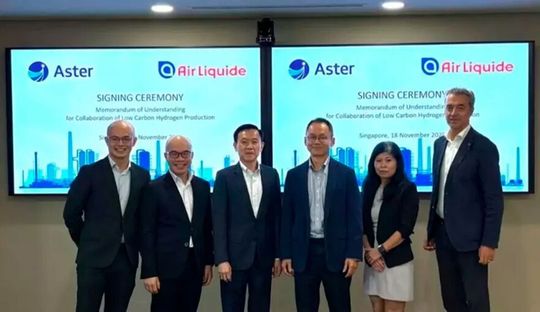
(L-R): From Aster - Kee Khoon Foo (Business Development Director); Andre Khor (Group CFO & Deputy CEO); Erwin Ciputra (Group CEO); From Air Liquide - Ilyong Park (CEO, East Asia Pacific); Tina Loke (CEO, Singapore); Michele Gritti (VP, Large Industries & Hydrogen Energy)
(Source: Air Liquide)
November 25 – Air Liquide Singapore and Aster Chemicals and Energy (Aster) have signed a Memorandum of Understanding (MOU) to jointly collaborate on the development of an innovative Auto Thermal Reformer (ATR) unit for the production of hydrogen with integrated carbon capture capabilities in Singapore. This strategic partnership marks a major milestone in advancing the decarbonization of Singapore’s energy and chemicals sector.
Under the MOU, Air Liquide will leverage its proprietary expertise in autothermal reforming technology, while Aster provides its integrated refining-petrochemical infrastructure and market knowledge. Together, the companies will assess the technical and commercial potential of the ATR with carbon capture which will support Singapore’s broader energy transition, in line with the national hydrogen strategy that positions low-carbon hydrogen as a key pillar in achieving net-zero emissions by 2050.
Associated with carbon capture technology, the ATR process delivers high energy efficiency, excellent reliability and enables a carbon capture rate of up to 99 %. This collaboration is in line with Singapore’s commitment to diversifying its energy mix, decarbonizing hard-to-abate sectors, and building a resilient low carbon economy.
Tina Loke, CEO of Air Liquide Singapore, commented: “Air Liquide is proud to partner with Aster on this crucial initiative, which aligns with its global strategy to actively accelerate the development of a low-carbon society. Leveraging our global expertise with more than 30 ATR and a number of carbon capture references worldwide, this collaboration underscores our dedication to providing innovative gas solutions that drive industrial performance and contribute to Singapore’s ambitious climate goals.”
Erwin Ciputra, Group CEO of Aster, said: “Aster’s commitment to green energy is demonstrated through strategic investments and pioneering collaborations that are positioned to deliver tangible impact. By partnering with Air Liquide, we seek to harness advanced ATR technology to supply low carbon hydrogen that strengthens the efficiency and reliability of our integrated infrastructure. This collaboration directly supports Singapore’s hydrogen strategy and aims to accelerate pathways to reduce emissions in hard to abate sectors. Together, we are striving towards a resilient, affordable, and competitive low carbon energy future for businesses and communities across Singapore.”
Uniper Selects Thyssenkrupp Uhde Technology for Ammonia Cracking Plants
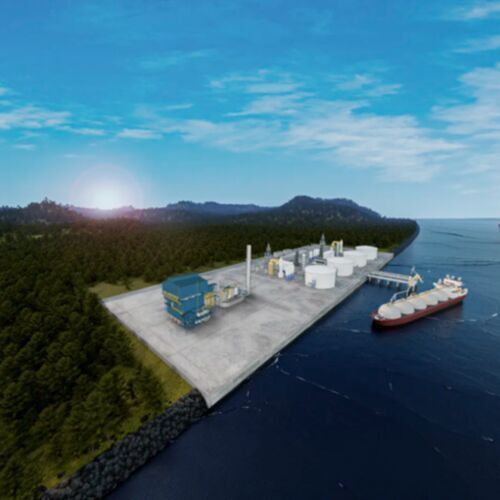
Uniper and Thyssenkrupp Uhde have signed a framework agreement that lays the foundation for the construction of commercial ammonia cracking plants.
(Source: Thyssenkrupp Uhde)
November 27 – Uniper and Thyssenkrupp Uhde have signed a framework agreement that lays the foundation for the construction of commercial ammonia cracking plants. Uniper has secured license packages for the use of Thyssenkrupp Uhde’s ammonia cracking technology. The agreement covers up to six large-scale plants with a total capacity of 7,200 metric tons of ammonia per day (mtpd). The use of hydrogen from ammonia on an industrial scale will make a significant contribution to the decarbonization of national and European industry.
The direct transport of hydrogen is both technically and economically challenging, while ammonia is an ideal transport and storage medium. Ammonia can be liquefied relatively easily and shipped long distances in large quantities. Without high-performance cracker technology, large-volume imports of hydrogen are not feasible. This project is therefore an important step toward establishing a resilient energy infrastructure in Europe.
The agreement establishes the terms for using the technology at Uniper’s planned hydrogen import terminal in Wilhelmshaven. The license package includes engineering, services and the supply of main equipment and catalysts. Uniper is currently driving forward the pre-Feed (front-end engineering and design) for a commercial plant at its Wilhelmshaven site. This pre-Feed phase will establish the design basis for the project, define its scope in more detail, further review its technoeconomic feasibility, and reduce its uncertainties and risks. The goal is to create a solid foundation for the subsequent Feed phase. The Feed phase is scheduled to start at the end of next year.
Holger Kreetz, COO of Uniper: “Domestic production alone cannot meet future hydrogen demand – imports of hydrogen derivatives will be essential. Our agreement with Thyssenkrupp Uhde marks a decisive next step toward enabling global hydrogen trading. Ammonia crackers are key to international hydrogen logistics, and together with Thyssenkrupp Uhde, we are laying the foundations for the infrastructure that Europe needs for its energy future – including our planned hydrogen import terminal in Wilhelmshaven.”
Nadja Håkansson, Member of the Executive Board / COO of Thyssenkrupp Decarbon Technologies & CEO of Thyssenkrupp Uhde: “Our partnership with Uniper shows how cross-industry cooperation creates real added value. With our world-leading ammonia technology and our experience in executing complex plant projects, we are making a significant contribution to decarbonization and the development of a global hydrogen market.”
Back in spring 2025, Uniper and Thyssenkrupp Uhde announced the construction of one of the world’s first demonstration plants for ammonia cracking at the Uniper power plant site in Gelsenkirchen-Scholven, Germany. The plant, with a capacity of 28 metric tonnes of ammonia per day, serves as a technological foundation for the commercial scale-up that has now been agreed. Signing this framework agreement, which includes licenses for large-scale commercial plants, is the next logical step in bringing this key technology for global hydrogen trading to industrial maturity. The demonstration plant, which is funded by the Ministry of Economic Affairs, Industry, Climate Action and Energy of the State of North Rhine-Westphalia, plays a key role in ensuring energy security and facilitating the sustainable transformation of energy-intensive industries.
Toyo Licenses Technology for Urea Plant in Kazakhstan
Toyo Engineering Corporation has licensed its proprietary urea granulation technology for a urea plant planned by Kazazot Prime, a chemical fertilizer manufacturer in the Republic of Kazakhstan.
(Source: Pixabay)
November 27 – Toyo Engineering Corporation has licensed its proprietary urea granulation technology for a urea plant planned by Kazazot Prime (Kazazot), a chemical fertilizer manufacturer in the Republic of Kazakhstan.
As the urea granulation licensor for this project, Toyo will be responsible for licensing, the Process Design Package (PDP), procurement of major equipment, and provision of technical services. Wuhuan Engineering Co. of China will be responsible for the engineering, procurement, and construction (EPC) work.To yo's track record of providing its own urea technology and constructing urea plants on over 100 occasions, as well as its track record of collaboration with Wuhan, were highly evaluated, leading to the adoption of this license.
The facility for which Toyo's license will be adopted is the first urea plant in Kazakhstan, and the urea produced will be used as fertilizer.
Honeywell Aims to Double Production Capacity at Africa’s Largest Refinery
Dangote will leverage Honeywell’s refining and petrochemical processing solutions, which help customers reduce production costs, improve efficiency and increase throughput, to grow its refining capacity from 650,000 barrels per day to 1.4 million barrels per day over the next three years.
(Source: Honeywell)
November 27 – Dangote Petroleum Refinery and Petrochemicals FZE have selected Honeywell to supply advanced technology, services, proprietary catalysts and equipment to help enable the refinery to process a wider range of crude and double the production capacity at Africa’s largest refinery in Lekki, Nigeria by 2028.
Dangote will leverage Honeywell’s refining and petrochemical processing solutions, which help customers reduce production costs, improve efficiency and increase throughput, to grow its refining capacity from 650,000 barrels per day to 1.4 million barrels per day over the next three years. With this expansion, Dangote will become the world’s largest petroleum refinery, strengthening in-continent fuel production, reducing reliance on imports and supporting local energy security needs.
“Our continued collaboration with Honeywell marks a significant milestone not only for Dangote’s refinery, but for Nigeria’s energy sector as a whole,” said Aliko Dangote, President, Dangote Petroleum Refinery and Petrochemicals FZE. “Through the use of Honeywell’s proven, advanced technologies, we can set new production standards for the industry while contributing to Nigeria’s energy independence and economic growth.”
For nearly a decade, Honeywell has been providing process technology to Dangote’s Lekki refinery. Going forward, this expansion project will enable it to maximize the existing equipment and infrastructure – providing the greatest return on investment and accelerating the project timeline and ultimately speed to market.
“Honeywell is committed to delivering groundbreaking technologies that empower customers, drive operational excellence, and support regional energy security efforts,” said Rajesh Gattupalli, President, Honeywell UOP. “Our work with Dangote demonstrates how innovation and collaboration can help enhance regional energy independence and support Africa’s growing energy needs.”
In addition, Dangote will also license Honeywell’s Oleflex technology, which converts propane to propylene through catalytic dehydrogenation, to produce 750,000 metric
tons per year of propylene. With this agreement, Dangote will increase its total production of polypropylene – the primary component in a variety of plastic products including packaging materials – to 2.4 million metric tons per year.
Dangote’s Lekki facility is the largest single-train refinery in the world producing Euro-V quality gasoline, diesel and jet fuel along with polypropylene, a primary component used in plastics and packaging.


:quality(80)/p7i.vogel.de/wcms/54/f4/54f4b4e2a86b203e0dfd84221602bdb5/0130367283v2.jpeg "Anybotics' Anymal robot combines depth cameras, LiDAR, thermal imaging, acoustic sensors, and gas detectors into a single inspection round. (Source: Anybotics)")
:quality(80)/p7i.vogel.de/wcms/e9/64/e964996410967c124c2cf01a8623068e/0130285341v1.jpeg "Geht unter die Oberfläche: Die Offshore-Ölförderung erfordert hochenergetische Pumpen – doch diese sind im Wesentlichen eine Black Box. Bisher zumindest. (Source: Kistler Group)")
:quality(80)/p7i.vogel.de/wcms/54/ae/54aece5dff672ce1651470eecd9f2589/0130138090v2.jpeg "The new Ionchromatograph “Nexera IC“ (Source: Shimadzu)")
:quality(80)/p7i.vogel.de/wcms/49/5c/495c651fabd24a437c98bde6a3d71ecc/0130060419v2.jpeg "Enfinium has successfully piloted Wasteer’s groundbreaking visual AI technology at its Ferrybridge 2 facility in West Yorkshire and Parc Adfer facility in North Wales. (Source: Chris Parkes Photographer Ltd.)")
:quality(80)/p7i.vogel.de/wcms/64/bb/64bb4812390b6491ce0bd4fe53597086/0130333812v2.jpeg "The solar power plant produces 30 GWh per year of renewable electricity, which is self-consumed by Holcim’s industrial facilities, making it the largest floating solar power plant in Europe dedicated to self-consumption. (Source: Pixabay)")
:quality(80)/p7i.vogel.de/wcms/32/06/320643bfb6b509933012a2fd9c42504d/0130333498v2.jpeg "BASF’s X3D catalysts combine high mechanical stability with an open structure. (Source: BASF)")
:quality(80)/p7i.vogel.de/wcms/1b/ca/1bca61c846359bfd9e7998fb30b662c6/0130333482v2.jpeg "Total Energies has launched France’s first advanced plastics recycling plant, with an annual capacity of 15,000 tons, at its Grandpuits site southeast of Paris. (Source: Pixabay)")
:quality(80)/p7i.vogel.de/wcms/09/e3/09e378194b496921d2a267a6752322eb/0130333473v2.jpeg "Under the terms of the contract, KBR will provide contract management, project management and supporting technical services throughout the EPC phases of the project. (Source: KBR)")
:quality(80)/p7i.vogel.de/wcms/7a/50/7a501f6d8f87a4524dc3aaceb04eacb4/0130333829v2.jpeg "The Clear Lake facility represents Clariant's first U.S. manufacturing site dedicated to producing pharmaceutical-grade PEG excipients, marking a pivotal milestone in the company's healthcare growth strategy. (Source: Clariant)")
:quality(80)/p7i.vogel.de/wcms/26/12/261210e5920899e5c35c4f905d3be8bd/0129399814v2.jpeg "Powders used in DPI formulations are often highly potent and administered in very low doses. (Source: Ima)")
:quality(80)/p7i.vogel.de/wcms/6b/3f/6b3f057c83c494e4732337d870d52b21/0130006927v2.jpeg "Lonza will realize upfront cash proceeds of 2.2 billion dollars and retain a 40 % stake in the business, with additional preferential participation in its future exit. (Source: Lonza)")
:quality(80)/p7i.vogel.de/wcms/df/cd/dfcd0c2e0eb4b554f956e0161ae08519/0129794328v1.jpeg "The plasma fractionation facility at CSL Behring, viewed from the outside. (Source: CSL Behring)")
:quality(80)/p7i.vogel.de/wcms/df/35/df3526a6f7aba41fdd2bb2051954e0d8/0130163620v2.jpeg "The SPA, valued at more than 3 billion dollars, is one of the largest binding long-term green ammonia off-take agreements globally. (Source: Pixabay)")
:quality(80)/p7i.vogel.de/wcms/af/73/af7394d9f8900024c5ee7fca459c4eeb/0130080328v2.jpeg "Axens has signed a MOU with Airbus to strengthen their cooperation in the development and deployment of SAF, a key pillar for decarbonizing the aviation sector. (Source: Pixabay)")
:quality(80)/p7i.vogel.de/wcms/0e/19/0e19f0cf0379c3af4c2fe02629db63f1/0130079229v2.jpeg "Thyssenkrupp Uhde has been selected by CSBP to deliver its patented Envinox technology for two nitric acid plants at CSBP’s Kwinana site in Western Australia. (Source: Thyssenkrupp Uhde)")
:quality(80)/p7i.vogel.de/wcms/a6/84/a68477d4ef879cc9cedeae332ca57c49/0129893677v2.jpeg "Siemens and Caphenia sign the partnership agreement. From left to right: Nicky Ahnert, Jürgen Giegerich, Frank Knauf (all Siemens), Dr. Mark Misselhorn, Dr. Andreas Waibel (both Caphenia) (Source: Siemens)")
:quality(80)/p7i.vogel.de/wcms/1c/39/1c39433f4bb4de2e5e6c5311c3236d09/0130110254v2.jpeg "The new pumps of the Omega type series have been designed for handling water and fluids with a low solids content efficiently. (Source: KSB)")
:quality(80)/p7i.vogel.de/wcms/be/e1/bee13b8d51a419b9b8f0685e2b9d47bf/0128917673v1.jpeg "The Centerwave 6000 measures pipes from 32 to 1,600 mm. (Source: Maag Group)")
:quality(80)/p7i.vogel.de/wcms/51/7a/517a4e83c5827663b4839f5ddb98f434/0128872953v1.jpeg "The Tigron in SIL version can be flexibly configured for different safety requirements. (Source: Auma)")
:quality(80)/p7i.vogel.de/wcms/60/ef/60efa975d1dd123c1afbfb6ccc060461/0130263955v2.jpeg "Aquaclean (Source: Oko-tech)")
:quality(80)/p7i.vogel.de/wcms/07/62/0762f20b1821ee2724c97989374d6397/0130257651v2.jpeg "Oleksandr Sadchykov in front of the water treatment unit (Source: Grundfos)")
:quality(80)/p7i.vogel.de/wcms/98/98/989863664c7b65e87caf74a08239d487/0130167217v2.jpeg "Keller 26KyX Level Probe (Source: © Keller Pressure)")
:quality(80)/p7i.vogel.de/wcms/64/4e/644e22b71e8d35a63f051f781eb13886/0130163451v2.jpeg "Vega will present level and pressure measurement technology for the water industry at Ifat 2026. (Source: Vega)")
:quality(80)/p7i.vogel.de/wcms/6b/cc/6bcc3d26e1c7c74d90a10bc3ca296ae1/0128362351v2.jpeg "A look into Bayer's new tablet production, Solida 1, during construction: The robots and lift columns for material handling are being installed. (Source: Bayer)")
:quality(80)/p7i.vogel.de/wcms/24/c8/24c84ab6b1bcd24468a87820a07a85aa/0128194707v2.jpeg "Ajax Equipment has supplied Binding Solutions with a feed system comprising buffer hopper, screw feeder and agitated screw feeder for a pilot plant handling iron ore and additives. (Source: Ajax Equipment )")
:quality(80)/p7i.vogel.de/wcms/1d/3e/1d3e2788eb37c1e974f36337c8d33cb5/0128191010v2.jpeg "Ajax Equipment has supplied IGI Systems with a stainless-steel conical hopper with gas purge capability, as part of a prototype Sublimation System for a low-pressure chemical vapour deposition application. (Source: Ajax Equipment)")
:quality(80)/p7i.vogel.de/wcms/19/76/1976928d7d0a2ed7c1eeba7ade8552c8/0126365603v1.jpeg "Detail of Valvedesign: It has an aktiv amd passive part (Bild: Italvacuum)")
:quality(80)/p7i.vogel.de/wcms/0c/a1/0ca135e0486c9af90a0552aea85de88c/0130439525v2.jpeg "Qatar Energy expects the damage to its Ras Laffan Industrial City caused by missile strikes, which occurred on Wednesday 18 March 2026, and in the early hours of Thursday 19 March 2026, to cost about 20 billion dollars a year in lost revenue. (Source: Pixabay)")
:quality(80)/p7i.vogel.de/wcms/d0/f7/d0f7d560dfce37c8371442d5b6120e3c/0130182478v1.jpeg "The Gelsenkirchen refinery primarily manufactures fuels for vehicles and aircraft, processing roughly 12 million tonnes of crude oil per year. (Source: BP)")
:quality(80)/p7i.vogel.de/wcms/7f/96/7f9628e43c99564fa6dfd8e76149425d/0130165852v2.jpeg "Pure titanium recycling process for chlor-alkali electrolysis cells. (Source: Asahi Kasei)")
:quality(80)/p7i.vogel.de/wcms/f8/29/f8298429c1638b949a6f76346f6709c7/0118701710v2.jpeg "Bosch Industrial Heat will be presenting sustainable steam and heat solutions for global industrial use at the Achema trade fair in Frankfurt, Germany. (Source: Bosch Industriekessel)")
:quality(80)/p7i.vogel.de/wcms/07/24/07242664ab2b1c7841c9d9d0a127670c/0116045959.jpeg "A look inside the GEA machine room. (Bild: Magnavale)")
:quality(80)/p7i.vogel.de/wcms/c9/79/c979a20b32395ddfa93fe7ead90578a0/0108386061.jpeg "Production residues, lime, salt and suspended solids quickly clog the pipes. (Source:©Tanakorn - stock.adobe.com)")
:quality(80)/p7i.vogel.de/wcms/9e/5c/9e5c92d942ed046a27562d6e3d730c92/0103483548.jpeg "It is almost ten metres high and extends over three floors: the world's first multiple dividing wall column is located in the new technical centre at the University of Ulm. (Bild: Eberhardt, kiz Universität Ulm)")
:quality(80)/p7i.vogel.de/wcms/7c/77/7c77e24fdcc9e1511e8e711eff161e28/0130175489v2.jpeg "The milestone confirms the fast pace of development of Eni’s deep water gas projects offshore East Kalimantan. (Source: Unsplash )")
:quality(80)/p7i.vogel.de/wcms/b3/2f/b32fb9f5aa54e9cb6c92e4b6c8665263/0130163018v2.jpeg "The decision to take emergency collective action was made following an extraordinary meeting of IEA Member governments, convened by the IEA Executive Director to assess market conditions amid the conflict in the Middle East and consider the options to address supply disruptions. (Source: © Sashkin - stock.adobe.com)")
:quality(80)/p7i.vogel.de/wcms/85/d2/85d2cb02c4ae45a99454b5405b0f2489/0130149909v2.jpeg "IEA Executive Director Fatih Birol issued a statement on the meeting of G7 Energy Ministers at its IEA headquarters in Paris. (Source: © Marko - stock.adobe.com)")
:quality(80)/p7i.vogel.de/wcms/a8/4e/a84e8039a90a5cf4751d01ebcf6ba1a9/0127510172v2.jpeg "After six years, Achemasia, the international trade fair and innovation forum for sustainable chemical production, has returned with renewed vigor, bringing together global expertise, Chinese innovation, and a shared commitment to a greener industrial future—according to the organizers of the fair. (Source:PROCESS China)")
:quality(80)/p7i.vogel.de/wcms/17/c7/17c703445f134eb3d7ecc7918dda2762/0124596096v2.jpeg "Achema Middle East will launch in Saudi Arabia in 2026. (Bild: Dechema/ Hannibal)")
:quality(80)/p7i.vogel.de/wcms/2a/2c/2a2cffc07f51019065387cd63241b5ce/0119463370v1.jpeg "The Injecta 36 fills and seals RTU (Ready-to-Use) syringes at high speed. The image shows the robotic arm. (Source: IMA)")
:quality(80)/p7i.vogel.de/wcms/b1/7e/b17ea8c62ccafad1d1fb072d6199bbd6/0118578446.jpeg "“Star in the ring”: Vegapuls 6X radar level sensors are the solution of choice for Renolit for many applications on the way to the perfect plastic product. (Source: © MR Design - stock.adobe.com; Vega)")
:quality(80)/p7i.vogel.de/wcms/77/9d/779db435e7f9d79bafe16101008a9cfa/0130263548v2.jpeg "The Kingdom of Saudi Arabia, the UAE and Turkey are three core countries in the region that are actively incorporating the plastics circular economy with the assistance of the chemical recycling technology. (Source: © Anastasiia - stock.adobe.com)")
:fill(fff,0)/p7i.vogel.de/companies/61/f9/61f9439b7cbe4/logo-edl.png "logo-edl (EDL Anlagenbau Gesellschaft mbH)")
:fill(fff,0)/images.vogel.de/vogelonline/companyimg/103000/103097/65.jpg "Pörner Gruppe mit Rand.jpg ()")
:fill(fff,0)/p7i.vogel.de/companies/5f/98/5f98fbb2e7bf2/05-trm-filter-logo-with-slogan-en-alt.png "05_TRM_Filter_LOGO_with_slogan_EN_ALT.png (www.trm-filter.com)")
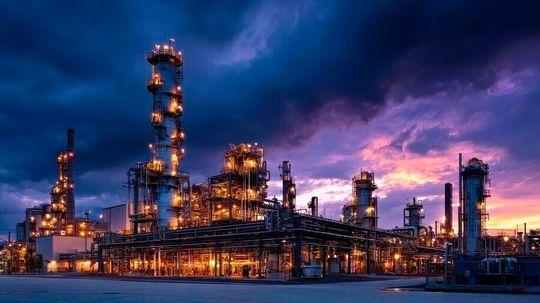


:quality(80)/p7i.vogel.de/wcms/97/ea/97eafe03fcf42cd003fe1ae65a306b09/0128187171v2.jpeg "Uniper and Thyssenkrupp Uhde have signed a framework agreement that lays the foundation for the construction of commercial ammonia cracking plants. (Source: Thyssenkrupp Uhde )")
:quality(80)/p7i.vogel.de/wcms/da/a8/daa818bff62c25ca92185a5013127c68/0128077713v2.jpeg "Developed in partnership with Combio, the initiative involves installing a boiler powered by renewable electricity, which will replace part of the steam currently produced using fossil fuels. (Source: Braskem)")