PROCESS Worldwide brings to you the ‘Top 10 plant engineering projects of July 2025’ from all over the world. Right from Gradiant developing the world’s first fully integrated lithium production facility to Veolia developing UK's first closed-loop pet recycling facility, find out all the projects making headlines here.
At a glance: Plant engineering projects from across the globe.
Gradiant to Develop World’s First Fully Integrated Lithium Production Facility
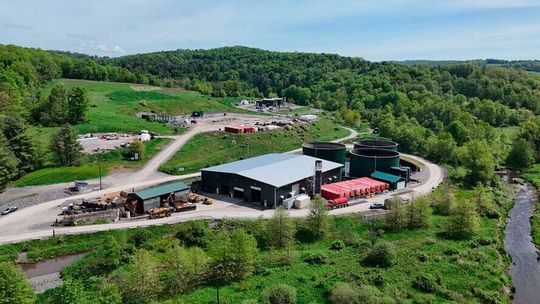
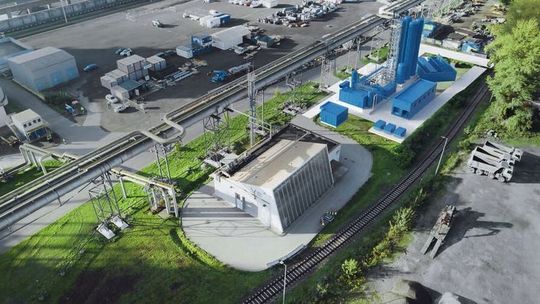
Alkali's commercial lithium production facility in the Marcellus Shale Formation of Pennsylvania is the world’s first to Extract, Concentrate, and Convert lithium in a fully integrated, end-to-end process from oilfield produced water.
(Source: Gradiant)
July 02 – Gradiant, a global leader in advanced water and resource recovery, has recently announced that its lithium business, alkali, will design, build, own, and operate a commercial lithium production facility in the Marcellus Shale Formation of Pennsylvania. This site is the world’s first to Extract, Concentrate, and Convert (EC²) lithium in a fully integrated, end-to-end process from oilfield produced water. This announcement builds on last year’s launch of alkali’s EC² platform, which guarantees a minimum 95 % lithium recovery at customer sites—empowering producers to deliver battery-grade lithium carbonate faster, cheaper, and more sustainably.
Gradiant’s alkali owns and operates the Pennsylvania facility—including equipment, land, water and mineral rights, and permits. This vertically integrated model secures long-term U.S. lithium supply while avoiding the permitting and ownership delays that often stall critical mineral projects.
Currently in testing, the system has already proven key benchmarks: 97 % lithium recovery from produced water and 99.5 % purity for battery-grade lithium carbonate. Full commercial operations are on track for early 2026.
In a major commercial achievement, alkali has signed a multi-year offtake agreement to supply up to 5,000 metric tonnes annually of battery-grade lithium carbonate to a U.S. lithium-ion battery manufacturer for electric vehicles (EVs) and energy storage systems (ESS). The deal affirms strong market demand and the commercial readiness of alkali’s solution.
alkali offers multiple models for partners and customers:
Deploy the EC² solution to lithium producers
Design, build and operate integrated systems for partners
Produce and sell lithium from alkali-owned assets
alkali’s patented EC² process combines Direct Lithium Extraction (DLE), concentration, and final conversion into a single streamlined system. Compared to conventional methods, EC² offers:
Up to 50 % lower capital and operating costs
Modular, pre-engineered systems for rapid global deployment
AI-optimized performance for real-time control and predictive maintenance
Reduced environmental footprint and streamlined permitting
Feedwater flexibility – including geothermal brines, battery recycling, and produced water sources
Air Liquide to Invest Up to 200 Million Dollars in USA
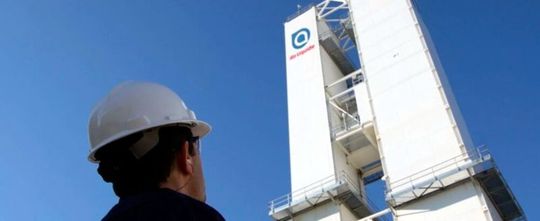
This strategic investment will strengthen Air Liquide’s position in the U.S. Gulf Coast and enable future growth opportunities.
(Source: Air Liquide)
July 7 – Air Liquide will invest up to 200 million dollars in Louisiana, U.S., to modernize and connect an Air Separation Unit (ASU) to its existing network. This investment also includes the expansion of its pipeline infrastructure by an additional 30 miles along the Gulf Coast. These enhancements supporting a long-term contract renewal with Dow will strengthen the Group's long-term relationship with them. Additionally, this reinforced network will position Air Liquide to support industrial growth in Louisiana.
In the context of a long-term renewal contract, Air Liquide will continue to supply oxygen and nitrogen to Dow’s St. Charles Operations site located in Taft, Louisiana. Site enhancements and extension of its Mississippi River pipeline system will allow Air Liquide to provide more efficient gas production and delivery. The construction is expected to be completed in early 2027.
By expanding its robust industrial pipeline network throughout Texas and Louisiana, Air Liquide will also be able to further support its nitrogen and oxygen customers along the Mississippi River with increased flexibility and competitiveness. This strategic investment will strengthen Air Liquide’s position in the U.S. Gulf Coast and enable future growth opportunities.
Catl Breaks Ground on Battery Integration Project in Indonesia
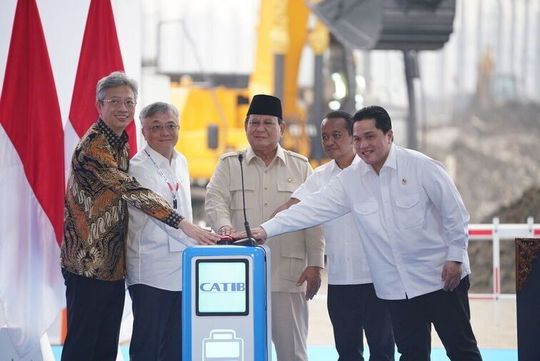
Ningbo Contemporary Brunp Lygend Co., a subsidiary of Guangdong Brunp Recycling Technology Co., in partnership with Antam and Indonesia Battery Corporation, recently broke ground on the Indonesia Battery Integration Project at the Knic in Indonesia's West Java Province.
(Source: Catl)
July 8 – Ningbo Contemporary Brunp Lygend Co. (CBL), a subsidiary of Guangdong Brunp Recycling Technology Co. (Brunp), in partnership with PT Aneka Tambang Tbk (Antam) and Indonesia Battery Corporation (IBC), recently broke ground on the Indonesia Battery Integration Project at the Karawang New Industry City (Knic) in Indonesia's West Java Province. Brunp is a subsidiary of Contemporary Amperex Technology Co. (Catl).
Spanning over 2,000 hectares, the Indonesia Battery Integration Project, with a planned investment of nearly 6 billion dollars, covers the full battery value chain including nickel mining and processing, battery materials and battery recycling at the FHT Industrial Park of East Halmahera, North Maluku Province, and battery manufacturing in Knic and Artha Industrial Hill (AIH) of Karawang, West Java Province.
The battery plant in Karawang will deliver an annual capacity of 6.9 GWh in the first phase. By applying Catl's Lighthouse Factory and Extreme Manufacturing experience, the plant will ensure efficient production of high-quality battery cells and modules to accelerate e-mobility and energy transition efforts in Indonesia and the world.
Date: 08.12.2025
Naturally, we always handle your personal data responsibly. Any personal data we receive from you is processed in accordance with applicable data protection legislation. For detailed information please see our privacy policy.
Consent to the use of data for promotional purposes
I hereby consent to Vogel Communications Group GmbH & Co. KG, Max-Planck-Str. 7-9, 97082 Würzburg including any affiliated companies according to §§ 15 et seq. AktG (hereafter: Vogel Communications Group) using my e-mail address to send editorial newsletters. A list of all affiliated companies can be found here
Newsletter content may include all products and services of any companies mentioned above, including for example specialist journals and books, events and fairs as well as event-related products and services, print and digital media offers and services such as additional (editorial) newsletters, raffles, lead campaigns, market research both online and offline, specialist webportals and e-learning offers. In case my personal telephone number has also been collected, it may be used for offers of aforementioned products, for services of the companies mentioned above, and market research purposes.
Additionally, my consent also includes the processing of my email address and telephone number for data matching for marketing purposes with select advertising partners such as LinkedIn, Google, and Meta. For this, Vogel Communications Group may transmit said data in hashed form to the advertising partners who then use said data to determine whether I am also a member of the mentioned advertising partner portals. Vogel Communications Group uses this feature for the purposes of re-targeting (up-selling, cross-selling, and customer loyalty), generating so-called look-alike audiences for acquisition of new customers, and as basis for exclusion for on-going advertising campaigns. Further information can be found in section “data matching for marketing purposes”.
In case I access protected data on Internet portals of Vogel Communications Group including any affiliated companies according to §§ 15 et seq. AktG, I need to provide further data in order to register for the access to such content. In return for this free access to editorial content, my data may be used in accordance with this consent for the purposes stated here. This does not apply to data matching for marketing purposes.
Right of revocation
I understand that I can revoke my consent at will. My revocation does not change the lawfulness of data processing that was conducted based on my consent leading up to my revocation. One option to declare my revocation is to use the contact form found at https://contact.vogel.de. In case I no longer wish to receive certain newsletters, I have subscribed to, I can also click on the unsubscribe link included at the end of a newsletter. Further information regarding my right of revocation and the implementation of it as well as the consequences of my revocation can be found in the data protection declaration, section editorial newsletter.
The other key component of the project is the establishment of Indonesia's first renewable energy circular system, with nickel mining and processing, battery materials, and battery recycling operations deployed at the FHT Industrial Park. This landmark project will use state-of-the-art technologies and renewable energy to achieve ultra-low energy consumption, enabling improved cost efficiency, and high-value battery material regeneration with a metal recovery rate of over 95 %. Once fully operational, the facility is expected to produce 142,000 tons of nickel and 30,000 tons of cathode materials annually, along with the capacity to process around 20,000 tons of recycled batteries.
This project, the largest initiative of its kind in Southeast Asia, clearly demonstrates Indonesia's dedication to promoting sustainable energy, declared Prabowo Subianto, President of the Republic of Indonesia while attending the ground breaking ceremony in Karawang. He also expressed enthusiasm for partnering with global stakeholders to develop a green battery industry ecosystem.
By vertically integrating the entire battery value chain, the Indonesia Battery Integration Project sets a strong example of green, circular industrial development, establishing a new benchmark in international industry collaboration. It is expected to create 8,000 direct jobs and generate 35,000 indirect job opportunities by the time it reaches full capacity, and it will make significant contribution to Indonesia's 2060 carbon neutrality target.
The ground breaking marks a key milestone in advancing the Indonesia Battery Integration Project, which will further enhance Catl's global footprint, create resilience of raw materials supply, and promote global battery circularity.
Mitsubishi Heavy Industries Secures Contract for Japan’s Largest CO2 Capture Plant
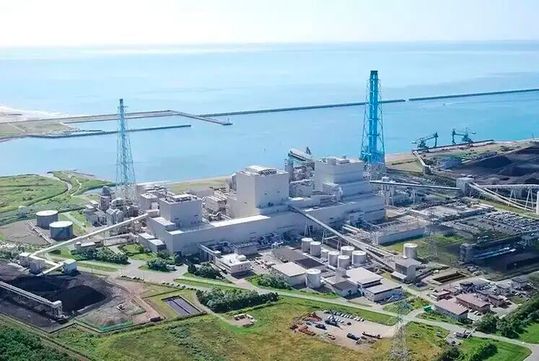
Mitsubishi Heavy Industries has received an order from Hokkaido Electric Power Co. (Hepco) for the basic design of a CO2 capture plant for the company's Tomato-Atsuma Power Station.
(Source: Mitsubishi Heavy Industries)
July 10 – Mitsubishi Heavy Industries (MHI) has received an order from Hokkaido Electric Power Co. (Hepco) for the basic design of a CO2 capture plant (Front End Engineering Design, Feed) for the company's Tomato-Atsuma Power Station. The plant will have the capacity to capture 5,200 tons of CO2 per day from the flue gases emitted during combustion of the boilers in the power station. For this Feed project, MHI will investigate the main equipment and specifications through MHI's proprietary CO2 capture technology, in preparation for the introduction of equipment in the future. When completed, the facility is expected to be the largest CO2 capture plant in Japan.
Hepco, in cooperation with Idemitsu Kosan Co. and Japan Petroleum Exploration Co. concluded a contract with Japan Organization for Metals and Energy Security (Jogmec), a Japanese government Incorporated Administrative Agency, for the design work of a CCS project in the Tomakomai area of Hokkaido, based on an open call for business consignment regarding "Engineering Design for Japanese Advanced CCS Projects."
According to the agreement, the conception for the project is for CO2 captured at Hepco's Tomato-Atsuma Power Station to be stored in deep saline formations in the Tomakomai area, with the aim of storing approximately 1.5 million to 2 million tons of CO2 per year by 2030. Of note, Japan's Ministry of Economy, Trade and Industry (Meti) has selected a sea area near Tomakomai as Japan's first "specified area" under the Act on Carbon Dioxide Storage Business (CCS Business Act), and exploratory drilling is currently being considered.
Voestalpine, Verbund to Expand World’s Longest-Running Hydrogen Pilot Plant
Voestalpine and Verbund are further extending the successful and one of the world’s longest-running PEM electrolysis plants, H2future, in Linz, Austria.
(Source: Voestalpine)
July 14 – Voestalpine and Verbund are further extending the successful and one of the world’s longest-running PEM electrolysis plants, H2future, in Linz. The expansion includes the production, compression, purification, storage, loading, and further use of green hydrogen. To this end, the plant at the Voestalpine site—commissioned in 2019 as the world’s largest hydrogen pilot project at the time—will be expanded to include a compression and purification plant, as well as five hydrogen storage tanks. The costs for expanding the research project amount to 16.4 million euros.
H2future Follow-up is a joint research project of the international steel and technology group Voestalpine and Austria’s largest electricity supply company Verbund. As an integral part of H2future Follow-up, the previous research activities on hydrogen production are being systematically continued in terms of quality characteristics of purity and pressure. The hydrogen is stored in the newly constructed storage tanks until it is loaded for transport and further use. Preparations for the plant expansion have been underway for two years; installation of the facilities is now in progress. Functional tests will start in January 2026 and the first research results are expected at the end of 2026. The project ends in December 2029.
Voestalpine will be using the green hydrogen in other Group research projects.
“With greentec steel, we are pursuing a clear phased plan for transformation. We are already working intensively on the first stage and will be commissioning a green electricity-powered electric arc furnace at both Linz and Donawitz from 2027. At the same time, two coal-based blast furnace units will be retired. In the long run, we are aiming for steel production with net zero-CO2-emissions by 2050. Hydrogen will play an important role here. Together with our partner Verbund, we will gain further crucial insights through H2future Follow-up,” shares Herbert Eibensteiner, CEO Voestalpine.
H2future—the world’s longest-running hydrogen pilot plant
The H2future plant, which has been in operation since 2019, is one of the world’s longest-running proton exchange membrane (PEM) electrolysis plants. It consists of 12 “stacks,” each with 50 electrolysis cells, and has a connected load of six megawatts. This plant can produce 1,200 cubic meters of green hydrogen per hour. Since its commissioning, it has produced several hundred tons of green hydrogen, and carried out numerous test programs. A “stress test” confirmed the load capacity of the system in continuous operation and its ability to react quickly to large load changes. It is used in particular to compensate for frequency fluctuations in the electricity grid caused by the irregular availability of renewable energies or varying electricity demand.
Cargill-Helm JV Completes 300 Million Dollar Unit, Commences Qira Production
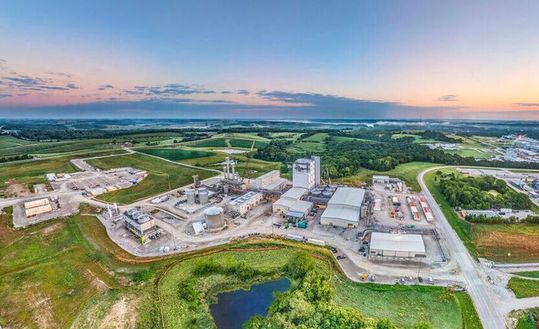
The 300-million dollar, 66,000 annual metric ton facility, located in Eddyville, Iowa, will celebrate the start of production with a grand opening event on July 22, 2025, with state officials, customers, farmer partners and industry leaders.
(Source: Qore)
July 16 – Qore, a joint venture of Minnesota-based Cargill and Germany-based Helm, is officially starting production of Qira, the world’s first large-scale 1,4-butanediol (BDO) made from locally grown dent corn. Qira is derived from annually renewable crops and serves as an impactful alternative to a fossil-derived equivalent used in the manufacture of consumer goods.
A grand opening event, held on July 22, 2025, will celebrate the completion of the 300-million-dollar facility and the official start of Qira production. The event will include elected officials, Iowa farmers, interactive exhibits, and a panel discussion with company employees, executives, and Qira customers.
The new facility is set to produce 66,000 metric tons of Qira, using corn grown primarily within 100 miles of the site. As the world’s largest facility of its kind, it marks a major step forward in meeting global demand for more sustainable materials in everyday consumer products.
“Qore is able to leverage the deep agricultural network and world-class fermentation technology expertise from Cargill and Helm’s global market reach to bring Qira to life,” said Jon Veldhouse, CEO of Qore. “By providing a reliable, renewable, and transparent feedstock, Qira helps global manufacturers and brands implement identical materials that reduce reliance on oversea supply chains, bringing more transparency to their product portfolios.”
At the heart of the environmental benefits are Iowa farmers who apply regenerative agriculture practices for growing dent corn. These practices are a holistic and inclusive approach to land management, meant to restore soil and ecosystem health. The proximity of the feedstock enables greater traceability and transparency throughout the supply chain.
Adnoc’s Suppliers to Invest 817 Million Dollars in Manufacturing Facilities
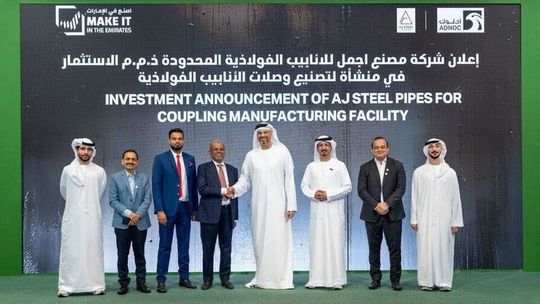
The facilities are located across Industrial City of Abu Dhabi (Icad), Khalifa Economic Zones Abu Dhabi (Kezad), Dubai Industrial Park, Jebel Ali Free Zone (Jafza), Sharjah Airport International Free Zone (Saif Zone) and Umm Al Quwain.
(Source: Adnoc)
July 22 – Adnoc has recently announced that its partners across its supply chain commit to invest AED 3 billion (817 million dollars) in manufacturing facilities across the UAE. The announcement was made at the ‘Make it in the Emirates’ forum which was held in Abu Dhabi.
The facilities are located across Industrial City of Abu Dhabi (Icad), Khalifa Economic Zones Abu Dhabi (Kezad), Dubai Industrial Park, Jebel Ali Free Zone (Jafza), Sharjah Airport International Free Zone (Saif Zone) and Umm
Al Quwain. They will create more than 3,500 highly skilled private sector jobs and manufacture a wide range of industrial products including pressure vessels, pipe coatings and fasteners.
The facilities have been enabled by commercial agreements Adnoc signed with the companies under its In-Country Value (ICV) program. The ICV program is providing a platform for businesses to capitalize on Adnoc’s diverse commercial opportunities as it delivers on its plan to locally manufacture AED 90 billion (24.5 billion dollars) worth of products in its procurement pipeline by 2030.
Yaser Saeed Almazrouei, Adnoc Executive Director, People, Commercial and Corporate Support, said: “We welcome our partners’ commitment to advancing local manufacturing through their investments in these state-of-the-art facilities which will strengthen the UAE’s industrial base and create highly skilled private sector jobs. These investments reflect Adnoc’s ongoing drive to support the ‘Make it in the Emirates’ initiative and localize strategic industrial capabilities through our In-Country Value program. We look forward to working with our partners to ensure business continuity and unlock further opportunities for sustainable growth and economic diversification.”
The facilities include newly operational sites, major expansions and investment commitments. The state-of-the art facilities are aligned with Adnoc’s current and future procurement requirements, underscoring its support for the ‘Make it in the Emirates’ initiative.
Astrazeneca to Invest 50 Billion Dollars in the USA
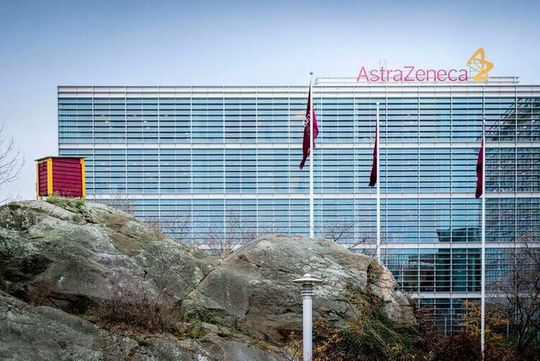
Astrazeneca has recently announced 50 billion dollars of investment in the United States by 2030, building on America’s global leadership in medicines manufacturing and R&D.
(Source: Astrazeneca)
July 23 – Astrazeneca has recently announced 50 billion dollars of investment in the United States by 2030, building on America’s global leadership in medicines manufacturing and R&D. This investment is expected to create tens of thousands of new, highly skilled direct and indirect jobs across the country powering growth and delivering next generation medicines for patients in America and worldwide.
The cornerstone of this landmark investment is a new multi-billion-dollar US manufacturing facility that will produce drug substances for the Company’s innovative weight management and metabolic portfolio, including oral GLP-1, baxdrostat, oral PCSK9 and combination small molecule products. The new state-of-the-art centre will produce small molecules, peptides and oligonucleotides. This multi-billion-dollar capital investment is in addition to the 3.5 billion dollars announced in November 2024.
The drug substance facility, planned to be in the Commonwealth of Virginia, would be Astrazeneca’s largest single manufacturing investment in the world. The facility will leverage AI, automation, and data analytics to optimize production.
The 50-billion-dollar investment across the firm’s R&D and manufacturing footprint in the US over the next five years also includes:
Expansion of its R&D facility in Gaithersburg, Maryland
State-of-the-art R&D centre in Kendall Square, Cambridge, Massachusetts
Next-generation manufacturing facilities for cell therapy in Rockville, Maryland and Tarzana, California
Continuous manufacturing expansion in Mount Vernon, Indiana
Specialty manufacturing expansion in Coppell, Texas
New sites to supply clinical trials
Growing research and development investment in novel medicines
Collectively, these investments will help deliver Astrazeneca’s ambition of reaching 80 billion dollars in Total Revenue by 2030, of which we expect 50 % would be generated in the US.
Air Liquide Starts Up New Molybdenum Plant in South Korea
This Molybdenum manufacturing plant, the largest in the world, will supply leading semiconductor customers with its breakthrough advanced materials offer Subleem.
(Source: Air Liquide)
July 23 – Air Liquide has successfully started up a new plant in Hwaseong, Gyeonggi Province, South Korea. This Molybdenum manufacturing plant, the largest in the world, will supply leading semiconductor customers with its breakthrough advanced materials offer Subleem. The offer includes a portfolio of ultra-high purity molybdenum molecules and first-of-its-kind proprietary distribution systems. With this strategic investment, Air Liquide confirms its technological leadership by being the first to supply molybdenum solutions to its customers in large volumes.
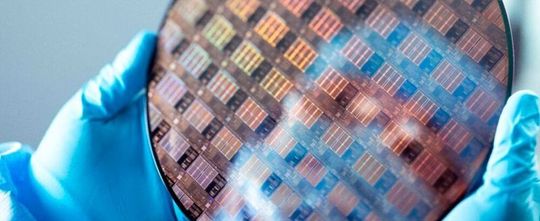
Subleem offer has been developed and qualified in close collaboration with semiconductor chips manufacturers. This offering includes a comprehensive portfolio of ultra-high purity solid molecules and first-of-its-kind proprietary distribution systems, supporting the semiconductor industry's major upcoming shift towards molybdenum. Emerging as a promising replacement for the traditional chip manufacturing material tungsten, the molybdenum “revolution” enables the next generations of advanced memory and logic chips driven by AI applications.
This new offer strengthens Air Liquide's leadership position in advanced materials for the semiconductor industry. It demonstrates the Group’s innovation capability as well as its ability to rapidly master high-volume manufacturing and distribution, providing unique solutions for molecules and dedicated proprietary distribution equipment with the fastest time-to-market to strengthen customer leadership.
In addition to this new high-volume manufacturing plant in South Korea, currently supplying Subleem to two early adopters of molybdenum, Air Liquide already has a production unit in operation since 2023 in Japan and will open another manufacturing plant in the United States by the end of 2025 to support the upcoming wave of demand.
Veolia to Develop UK's First Closed-Loop Pet Recycling Facility
Veolia has launched its biggest UK plastics recycling project with a 70-million-pound investment which will include the country’s first “tray to tray” closed loop Pet recycling facility in Battlefield near Shrewsbury, Shropshire.
(Source: Pixabay)
July 23 – Veolia has launched its biggest UK plastics recycling project with a 70-million-pound investment which will include the country’s first “tray to tray” closed loop Pet (Polyethylene Terephthalate) recycling facility in Battlefield near Shrewsbury, Shropshire. Construction on the facility has begun, with plans for the site to be operational by early 2026. This initiative forms part of the company’s broader commitment to the circular economy in the UK, with total investments set to reach around 1 billion pounds by 2030.
The UK does not have a closed-loop facility to recycle Pet trays into food grade materials due to the difficulty in achieving the required standards. Veolia has used its world-leading expertise to bring this technology to the UK’s domestic recycling industry. The innovative Shrewsbury facility will shred, wash and flake Pet plastic from trays and bottles to be recycled into food grade low carbon new packaging, bolstering supply in a boost to the UK grocery industry.
The plant will sort around 80,000 tonnes of mixed plastics annually, collected from homes and businesses across the country, and will contribute to a significant reduction in carbon emissions, as using recycled plastic can save up to 70 % of the CO2 that would otherwise be associated with the use of virgin materials.
The investment was announced during French President Emmanuel Macron's state visit to the UK. It's part of the French Group’s continuous efforts to advance the circular economy in the UK for the benefit of local populations and resilience of the country's businesses. Other investments currently coming on stream include the extension of a district heating network to 5,000 homes in Southwark, delivering heat from the Selchp energy recovery facility, alongside investment to process and recover solvents and other hazardous waste, delivering further carbon savings.
Veolia also launched a new process for the treatment of aqueous film forming foam (AFFF) fire suppressants containing PFAS* (Per- and polyfluoroalkyl substances) ahead of a UK ban that came into force on 1 July 2025.




:quality(80)/p7i.vogel.de/wcms/49/5c/495c651fabd24a437c98bde6a3d71ecc/0130060419v2.jpeg "Enfinium has successfully piloted Wasteer’s groundbreaking visual AI technology at its Ferrybridge 2 facility in West Yorkshire and Parc Adfer facility in North Wales. (Source: Chris Parkes Photographer Ltd.)")
:quality(80)/p7i.vogel.de/wcms/77/1c/771c3d385d46ede7ab736f3f7d63cb62/0130007313v2.jpeg "The laser perforated filter elements for Eaton’s DCF series enable retention ratings that were previously unattainable with conventional manufacturing methods. Thanks to automatic self-cleaning, they also provide uninterrupted operation with long service life and minimal maintenance requirements. (Source: Eaton )")
:quality(80)/p7i.vogel.de/wcms/0b/33/0b3359449325c4e66cffdb41fce11683/0129956557v2.jpeg "Aramco Senior Vice President of Digital & Information Technology Sami A. Al Ajmi, sitting right, and President of Microsoft Arabia Turki Badhris, sitting left, at a signing ceremony attended by Aramco Executive Vice President of Technology & Innovation Ahmad O. Al Khowaiter, standing right, and Vice Chair and President of Microsoft Brad Smith, standing left. (Source: Aramco )")
:quality(80)/p7i.vogel.de/wcms/60/25/60259e0165560492b717049a5006b5d2/0129719891v2.jpeg "Adnoc's panorama digital command center. (Source: Adnoc )")
:quality(80)/p7i.vogel.de/wcms/fd/61/fd617d02373498db1a96ba012e4cfdcd/0130026960v2.jpeg "Reliance Industries, one of India’s largest energy companies, will be investing in the new refinery at the Port of Brownsville in Texas, USA, according to Trump’s post. (Source: Unsplash )")
:quality(80)/p7i.vogel.de/wcms/93/9f/939fb603e5c2c60e52e4e92dd1de44e2/0129972638v2.jpeg "Shintech Louisiana has recently announced a 3.4-billion-dollar investment to bolster its manufacturing capabilities in the state. (Source: Pixabay)")
:quality(80)/p7i.vogel.de/wcms/0d/22/0d221bfb0debc81ac74afafc9cc632c2/0129972549v2.jpeg "The overall package is worth 485 million euros, of which 10 million euros related to engineering activities already started will be recognized in the pre-FID phase, while the remaining part at Final Investment Decision. (Source: Pixabay)")
:quality(80)/p7i.vogel.de/wcms/1d/da/1ddaee208ed26c1ad241f3b8fb216afe/0129956568v2.jpeg "Inox Air Products has entered into a long-term partnership with TACC for the supply of nitrogen through a dedicated onsite nitrogen plant for their upcoming greenfield manufacturing facility in Dewas, Madhya Pradesh, India. (Source: Pixabay)")
:quality(80)/p7i.vogel.de/wcms/6b/3f/6b3f057c83c494e4732337d870d52b21/0130006927v2.jpeg "Lonza will realize upfront cash proceeds of 2.2 billion dollars and retain a 40 % stake in the business, with additional preferential participation in its future exit. (Source: Lonza)")
:quality(80)/p7i.vogel.de/wcms/df/cd/dfcd0c2e0eb4b554f956e0161ae08519/0129794328v1.jpeg "The plasma fractionation facility at CSL Behring, viewed from the outside. (Source: CSL Behring)")
:quality(80)/p7i.vogel.de/wcms/74/af/74af2b65341eeee13a44bc85eb759596/0129839901v2.jpeg "With around 6,000 European companies operating in India and an annual trade of 180 billion euros between the EU and India at present, the trade deal intends to double EU goods exports to India by 2032. (Source: © NazeerArt - stock.adobe.com)")
:quality(80)/p7i.vogel.de/wcms/26/12/261210e5920899e5c35c4f905d3be8bd/0129399814v2.jpeg "Powders used in DPI formulations are often highly potent and administered in very low doses. (Source: Ima)")
:quality(80)/p7i.vogel.de/wcms/a6/84/a68477d4ef879cc9cedeae332ca57c49/0129893677v2.jpeg "Siemens and Caphenia sign the partnership agreement. From left to right: Nicky Ahnert, Jürgen Giegerich, Frank Knauf (all Siemens), Dr. Mark Misselhorn, Dr. Andreas Waibel (both Caphenia) (Source: Siemens)")
:quality(80)/p7i.vogel.de/wcms/42/67/42671f576c7f8a1284b54bc8f92cce02/0129864175v2.jpeg "Honeywell’s advanced technologies and standardized design will help Verso Energy reduce capital expenses, accelerate speed to market and increase global SAF capacity. (Source: Pixabay)")
:quality(80)/p7i.vogel.de/wcms/f7/70/f770417abff565b1743068fa37d21266/0129833262v2.jpeg "Under the agreement, Air Liquide will supply the necessary oxygen for Holcim’s oxyfuel-ready clinker production line, as well as provide its innovative and proprietary Cryocap Oxy technology to enable the capture of CO₂ emissions with high efficiency. (Source: Air Liquide )")
:quality(80)/p7i.vogel.de/wcms/9f/7c/9f7cd6c9dcb679827c4c2c10f116c8b9/0129832882v2.jpeg "The extended agreement helps support World Fuel's ability to secure SAF supply and comply with regulatory requirements, including the Refuel EU Aviation Regulation and the UK SAF mandate. (Source: World Fuel Services)")
:quality(80)/p7i.vogel.de/wcms/be/e1/bee13b8d51a419b9b8f0685e2b9d47bf/0128917673v1.jpeg "The Centerwave 6000 measures pipes from 32 to 1,600 mm. (Source: Maag Group)")
:quality(80)/p7i.vogel.de/wcms/51/7a/517a4e83c5827663b4839f5ddb98f434/0128872953v1.jpeg "The Tigron in SIL version can be flexibly configured for different safety requirements. (Source: Auma)")
:quality(80)/p7i.vogel.de/wcms/d5/72/d5728578b35b72f365f5086bc1d068da/0128662441v2.jpeg "Nikkiso Clean Energy & Industrial Gases Group has announced the launch of its new multistage process pump (MSPP 210), designed to enhance safety and reduce downtime on air separation equipment. (Source: Nikkiso Clean Energy & Industrial Gases Group)")
:quality(80)/p7i.vogel.de/wcms/a9/69/a96920e47e362a9cf0b9916b7ad3d30a/0128071795v2.jpeg "Nine partners from six European countries are working on the 36-month project to determine where heat pumps can achieve the greatest efficiency gains in the food and beverage sector and to develop reproducible and market-ready solutions. (Source: EU project Exquisheat)")
:quality(80)/p7i.vogel.de/wcms/c4/54/c454c7d8fd344c0ffc2ef5db00ad632f/0129728429v2.jpeg "Liqtech International recently launched its Qureflow Max produced-water treatment system. (Source: Liqtech International )")
:quality(80)/p7i.vogel.de/wcms/18/47/1847e6b1456c96f04bd511bbd21f3779/0129039479v2.jpeg "Jacobs has been selected as the progressive design-build contractor for upgrades to the San José–Santa Clara Regional Wastewater Facility in California. (Source: Jacobs)")
:quality(80)/p7i.vogel.de/wcms/3b/fd/3bfda4bbcb1a60004c330bde3b705109/0128453300v2.jpeg "In the Jiangsu province, Suez will partner with Lianyun Economic Development Zone to jointly study the investment in, build, and operate a new industrial water treatment plant. (Source: Pixabay)")
:quality(80)/p7i.vogel.de/wcms/cc/19/cc19aa5fec6f6f2b25dbd9516efed735/0128077403v2.jpeg "Distinguished guests at the ceremony included senior government officials, Japan’s Ambassador, and local business leaders. (Source: Toray)")
:quality(80)/p7i.vogel.de/wcms/6b/cc/6bcc3d26e1c7c74d90a10bc3ca296ae1/0128362351v2.jpeg "A look into Bayer's new tablet production, Solida 1, during construction: The robots and lift columns for material handling are being installed. (Source: Bayer)")
:quality(80)/p7i.vogel.de/wcms/24/c8/24c84ab6b1bcd24468a87820a07a85aa/0128194707v2.jpeg "Ajax Equipment has supplied Binding Solutions with a feed system comprising buffer hopper, screw feeder and agitated screw feeder for a pilot plant handling iron ore and additives. (Source: Ajax Equipment )")
:quality(80)/p7i.vogel.de/wcms/1d/3e/1d3e2788eb37c1e974f36337c8d33cb5/0128191010v2.jpeg "Ajax Equipment has supplied IGI Systems with a stainless-steel conical hopper with gas purge capability, as part of a prototype Sublimation System for a low-pressure chemical vapour deposition application. (Source: Ajax Equipment)")
:quality(80)/p7i.vogel.de/wcms/19/76/1976928d7d0a2ed7c1eeba7ade8552c8/0126365603v1.jpeg "Detail of Valvedesign: It has an aktiv amd passive part (Bild: Italvacuum)")
:quality(80)/p7i.vogel.de/wcms/c0/f1/c0f1dc3ee8414e8768d9c92f7884ed67/0130060528v2.jpeg "Air BP will support a wide spectrum of Airbus' operations, including its commercial aircraft, helicopters, and military aircraft divisions. (Source: Air BP)")
:quality(80)/p7i.vogel.de/wcms/ef/81/ef81cdf2881a358f8743c07eae68e428/0130060283v2.jpeg "BASF has recently announced a price increase of up to 100 dollars per metric ton for butyl acrylate and 2-ethylhexyl acrylate across Asia-Pacific. (Source: BASF)")
:quality(80)/p7i.vogel.de/wcms/51/38/51382cd4287d6372a6f9648c25de55bf/0130024254v2.jpeg "On March 4, 2026, Qatar Energy declared force majeure to its buyers due to military attacks on its operating facilities in Ras Laffan Industrial City and Mesaieed Industrial City in Qatar. (Source: © Fahad - stock.adobe.com)")
:quality(80)/p7i.vogel.de/wcms/f8/29/f8298429c1638b949a6f76346f6709c7/0118701710v2.jpeg "Bosch Industrial Heat will be presenting sustainable steam and heat solutions for global industrial use at the Achema trade fair in Frankfurt, Germany. (Source: Bosch Industriekessel)")
:quality(80)/p7i.vogel.de/wcms/07/24/07242664ab2b1c7841c9d9d0a127670c/0116045959.jpeg "A look inside the GEA machine room. (Bild: Magnavale)")
:quality(80)/p7i.vogel.de/wcms/c9/79/c979a20b32395ddfa93fe7ead90578a0/0108386061.jpeg "Production residues, lime, salt and suspended solids quickly clog the pipes. (Source:©Tanakorn - stock.adobe.com)")
:quality(80)/p7i.vogel.de/wcms/9e/5c/9e5c92d942ed046a27562d6e3d730c92/0103483548.jpeg "It is almost ten metres high and extends over three floors: the world's first multiple dividing wall column is located in the new technical centre at the University of Ulm. (Bild: Eberhardt, kiz Universität Ulm)")
:quality(80)/p7i.vogel.de/wcms/1f/60/1f608b1d7b9fe0abab30d68341eaefc7/0130031208v2.jpeg "Adnoc suspends operations at the Ruwais oil refinery following a fire triggered by a drone attack on March 10, 2026. (Source: Adnoc)")
:quality(80)/p7i.vogel.de/wcms/1d/33/1d33cbe43461f24175e18aa01a426840/0129971592v2.jpeg "KBR has been awarded a major contract by Basra Oil Company to provide Integrated Field Management Services for the Majnoon Oil Field in Iraq. (Source: KBR)")
:quality(80)/p7i.vogel.de/wcms/a8/4e/a84e8039a90a5cf4751d01ebcf6ba1a9/0127510172v2.jpeg "After six years, Achemasia, the international trade fair and innovation forum for sustainable chemical production, has returned with renewed vigor, bringing together global expertise, Chinese innovation, and a shared commitment to a greener industrial future—according to the organizers of the fair. (Source:PROCESS China)")
:quality(80)/p7i.vogel.de/wcms/17/c7/17c703445f134eb3d7ecc7918dda2762/0124596096v2.jpeg "Achema Middle East will launch in Saudi Arabia in 2026. (Bild: Dechema/ Hannibal)")
:quality(80)/p7i.vogel.de/wcms/2a/2c/2a2cffc07f51019065387cd63241b5ce/0119463370v1.jpeg "The Injecta 36 fills and seals RTU (Ready-to-Use) syringes at high speed. The image shows the robotic arm. (Source: IMA)")
:quality(80)/p7i.vogel.de/wcms/b1/7e/b17ea8c62ccafad1d1fb072d6199bbd6/0118578446.jpeg "“Star in the ring”: Vegapuls 6X radar level sensors are the solution of choice for Renolit for many applications on the way to the perfect plastic product. (Source: © MR Design - stock.adobe.com; Vega)")
:quality(80)/p7i.vogel.de/wcms/01/9b/019b59f3ef2e852ec5058ba18f323af2/0129651573v2.jpeg "With its strategic ‘Vision 2030’ plan announced in 2016, Saudi Arabia aims to diversify its economy by investing in sectors such as tourism, technology and industry, reduce its reliance on oil, and transform the country into a cleaner and more sustainable economy. (Source: © Peter Hermes Furian - stock.adobe.com)")
:fill(fff,0)/images.vogel.de/vogelonline/companyimg/2000/2093/65.jpg "Glatt_Logo_ND4c-RGB (5x3cm).jpg ()")
:fill(fff,0)/p7i.vogel.de/companies/5f/98/5f98fbb2e7bf2/05-trm-filter-logo-with-slogan-en-alt.png "05_TRM_Filter_LOGO_with_slogan_EN_ALT.png (www.trm-filter.com)")
:fill(fff,0)/p7i.vogel.de/companies/68/c8/68c815bc8fe81/prominent-logo-300x300.jpeg "prominent-logo-300x300 (ProMinent GmBH)")


:quality(80)/p7i.vogel.de/wcms/94/ec/94ec5d452bc0476530b0aafd5941c25f/0125620333v2.jpeg "Voestalpine and Verbund are further extending the successful and one of the world’s longest-running PEM electrolysis plants, H2future, in Linz, Austria. (Source: Voestalpine )")
:quality(80)/p7i.vogel.de/wcms/13/55/1355f6fc634082d776395aa6fb38aa2a/0125530402v2.jpeg "Ningbo Contemporary Brunp Lygend Co., a subsidiary of Guangdong Brunp Recycling Technology Co., in partnership with Antam and Indonesia Battery Corporation, recently broke ground on the Indonesia Battery Integration Project at the Knic in Indonesia's West Java Province. (Source: Catl )")