PROCESS Worldwide brings to you the ‘Top 10 plant engineering projects of December 2024’ from all over the world. Right from Qatar Energy breaking ground on a 1.2-billion-dollar blue ammonia plant to the world's first full-scale carbon capture unit reaching mechanical completion, find out all the projects making headlines here.
At a glance: Plant engineering projects from across the globe.
(Source: 69 - stock.adobe.com)
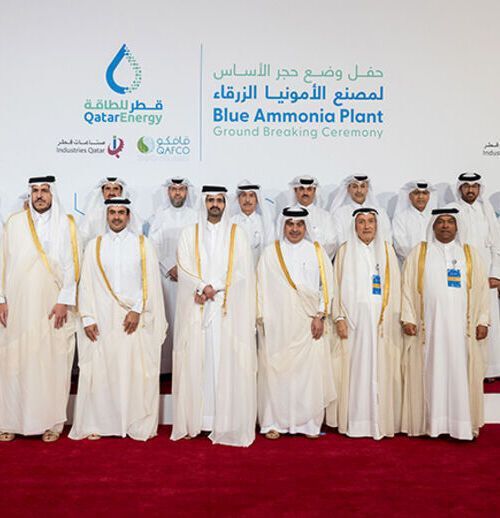
Qatar Energy Breaks Ground on 1.2 Billion Dollar Blue Ammonia Plant
The ceremony was attended by His Excellency Saad Sherida Al-Kaabi, the Minister of State for Energy Affairs, the President and CEO of Qatar Energy, and senior executives and officials from the entities involved in the project implementation.
(Source: Qatar Energy)
Dec 02 – Under the patronage of His Highness Sheikh Tamim bin Hamad Al Thani, the Amir of the State of Qatar, His Highness Sheikh Abdullah bin Hamad Al Thani, the Deputy Amir, laid the foundation stone of the blue ammonia plant at a special ceremony held in Mesaieed Industrial City. The ceremony was attended by His Excellency Saad Sherida Al-Kaabi, the Minister of State for Energy Affairs, the President and CEO of Qatar Energy, and senior executives and officials from the entities involved in the project implementation.
The blue ammonia plant is the largest of its kind in the world and represents an important milestone in Qatar Energy’s strategy to expand in the clean energy sector by producing low carbon ammonia – one of the most important solutions to reduce CO2 emissions.
In his remarks at the ceremony, His Excellency Minister Saad Sherida Al-Kaabi said: “This facility consists of an ammonia production unit with a capacity of 1.2 million tons per year, along with an additional unit for CO2 injection and storage, with a capacity of 1.5 million tons per year. Qatar Energy will provide the new plant with more than 35 megawatts of electricity from the solar power plant currently being built in Mesaieed Industrial City, thereby becoming blue ammonia. This plant will enhance our ability to provide the world with low-carbon products, in line with the global efforts to reduce carbon emissions.”
His Excellency Minister Al-Kaabi pointed to the fact that: “In building this facility, we will rely on our own capabilities and expertise in the construction and operation of ammonia plants used for the production of fertilizers. This will be carried out in cooperation between Qatar Energy and Qatar Fertiliser Company - Qafco.”
His Excellency added: “The blue ammonia plant joins a list of Qatar Energy’s large and ambitious expansion projects in Qatar and around the world covering LNG, oil and gas exploration and production, petrochemicals, fertilizers, solar power, and more.”
His Excellency Minister Al-Kaabi concluded his remarks by thanking the consortium implementing the project, consisting of Thyssenkrupp and CCC, as well as the working teams from Qatar Energy and Qafco, whose efforts contributed to the realization of the project.
His Excellency extended sincere thanks to His Highness Sheikh Tamim bin Hamad Al Thani, the Amir of the State of Qatar for his patronage and unlimited support of the energy sector, and to His Highness Sheikh Abdullah bin Hamad Al Thani, the Deputy Amir, Chairman of the Qatar Energy Board of Directors for laying the foundation stone of the blue ammonia plant.
With an investment of about QAR 4.4 billion (1.20 billion dollars), the plant will be built in Mesaieed Industrial City, which offers a strategic location, integrated infrastructure, ideal capabilities, and a port that is considered one of the largest petrochemical export facilities in the Middle East.
The plant is expected to start production in the second quarter of 2026, marking a milestone in Qatar Energy’s strategy to expand into the cleaner energy sector.
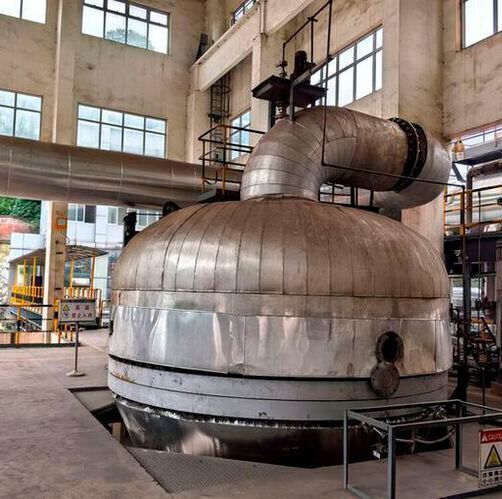
World's First Full-Scale Carbon Capture Unit at Cement Plant Reaches Mechanical Completion
The Brevik carbon capture plant is part of Longship, the full CCS value chain development enabled by Norway's strong competence in both carbon capture and storage.
(Source: Pixabay)
Dec 03 – Aker Carbon Capture ASA (ACC ASA) has reached a significant milestone with the mechanical completion of the world's first full-scale carbon capture facility at a cement plant, the Heidelberg Materials Brevik plant in Norway. ACC ASA holds 20 % ownership in SLB Capturi, which is delivering CO₂ capture, conditioning, compression, heat integration, intermediate storage and loading facility for the plant. The carbon capture plant is designed to capture 400,000 metric tons of CO2 annually from the cement facility. The development will now move into commissioning phase and is planned to be operational by 2025.
The Brevik carbon capture plant is part of Longship, the full CCS value chain development enabled by Norway's strong competence in both carbon capture and storage. SLB Capturi is a joint venture between SLB and ACC ASA, combining the strengths and capabilities of both companies to accelerate industrial decarbonization at a global scale. SLB owns 80 % of SLB Capturi, while ACC ASA owns the remaining 20 % stake.
Date: 08.12.2025
Naturally, we always handle your personal data responsibly. Any personal data we receive from you is processed in accordance with applicable data protection legislation. For detailed information please see our privacy policy.
Consent to the use of data for promotional purposes
I hereby consent to Vogel Communications Group GmbH & Co. KG, Max-Planck-Str. 7-9, 97082 Würzburg including any affiliated companies according to §§ 15 et seq. AktG (hereafter: Vogel Communications Group) using my e-mail address to send editorial newsletters. A list of all affiliated companies can be found here
Newsletter content may include all products and services of any companies mentioned above, including for example specialist journals and books, events and fairs as well as event-related products and services, print and digital media offers and services such as additional (editorial) newsletters, raffles, lead campaigns, market research both online and offline, specialist webportals and e-learning offers. In case my personal telephone number has also been collected, it may be used for offers of aforementioned products, for services of the companies mentioned above, and market research purposes.
Additionally, my consent also includes the processing of my email address and telephone number for data matching for marketing purposes with select advertising partners such as LinkedIn, Google, and Meta. For this, Vogel Communications Group may transmit said data in hashed form to the advertising partners who then use said data to determine whether I am also a member of the mentioned advertising partner portals. Vogel Communications Group uses this feature for the purposes of re-targeting (up-selling, cross-selling, and customer loyalty), generating so-called look-alike audiences for acquisition of new customers, and as basis for exclusion for on-going advertising campaigns. Further information can be found in section “data matching for marketing purposes”.
In case I access protected data on Internet portals of Vogel Communications Group including any affiliated companies according to §§ 15 et seq. AktG, I need to provide further data in order to register for the access to such content. In return for this free access to editorial content, my data may be used in accordance with this consent for the purposes stated here. This does not apply to data matching for marketing purposes.
Right of revocation
I understand that I can revoke my consent at will. My revocation does not change the lawfulness of data processing that was conducted based on my consent leading up to my revocation. One option to declare my revocation is to use the contact form found at https://contact.vogel.de. In case I no longer wish to receive certain newsletters, I have subscribed to, I can also click on the unsubscribe link included at the end of a newsletter. Further information regarding my right of revocation and the implementation of it as well as the consequences of my revocation can be found in the data protection declaration, section editorial newsletter.
Nextchem Wins Licensing and Process Design Package for Nitric Acid Plant
Stamicarbon will apply its proprietary tertiary abatement technology, a highly efficient system designed to reduce emissions from nitric acid plants.
(Source: Pixabay)
Dec 04 – Maire has recently announced that Nextchem (Sustainable Technology Solutions), through its subsidiary Stamicarbon, nitrogen fertilizer technology licensor, has been awarded licensing and Process Design Package (PDP) for a tertiary abatement unit to be installed at Soluciones Químicas' nitric acid plant in Minatitlán, Veracruz, Mexico.
Stamicarbon will apply its proprietary tertiary abatement technology, a highly efficient system designed to reduce emissions from nitric acid plants. This technology not only helps to comply with strict environmental regulations but also contributes to global efforts to mitigate climate change by reducing the carbon footprint of nitric acid production.
This technology, which is part of NX Stami Nitrates portfolio, will be used to provide a tailor-made solution to remove nitrous oxide (N2O) from the tail gas stream, bringing the plant’s environmental status up to current emission regulations. Alessandro Bernini, CEO of Maire, commented: “This award underscores our commitment to providing advanced solutions that drive environmental stewardship in the fertilizer industry.”
Topsoe Technology Selected for E-Methanol Project in Spain
Topsoe has been chosen as a technology provider and engineering partner for the Triskelion project, located in Galicia, Spain.
(Source: Topsoe)
Dec 05 – Topsoe has been chosen as a technology provider and engineering partner for the Triskelion project, located in Galicia, Spain. The project, owned by the Spanish shipping and chemicals company Forestal del Atlántico, was a recipient of a 49 million euro grant from the EU Innovation Fund in 2023.
Due to its inherent versatility, e-methanol offers multiple pathways for decarbonization across industries, particularly as a fuel in industrial transport such as international shipping, and the International Maritime Organization (IMO) targets include e-methanol to make up 8 % of global shipping fuel demand by 2030. Spain has proved ambitious in renewable fuels applications, as the country has set a target of 74 % of hydrogen used by industry in 2030 has to be green. This compares the 42 % agreed by EU member states in the Renewable Energy Directive.
Kim Hedegaard, CEO Power-to-X at Topsoe, said: “We are excited to be selected as the technology provider for this promising project. E-methanol will act as a key driver in decarbonizing the energy-intensive sectors and may be one of the leading e-fuels used in reducing carbon emissions in industries such as international shipping. Topsoe and Forestal del Atlántico have a shared ambition to make the Triskelion project a European leader in this space, and we look forward to working together to turning these ambitions into reality.”
Andrés Fuentes, CEO at Forestal del Atlántico, said: “For Forestal del Atlántico it is very important to have leading technology suppliers for the development of a project as innovative as Triskelion and Topsoe is a guarantee of the highest level to successfully develop and decarbonize our company, after more than 30 years using methanol of fossil origin for our production processes as well as distributing it in the market. This agreement makes that goal much closer.”
Topsoe will provide its e-methanol reactor and catalyst technologies, as well as engineering support to Triskelion – a core element of the
project’s functionality and a key enabler for its e-methanol production targets.
Once operational, the plant will produce 40,000 tons of e-methanol, while capturing and using c. 56,000 tons of CO2 annually. The e-methanol produced is initially intended for bunkering, transportation, and applications in the chemicals industries.
Fluor Wins Feed Contract for Heidelberg Materials’ Gezero Project
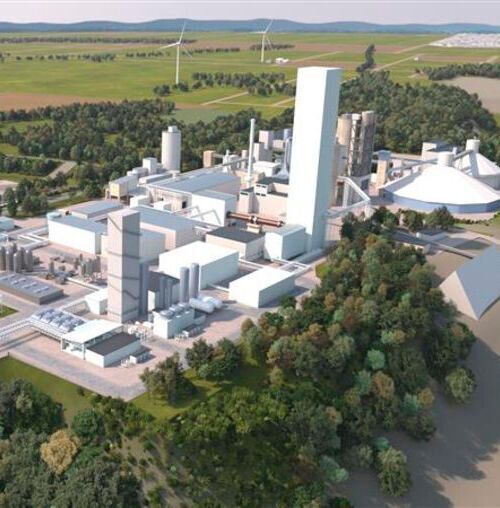
A rendering of Heidelberg Materials’ cement production facility in Geseke, Germany.
(Source: Business Wire)
Dec 06 – Fluor Corporation has recently signed a Front-end Engineering and Design (Feed) contract with Heidelberg Materials for its Gezero project to integrate an industrial-scale carbon capture and storage solution into its cement production facility in Geseke, Germany. Fluor will recognize the undisclosed contract value in the fourth quarter of 2024.
“Gezero is a flagship project for the decarbonization strategy of Heidelberg Materials and Fluor is excited to assist with this pioneering technology,” said Mike Alexander, Group President of Fluor’s Energy Solutions business. “Carbon capture and permanent storage is crucial in meeting sustainability goals.”
Fluor will be responsible for design integration of several decarbonization technologies at the Geseke cement production facility. Construction is planned to start in 2026, with commissioning three years later.
Based on state-of-the-art second generation advanced Oxyfuel technology, Heidelberg Materials’ project aims to capture 700,000 tonnes of CO₂ annually. Once captured, the CO₂ will be transported to offshore storage sites in the North Sea via pipeline or ship, where it will be permanently and safely stored.
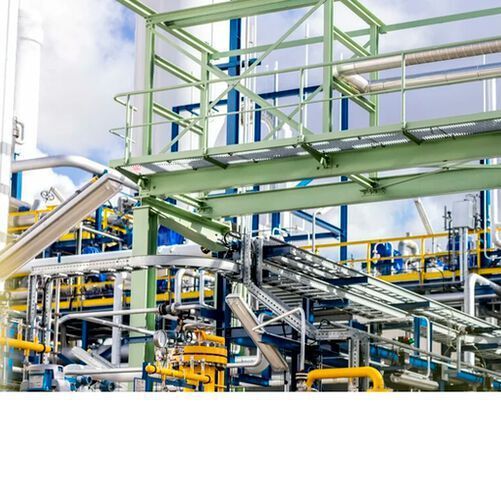
Clariant Catalyst to Cut Emissions at Sichuan Lutianhua Nitric Acid Plant
Clariant has announced that its Envicat N2O-S nitrous abatement catalyst is performing successfully at Sichuan Lutianhua's nitric acid plant and is projected to reduce annual emissions by 275 kilotons of CO2eq.
(Source: Clariant)
Dec 10 – Clariant has recently announced that its Envicat N2O-S nitrous abatement catalyst is performing successfully at Sichuan Lutianhua's nitric acid plant and is projected to reduce annual emissions by 275 kilotons of CO2eq. Sichuan Lutianhua is one of the winners of Clariant's 2021-2022 global Climate Campaign, which offered a free load of the catalyst to nitric acid producers lacking N2O abatement technology.
Located in Sichuan Province, China, the 135 KTA nitric acid plant started operating in 2009 with no N2O removal system in place. Xaver Karsunke, Vice President of Clariant Specialty Catalysts, commented, "With China supporting crucial decarbonization efforts to combat climate change, we are proud to partner with Sichuan Lutianhua on reducing their carbon footprint through our innovative catalyst technology. Clariant's Envicat solutions are empowering leading Chinese companies, like Sichuan Lutianhua, to efficiently cut emissions in hard-to-abate industrial sectors."
Sun Guang, Assistant General Manager at Sichuan Lutianhua, added, “Our company is committed to sustainable practices and reducing our environmental impact. Partnering with Clariant to install the Envicat N2O-S catalyst is an important step towards achieving our emissions reduction goals. We have already measured a significant decrease in N2O emissions from our nitric acid production and look forward to continued positive results.”
Nitric acid is essential for producing fertilizers. However, its production emits N2O, which is nearly 300 times more damaging to the climate than CO2. Adding to the problem, more than half of nitric acid producers do not remove N2O from their off-gas. Based on 66 million tons of nitric acid produced annually around the world, N2O emissions equal to approximately 100 million tons of CO2e yearly.
The Envicat N2O catalyst series presents an easy solution to this serious problem. Using the catalysts, N2O and other nitrogen oxides can be removed almost completely (up to 99 % for tertiary abatement and 95 % for secondary abatement) from production emissions. Moreover, the Envicat N2O-S is easy to adopt as the catalysts can be installed in any state-of-the-art nitric acid plant without disrupting the production process. Well-established in the market for more than 20 years, Envicat N2O catalysts are currently installed in over 50 plants globally.
Sulzer Technology to be Used for World's Largest Polylactic Acid Production Facility
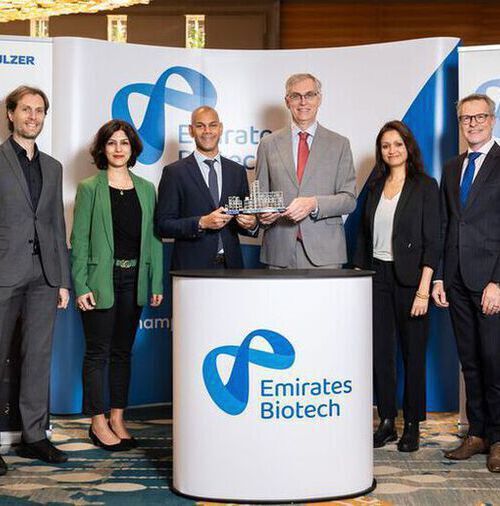
Left to right: Alex Battu, Global Licensing Manager Sulzer; Hoda Torkashvand, Sales Enablement Manager Sulzer; Emmanuel Rapendy, Global Head Polymer & Crystallization Sulzer; Marc Verbruggen, CEO Emirates Biotech; Aman Kulshrestha, CTO Emirates Biotech; François de Bie, CCO Emirates Biotech.
(Source: Sulzer)
Dec 11 – Sulzer’s technology has been selected by Emirates Biotech for its upcoming Polylactic Acid (PLA) production plant in the United Arab Emirates. The facility will be constructed in two phases, each with an annual capacity of 80,000 tonnes, resulting in a total production capacity of 160,000 tonnes per annum. Once completed, it will be the largest PLA production facility in the world.
PLA offers a sustainable alternative to traditional plastics. It is widely used in applications such as packaging, disposable utensils, helping to 0reduce reliance on single-use plastics across the globe. Emirates Biotech will leverage Sulzer’s licensed PLA technology to manage all production steps from a single location, including lactide production, purification and polymerization. The facility will also use a plant-based feedstock to produce high-quality PLA bioplastics at scale, positioning the Middle East as a key player in the bioplastics industry.
Thanks to its strong track record in the bioplastics sector, Sulzer’s licensed PLA technology is already in use at most PLA facilities worldwide. This new development strengthens Sulzer’s commitment to supporting global industry in adopting circular manufacturing and building a more prosperous and sustainable society.
Located in the United Arab Emirates, construction is set to commence in 2025, with the plant expected to be operational by early 2028. The facility will use Lactic Acid (LA) as its feedstock to produce PLA, offering a low carbon footprint and biodegradable alternatives to conventional plastics, further contributing to the circular economy.
Tim Schulten, Division President of Chemtech, said: “We are thrilled to collaborate with Emirates Biotech on this groundbreaking project. By bringing our advanced PLA production technology to the UAE, we are supporting the region's transition to more sustainable materials and contributing to a greener future.”
Marc Verbruggen, CEO of Emirates Biotech, said: “Our partnership with Sulzer marks a key milestone in our journey to establish a world-class PLA production facility. Sulzer's expertise and innovative solutions will be crucial in achieving our vision of leading the biopolymer industry while contributing to a more sustainable future.”
Shaikh Suhail Ali Saeed Rashed Al-Maktoum, a key shareholder of Emirates Biotech, commented: “This project highlights our commitment to sustainability and economic diversification. By leveraging innovative technologies and strategic partnerships, we aim to establish the UAE as a global leader in the production of eco-friendly materials.”
As the global demand for PLA continues to rise, driven by environmental concerns and the shift towards sustainable materials, this facility will position the Middle East as a key player in the bioplastics industry, supporting regional and global efforts to combat plastic pollution.
Technip Energies, GE Vernova Win Major Contract for Net Zero Teesside Power Project
This landmark project aims to be the world’s first gas-fired power station with carbon capture and storage.
(Source: Pixabay)
Dec 11 – Technip Energies, leader of a consortium with GE Vernova and construction partner Balfour Beatty – with the support of technology partner Shell Catalysts & Technologies – received Notice to Proceed by NZT Power to execute a major* contract for the Net Zero Teesside Power (NZT Power) project in the United Kingdom.
NZT Power has reached financial close and has issued a Full Notice to Proceed to the Technip Energies-led consortium to start the full
Engineering Procurement and Construction (EPC) package for the Onshore Power, Capture and Compression contract. Financial close follows the UK Government’s recent announcement of a 21.7 billion pound pledge for projects to capture and store carbon emissions from energy, industry and hydrogen production.
This landmark project aims to be the world’s first gas-fired power station with carbon capture and storage. Up to 2 million tonnes of CO2 per year will be captured at the plant and transported and permanently stored by the Northern Endurance Partnership. The plant could produce up to 742 megawatts of flexible, low-carbon power, equivalent to the average annual electricity requirements of more than 1 million UK homes, further supporting the UK's transition to a cleaner energy future.
Supported by the UK Government, NZT Power could create and support more than 3,000 construction jobs and then generate 1,000 jobs annually during operations. This initiative is expected to attract private investment and help the UK to meet its climate goals and is aligned with the UK plan to reduce carbon emissions to net zero by 2050.
Technip Energies and GE Vernova, with the support of infrastructure group Balfour Beatty, plan to deliver a highly efficient combined cycle plant and associated carbon capture plant. Technip Energies will lead the integration of a state-of-the-art carbon capture plant using its Canopy by T.EN solution, powered by Shell’s Cansolv CO2 Capture System. The plant will be powered by GE Vernova’s advanced 9HA.02 gas turbine, a steam turbine, a generator, a Heat Recovery Steam Generator, an Exhaust Gas Recirculation (EGR) system and benefit from GE Vernova’s maintenance service contract for 16 years.
Technip Energies, GE Vernova and Balfour Beatty, supported by Shell Catalysts & Technologies, together form the Carbon Capture Alliance (CCA). Alliance members are deeply committed to long-term investment in the UK and already possess a significant local footprint and supply chain.
Arnaud Pieton, CEO of Technip Energies, commented, “We are excited to partner with GE Vernova and Balfour Beatty on the first-of-its kind Net Zero Teesside Power project. This award confirms Technip Energies’ leading position as a provider of state-of-the-art integrated CCUS solutions. I would like to thank Net Zero Teesside Power for their trust. This groundbreaking project represents a significant milestone in our collective efforts to advance carbon capture technology at scale and support the UK’s ambitious climate goals through low carbon power generation from gas combined with renewables. By leveraging our Canopy by T.EN solution powered by Shell’s Cansolv CO2 Capture System, we aim to set a new standard for low-carbon power generation. This project not only underscores our commitment to innovation and sustainability but also highlights the critical role of collaboration in driving the energy transition forward.”
Maví Zingoni, CEO, Power at GE Vernova commented: “We believe CCUS technology can be crucial to help decarbonize the planet, and we welcome the commitment from the UK Government to invest in its implementation as well as NZT Power’s trust in our technology. Flagship projects like Net Zero Teesside Power can give the industry foundations to grow. We look forward to powering the station with our advanced H-Class combined cycle technology, as well as proceeding with the first commercial use of our Exhaust Gas Recirculation system and integration technologies, which aim to support carbon abatement by boosting the efficiency and performance of carbon capture.”
Leo Quinn, CEO of Balfour Beatty Group, said: “Net Zero Teesside is a transformational project, underpinning the UK’s transition to cleaner and greener energy consumption and driving regional economic growth in Northeast England. Today’s announcement takes us one step closer to realizing this ambitious scheme, which will demonstrate collaboration at its finest and see us unite our unique strengths together with Technip Energies’ world-leading engineering and technology integration skills, Shell's state-of-the-art Cansolv CO2 Capture technology and GE Vernova’s unparalleled power generation knowledge."
Elise H. Nowee, President of Shell Catalysts & Technologies, said: “Being selected as the carbon capture technology provider for Net Zero Teesside Power reflects the proven capabilities of Shell’s Cansolv CO₂ technology in delivering substantial, reliable emissions reductions at scale. This project also highlights the strength of our alliance with Technip Energies, which combines Shell Catalysts & Technologies’ expertise in technology licensing with Technip Energies’ excellence in project integration and delivery. Together, we are addressing the growing demand for scalable post-combustion carbon capture solutions. With the potential to capture up to 2 million tonnes of CO₂ annually, Net Zero Teesside Power marks a critical milestone in the UK’s journey toward net zero.”
* A “major” award for Technip Energies is a contract award representing above 1 billion euros of revenue. The award will be included in backlog in Q4 2024.
Air Liquide to Develop Project for Producing Low Carbon, Renewable Hydrogen from NH3
Air Liquide has been awarded a grant of 110 million euros from the European Innovation Fund for its Enhance project in the port of Antwerp-Bruges, Belgium, that aims to produce and distribute low-carbon and renewable hydrogen derived from ammonia.
(Source: Air Liquide)
Dec 12 – Air Liquide has been awarded a grant of 110 million euros from the European Innovation Fund for its Enhance project in the port of Antwerp-Bruges, Belgium, that aims to produce and distribute low-carbon and renewable hydrogen derived from ammonia. As part of the project, Air Liquide intends to build, own and operate a first-of-its-kind large scale renewable ammonia cracking plant and an innovative hydrogen liquefier. Enhance is the first European industrial-scale project for the production and distribution of low-carbon and renewable hydrogen using ammonia as a feedstock.
As part of this initiative, Air Liquide intends to retrofit one of its hydrogen production units located in the Port of Antwerp-Bruges, using renewable ammonia as a feedstock instead of natural gas, and would also build a hydrogen liquefier. This new facility would support the development of a low-carbon and renewable hydrogen supply chain in Europe and contribute to the decarbonization of a wide range of hard-to-abate customers, such as refineries, chemicals, as well as heavy duty road, maritime transport and aviation. Replacing natural gas by ammonia to produce gaseous and liquid hydrogen would allow the project to reduce the CO₂ emissions by more than 300,000 tonnes per year. This project would capitalize on the knowledge and expertise acquired from the Group’s ammonia cracking pilot plant located in the port of Antwerp.
Armelle Levieux, member of the Executive Committee of Air Liquide, notably overseeing Innovation, stated: “The combination of ammonia cracking and hydrogen liquefaction technologies offers an additional solution to support the growth of the global hydrogen market. We welcome the support from the European Commission for our Enhance project, which contributes to the emergence of a viable infrastructure for the supply of renewable and low-carbon hydrogen in Europe. In line with our Advance strategic plan, this project supports Air Liquide’s commitment to the energy transition, with low-carbon hydrogen playing a key role for the decarbonization of the industry and mobility. Enhance supports European ambitions towards carbon neutrality.”
Ammonia - a molecule made of hydrogen and nitrogen - can notably be produced with a low-carbon footprint in geographies with abundant renewable energy sources such as sun, water and wind, or other low-carbon source of energy. A global supply chain infrastructure is already in place for its production, transportation and utilization at large scale, serving various industries.
The European Innovation Fund is one of the world’s largest programs for promoting innovative low-carbon technologies. Receiving this funding is an essential milestone in making a final investment decision and starting the execution of this project.
Hydrom Partners with Thyssenkrupp Nucera for Developing Green H2 Projects in Oman
Hydrom and Thyssenkrupp Nucera have signed a MOU to work together in supporting the growing green hydrogen sector in the Sultanate of Oman, with the aim of fostering future collaboration.
(Source: Thyssenkrupp Nucera)
Dec 13 – Hydrogen Oman (Hydrom) and Thyssenkrupp Nucera have signed a Memorandum of Understanding (MOU) to work together in supporting the growing green hydrogen sector in the Sultanate of Oman, with the aim of fostering future collaboration. Identifying the potential for localization and exploring development opportunities are key aspects of the intended collaboration. The MOU was signed in the presence of Oman’s Minister of Energy and Minerals, HE Salim Nasser Al Aufi, during Hydrom’s inaugural gH2 Investor Day in Muscat, Oman.
Hydrom is the national orchestrator for Oman’s green hydrogen strategy and has awarded over 2,300 square kilometers of land for large-scale green hydrogen production. The company plays a pivotal role in fostering an integrated ecosystem by identifying local applications, building strategic partnerships, and supporting comprehensive market analyses. Hydrom is also driving initiatives to streamline regulatory frameworks, enhance infrastructure planning, and align workforce development with sector needs, ensuring a sustainable and scalable hydrogen economy that meets both domestic and global demand.
“Hydrom is orchestrating all green hydrogen activities including a master plan for the sector in the Sultanate of Oman. As Thyssenkrupp Nucera, we are committed to bringing deep expertise in electrolysis technology to support this ambition. With decades of experience and innovative solutions in electrolysis business, we are well-equipped to strengthen our presence in the Middle East by laying the foundation for a successful green hydrogen sector in Oman in partnership with Hydrom,” said Dr. Werner Ponikwar, CEO at Thyssenkrupp Nucera.
“Green hydrogen has the potential to be a central element in Oman’s clean economy, supporting a more sustainable and decarbonized future. Through the development of a competitive and sustainable green hydrogen ecosystem, we aim to position the Sultanate as a leading global green hydrogen hub. Collaborating with Thyssenkrupp Nucera is a further significant step on our way to achieve our ambition,” said Eng. Abdulaziz Said Al Shidhani, Managing Director of Hydrom.
Due to its strategic location between two major green hydrogen demand centers in Europe and Asia as well as its extraordinary infrastructure and logistics capabilities, Oman is one of the global first-mover hydrogen markets. According to Oman’s Vision 2040, the Sultanate aims to diversify its economy and prioritize sustainability through the development of renewable energy and green technologies. In line with this vision, Oman is committed to achieving net-zero emissions by 2050, with green hydrogen playing a key role in this transition.




:quality(80)/p7i.vogel.de/wcms/54/f4/54f4b4e2a86b203e0dfd84221602bdb5/0130367283v2.jpeg "Anybotics' Anymal robot combines depth cameras, LiDAR, thermal imaging, acoustic sensors, and gas detectors into a single inspection round. (Source: Anybotics)")
:quality(80)/p7i.vogel.de/wcms/e9/64/e964996410967c124c2cf01a8623068e/0130285341v1.jpeg "Geht unter die Oberfläche: Die Offshore-Ölförderung erfordert hochenergetische Pumpen – doch diese sind im Wesentlichen eine Black Box. Bisher zumindest. (Source: Kistler Group)")
:quality(80)/p7i.vogel.de/wcms/54/ae/54aece5dff672ce1651470eecd9f2589/0130138090v2.jpeg "The new Ionchromatograph “Nexera IC“ (Source: Shimadzu)")
:quality(80)/p7i.vogel.de/wcms/49/5c/495c651fabd24a437c98bde6a3d71ecc/0130060419v2.jpeg "Enfinium has successfully piloted Wasteer’s groundbreaking visual AI technology at its Ferrybridge 2 facility in West Yorkshire and Parc Adfer facility in North Wales. (Source: Chris Parkes Photographer Ltd.)")
:quality(80)/p7i.vogel.de/wcms/1e/15/1e15b0e20cf5ede83e0749260dfda733/0130465044v2.jpeg "Energy X has recently announced the successful commissioning of a first-of-its-kind, U.S.-based lithium production facility at Project Lonestar, marking a major milestone toward commercial-scale domestic lithium production. (Source: Pixabay)")
:quality(80)/p7i.vogel.de/wcms/36/36/36369e6e59d4c660893cc04a4d257cfc/0130465035v2.jpeg "Wacker has successfully completed the second expansion phase at its production site in Panagarh, India. In addition to silicone rubber, the site now also operates a production complex (left) for silicone emulsions. (Source: Wacker)")
:quality(80)/p7i.vogel.de/wcms/1f/1e/1f1eba3731af22e1d9946e2897f134da/0130464799v2.jpeg "Aerial view of the BASF production site in Zhanjiang, China. (Source: BASF )")
:quality(80)/p7i.vogel.de/wcms/64/bb/64bb4812390b6491ce0bd4fe53597086/0130333812v2.jpeg "The solar power plant produces 30 GWh per year of renewable electricity, which is self-consumed by Holcim’s industrial facilities, making it the largest floating solar power plant in Europe dedicated to self-consumption. (Source: Pixabay)")
:quality(80)/p7i.vogel.de/wcms/41/c9/41c96e0244221ad38daa73bdd8231477/0130477173v2.jpeg "The „ORBITA‑L“-system is designed for filling and capping non‑injectable liquid products. (Source: Marchesini)")
:quality(80)/p7i.vogel.de/wcms/7a/50/7a501f6d8f87a4524dc3aaceb04eacb4/0130333829v2.jpeg "The Clear Lake facility represents Clariant's first U.S. manufacturing site dedicated to producing pharmaceutical-grade PEG excipients, marking a pivotal milestone in the company's healthcare growth strategy. (Source: Clariant)")
:quality(80)/p7i.vogel.de/wcms/26/12/261210e5920899e5c35c4f905d3be8bd/0129399814v2.jpeg "Powders used in DPI formulations are often highly potent and administered in very low doses. (Source: Ima)")
:quality(80)/p7i.vogel.de/wcms/6b/3f/6b3f057c83c494e4732337d870d52b21/0130006927v2.jpeg "Lonza will realize upfront cash proceeds of 2.2 billion dollars and retain a 40 % stake in the business, with additional preferential participation in its future exit. (Source: Lonza)")
:quality(80)/p7i.vogel.de/wcms/df/35/df3526a6f7aba41fdd2bb2051954e0d8/0130163620v2.jpeg "The SPA, valued at more than 3 billion dollars, is one of the largest binding long-term green ammonia off-take agreements globally. (Source: Pixabay)")
:quality(80)/p7i.vogel.de/wcms/af/73/af7394d9f8900024c5ee7fca459c4eeb/0130080328v2.jpeg "Axens has signed a MOU with Airbus to strengthen their cooperation in the development and deployment of SAF, a key pillar for decarbonizing the aviation sector. (Source: Pixabay)")
:quality(80)/p7i.vogel.de/wcms/0e/19/0e19f0cf0379c3af4c2fe02629db63f1/0130079229v2.jpeg "Thyssenkrupp Uhde has been selected by CSBP to deliver its patented Envinox technology for two nitric acid plants at CSBP’s Kwinana site in Western Australia. (Source: Thyssenkrupp Uhde)")
:quality(80)/p7i.vogel.de/wcms/a6/84/a68477d4ef879cc9cedeae332ca57c49/0129893677v2.jpeg "Siemens and Caphenia sign the partnership agreement. From left to right: Nicky Ahnert, Jürgen Giegerich, Frank Knauf (all Siemens), Dr. Mark Misselhorn, Dr. Andreas Waibel (both Caphenia) (Source: Siemens)")
:quality(80)/p7i.vogel.de/wcms/1c/39/1c39433f4bb4de2e5e6c5311c3236d09/0130110254v2.jpeg "The new pumps of the Omega type series have been designed for handling water and fluids with a low solids content efficiently. (Source: KSB)")
:quality(80)/p7i.vogel.de/wcms/be/e1/bee13b8d51a419b9b8f0685e2b9d47bf/0128917673v1.jpeg "The Centerwave 6000 measures pipes from 32 to 1,600 mm. (Source: Maag Group)")
:quality(80)/p7i.vogel.de/wcms/51/7a/517a4e83c5827663b4839f5ddb98f434/0128872953v1.jpeg "The Tigron in SIL version can be flexibly configured for different safety requirements. (Source: Auma)")
:quality(80)/p7i.vogel.de/wcms/60/ef/60efa975d1dd123c1afbfb6ccc060461/0130263955v2.jpeg "Aquaclean (Source: Oko-tech)")
:quality(80)/p7i.vogel.de/wcms/07/62/0762f20b1821ee2724c97989374d6397/0130257651v2.jpeg "Oleksandr Sadchykov in front of the water treatment unit (Source: Grundfos)")
:quality(80)/p7i.vogel.de/wcms/98/98/989863664c7b65e87caf74a08239d487/0130167217v2.jpeg "Keller 26KyX Level Probe (Source: © Keller Pressure)")
:quality(80)/p7i.vogel.de/wcms/64/4e/644e22b71e8d35a63f051f781eb13886/0130163451v2.jpeg "Vega will present level and pressure measurement technology for the water industry at Ifat 2026. (Source: Vega)")
:quality(80)/p7i.vogel.de/wcms/6b/cc/6bcc3d26e1c7c74d90a10bc3ca296ae1/0128362351v2.jpeg "A look into Bayer's new tablet production, Solida 1, during construction: The robots and lift columns for material handling are being installed. (Source: Bayer)")
:quality(80)/p7i.vogel.de/wcms/24/c8/24c84ab6b1bcd24468a87820a07a85aa/0128194707v2.jpeg "Ajax Equipment has supplied Binding Solutions with a feed system comprising buffer hopper, screw feeder and agitated screw feeder for a pilot plant handling iron ore and additives. (Source: Ajax Equipment )")
:quality(80)/p7i.vogel.de/wcms/1d/3e/1d3e2788eb37c1e974f36337c8d33cb5/0128191010v2.jpeg "Ajax Equipment has supplied IGI Systems with a stainless-steel conical hopper with gas purge capability, as part of a prototype Sublimation System for a low-pressure chemical vapour deposition application. (Source: Ajax Equipment)")
:quality(80)/p7i.vogel.de/wcms/19/76/1976928d7d0a2ed7c1eeba7ade8552c8/0126365603v1.jpeg "Detail of Valvedesign: It has an aktiv amd passive part (Bild: Italvacuum)")
:quality(80)/p7i.vogel.de/wcms/0c/a1/0ca135e0486c9af90a0552aea85de88c/0130439525v2.jpeg "Qatar Energy expects the damage to its Ras Laffan Industrial City caused by missile strikes, which occurred on Wednesday 18 March 2026, and in the early hours of Thursday 19 March 2026, to cost about 20 billion dollars a year in lost revenue. (Source: Pixabay)")
:quality(80)/p7i.vogel.de/wcms/d0/f7/d0f7d560dfce37c8371442d5b6120e3c/0130182478v1.jpeg "The Gelsenkirchen refinery primarily manufactures fuels for vehicles and aircraft, processing roughly 12 million tonnes of crude oil per year. (Source: BP)")
:quality(80)/p7i.vogel.de/wcms/7f/96/7f9628e43c99564fa6dfd8e76149425d/0130165852v2.jpeg "Pure titanium recycling process for chlor-alkali electrolysis cells. (Source: Asahi Kasei)")
:quality(80)/p7i.vogel.de/wcms/f8/29/f8298429c1638b949a6f76346f6709c7/0118701710v2.jpeg "Bosch Industrial Heat will be presenting sustainable steam and heat solutions for global industrial use at the Achema trade fair in Frankfurt, Germany. (Source: Bosch Industriekessel)")
:quality(80)/p7i.vogel.de/wcms/07/24/07242664ab2b1c7841c9d9d0a127670c/0116045959.jpeg "A look inside the GEA machine room. (Bild: Magnavale)")
:quality(80)/p7i.vogel.de/wcms/c9/79/c979a20b32395ddfa93fe7ead90578a0/0108386061.jpeg "Production residues, lime, salt and suspended solids quickly clog the pipes. (Source:©Tanakorn - stock.adobe.com)")
:quality(80)/p7i.vogel.de/wcms/9e/5c/9e5c92d942ed046a27562d6e3d730c92/0103483548.jpeg "It is almost ten metres high and extends over three floors: the world's first multiple dividing wall column is located in the new technical centre at the University of Ulm. (Bild: Eberhardt, kiz Universität Ulm)")
:quality(80)/p7i.vogel.de/wcms/7c/77/7c77e24fdcc9e1511e8e711eff161e28/0130175489v2.jpeg "The milestone confirms the fast pace of development of Eni’s deep water gas projects offshore East Kalimantan. (Source: Unsplash )")
:quality(80)/p7i.vogel.de/wcms/b3/2f/b32fb9f5aa54e9cb6c92e4b6c8665263/0130163018v2.jpeg "The decision to take emergency collective action was made following an extraordinary meeting of IEA Member governments, convened by the IEA Executive Director to assess market conditions amid the conflict in the Middle East and consider the options to address supply disruptions. (Source: © Sashkin - stock.adobe.com)")
:quality(80)/p7i.vogel.de/wcms/85/d2/85d2cb02c4ae45a99454b5405b0f2489/0130149909v2.jpeg "IEA Executive Director Fatih Birol issued a statement on the meeting of G7 Energy Ministers at its IEA headquarters in Paris. (Source: © Marko - stock.adobe.com)")
:quality(80)/p7i.vogel.de/wcms/a8/4e/a84e8039a90a5cf4751d01ebcf6ba1a9/0127510172v2.jpeg "After six years, Achemasia, the international trade fair and innovation forum for sustainable chemical production, has returned with renewed vigor, bringing together global expertise, Chinese innovation, and a shared commitment to a greener industrial future—according to the organizers of the fair. (Source:PROCESS China)")
:quality(80)/p7i.vogel.de/wcms/17/c7/17c703445f134eb3d7ecc7918dda2762/0124596096v2.jpeg "Achema Middle East will launch in Saudi Arabia in 2026. (Bild: Dechema/ Hannibal)")
:quality(80)/p7i.vogel.de/wcms/2a/2c/2a2cffc07f51019065387cd63241b5ce/0119463370v1.jpeg "The Injecta 36 fills and seals RTU (Ready-to-Use) syringes at high speed. The image shows the robotic arm. (Source: IMA)")
:quality(80)/p7i.vogel.de/wcms/b1/7e/b17ea8c62ccafad1d1fb072d6199bbd6/0118578446.jpeg "“Star in the ring”: Vegapuls 6X radar level sensors are the solution of choice for Renolit for many applications on the way to the perfect plastic product. (Source: © MR Design - stock.adobe.com; Vega)")
:quality(80)/p7i.vogel.de/wcms/09/e3/09e378194b496921d2a267a6752322eb/0130333473v2.jpeg "Under the terms of the contract, KBR will provide contract management, project management and supporting technical services throughout the EPC phases of the project. (Source: KBR)")
:quality(80)/p7i.vogel.de/wcms/77/9d/779db435e7f9d79bafe16101008a9cfa/0130263548v2.jpeg "The Kingdom of Saudi Arabia, the UAE and Turkey are three core countries in the region that are actively incorporating the plastics circular economy with the assistance of the chemical recycling technology. (Source: © Anastasiia - stock.adobe.com)")
:fill(fff,0)/images.vogel.de/vogelonline/companyimg/113800/113818/65.jpg "Turck_Your_Global_Automation_Partner.jpg ()")
:fill(fff,0)/p7i.vogel.de/companies/61/f9/61f9439b7cbe4/logo-edl.png "logo-edl (EDL Anlagenbau Gesellschaft mbH)")
:fill(fff,0)/images.vogel.de/vogelonline/companyimg/103000/103097/65.jpg "Pörner Gruppe mit Rand.jpg ()")



:quality(80)/p7i.vogel.de/wcms/69/7c/697c02ed9541bda3686e4e4c276b796d/0127055299v2.jpeg "Countries such as Saudi Arabia, the United Arab Emirates, Oman and Qatar in the Middle East are developing some of the most noteworthy and advanced decarbonization projects in the world. (Source: © FYN ART - stock.adobe.com)")
:quality(80)/p7i.vogel.de/wcms/0e/19/0e19f0cf0379c3af4c2fe02629db63f1/0130079229v2.jpeg "Thyssenkrupp Uhde has been selected by CSBP to deliver its patented Envinox technology for two nitric acid plants at CSBP’s Kwinana site in Western Australia. (Source: Thyssenkrupp Uhde)")