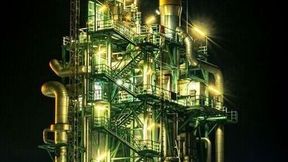
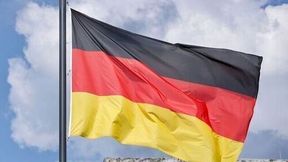
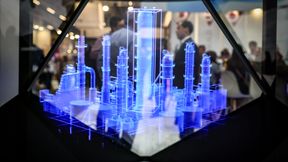
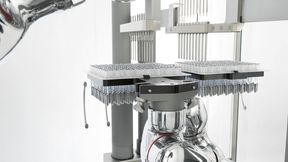
Tug-of-war: What does Brexit mean for EU and UK chemical industry? (Source: © Pixelbliss – stock.adobe.com, Getty05 – stock.adobe.com, dolva – stock.adobe.com [M: froehm])
Brexit

Tug-of-War around Brexit

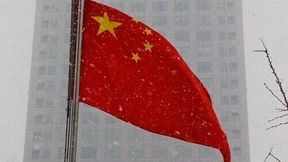
Brexit is sealed ... What’s next for the EU-UK chemical industry? — Europe is the second largest chemicals producer in the world. With the UK now leaving the EU zone, what will this mean for chemical trade between the two sides? PROCESS Worldwide offers an insight into this dynamic market scenario.

Read on
At a glance: Plant engineering projects from across the globe. (Mike Mareen - stock.adobe.com)
Plant Watch

Top 10 Engineering Projects of April 2022

PROCESS Worldwide brings to you the ‘Top 10 plant engineering projects of April 2022’ from all over the world. Right from Southeast Asia’s first green e-methanol plant to the world’s largest green hydrogen hub in the USA, find out all the projects making headlines here.

Read on

Galleries

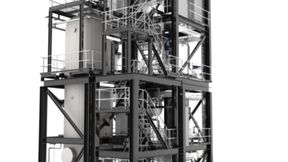
Tailor-made solutions are regularly developed in the Center of Competence for Thermal Separation Technology for distillation (shown in the picture), concentration, crystallization and drying. (Source: Gea)
Milestone Separation Technology

Specialists for Demanding Challenges: When It Comes to the Fundamental Process of Separation, Gea Leaves Nothing to Chance

An ancient tree, hundreds of years old, is an impressive sight with the wide, far-reaching branches of its huge crown. Even more impressive would be the root network — if we could only see it. This is a perfect analogy for the Gea Group, which has grown from around 250 companies. Many of these have a long history of their own, and even under the umbrella of the parent corporation they still develop with their own impetus and momentum. Today, the complementary skill sets and expertise in the field of thermal separation technology are bundled at Gea Wiegand, while Gea Westfalia Separator covers the area of mechanical separation technology.

Read on
The study received financial support from the ‘Fonds der Chemischen Industrie’ as well as from the German Research Foundation via the Leibniz award and its Priority Programme 2102. (Source: Deposit Photos )
Germany: Artificial Intelligence

Predicting Reaction Results: Machines Learn Chemistry

In the production of chemical compounds, the success of each individual reaction depends on numerous parameters. It is not always possible, even for experienced chemists, to predict whether a reaction will take place and how well it will work. In order to remedy this situation, chemists and computer scientists from the University of Münster have now developed a tool based on artificial intelligence. The study has been published in the journal ‘Chem’.
Read on