



:quality(80)/p7i.vogel.de/wcms/49/5c/495c651fabd24a437c98bde6a3d71ecc/0130060419v2.jpeg "Enfinium has successfully piloted Wasteer’s groundbreaking visual AI technology at its Ferrybridge 2 facility in West Yorkshire and Parc Adfer facility in North Wales. (Source: Chris Parkes Photographer Ltd.)")
:quality(80)/p7i.vogel.de/wcms/77/1c/771c3d385d46ede7ab736f3f7d63cb62/0130007313v2.jpeg "The laser perforated filter elements for Eaton’s DCF series enable retention ratings that were previously unattainable with conventional manufacturing methods. Thanks to automatic self-cleaning, they also provide uninterrupted operation with long service life and minimal maintenance requirements. (Source: Eaton )")
:quality(80)/p7i.vogel.de/wcms/0b/33/0b3359449325c4e66cffdb41fce11683/0129956557v2.jpeg "Aramco Senior Vice President of Digital & Information Technology Sami A. Al Ajmi, sitting right, and President of Microsoft Arabia Turki Badhris, sitting left, at a signing ceremony attended by Aramco Executive Vice President of Technology & Innovation Ahmad O. Al Khowaiter, standing right, and Vice Chair and President of Microsoft Brad Smith, standing left. (Source: Aramco )")
:quality(80)/p7i.vogel.de/wcms/60/25/60259e0165560492b717049a5006b5d2/0129719891v2.jpeg "Adnoc's panorama digital command center. (Source: Adnoc )")
:quality(80)/p7i.vogel.de/wcms/64/bb/64bb4812390b6491ce0bd4fe53597086/0130333812v2.jpeg "The solar power plant produces 30 GWh per year of renewable electricity, which is self-consumed by Holcim’s industrial facilities, making it the largest floating solar power plant in Europe dedicated to self-consumption. (Source: Pixabay)")
:quality(80)/p7i.vogel.de/wcms/32/06/320643bfb6b509933012a2fd9c42504d/0130333498v2.jpeg "BASF’s X3D catalysts combine high mechanical stability with an open structure. (Source: BASF)")
:quality(80)/p7i.vogel.de/wcms/1b/ca/1bca61c846359bfd9e7998fb30b662c6/0130333482v2.jpeg "Total Energies has launched France’s first advanced plastics recycling plant, with an annual capacity of 15,000 tons, at its Grandpuits site southeast of Paris. (Source: Pixabay)")
:quality(80)/p7i.vogel.de/wcms/09/e3/09e378194b496921d2a267a6752322eb/0130333473v2.jpeg "Under the terms of the contract, KBR will provide contract management, project management and supporting technical services throughout the EPC phases of the project. (Source: KBR)")
:quality(80)/p7i.vogel.de/wcms/7a/50/7a501f6d8f87a4524dc3aaceb04eacb4/0130333829v2.jpeg "The Clear Lake facility represents Clariant's first U.S. manufacturing site dedicated to producing pharmaceutical-grade PEG excipients, marking a pivotal milestone in the company's healthcare growth strategy. (Source: Clariant)")
:quality(80)/p7i.vogel.de/wcms/26/12/261210e5920899e5c35c4f905d3be8bd/0129399814v2.jpeg "Powders used in DPI formulations are often highly potent and administered in very low doses. (Source: Ima)")
:quality(80)/p7i.vogel.de/wcms/6b/3f/6b3f057c83c494e4732337d870d52b21/0130006927v2.jpeg "Lonza will realize upfront cash proceeds of 2.2 billion dollars and retain a 40 % stake in the business, with additional preferential participation in its future exit. (Source: Lonza)")
:quality(80)/p7i.vogel.de/wcms/df/cd/dfcd0c2e0eb4b554f956e0161ae08519/0129794328v1.jpeg "The plasma fractionation facility at CSL Behring, viewed from the outside. (Source: CSL Behring)")
:quality(80)/p7i.vogel.de/wcms/df/35/df3526a6f7aba41fdd2bb2051954e0d8/0130163620v2.jpeg "The SPA, valued at more than 3 billion dollars, is one of the largest binding long-term green ammonia off-take agreements globally. (Source: Pixabay)")
:quality(80)/p7i.vogel.de/wcms/af/73/af7394d9f8900024c5ee7fca459c4eeb/0130080328v2.jpeg "Axens has signed a MOU with Airbus to strengthen their cooperation in the development and deployment of SAF, a key pillar for decarbonizing the aviation sector. (Source: Pixabay)")
:quality(80)/p7i.vogel.de/wcms/0e/19/0e19f0cf0379c3af4c2fe02629db63f1/0130079229v2.jpeg "Thyssenkrupp Uhde has been selected by CSBP to deliver its patented Envinox technology for two nitric acid plants at CSBP’s Kwinana site in Western Australia. (Source: Thyssenkrupp Uhde)")
:quality(80)/p7i.vogel.de/wcms/a6/84/a68477d4ef879cc9cedeae332ca57c49/0129893677v2.jpeg "Siemens and Caphenia sign the partnership agreement. From left to right: Nicky Ahnert, Jürgen Giegerich, Frank Knauf (all Siemens), Dr. Mark Misselhorn, Dr. Andreas Waibel (both Caphenia) (Source: Siemens)")
:quality(80)/p7i.vogel.de/wcms/1c/39/1c39433f4bb4de2e5e6c5311c3236d09/0130110254v2.jpeg "The new pumps of the Omega type series have been designed for handling water and fluids with a low solids content efficiently. (Source: KSB)")
:quality(80)/p7i.vogel.de/wcms/be/e1/bee13b8d51a419b9b8f0685e2b9d47bf/0128917673v1.jpeg "The Centerwave 6000 measures pipes from 32 to 1,600 mm. (Source: Maag Group)")
:quality(80)/p7i.vogel.de/wcms/51/7a/517a4e83c5827663b4839f5ddb98f434/0128872953v1.jpeg "The Tigron in SIL version can be flexibly configured for different safety requirements. (Source: Auma)")
:quality(80)/p7i.vogel.de/wcms/d5/72/d5728578b35b72f365f5086bc1d068da/0128662441v2.jpeg "Nikkiso Clean Energy & Industrial Gases Group has announced the launch of its new multistage process pump (MSPP 210), designed to enhance safety and reduce downtime on air separation equipment. (Source: Nikkiso Clean Energy & Industrial Gases Group)")
:quality(80)/p7i.vogel.de/wcms/60/ef/60efa975d1dd123c1afbfb6ccc060461/0130263955v2.jpeg "Aquaclean (Source: Oko-tech)")
:quality(80)/p7i.vogel.de/wcms/07/62/0762f20b1821ee2724c97989374d6397/0130257651v2.jpeg "Oleksandr Sadchykov in front of the water treatment unit (Source: Grundfos)")
:quality(80)/p7i.vogel.de/wcms/98/98/989863664c7b65e87caf74a08239d487/0130167217v2.jpeg "Keller 26KyX Level Probe (Source: © Keller Pressure)")
:quality(80)/p7i.vogel.de/wcms/64/4e/644e22b71e8d35a63f051f781eb13886/0130163451v2.jpeg "Vega will present level and pressure measurement technology for the water industry at Ifat 2026. (Source: Vega)")
:quality(80)/p7i.vogel.de/wcms/6b/cc/6bcc3d26e1c7c74d90a10bc3ca296ae1/0128362351v2.jpeg "A look into Bayer's new tablet production, Solida 1, during construction: The robots and lift columns for material handling are being installed. (Source: Bayer)")
:quality(80)/p7i.vogel.de/wcms/24/c8/24c84ab6b1bcd24468a87820a07a85aa/0128194707v2.jpeg "Ajax Equipment has supplied Binding Solutions with a feed system comprising buffer hopper, screw feeder and agitated screw feeder for a pilot plant handling iron ore and additives. (Source: Ajax Equipment )")
:quality(80)/p7i.vogel.de/wcms/1d/3e/1d3e2788eb37c1e974f36337c8d33cb5/0128191010v2.jpeg "Ajax Equipment has supplied IGI Systems with a stainless-steel conical hopper with gas purge capability, as part of a prototype Sublimation System for a low-pressure chemical vapour deposition application. (Source: Ajax Equipment)")
:quality(80)/p7i.vogel.de/wcms/19/76/1976928d7d0a2ed7c1eeba7ade8552c8/0126365603v1.jpeg "Detail of Valvedesign: It has an aktiv amd passive part (Bild: Italvacuum)")
:quality(80)/p7i.vogel.de/wcms/d0/f7/d0f7d560dfce37c8371442d5b6120e3c/0130182478v1.jpeg "The Gelsenkirchen refinery primarily manufactures fuels for vehicles and aircraft, processing roughly 12 million tonnes of crude oil per year. (Source: BP)")
:quality(80)/p7i.vogel.de/wcms/7f/96/7f9628e43c99564fa6dfd8e76149425d/0130165852v2.jpeg "Pure titanium recycling process for chlor-alkali electrolysis cells. (Source: Asahi Kasei)")
:quality(80)/p7i.vogel.de/wcms/4e/27/4e2797cb610f686f13355a5957190d92/0130164068v2.jpeg "Bilfinger experts install and inspect Electrical, Instrumentation and Control systems at customer sites. (Source: Bilfinger)")
:quality(80)/p7i.vogel.de/wcms/f8/29/f8298429c1638b949a6f76346f6709c7/0118701710v2.jpeg "Bosch Industrial Heat will be presenting sustainable steam and heat solutions for global industrial use at the Achema trade fair in Frankfurt, Germany. (Source: Bosch Industriekessel)")
:quality(80)/p7i.vogel.de/wcms/07/24/07242664ab2b1c7841c9d9d0a127670c/0116045959.jpeg "A look inside the GEA machine room. (Bild: Magnavale)")
:quality(80)/p7i.vogel.de/wcms/c9/79/c979a20b32395ddfa93fe7ead90578a0/0108386061.jpeg "Production residues, lime, salt and suspended solids quickly clog the pipes. (Source:©Tanakorn - stock.adobe.com)")
:quality(80)/p7i.vogel.de/wcms/9e/5c/9e5c92d942ed046a27562d6e3d730c92/0103483548.jpeg "It is almost ten metres high and extends over three floors: the world's first multiple dividing wall column is located in the new technical centre at the University of Ulm. (Bild: Eberhardt, kiz Universität Ulm)")
:quality(80)/p7i.vogel.de/wcms/7c/77/7c77e24fdcc9e1511e8e711eff161e28/0130175489v2.jpeg "The milestone confirms the fast pace of development of Eni’s deep water gas projects offshore East Kalimantan. (Source: Unsplash )")
:quality(80)/p7i.vogel.de/wcms/b3/2f/b32fb9f5aa54e9cb6c92e4b6c8665263/0130163018v2.jpeg "The decision to take emergency collective action was made following an extraordinary meeting of IEA Member governments, convened by the IEA Executive Director to assess market conditions amid the conflict in the Middle East and consider the options to address supply disruptions. (Source: © Sashkin - stock.adobe.com)")
:quality(80)/p7i.vogel.de/wcms/85/d2/85d2cb02c4ae45a99454b5405b0f2489/0130149909v2.jpeg "IEA Executive Director Fatih Birol issued a statement on the meeting of G7 Energy Ministers at its IEA headquarters in Paris. (Source: © Marko - stock.adobe.com)")
:quality(80)/p7i.vogel.de/wcms/a8/4e/a84e8039a90a5cf4751d01ebcf6ba1a9/0127510172v2.jpeg "After six years, Achemasia, the international trade fair and innovation forum for sustainable chemical production, has returned with renewed vigor, bringing together global expertise, Chinese innovation, and a shared commitment to a greener industrial future—according to the organizers of the fair. (Source:PROCESS China)")
:quality(80)/p7i.vogel.de/wcms/17/c7/17c703445f134eb3d7ecc7918dda2762/0124596096v2.jpeg "Achema Middle East will launch in Saudi Arabia in 2026. (Bild: Dechema/ Hannibal)")
:quality(80)/p7i.vogel.de/wcms/2a/2c/2a2cffc07f51019065387cd63241b5ce/0119463370v1.jpeg "The Injecta 36 fills and seals RTU (Ready-to-Use) syringes at high speed. The image shows the robotic arm. (Source: IMA)")
:quality(80)/p7i.vogel.de/wcms/b1/7e/b17ea8c62ccafad1d1fb072d6199bbd6/0118578446.jpeg "“Star in the ring”: Vegapuls 6X radar level sensors are the solution of choice for Renolit for many applications on the way to the perfect plastic product. (Source: © MR Design - stock.adobe.com; Vega)")
:quality(80)/p7i.vogel.de/wcms/77/9d/779db435e7f9d79bafe16101008a9cfa/0130263548v2.jpeg "The Kingdom of Saudi Arabia, the UAE and Turkey are three core countries in the region that are actively incorporating the plastics circular economy with the assistance of the chemical recycling technology. (Source: © Anastasiia - stock.adobe.com)")
:quality(80)/p7i.vogel.de/wcms/a0/a3/a0a3cec0d4f46ed33f66ac24b1e03938/0130149916v2.jpeg "Bapco Energies serves notice of Force Majeure on its Group operations. (Source: © Design_Stock - stock.adobe.com)")
:quality(80)/p7i.vogel.de/wcms/76/87/7687c53b1f8451b5d78ccb2254e5bcd9/0130080619v2.jpeg "The transaction marks a transformational milestone for Sidara and significantly advances its long-term strategic ambition to expand and elevate its energy offering to clients worldwide. (Source: Pixabay)")
Market Impact German Chemical Industry Association Outlines the Effects of the Ukraine War
The German Chemical Industry Association (VCI) has stated that the industry's expectations from the beginning of the year for the business outlook in 2022 have been overturned due to Russia’s invasion of Ukraine. It further mentions that 70 % of companies are facing major problems in their business with the explosion of energy prices and also warned that an import ban on Russian natural gas would lead to massive consequences for the chemical and pharmaceutical industry.
Related Vendors
:fill(fff,0)/p7i.vogel.de/companies/61/f9/61f9439b7cbe4/logo-edl.png "logo-edl (EDL Anlagenbau Gesellschaft mbH)")
:fill(fff,0)/images.vogel.de/vogelonline/companyimg/103000/103097/65.jpg "Pörner Gruppe mit Rand.jpg ()")
:fill(fff,0)/p7i.vogel.de/companies/5f/98/5f98fbb2e7bf2/05-trm-filter-logo-with-slogan-en-alt.png "05_TRM_Filter_LOGO_with_slogan_EN_ALT.png (www.trm-filter.com)")
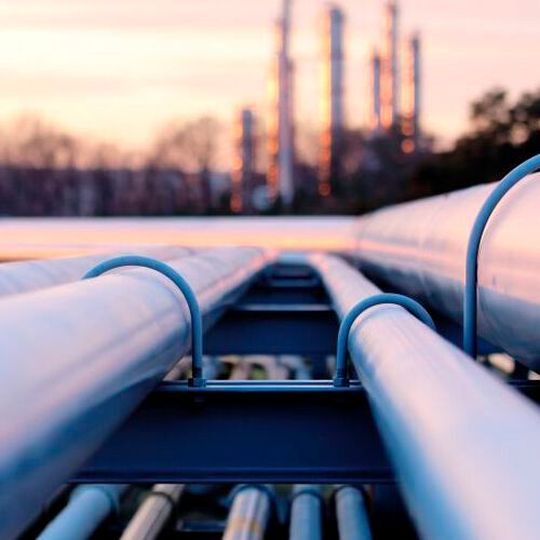
Frankfurt/Germany – The hopes of the chemical and pharmaceutical industry for a positive economic trend this year have come to an abrupt end with Russia's invasion of Ukraine. The industry's expectations from the beginning of the year for the business outlook in 2022 have been overturned within a few weeks.
According to the German Chemical Industry Association (VCI), 54 percent of member companies expect a decline in production and sales for the current year, according to a recent survey by the association. As a result, the VCI has withdrawn its previous estimate for 2022 as a whole. The chemical association is currently unable to provide an update: "Any forecast would be highly speculative," VCI CEO Wolfgang Große Entrup stressed to the press.
The economic and political situation has changed dramatically for the energy- and raw material-intensive chemical industry as a result of the war in Ukraine. Prices for oil and natural gas have exploded. Companies' financial leeway is dwindling more and more. 70 percent of companies report serious problems for their business due to high energy prices. 85 percent state that they are either unable to pass on rising production and procurement costs at all or only in part.
Consequences of an embargo
The VCI chief executive warned that the consequences of an import ban on Russian natural gas for the chemical and pharmaceutical industry would be massive, but not limited to them. "Deep cuts in the industry's production levels would not only be expected in large energy-intensive companies, but would also be unavoidable in medium-sized businesses and probably across all divisions. Through the value chains, the effect would propagate to the entire industry in Germany," Große Entrup emphasized.
Almost all sectors, according to the VCI, such as agriculture, food, automotive, cosmetics and hygiene, construction, packaging, pharmaceuticals or electronics, would then be affected by a disruption of their supply chains. "A severe and multi-year recession with massive job losses must be expected. And unlike the financial and corona crises, Germany would not recover relatively quickly in the event of an industrial crisis. Then the economic performance of this country is at stake."
The chemical and pharmaceutical industry uses around 2.8 million metric tons of natural gas as a raw material (27 percent of total consumption) and 99.3 terawatt hours of natural gas (73 percent) to generate steam and electricity each year.
Reprioritize political projects in Brussels and Berlin
Under the changed energy and geopolitical conditions, the VCI believes it is urgent for Berlin and Brussels to conduct an urgent analysis of their current legislative projects and prioritize them in three categories. According to Große Entrup, "Simply 'carrying on as planned' is irresponsible and extremely dangerous in terms of industrial policy."
In the view of the VCI, absolute priority should be given to all timely solutions that support the security of supply and affordability of energy and thus stabilize the economy and jobs - such as the prompt abolition of the EEG levy, a reduction in the energy tax to the EU minimum, or a temporary suspension of the phase-out of coal-fired power generation. In parallel, the expansion of renewable energies and the necessary infrastructure must be driven forward with all our might - even in the face of resistance.
For the VCI, the "postponement" category includes, for example, the EU chemicals strategy project with the extensive regulatory package of the amendment to the REACH Regulation or the national and European Supply Chain Act. From the VCI's point of view, the Brussels project CO2 border adjustment (CBAM) could be completely postponed: "The effectiveness of this project for climate protection is highly controversial and a WTO-compliant design is still in the stars. It threatens to become a bureaucratic monster that creates new trade barriers. Such a political monster is absolutely out of place for the period of economic revival after the crisis," emphasized Große Entrup. More promising for more global climate protection, on the other hand, is the German Government's plan to win international partners for a "club of the willing”.
In order to better position the country in terms of the resilience of raw material and energy supply, for the process of transformation and the international competitiveness of the industrial location, the acceleration of planning and approval procedures is of paramount importance, said the VCI.
However, the German Government's goal of halving operating times in government agencies should not apply exclusively to the development of the energy transition infrastructure and more solar and wind power capacity, it said. "This target must also be applied as a general requirement for industrial plants in order to provide a tailwind for investments. Because wind power alone does not make climate protection," said Große Entrup.
Facts and figures
Foreign trade with Russia and Ukraine
The economic links between the German chemical and pharmaceutical industries and the warring parties are manageable, but not insignificant: Russia and Ukraine together account for just under 3 percent of German chemical and pharmaceutical exports. Most recently, this amounted to a good 6.8 billion euros.
The industry is also active locally with subsidiaries: The region accounts for around 2 percent of its direct investments abroad. The VCI estimates that the 70 or so companies employed a total of about 20,000 people before the war began. "The Russian invasion is a brutal attack on Ukraine's right to self-determination and in no way justifiable. State propaganda, lies and fake news from the Kremlin do not change this in the slightest," explained the VCI CEO.
2021 annual financial statements of the industry
- Despite the pandemic and other adversities, the chemical-pharmaceutical industry achieved a successful and remarkable full-year 2021:
- Production increased by 5.3 percent compared to the previous year. Excluding pharmaceuticals, volume growth amounted to 5.0 percent. Almost all divisions benefited from the development, with the exception of the personal care and detergents segment (-1.7 percent). The polymers product group, which is required, for example, in the automotive and packaging industries or for the construction industry and sporting goods, achieved a particular plus with a 16.3 percent increase in volumes.
- Sales rose by 17.9 percent over the course of the year to 225 billion euros due to the continuous increase in producer prices (+9.3 percent). International business developed dynamically (+17 percent) and, at 140 billion euros, contributed almost two thirds (62 percent) of the overall result.
- The number of employees in companies in the chemical and pharmaceutical industry rose slightly (+0.5 percent) to 466,500.
(ID:48108084)
:quality(80)/p7i.vogel.de/wcms/47/13/4713f23ed5618b42e716329a2b5ce666/0124329609v1.jpeg "In Rough Waters: The chemical industry is struggling with high raw material and energy costs and weak demand amidst the current uncertainty. (Source: © TTstudio - stock.adobe.com)")
:quality(80)/p7i.vogel.de/wcms/10/8f/108f98e468e0b4d2e71292d16f02aea6/0126122707v2.jpeg "EU Commission President Ursula von der Leyen and US President Donald Trump shake hands after reaching an agreement in the tariff dispute. (Source: © picture alliance / ASSOCIATED PRESS)")