Fette Compacting is on a successful path and presents itself confidently as a strategic partner for the pharmaceutical and nutrition industries. We inquired into how the company embodies its new orientation: “Together — from lab to production.”
Working together in partnership is at the centre of Fette Compacting's new direction: Together — from lab to production
(Source: istock.com/sanjeri)
After its appearance at Achema 2024, the company’s message should be well-received in the market: Fette Compacting has positioned itself as a process partner for pharmaceutical production and has shifted away from the image of merely a machinery manufacturer. This strategic process began two years ago, and since the beginning of this year, it has also become visible in the company’s leadership structure. Alongside CEO Joachim Dittrich and CFO Anke Fischer, Dr. Marten Klukkert now completes the trio as Chief Customer Officer.
At Fette Compacting, with ten years of service, he can already be regarded as a veteran. For the past two years, he has been responsible as Vice President of the Customer Development Center for the five Competence Centres located in Germany, the USA, Brazil, India, and China, and he has been closer to pharmaceutical customers than anyone else in the company.
His new role as a “customer communication expert” is thus tailor-made for him — on top of this, he now also carries a significant amount of strategic responsibility: embedding customer orientation into the DNA of the company, further developing the range of services and process partnerships, and implementing the corresponding structures.
Robust Processes and Rapid Scale-Up
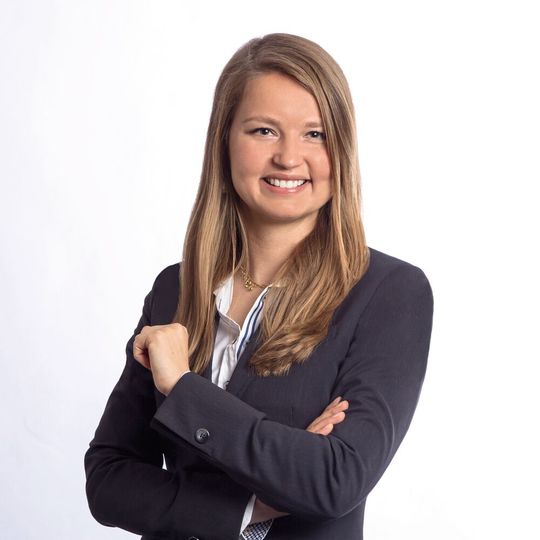
Five Questions to Dr. Anna Novikova
Dr. Anna Novikova, Head of Process Consultancy
(Source: Fette Compacting)
What do you see as the challenges in process development?
Novikova: Based on our experience, the core challenge in process development concerns the costs and availability of limited powder material. The process often takes too long, and too much material is wasted; in some cases we are talking about several hundred kilograms before it transitions from lab scale to commercial production. Our clients want rapid technology transfers and do not want to go through multiple scale-up steps. Furthermore, a process should operate robustly over an extended period and require minimal intervention from the operator.
And how is this achieved?
Novikova: The aim is to develop the process so that it can accommodate changes in raw materials and deliver a tablet that meets the customer’s quality requirements over many years. We look at the critical material attributes (CMAs) that are crucial for product quality and link these CMAs with the critical process parameters (CPPs). We employ the concept of Quality by Design, developing a design space for the customer: Our Lab Solutions service is ideal for clients who currently do not have the capacity to focus on Quality by Design in process development.
Where do you see the technological strength of Fette Compacting?
Novikova: A prerequisite for Quality by Design is an understanding of processes and materials. Our strength lies in our ability to relate powder properties to the manufacturing process (e.g. the tablet pressing process) and to take a holistic view of the problem. This is precisely why we have the F Lab 5 and F Lab 10 in our portfolio. They allow us to analyse the powder compression behaviour very accurately and lay the foundation for the step into process development. Subsequently, we simulate process steps using emulators and obtain real process data. This enables us to make predictions regarding the later production process.
What benefits do customers gain from the use of emulators?
Novikova: The process development is significantly faster; we only require small amounts of material for analyses while still obtaining accurate predictions. Another advantage for the customer is that they do not have to block capacities on their production machines for development purposes. In the long term, the customer is empowered to validate their formulations and process parameters early and rectify issues already in the development phase. Overall, we help customers to enter the market faster and to develop robust processes.
What role does PAT play nowadays?
Novikova: In fact, Fette Compacting adopted PAT development back in 2004, when the FDA began to promote the topic. Nevertheless, we believe that the full potential of PAT is not yet being utilised, due in part to the complexity of some systems. We have developed the embedded process analytical technology (ePAT). This technology is fully integrated into the tablet presses, and the sensors can be installed via plug-and-play. This makes process control simple, robust, and efficient — both in batch and continuous processes.
Now the Transformation is Also Visible at the C-Level
Customer orientation is a buzzword that many companies proudly boast — machinery manufacturers also like to present themselves as solution providers. However, Fette Compacting has been pursuing this initiative with great determination for the past two years, including a cultural shift within the company. The newly created position of CCO now underscores how seriously the leadership trio takes the transition from a tablet press manufacturer to a strategic partner of the pharmaceutical industry.
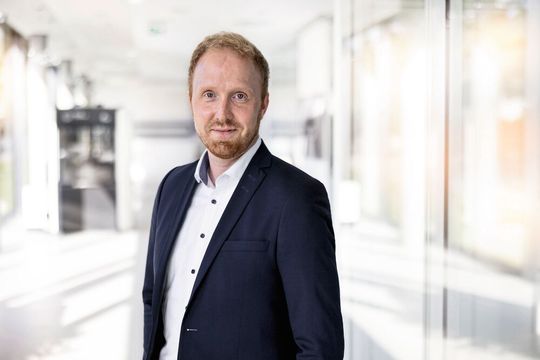
Dr. Marten Klukkert, Chief Customer Officer
(Source: Fette Compacting)
“Our customers now demand more than just a technically perfect machine from us; they expect functioning processes,” explains Klukkert. He has observed this market development for years, and the motto presented at Achema, “Together — from lab to production”, represents the ambition that Fette Compacting has worked out for itself. This entails support throughout the entire lifecycle of the OSD from formulation and process development to scale-up, production, and later process optimisation.
As a first necessity, the Fette Compacting team has been building for the past two years and has established new structures. Of course, the sales department is still the a point of contact for customers, but the purely commercial mindset is being replaced by a focus on the core challenges of the customer and the overall solution that should emerge later. Specifically, this means breaking down the traditional concept of functional areas and moving away from pure machinery sales. “We engage with pharmaceutical customers as an interdisciplinary, content-driven team and discuss the best process solution,” emphasises the CCO. It is crucial to initiate discussions with the pharmaceutical partner at a time when everything is still open from a technological perspective. Often, this is around clinical phase IIb, where dosage form and levels have been determined, but the production method can still be discussed.
We support pharmaceutical and nutraceutical companies from formulation development to the validation of their processes.
Dr. Marten Klukkert, CCO (VDA)
Therefore, in these early project phases, alongside the sales expertise, application specialists, technical project management, and experts from the Process Consultancy Team join in. Led by pharmaceutical expert Dr. Anna Novikova, this team sees itself as a sparring partner, guiding customers through the entire lifecycle of the pharmaceutical product, from the initial laboratory characterization and properties of the powder to be tableted, through formulation and process development, to a robust production process and later optimisation.
“We help the customer understand their powder,” summarizes Novikova succinctly. She has the best qualifications for understanding powder. Eight years ago, she joined Fette Compacting as a PAT expert when they were looking for an expert in spectroscopic analytics in tablet formulation — fittingly, the subject of her doctoral thesis. One of the first in the field, she was involved in the development of the ePAT system, a key component in the continuous dosing-mixing unit FE CPS. The combination of mechanical engineering and pharmaceutical technology continues to fascinate her. This interaction — pharmaceutical knowledge, process expertise, and the know-how of the machinery builder — is considered by Fette Compacting to be the key to success in discussing the best solution with customers at eye level.
That the “collaboration between pharmaceutical expertise and mechanical engineering competence” works is evidenced by Anna Novikova and Marten Klukkert themselves. For his PhD in pharmaceutical technology, Klukkert researched which parameters solid drug formulations must meet to be processed into tablet presses and to have their quality tested directly in the production process. Later, at Fette Compacting, he, along with Novikova, was involved in the development of the Continuous Processing System FE CPS, which serves as a blueprint for the concept of process partnerships and as a catalyst for the idea of expanding into process development. It is no coincidence that both are enthusiastic advocates of continuous production. “Continuous production adapts to different production scenarios and thereby offers optimal conditions for process development and manufacturing,” both emphasise.
Changes in the Pharmaceutical Industry as a Catalyst for Continuous Production
The pharmaceutical industry is currently undergoing significant changes, which are promoting transformation towards continuous manufacturing: the product portfolios of original manufacturers are shifting considerably. While there still are large-volume products, the success of cell and gene therapies is leading to a significant increase in highly specific, customized therapies with smaller batch sizes.“To provide our customers with competitive advantages, we must reduce time-to-market, minimise powder usage in product testing, and expedite the technology transfer,” explains Klukkert. Additionally, the frugal health policies of many countries are reducing drug prices and, as a result, profit margins for companies. Highly efficient machines and process consulting, as offered by Fette Compacting, can alleviate some of this pressure.
As a result of this dynamic, there is also a growing motivation within the traditionally slow solid production to look beyond the obvious — after all, everyone wants to become faster, more flexible, and more efficient. A key insight from Klukkert: “Many companies are currently working to position themselves with a future-oriented approach, making fundamental changes, and rethinking entire plant structures.” This presents a prime opportunity for the makers at Fette Compacting to leverage their process knowledge and over 75 years of tablet press experience as consultants and service providers. “In many areas, we see that simplified processes and complexity reduction offer significant added value to the customer and can in many cases also minimise risk.” This reiterates an argument for continuous production, as compared to granulation-based processes, direct compression from the doser/mixer into the tablet press saves process steps, making production leaner and more energy-efficient.
Global Competence Centres Where the Customer Needs Them
An important part of the “Together — from lab to production” concept is the global Customer Development Centres. Here, all available tablet technologies are maintained, and process experts are on hand to assist pharmaceutical customers when testing a new technology. The digital foundation of the comprehensive process consulting is the Qualified Expert Database (QED), which accumulates experiences from seven decades of tablet press expertise and is continuously enriched with new insights. “This allows us to quickly determine the best processes and machine configurations,” emphasises Klukkert.
The technology park of the Customer Development Centres offers another benefit: since there is always a risk of things going wrong in the early phases of drug development, collaboration with Fette Compacting shifts investment risks for pharmaceutical companies to the end of the development process. By this stage, the wheat has usually been separated from the chaff, and the risk of total failure is significantly lower. Klukkert clarifies that during the process development phase, the production volumes needed for market supply can only be estimated roughly, and he adds: “When the customer enters into a partnership with us during the early clinical phase, they have a very clearly defined effort for developing the process technology. If successful, we then jointly take the next step,” explains Klukkert. This could involve ramping up production capacities while concurrently training production teams to build machine-side expertise. Ideally, Novikova adds, a partnership is established that lasts throughout the entire lifecycle of production and also includes optimisation and maintenance. The interest is high. Fette Compacting has thus already made significant strides in implementing its new strategy and achieved initial successes. Next on the agenda is an expansion of the Customer Development Centre in Schwarzenbek, Germany. Once the clean rooms are completed, it will also enable the processing of highly potent active ingredients, thereby offering customers an expanded testing option.
(ID:50374323)
Date: 08.12.2025
Naturally, we always handle your personal data responsibly. Any personal data we receive from you is processed in accordance with applicable data protection legislation. For detailed information please see our privacy policy.
Consent to the use of data for promotional purposes
I hereby consent to Vogel Communications Group GmbH & Co. KG, Max-Planck-Str. 7-9, 97082 Würzburg including any affiliated companies according to §§ 15 et seq. AktG (hereafter: Vogel Communications Group) using my e-mail address to send editorial newsletters. A list of all affiliated companies can be found here
Newsletter content may include all products and services of any companies mentioned above, including for example specialist journals and books, events and fairs as well as event-related products and services, print and digital media offers and services such as additional (editorial) newsletters, raffles, lead campaigns, market research both online and offline, specialist webportals and e-learning offers. In case my personal telephone number has also been collected, it may be used for offers of aforementioned products, for services of the companies mentioned above, and market research purposes.
Additionally, my consent also includes the processing of my email address and telephone number for data matching for marketing purposes with select advertising partners such as LinkedIn, Google, and Meta. For this, Vogel Communications Group may transmit said data in hashed form to the advertising partners who then use said data to determine whether I am also a member of the mentioned advertising partner portals. Vogel Communications Group uses this feature for the purposes of re-targeting (up-selling, cross-selling, and customer loyalty), generating so-called look-alike audiences for acquisition of new customers, and as basis for exclusion for on-going advertising campaigns. Further information can be found in section “data matching for marketing purposes”.
In case I access protected data on Internet portals of Vogel Communications Group including any affiliated companies according to §§ 15 et seq. AktG, I need to provide further data in order to register for the access to such content. In return for this free access to editorial content, my data may be used in accordance with this consent for the purposes stated here. This does not apply to data matching for marketing purposes.
Right of revocation
I understand that I can revoke my consent at will. My revocation does not change the lawfulness of data processing that was conducted based on my consent leading up to my revocation. One option to declare my revocation is to use the contact form found at https://contact.vogel.de. In case I no longer wish to receive certain newsletters, I have subscribed to, I can also click on the unsubscribe link included at the end of a newsletter. Further information regarding my right of revocation and the implementation of it as well as the consequences of my revocation can be found in the data protection declaration, section editorial newsletter.




:quality(80)/p7i.vogel.de/wcms/97/ff/97ffc5d8894eaaabac89fa86c88b5c04/0130558883v2.jpeg "BASF and Sevnce Robotics have signed a MOU to advance smart transformation of the chemical industry. (Source: BASF )")
:quality(80)/p7i.vogel.de/wcms/54/f4/54f4b4e2a86b203e0dfd84221602bdb5/0130367283v2.jpeg "Anybotics' Anymal robot combines depth cameras, LiDAR, thermal imaging, acoustic sensors, and gas detectors into a single inspection round. (Source: Anybotics)")
:quality(80)/p7i.vogel.de/wcms/e9/64/e964996410967c124c2cf01a8623068e/0130285341v1.jpeg "Geht unter die Oberfläche: Die Offshore-Ölförderung erfordert hochenergetische Pumpen – doch diese sind im Wesentlichen eine Black Box. Bisher zumindest. (Source: Kistler Group)")
:quality(80)/p7i.vogel.de/wcms/54/ae/54aece5dff672ce1651470eecd9f2589/0130138090v2.jpeg "The new Ionchromatograph “Nexera IC“ (Source: Shimadzu)")
:quality(80)/p7i.vogel.de/wcms/f6/42/f64217521bd12e4cf6dc3396bb7691be/0130557840v2.jpeg "The commissioning marks a significant milestone in strengthening India’s advanced manufacturing ecosystem, especially for the sunrise sectors like semiconductor and solar cell manufacturing. (Source: Pixabay)")
:quality(80)/p7i.vogel.de/wcms/7e/1f/7e1f3996f5b0ceaa2cd63e8f42c46e8b/0130491098v2.jpeg "At a glance: Plant engineering projects from across the globe. (Source: © Andi - stock.adobe.com)")
:quality(80)/p7i.vogel.de/wcms/1e/15/1e15b0e20cf5ede83e0749260dfda733/0130465044v2.jpeg "Energy X has recently announced the successful commissioning of a first-of-its-kind, U.S.-based lithium production facility at Project Lonestar, marking a major milestone toward commercial-scale domestic lithium production. (Source: Pixabay)")
:quality(80)/p7i.vogel.de/wcms/36/36/36369e6e59d4c660893cc04a4d257cfc/0130465035v2.jpeg "Wacker has successfully completed the second expansion phase at its production site in Panagarh, India. In addition to silicone rubber, the site now also operates a production complex (left) for silicone emulsions. (Source: Wacker)")
:quality(80)/p7i.vogel.de/wcms/3b/86/3b86c49f99e3638ed9f42c6cc7732950/0130491017v2.jpeg "Turning liquids into powders enables storage at room-temperature. (Source: Glatt)")
:quality(80)/p7i.vogel.de/wcms/84/78/8478fcee08360056b226cb8d5032d50c/0130489771v2.jpeg "Saharsh Davuluri will assume the role of Chief Executive Officer and Managing Director, effective immediately, as the company moves into its next stage of CDMO growth. (Source: Neuland Laboratories)")
:quality(80)/p7i.vogel.de/wcms/ab/c2/abc21b4affa79498712fe95c16991828/0130489183v2.jpeg "Prange Pharma recently announced the successful completion of the acquisition of the MSD Animal Health manufacturing site in Aprilia, Italy. (Source: Pixabay)")
:quality(80)/p7i.vogel.de/wcms/41/c9/41c96e0244221ad38daa73bdd8231477/0130477173v2.jpeg "The „ORBITA‑L“-system is designed for filling and capping non‑injectable liquid products. (Source: Marchesini)")
:quality(80)/p7i.vogel.de/wcms/99/11/9911a2263913a34bd9b8275de32ce657/0130557422v2.jpeg "This allocation will enable Total Energies to cover around 60 % of the electricity needs of its refining and chemicals sites in France, estimated at 400 MW. (Source: Pixabay)")
:quality(80)/p7i.vogel.de/wcms/4c/05/4c05e753794ab348734a3b8f64091196/0130549487v2.jpeg "The new unit will replace the existing Battery #3A at the Pohang site. (Source: Thyssenkrupp Uhde)")
:quality(80)/p7i.vogel.de/wcms/ce/a0/cea0130be5857132356c9915ff9b35b7/0130548375v2.jpeg "Phelan efuels will deploy Honeywell UOP’s Fischer Tropsch Unicracking process technology, which uses FT liquids and waxes made from CO2 to create eSAF that complies with aviation industry standards. (Source: Pixabay)")
:quality(80)/p7i.vogel.de/wcms/80/ae/80ae5dcaef8b78989454ddba5eb2f6a7/0130485693v2.jpeg "The Global Impact Coalition has recently announced that Siemens has joined the coalition as a member. (Source: Siemens)")
:quality(80)/p7i.vogel.de/wcms/1c/39/1c39433f4bb4de2e5e6c5311c3236d09/0130110254v2.jpeg "The new pumps of the Omega type series have been designed for handling water and fluids with a low solids content efficiently. (Source: KSB)")
:quality(80)/p7i.vogel.de/wcms/be/e1/bee13b8d51a419b9b8f0685e2b9d47bf/0128917673v1.jpeg "The Centerwave 6000 measures pipes from 32 to 1,600 mm. (Source: Maag Group)")
:quality(80)/p7i.vogel.de/wcms/51/7a/517a4e83c5827663b4839f5ddb98f434/0128872953v1.jpeg "The Tigron in SIL version can be flexibly configured for different safety requirements. (Source: Auma)")
:quality(80)/p7i.vogel.de/wcms/60/ef/60efa975d1dd123c1afbfb6ccc060461/0130263955v2.jpeg "Aquaclean (Source: Oko-tech)")
:quality(80)/p7i.vogel.de/wcms/07/62/0762f20b1821ee2724c97989374d6397/0130257651v2.jpeg "Oleksandr Sadchykov in front of the water treatment unit (Source: Grundfos)")
:quality(80)/p7i.vogel.de/wcms/98/98/989863664c7b65e87caf74a08239d487/0130167217v2.jpeg "Keller 26KyX Level Probe (Source: © Keller Pressure)")
:quality(80)/p7i.vogel.de/wcms/64/4e/644e22b71e8d35a63f051f781eb13886/0130163451v2.jpeg "Vega will present level and pressure measurement technology for the water industry at Ifat 2026. (Source: Vega)")
:quality(80)/p7i.vogel.de/wcms/79/31/7931cc94924b4c2ebc7087e9cec2f801/0130490720v2.jpeg "The new Pulsar Model R80 solids antenna delivers improved measurement capability through its high-frequency signal, narrow beam angle, and advanced configuration software. (Source: Ametek )")
:quality(80)/p7i.vogel.de/wcms/6b/cc/6bcc3d26e1c7c74d90a10bc3ca296ae1/0128362351v2.jpeg "A look into Bayer's new tablet production, Solida 1, during construction: The robots and lift columns for material handling are being installed. (Source: Bayer)")
:quality(80)/p7i.vogel.de/wcms/24/c8/24c84ab6b1bcd24468a87820a07a85aa/0128194707v2.jpeg "Ajax Equipment has supplied Binding Solutions with a feed system comprising buffer hopper, screw feeder and agitated screw feeder for a pilot plant handling iron ore and additives. (Source: Ajax Equipment )")
:quality(80)/p7i.vogel.de/wcms/1d/3e/1d3e2788eb37c1e974f36337c8d33cb5/0128191010v2.jpeg "Ajax Equipment has supplied IGI Systems with a stainless-steel conical hopper with gas purge capability, as part of a prototype Sublimation System for a low-pressure chemical vapour deposition application. (Source: Ajax Equipment)")
:quality(80)/p7i.vogel.de/wcms/8e/f9/8ef9bb7b46f133439b299c2ea2f4bac4/0130548981v2.jpeg "The Rockville site comprises two cGMP manufacturing plants with a combined 60,000-liter drug substance capacity, supporting both clinical and commercial biologics production across multiple manufacturing scales. (Source: Samsung Biologics)")
:quality(80)/p7i.vogel.de/wcms/0f/11/0f11c60729f25db0ca0d301d9d4ca0ee/0130485703v2.jpeg "The signatories of the Joint Biomethane Declaration, leading European industry associations, are calling to scale biomethane as an important building block of the EU’s reindustrialization, energy security, and transition to climate neutrality. (Source: Pixabay)")
:quality(80)/p7i.vogel.de/wcms/0c/a1/0ca135e0486c9af90a0552aea85de88c/0130439525v2.jpeg "Qatar Energy expects the damage to its Ras Laffan Industrial City caused by missile strikes, which occurred on Wednesday 18 March 2026, and in the early hours of Thursday 19 March 2026, to cost about 20 billion dollars a year in lost revenue. (Source: Pixabay)")
:quality(80)/p7i.vogel.de/wcms/f8/29/f8298429c1638b949a6f76346f6709c7/0118701710v2.jpeg "Bosch Industrial Heat will be presenting sustainable steam and heat solutions for global industrial use at the Achema trade fair in Frankfurt, Germany. (Source: Bosch Industriekessel)")
:quality(80)/p7i.vogel.de/wcms/07/24/07242664ab2b1c7841c9d9d0a127670c/0116045959.jpeg "A look inside the GEA machine room. (Bild: Magnavale)")
:quality(80)/p7i.vogel.de/wcms/c9/79/c979a20b32395ddfa93fe7ead90578a0/0108386061.jpeg "Production residues, lime, salt and suspended solids quickly clog the pipes. (Source:©Tanakorn - stock.adobe.com)")
:quality(80)/p7i.vogel.de/wcms/9e/5c/9e5c92d942ed046a27562d6e3d730c92/0103483548.jpeg "It is almost ten metres high and extends over three floors: the world's first multiple dividing wall column is located in the new technical centre at the University of Ulm. (Bild: Eberhardt, kiz Universität Ulm)")
:quality(80)/p7i.vogel.de/wcms/20/36/20366ffa57a841882fd165e4dc885c09/0130491929v2.jpeg "With the US and Israel jointly firing the first shot on Iran, the world is now witnessing major cascading effects—from soaring global oil and gas prices, to industry leaders declaring force majeure, and even predictions that the war could trigger a global economic recession! (Source: © FOYSAL - stock.adobe.com)")
:quality(80)/p7i.vogel.de/wcms/d0/f7/d0f7d560dfce37c8371442d5b6120e3c/0130182478v1.jpeg "The Gelsenkirchen refinery primarily manufactures fuels for vehicles and aircraft, processing roughly 12 million tonnes of crude oil per year. (Source: BP)")
:quality(80)/p7i.vogel.de/wcms/7c/77/7c77e24fdcc9e1511e8e711eff161e28/0130175489v2.jpeg "The milestone confirms the fast pace of development of Eni’s deep water gas projects offshore East Kalimantan. (Source: Unsplash )")
:quality(80)/p7i.vogel.de/wcms/b3/2f/b32fb9f5aa54e9cb6c92e4b6c8665263/0130163018v2.jpeg "The decision to take emergency collective action was made following an extraordinary meeting of IEA Member governments, convened by the IEA Executive Director to assess market conditions amid the conflict in the Middle East and consider the options to address supply disruptions. (Source: © Sashkin - stock.adobe.com)")
:quality(80)/p7i.vogel.de/wcms/a8/4e/a84e8039a90a5cf4751d01ebcf6ba1a9/0127510172v2.jpeg "After six years, Achemasia, the international trade fair and innovation forum for sustainable chemical production, has returned with renewed vigor, bringing together global expertise, Chinese innovation, and a shared commitment to a greener industrial future—according to the organizers of the fair. (Source:PROCESS China)")
:quality(80)/p7i.vogel.de/wcms/17/c7/17c703445f134eb3d7ecc7918dda2762/0124596096v2.jpeg "Achema Middle East will launch in Saudi Arabia in 2026. (Bild: Dechema/ Hannibal)")
:quality(80)/p7i.vogel.de/wcms/2a/2c/2a2cffc07f51019065387cd63241b5ce/0119463370v1.jpeg "The Injecta 36 fills and seals RTU (Ready-to-Use) syringes at high speed. The image shows the robotic arm. (Source: IMA)")
:quality(80)/p7i.vogel.de/wcms/b1/7e/b17ea8c62ccafad1d1fb072d6199bbd6/0118578446.jpeg "“Star in the ring”: Vegapuls 6X radar level sensors are the solution of choice for Renolit for many applications on the way to the perfect plastic product. (Source: © MR Design - stock.adobe.com; Vega)")
:quality(80)/p7i.vogel.de/wcms/09/e3/09e378194b496921d2a267a6752322eb/0130333473v2.jpeg "Under the terms of the contract, KBR will provide contract management, project management and supporting technical services throughout the EPC phases of the project. (Source: KBR)")
:quality(80)/p7i.vogel.de/wcms/77/9d/779db435e7f9d79bafe16101008a9cfa/0130263548v2.jpeg "The Kingdom of Saudi Arabia, the UAE and Turkey are three core countries in the region that are actively incorporating the plastics circular economy with the assistance of the chemical recycling technology. (Source: © Anastasiia - stock.adobe.com)")
:fill(fff,0)/images.vogel.de/vogelonline/companyimg/63900/63919/65.jpg "fette_com_ohne_rgb_72dpi.jpg ()")

:quality(80)/p7i.vogel.de/wcms/ac/dc/acdcf665b6381c0465752af80964cae5/0118579480.jpeg "The FE CPS Continuous Processing System is the result of a partnership-based development approach. (Source: Laura Pashkevich - stock.adobe.com)")
:quality(80)/p7i.vogel.de/wcms/9c/7b/9c7bfde0cb4213fc926662d1593718fc/0127804144v1.jpeg "More than 300 participants all over the world. View in the entrance hall of Villa Erba (Bild: IMA)")
:quality(80)/p7i.vogel.de/wcms/3a/d6/3ad65ecb7337a63b629428c256461943/0127773467v2.jpeg "The SMEPAC guideline requires that containment performance is not only ensured and validated during operation but also during cleaning, conversion, and maintenance. (Source:Fette Compacting)")