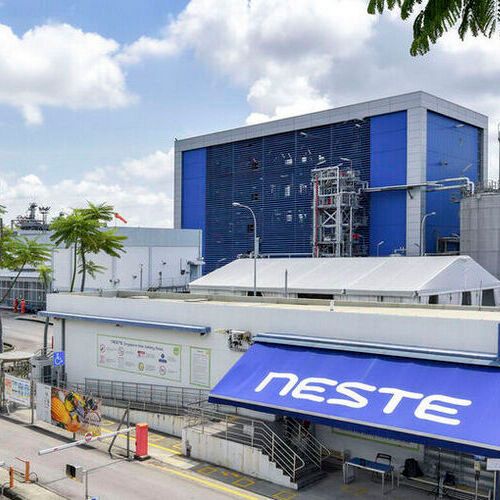
With the growing demand for biofuels across the globe, the oil refining firm Neste is in the process of expanding and digitalizing its existing biofuel refinery in Singapore in order to enhance process safety and asset integrity in the plant; improve energy efficiency, operational reliability and predictability in maintenance regime; and foster closer collaborations among other production sites.
Neste plans to invest 1.5 billion euros to expand its existing biofuel refinery in Singapore.
(Source: Neste)
In the backdrop of rising pressure from international initiatives such as the United Nations Climate Change Conference (Cop26), the global industrial sector is committing to sustainable goals. Some of them have already started work on achieving these goals which aim at reducing greenhouse gas (GHG) emissions in their processes, overall operations, as well as the products produced at the facility which are then supplied to end-user markets such as the transport industry.
For instance, the Finland-based company Neste which develops sustainable solutions for the transport and aviation sectors, dedicatedly produces biofuels to reduce GHG emissions. The transport industry is one sector that emits a significant amount of carbon dioxide (CO2) emissions and one which needs to be decarbonized urgently. Industry leaders believe that biofuels are one of the most viable solutions to this problem and therefore, the global demand for biofuels is expected to grow significantly.
In terms of numbers, the global biofuels market size is predicted to surpass around 201.21 billion dollars by 2030, from a value of 120.60 billion dollars in 2020, growing at a CAGR of 8.3 % from 2021 to 2030, states strategic market insights firm Precedence Research.
Neste Invests 1.5 Billion Euros for Biofuel Refinery Expansion
Given the growing market for biofuels and to help its customers reduce their GHG emissions by 20 million tons annually by 2030, Neste plans to invest 1.5 billion euros to expand its existing biofuel refinery in Singapore. With a current production capacity of 1.3 million metric tons, the facility is producing renewable diesel and on expansion is scheduled to increase the capacity by another 1.3 million tons, including up to one million metric tons of sustainable aviation fuel (SAF).
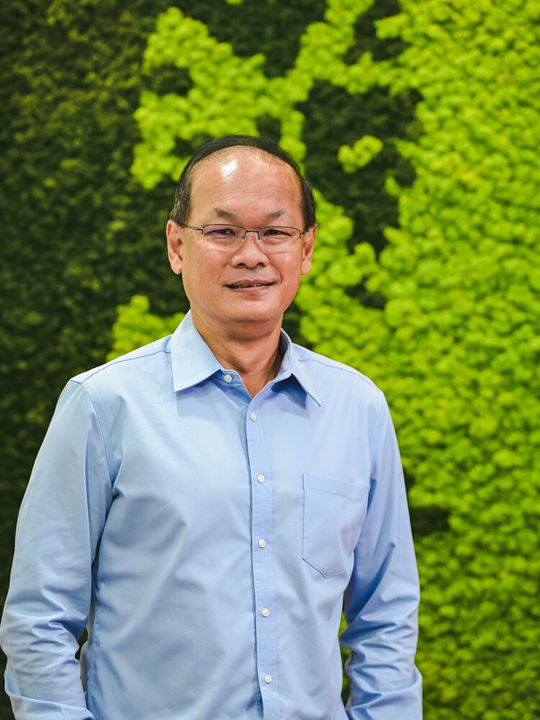
Kenneth Lim, Site Director/General Manager, Neste Singapore Refinery, Neste shares, “This expansion will enable the Singapore refinery to also produce sustainable aviation fuel and other renewable raw materials for polymers and chemicals. On top of that, we will also have additional capabilities to enhance our raw material pre-treatment, allowing us to process increasingly low-quality waste and residue raw materials.”
Kenneth Lim, Site Director/General Manager, Neste Singapore Refinery, Neste
(Source: Neste)
SAF is another biofuel that is slowly gaining attention from the aviation industry owing to its ability to decarbonize the industry. A report by market research company Research and Markets forecasts that the global sustainable aviation fuel market is expected to grow with a CAGR of 61 % during the forecast period from 2021-2027.
Digitalizing the Refinery
With ambitious plans to expand its biofuel production and at the same time enhance its plant for overall efficiency as well as meet its net zero goals, the firm collaborated with the US-based company Emerson Automation Solutions to digitalize the Singapore refinery. “We are embracing the technological advances that Industry 4.0 brings, in order to enhance process safety and asset integrity in the plant; improve energy efficiency, operational reliability and predictability in maintenance regime; and foster closer collaborations among other production sites,” adds Lim.
The company plans to develop a wireless plan network at the plant and for this purpose a digitization road map was co-developed by Emerson on potential applications on safety, reliability, and efficiency.
On the different digital technologies that will be incorporated into the facility, Julie Valentine, Director – Global Refining and Sustainability Measurement Solutions, Emerson Automation Solutions says, “For the expanded plant in Singapore, Neste will apply Emerson’s Delta V automation system and software to control production for efficient performance and to deliver on-demand remote access to data and analytics.”
Julie Valentine, Director – Global Refining and Sustainability Measurement Solutions, Emerson Automation Solutions
(Source: Emerson Automation Solutions)
She further adds that the firm’s advanced systems, software, analytics and mobility tools – part of its Plantweb digital ecosystem – establish the foundation to digitally transform operations by turning relevant data into new operational insights and actionable information that empower better decision-making.
Date: 08.12.2025
Naturally, we always handle your personal data responsibly. Any personal data we receive from you is processed in accordance with applicable data protection legislation. For detailed information please see our privacy policy.
Consent to the use of data for promotional purposes
I hereby consent to Vogel Communications Group GmbH & Co. KG, Max-Planck-Str. 7-9, 97082 Würzburg including any affiliated companies according to §§ 15 et seq. AktG (hereafter: Vogel Communications Group) using my e-mail address to send editorial newsletters. A list of all affiliated companies can be found here
Newsletter content may include all products and services of any companies mentioned above, including for example specialist journals and books, events and fairs as well as event-related products and services, print and digital media offers and services such as additional (editorial) newsletters, raffles, lead campaigns, market research both online and offline, specialist webportals and e-learning offers. In case my personal telephone number has also been collected, it may be used for offers of aforementioned products, for services of the companies mentioned above, and market research purposes.
Additionally, my consent also includes the processing of my email address and telephone number for data matching for marketing purposes with select advertising partners such as LinkedIn, Google, and Meta. For this, Vogel Communications Group may transmit said data in hashed form to the advertising partners who then use said data to determine whether I am also a member of the mentioned advertising partner portals. Vogel Communications Group uses this feature for the purposes of re-targeting (up-selling, cross-selling, and customer loyalty), generating so-called look-alike audiences for acquisition of new customers, and as basis for exclusion for on-going advertising campaigns. Further information can be found in section “data matching for marketing purposes”.
In case I access protected data on Internet portals of Vogel Communications Group including any affiliated companies according to §§ 15 et seq. AktG, I need to provide further data in order to register for the access to such content. In return for this free access to editorial content, my data may be used in accordance with this consent for the purposes stated here. This does not apply to data matching for marketing purposes.
Right of revocation
I understand that I can revoke my consent at will. My revocation does not change the lawfulness of data processing that was conducted based on my consent leading up to my revocation. One option to declare my revocation is to use the contact form found at https://contact.vogel.de. In case I no longer wish to receive certain newsletters, I have subscribed to, I can also click on the unsubscribe link included at the end of a newsletter. Further information regarding my right of revocation and the implementation of it as well as the consequences of my revocation can be found in the data protection declaration, section editorial newsletter.
The measurement, analytical, process control and software technologies will help to deliver efficient operations. Hence, the overall infrastructure will allow Neste to deploy smart wireless sensors and related analytics in a scalable manner, according to the digitization road map. Valentine mentions that the firm’s automation and software technologies can help Neste to meet its net zero goals by providing the visibility to monitor, track and abate emissions.
Overcoming Hurdles
The multiple benefits of digitalizing and establishing a wireless network at the refinery cannot be ignored but the process of developing it is surely not easy. Valentine explains, “When designing a wireless network, a wireless tool would be deployed in conjunction with data from a site survey. Upon the placement of the access points at site, that is where the actual overall performance is evaluated, there were situations when we had to adjust the locations for the access points, but we expected this when executing a wireless network in the plant.” Hence, the company was able to design the wireless network without any major issues.
In conclusion, this example showcases how industry players can digitalize their plants to ensure better decision making and to enhance process safety as well as improve energy efficiency in their plants while producing sustainable solutions such as biofuels to reduce GHG emissions. Companies can also track their emissions and undertake suitable measures to reduce it with the help of these new-age technologies, thus supporting the climate change cause.
With time, digital transformation in plants will be inevitable due to its many advantages and sadly, those who don’t adapt to this change will be left out.
* The author is a freelance editor at PROCESS Worldwide. Contact: ahlam.rais@vogel.com




:quality(80)/p7i.vogel.de/wcms/77/1c/771c3d385d46ede7ab736f3f7d63cb62/0130007313v2.jpeg "The laser perforated filter elements for Eaton’s DCF series enable retention ratings that were previously unattainable with conventional manufacturing methods. Thanks to automatic self-cleaning, they also provide uninterrupted operation with long service life and minimal maintenance requirements. (Source: Eaton )")
:quality(80)/p7i.vogel.de/wcms/0b/33/0b3359449325c4e66cffdb41fce11683/0129956557v2.jpeg "Aramco Senior Vice President of Digital & Information Technology Sami A. Al Ajmi, sitting right, and President of Microsoft Arabia Turki Badhris, sitting left, at a signing ceremony attended by Aramco Executive Vice President of Technology & Innovation Ahmad O. Al Khowaiter, standing right, and Vice Chair and President of Microsoft Brad Smith, standing left. (Source: Aramco )")
:quality(80)/p7i.vogel.de/wcms/60/25/60259e0165560492b717049a5006b5d2/0129719891v2.jpeg "Adnoc's panorama digital command center. (Source: Adnoc )")
:quality(80)/p7i.vogel.de/wcms/40/8f/408f074f8094bca2cd9bb078e79eccb0/0129580192v2.jpeg "The Anymal robot undertaking gas leak detection in the field. (Source: Anybotics)")
:quality(80)/p7i.vogel.de/wcms/fd/61/fd617d02373498db1a96ba012e4cfdcd/0130026960v2.jpeg "Reliance Industries, one of India’s largest energy companies, will be investing in the new refinery at the Port of Brownsville in Texas, USA, according to Trump’s post. (Source: Unsplash )")
:quality(80)/p7i.vogel.de/wcms/93/9f/939fb603e5c2c60e52e4e92dd1de44e2/0129972638v2.jpeg "Shintech Louisiana has recently announced a 3.4-billion-dollar investment to bolster its manufacturing capabilities in the state. (Source: Pixabay)")
:quality(80)/p7i.vogel.de/wcms/0d/22/0d221bfb0debc81ac74afafc9cc632c2/0129972549v2.jpeg "The overall package is worth 485 million euros, of which 10 million euros related to engineering activities already started will be recognized in the pre-FID phase, while the remaining part at Final Investment Decision. (Source: Pixabay)")
:quality(80)/p7i.vogel.de/wcms/1d/da/1ddaee208ed26c1ad241f3b8fb216afe/0129956568v2.jpeg "Inox Air Products has entered into a long-term partnership with TACC for the supply of nitrogen through a dedicated onsite nitrogen plant for their upcoming greenfield manufacturing facility in Dewas, Madhya Pradesh, India. (Source: Pixabay)")
:quality(80)/p7i.vogel.de/wcms/6b/3f/6b3f057c83c494e4732337d870d52b21/0130006927v2.jpeg "Lonza will realize upfront cash proceeds of 2.2 billion dollars and retain a 40 % stake in the business, with additional preferential participation in its future exit. (Source: Lonza)")
:quality(80)/p7i.vogel.de/wcms/df/cd/dfcd0c2e0eb4b554f956e0161ae08519/0129794328v1.jpeg "The plasma fractionation facility at CSL Behring, viewed from the outside. (Source: CSL Behring)")
:quality(80)/p7i.vogel.de/wcms/74/af/74af2b65341eeee13a44bc85eb759596/0129839901v2.jpeg "With around 6,000 European companies operating in India and an annual trade of 180 billion euros between the EU and India at present, the trade deal intends to double EU goods exports to India by 2032. (Source: © NazeerArt - stock.adobe.com)")
:quality(80)/p7i.vogel.de/wcms/26/12/261210e5920899e5c35c4f905d3be8bd/0129399814v2.jpeg "Powders used in DPI formulations are often highly potent and administered in very low doses. (Source: Ima)")
:quality(80)/p7i.vogel.de/wcms/a6/84/a68477d4ef879cc9cedeae332ca57c49/0129893677v2.jpeg "Siemens and Caphenia sign the partnership agreement. From left to right: Nicky Ahnert, Jürgen Giegerich, Frank Knauf (all Siemens), Dr. Mark Misselhorn, Dr. Andreas Waibel (both Caphenia) (Source: Siemens)")
:quality(80)/p7i.vogel.de/wcms/42/67/42671f576c7f8a1284b54bc8f92cce02/0129864175v2.jpeg "Honeywell’s advanced technologies and standardized design will help Verso Energy reduce capital expenses, accelerate speed to market and increase global SAF capacity. (Source: Pixabay)")
:quality(80)/p7i.vogel.de/wcms/f7/70/f770417abff565b1743068fa37d21266/0129833262v2.jpeg "Under the agreement, Air Liquide will supply the necessary oxygen for Holcim’s oxyfuel-ready clinker production line, as well as provide its innovative and proprietary Cryocap Oxy technology to enable the capture of CO₂ emissions with high efficiency. (Source: Air Liquide )")
:quality(80)/p7i.vogel.de/wcms/9f/7c/9f7cd6c9dcb679827c4c2c10f116c8b9/0129832882v2.jpeg "The extended agreement helps support World Fuel's ability to secure SAF supply and comply with regulatory requirements, including the Refuel EU Aviation Regulation and the UK SAF mandate. (Source: World Fuel Services)")
:quality(80)/p7i.vogel.de/wcms/be/e1/bee13b8d51a419b9b8f0685e2b9d47bf/0128917673v1.jpeg "The Centerwave 6000 measures pipes from 32 to 1,600 mm. (Source: Maag Group)")
:quality(80)/p7i.vogel.de/wcms/51/7a/517a4e83c5827663b4839f5ddb98f434/0128872953v1.jpeg "The Tigron in SIL version can be flexibly configured for different safety requirements. (Source: Auma)")
:quality(80)/p7i.vogel.de/wcms/d5/72/d5728578b35b72f365f5086bc1d068da/0128662441v2.jpeg "Nikkiso Clean Energy & Industrial Gases Group has announced the launch of its new multistage process pump (MSPP 210), designed to enhance safety and reduce downtime on air separation equipment. (Source: Nikkiso Clean Energy & Industrial Gases Group)")
:quality(80)/p7i.vogel.de/wcms/a9/69/a96920e47e362a9cf0b9916b7ad3d30a/0128071795v2.jpeg "Nine partners from six European countries are working on the 36-month project to determine where heat pumps can achieve the greatest efficiency gains in the food and beverage sector and to develop reproducible and market-ready solutions. (Source: EU project Exquisheat)")
:quality(80)/p7i.vogel.de/wcms/c4/54/c454c7d8fd344c0ffc2ef5db00ad632f/0129728429v2.jpeg "Liqtech International recently launched its Qureflow Max produced-water treatment system. (Source: Liqtech International )")
:quality(80)/p7i.vogel.de/wcms/18/47/1847e6b1456c96f04bd511bbd21f3779/0129039479v2.jpeg "Jacobs has been selected as the progressive design-build contractor for upgrades to the San José–Santa Clara Regional Wastewater Facility in California. (Source: Jacobs)")
:quality(80)/p7i.vogel.de/wcms/3b/fd/3bfda4bbcb1a60004c330bde3b705109/0128453300v2.jpeg "In the Jiangsu province, Suez will partner with Lianyun Economic Development Zone to jointly study the investment in, build, and operate a new industrial water treatment plant. (Source: Pixabay)")
:quality(80)/p7i.vogel.de/wcms/cc/19/cc19aa5fec6f6f2b25dbd9516efed735/0128077403v2.jpeg "Distinguished guests at the ceremony included senior government officials, Japan’s Ambassador, and local business leaders. (Source: Toray)")
:quality(80)/p7i.vogel.de/wcms/6b/cc/6bcc3d26e1c7c74d90a10bc3ca296ae1/0128362351v2.jpeg "A look into Bayer's new tablet production, Solida 1, during construction: The robots and lift columns for material handling are being installed. (Source: Bayer)")
:quality(80)/p7i.vogel.de/wcms/24/c8/24c84ab6b1bcd24468a87820a07a85aa/0128194707v2.jpeg "Ajax Equipment has supplied Binding Solutions with a feed system comprising buffer hopper, screw feeder and agitated screw feeder for a pilot plant handling iron ore and additives. (Source: Ajax Equipment )")
:quality(80)/p7i.vogel.de/wcms/1d/3e/1d3e2788eb37c1e974f36337c8d33cb5/0128191010v2.jpeg "Ajax Equipment has supplied IGI Systems with a stainless-steel conical hopper with gas purge capability, as part of a prototype Sublimation System for a low-pressure chemical vapour deposition application. (Source: Ajax Equipment)")
:quality(80)/p7i.vogel.de/wcms/19/76/1976928d7d0a2ed7c1eeba7ade8552c8/0126365603v1.jpeg "Detail of Valvedesign: It has an aktiv amd passive part (Bild: Italvacuum)")
:quality(80)/p7i.vogel.de/wcms/51/38/51382cd4287d6372a6f9648c25de55bf/0130024254v2.jpeg "On March 4, 2026, Qatar Energy declared force majeure to its buyers due to military attacks on its operating facilities in Ras Laffan Industrial City and Mesaieed Industrial City in Qatar. (Source: © Fahad - stock.adobe.com)")
:quality(80)/p7i.vogel.de/wcms/1d/33/1d33cbe43461f24175e18aa01a426840/0129971592v2.jpeg "KBR has been awarded a major contract by Basra Oil Company to provide Integrated Field Management Services for the Majnoon Oil Field in Iraq. (Source: KBR)")
:quality(80)/p7i.vogel.de/wcms/e6/e1/e6e126a90647ced00f744126dd914531/0129956040v2.jpeg "BASF’s dispersion-production building at the Durban site, South Africa — exterior view showing the facility and surrounding site infrastructure. (Source: BASF )")
:quality(80)/p7i.vogel.de/wcms/f8/29/f8298429c1638b949a6f76346f6709c7/0118701710v2.jpeg "Bosch Industrial Heat will be presenting sustainable steam and heat solutions for global industrial use at the Achema trade fair in Frankfurt, Germany. (Source: Bosch Industriekessel)")
:quality(80)/p7i.vogel.de/wcms/07/24/07242664ab2b1c7841c9d9d0a127670c/0116045959.jpeg "A look inside the GEA machine room. (Bild: Magnavale)")
:quality(80)/p7i.vogel.de/wcms/c9/79/c979a20b32395ddfa93fe7ead90578a0/0108386061.jpeg "Production residues, lime, salt and suspended solids quickly clog the pipes. (Source:©Tanakorn - stock.adobe.com)")
:quality(80)/p7i.vogel.de/wcms/9e/5c/9e5c92d942ed046a27562d6e3d730c92/0103483548.jpeg "It is almost ten metres high and extends over three floors: the world's first multiple dividing wall column is located in the new technical centre at the University of Ulm. (Bild: Eberhardt, kiz Universität Ulm)")
:quality(80)/p7i.vogel.de/wcms/1f/60/1f608b1d7b9fe0abab30d68341eaefc7/0130031208v2.jpeg "Adnoc suspends operations at the Ruwais oil refinery following a fire triggered by a drone attack on March 10, 2026. (Source: Adnoc)")
:quality(80)/p7i.vogel.de/wcms/a8/4e/a84e8039a90a5cf4751d01ebcf6ba1a9/0127510172v2.jpeg "After six years, Achemasia, the international trade fair and innovation forum for sustainable chemical production, has returned with renewed vigor, bringing together global expertise, Chinese innovation, and a shared commitment to a greener industrial future—according to the organizers of the fair. (Source:PROCESS China)")
:quality(80)/p7i.vogel.de/wcms/17/c7/17c703445f134eb3d7ecc7918dda2762/0124596096v2.jpeg "Achema Middle East will launch in Saudi Arabia in 2026. (Bild: Dechema/ Hannibal)")
:quality(80)/p7i.vogel.de/wcms/2a/2c/2a2cffc07f51019065387cd63241b5ce/0119463370v1.jpeg "The Injecta 36 fills and seals RTU (Ready-to-Use) syringes at high speed. The image shows the robotic arm. (Source: IMA)")
:quality(80)/p7i.vogel.de/wcms/b1/7e/b17ea8c62ccafad1d1fb072d6199bbd6/0118578446.jpeg "“Star in the ring”: Vegapuls 6X radar level sensors are the solution of choice for Renolit for many applications on the way to the perfect plastic product. (Source: © MR Design - stock.adobe.com; Vega)")
:quality(80)/p7i.vogel.de/wcms/01/9b/019b59f3ef2e852ec5058ba18f323af2/0129651573v2.jpeg "With its strategic ‘Vision 2030’ plan announced in 2016, Saudi Arabia aims to diversify its economy by investing in sectors such as tourism, technology and industry, reduce its reliance on oil, and transform the country into a cleaner and more sustainable economy. (Source: © Peter Hermes Furian - stock.adobe.com)")
:fill(fff,0)/p7i.vogel.de/companies/61/f9/61f9439b7cbe4/logo-edl.png "logo-edl (EDL Anlagenbau Gesellschaft mbH)")
:fill(fff,0)/images.vogel.de/vogelonline/companyimg/103000/103097/65.jpg "Pörner Gruppe mit Rand.jpg ()")
:fill(fff,0)/images.vogel.de/vogelonline/companyimg/101800/101879/65.jpg "ITV_LogoOrizzontale-per-il-web.jpg ()")

:quality(80)/p7i.vogel.de/wcms/2b/c0/2bc0fe10a2aa78fde8ce230d928d50f8/0124181823v2.jpeg "Neste has started producing SAF at its renewable products refinery in Rotterdam, the Netherlands. (Source: Neste)")
:quality(80)/p7i.vogel.de/wcms/73/20/73208a936a8065f26bf8ebfe4f5e9480/0127162461v2.jpeg "At a glance: Plant engineering projects from across the globe. (Source: © suphamit - stock.adobe.com)")