Electronics manufacturing is in the throes of a quiet transformation built around specialty 3D printers and advanced materials working together to create fully functional electronic parts.
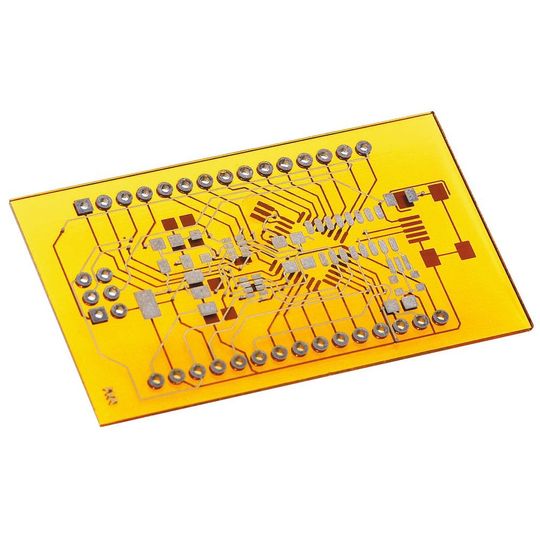
Fig. 1: 3D printed 2-layer Arduino Board printed on the DragonFly 2020 3D Printer
(Source: Nano Dimension)
Breakthroughs in additive manufacturing today include using specialty 3D printers to build functional electronics. It’s somewhat of a novelty, but its promise has wide-reaching implications for some of the world's largest industries. Advances already being made around these specialty 3D printers will lead us to new capabilities and radically altered design and production processes. Developments on the horizon include faster printing speeds, higher resolution printing, and increased printing sizes and capabilities for incorporating multiple types of materials – including the ability to use multiple materials while printing a single object.
The DragonFly 2020 Pro 3D Printer is designed for the production of professional multilayer printed circuit boards (PCBs) and 3D circuitry. It brings together a very precise inkjet deposition printer, high performance silver nano-particle conductive and dielectric inks as well as dedicated software. Professional prototypes can be printed within hours, reducing PCB design and test cycles from month or weeks to days.
DragonFly 2020Pro is able to print the full range of PCBs, including interconnections, through-holes and complex geometries – without etching, drilling, plating or waste.
To build a complete multilayer PCB from the bottom up, each pass of the print head deposits dielectric and conductive material at the exact location specified by the design files – layer by layer.
Vias are built up, drop by drop, either as blind, open or complete vias. Plated and non-plated through-holes are created by repeatedly leaving a space at a particular XY coordinate, thereby building surrounding materials up around a void. The dielectric ends up as a solid piece within which the conductive traces are positioned at the precise YZ coordinates specified.
Nano Dimension's Switch software enables the editing and preparation of multilayer 3D files, and allows the adjustment of numerous parameters such as layer order and thickness. It supports most typical field formats used in the electronics industry, including Gerber and Excellon files.
Innovation Within an Innovative Field
Already, 3D printers for printed electronics are being deployed for printed circuit board (PCB) prototyping and development. With the printers, manufacturers and designers can protect their intellectual property and enjoy faster times to market because they no longer need to use outside outsourcing facilities; product development costs are lowered because designs can be modified and reprinted on the fly; and design flexibility and quality are vastly improved.
Gallery
While 3D printing has been around for several decades, using specialty additive manufacturing printers to make fully functional electronics circuits is new. Just like other forms of 3D printing, this latest advancement brings new levels of efficiency and productivity to support increased innovation and generate new revenue streams.
The breakthrough in creating electronics with 3D printers comes from Nano Dimension, the Israel-based creators of the DragonFly 2020 3D Printer and the recently introduced DragonFly 2020 3D Pro Printer. Nano Dimension conceptualized building a high-resolution inkjet 3D printer that uses the company’s advanced nano materials and inks to build – layer-by-layer – completely functional electronic objects such as PCB prototypes, circuits and antennas.
With Nano Dimension’s DragonFly, designers and engineers can print and test designs, make changes as needed, and reprint. Some users might also employ the DragonFly for printing small-batch electronics or developing parts that can’t be made in any other way, because the printers allow for innovative designs that can fit virtually any design footprint. The DragonFly addresses the growing demand for electronic devices that require increasingly sophisticated features and rely on multilayer printed circuit boards.
Now, the chemical industry also wants a piece of the action: 70 % of companies expect 3D printing will change their business profoundly, a recent Bitkom survey found out.
Demand for circuitry, including PCBs – which are at the heart of every electronic device – covers a diverse range of industries, including consumer electronics, medical devices, defense, aerospace, automotive, IoT and telecom. These sectors can all benefit from Nano Dimension’s 3D printed electronics solutions for rapid prototyping and short-run manufacturing.
A Market That Needs Change
The DragonFly addresses the primary challenges in electronic design: transforming concepts into market-ready products quickly, and without breaking the bank – while meeting the need for smaller, faster, lighter, thinner and more functional products.
Today, the PCB development process is extremely time-consuming, particularly for companies that are developing high layer count boards or odd-sized boards that fit a unique device footprint. The more complex the PCB, the longer the design, prototyping and testing process takes. Prototyping – and often re-prototyping – offsite is also expensive. The process involves producing the PCB prototype through traditional subtractive manufacturing methods, often relying on overseas vendors who require several weeks of lead time. The original equipment provider contracts with the prototype manufacturer, and then waits for the board to be produced, shipped, and clear customs before it is delivered for testing.
Anyone who works in electronics knows that the demands for speedy development can result in a rushed, sub-par product. Because of time constraints, even after a PCB prototype has been produced and tested, problems might be discovered that require design updates. That means refabricating the PCB, increasing the lead time and cost for each product. Even a very minor mistake in design or circuitry can lead to product recalls and other quality problems that can seriously hurt a product’s sales and a vendor’s reputation.
Date: 08.12.2025
Naturally, we always handle your personal data responsibly. Any personal data we receive from you is processed in accordance with applicable data protection legislation. For detailed information please see our privacy policy.
Consent to the use of data for promotional purposes
I hereby consent to Vogel Communications Group GmbH & Co. KG, Max-Planck-Str. 7-9, 97082 Würzburg including any affiliated companies according to §§ 15 et seq. AktG (hereafter: Vogel Communications Group) using my e-mail address to send editorial newsletters. A list of all affiliated companies can be found here
Newsletter content may include all products and services of any companies mentioned above, including for example specialist journals and books, events and fairs as well as event-related products and services, print and digital media offers and services such as additional (editorial) newsletters, raffles, lead campaigns, market research both online and offline, specialist webportals and e-learning offers. In case my personal telephone number has also been collected, it may be used for offers of aforementioned products, for services of the companies mentioned above, and market research purposes.
Additionally, my consent also includes the processing of my email address and telephone number for data matching for marketing purposes with select advertising partners such as LinkedIn, Google, and Meta. For this, Vogel Communications Group may transmit said data in hashed form to the advertising partners who then use said data to determine whether I am also a member of the mentioned advertising partner portals. Vogel Communications Group uses this feature for the purposes of re-targeting (up-selling, cross-selling, and customer loyalty), generating so-called look-alike audiences for acquisition of new customers, and as basis for exclusion for on-going advertising campaigns. Further information can be found in section “data matching for marketing purposes”.
In case I access protected data on Internet portals of Vogel Communications Group including any affiliated companies according to §§ 15 et seq. AktG, I need to provide further data in order to register for the access to such content. In return for this free access to editorial content, my data may be used in accordance with this consent for the purposes stated here. This does not apply to data matching for marketing purposes.
Right of revocation
I understand that I can revoke my consent at will. My revocation does not change the lawfulness of data processing that was conducted based on my consent leading up to my revocation. One option to declare my revocation is to use the contact form found at https://contact.vogel.de. In case I no longer wish to receive certain newsletters, I have subscribed to, I can also click on the unsubscribe link included at the end of a newsletter. Further information regarding my right of revocation and the implementation of it as well as the consequences of my revocation can be found in the data protection declaration, section editorial newsletter.
When companies print their own PCB prototypes in-house in just hours, design and test cycles can drop from months or weeks to days or even hours. By using an advanced printing platform such as Nano Dimension’s DragonFly, designers and engineers can design sections of the circuit in parallel – and they can test, fail fast and iterate on the fly to accelerate creativity and improve quality. These advances translate into lowered development time and costs, added innovation and far fewer development and IP risks and re-prototyping.
The DragonFly also can produce non-planar 3D objects that contain 3D-circuitry, moving 3D printing beyond traditional electronics formats of multilayer flat circuits to electrically functional structures for a wide range of development, custom and small-scale production projects. The application possibilities are endless including flexible, rigid PCBs and embedded components (fig. 3).
3D Printing Electronics: the Applications Are Endless
Clearly, a printer that can generate complex electronics through additive manufacturing is highly advanced. The DragonFly works with tested technology and advanced nano inks. The printer itself works on X, Y and Z axes – for width, depth and height. It uses an extremely precise deposition system with advanced inkjet print heads that have hundreds of small nozzles that allows for the simultaneous 3D-printing of silver nanoparticle conductive inks (metals) and insulating inks (polymers). Objects printed on the DragonFly need no post processing.
The printer runs with Nano Dimension’s proprietary software, called Switch, which converts complex 2D renderings and schematics such as Gerber files into layer-by-layer print instructions for 3D printing. The software allows for printing of a full range of PCBs, even those including interconnections, through-holes and complex geometries – with no etching, drilling, plating or waste. Using the DragonFly, it is possible to print polymers and metals together to meet functional goals such as meeting demands for compact and stronger electronics. Critical to the process is the use of advanced, conductive silver nanoparticle inks. Nano-particle sizes and distributions are requirements for printing highly conductive PCB traces. Non-conductive (or dielectric) inks complement the silver inks to create insulating barriers that support the optimal performance of the electronically conductive inks. Importantly, these dielectric inks are a key enabler of the printing of the entire PCB structure.
The DragonFly 2020 3D Printer deposits AgCite silver conductive ink and the FR-4 like dielectric material to build a complete circuit or multilayer PCB layer by layer. Starting from a sacrificial substrate, the materials are built up from the underside conductive traces to finish with the topside conductors or pads. This process builds vias, drop by drop, either as blind, open or complete vias, with conductive traces that are about 100 microns (3.94 mil) in width.
The additive process means that vias are easily printed as filled vias. The DragonFly makes several passes to create the width and thickness required for one line. It is an integrated process that cures and sinters the inks during the build to achieve the desired shape, conductivity and adhesion. Plated and non-plated through-holes are created by repeatedly leaving a space at a particular XY coordinate, thereby building surrounding materials up around a void. The dielectric ends up as a solid piece, within which the conductive traces are positioned at the precise XYZ coordinates specified. Upon completion, a multilayer PCB 3D printed on a DragonFly 2020 3D Printer can be soldered using low temperature solder.
The unique construction of the DragonFly means there are no limits to the layers count that can be printed on the DragonFly, beyond the mechanical height of the printer’s Z axis. The speed of the print depends on the number of layers, the complexity and conductivity of the circuits as well as the board size. For example, a large complex, 10-layer board can be 3D printed overnight.
Printing Fully Functional Objects in One Print Job?
In the near term, we expect the market will see additional high-quality materials that will enable the final 3D printed parts to have additional functionality. Advances will continue in combining materials such as metals and polymers or metals and ceramics in the same print job, so users can build electrical capabilities directly into mechanical objects.
For all of this, the holy grail is the day when 3D printers can generate – in one print job – fully functional objects that incorporate many modules, like embedded electronics and sensors. Thanks to Nano Dimension, that dream of disrupting the future of how electronics are made may not be all that far off.




:quality(80)/p7i.vogel.de/wcms/97/ff/97ffc5d8894eaaabac89fa86c88b5c04/0130558883v2.jpeg "BASF and Sevnce Robotics have signed a MOU to advance smart transformation of the chemical industry. (Source: BASF )")
:quality(80)/p7i.vogel.de/wcms/54/f4/54f4b4e2a86b203e0dfd84221602bdb5/0130367283v2.jpeg "Anybotics' Anymal robot combines depth cameras, LiDAR, thermal imaging, acoustic sensors, and gas detectors into a single inspection round. (Source: Anybotics)")
:quality(80)/p7i.vogel.de/wcms/e9/64/e964996410967c124c2cf01a8623068e/0130285341v1.jpeg "Geht unter die Oberfläche: Die Offshore-Ölförderung erfordert hochenergetische Pumpen – doch diese sind im Wesentlichen eine Black Box. Bisher zumindest. (Source: Kistler Group)")
:quality(80)/p7i.vogel.de/wcms/54/ae/54aece5dff672ce1651470eecd9f2589/0130138090v2.jpeg "The new Ionchromatograph “Nexera IC“ (Source: Shimadzu)")
:quality(80)/p7i.vogel.de/wcms/f6/42/f64217521bd12e4cf6dc3396bb7691be/0130557840v2.jpeg "The commissioning marks a significant milestone in strengthening India’s advanced manufacturing ecosystem, especially for the sunrise sectors like semiconductor and solar cell manufacturing. (Source: Pixabay)")
:quality(80)/p7i.vogel.de/wcms/7e/1f/7e1f3996f5b0ceaa2cd63e8f42c46e8b/0130491098v2.jpeg "At a glance: Plant engineering projects from across the globe. (Source: © Andi - stock.adobe.com)")
:quality(80)/p7i.vogel.de/wcms/1e/15/1e15b0e20cf5ede83e0749260dfda733/0130465044v2.jpeg "Energy X has recently announced the successful commissioning of a first-of-its-kind, U.S.-based lithium production facility at Project Lonestar, marking a major milestone toward commercial-scale domestic lithium production. (Source: Pixabay)")
:quality(80)/p7i.vogel.de/wcms/36/36/36369e6e59d4c660893cc04a4d257cfc/0130465035v2.jpeg "Wacker has successfully completed the second expansion phase at its production site in Panagarh, India. In addition to silicone rubber, the site now also operates a production complex (left) for silicone emulsions. (Source: Wacker)")
:quality(80)/p7i.vogel.de/wcms/3b/86/3b86c49f99e3638ed9f42c6cc7732950/0130491017v2.jpeg "Turning liquids into powders enables storage at room-temperature. (Source: Glatt)")
:quality(80)/p7i.vogel.de/wcms/84/78/8478fcee08360056b226cb8d5032d50c/0130489771v2.jpeg "Saharsh Davuluri will assume the role of Chief Executive Officer and Managing Director, effective immediately, as the company moves into its next stage of CDMO growth. (Source: Neuland Laboratories)")
:quality(80)/p7i.vogel.de/wcms/ab/c2/abc21b4affa79498712fe95c16991828/0130489183v2.jpeg "Prange Pharma recently announced the successful completion of the acquisition of the MSD Animal Health manufacturing site in Aprilia, Italy. (Source: Pixabay)")
:quality(80)/p7i.vogel.de/wcms/41/c9/41c96e0244221ad38daa73bdd8231477/0130477173v2.jpeg "The „ORBITA‑L“-system is designed for filling and capping non‑injectable liquid products. (Source: Marchesini)")
:quality(80)/p7i.vogel.de/wcms/99/11/9911a2263913a34bd9b8275de32ce657/0130557422v2.jpeg "This allocation will enable Total Energies to cover around 60 % of the electricity needs of its refining and chemicals sites in France, estimated at 400 MW. (Source: Pixabay)")
:quality(80)/p7i.vogel.de/wcms/4c/05/4c05e753794ab348734a3b8f64091196/0130549487v2.jpeg "The new unit will replace the existing Battery #3A at the Pohang site. (Source: Thyssenkrupp Uhde)")
:quality(80)/p7i.vogel.de/wcms/ce/a0/cea0130be5857132356c9915ff9b35b7/0130548375v2.jpeg "Phelan efuels will deploy Honeywell UOP’s Fischer Tropsch Unicracking process technology, which uses FT liquids and waxes made from CO2 to create eSAF that complies with aviation industry standards. (Source: Pixabay)")
:quality(80)/p7i.vogel.de/wcms/80/ae/80ae5dcaef8b78989454ddba5eb2f6a7/0130485693v2.jpeg "The Global Impact Coalition has recently announced that Siemens has joined the coalition as a member. (Source: Siemens)")
:quality(80)/p7i.vogel.de/wcms/1c/39/1c39433f4bb4de2e5e6c5311c3236d09/0130110254v2.jpeg "The new pumps of the Omega type series have been designed for handling water and fluids with a low solids content efficiently. (Source: KSB)")
:quality(80)/p7i.vogel.de/wcms/be/e1/bee13b8d51a419b9b8f0685e2b9d47bf/0128917673v1.jpeg "The Centerwave 6000 measures pipes from 32 to 1,600 mm. (Source: Maag Group)")
:quality(80)/p7i.vogel.de/wcms/51/7a/517a4e83c5827663b4839f5ddb98f434/0128872953v1.jpeg "The Tigron in SIL version can be flexibly configured for different safety requirements. (Source: Auma)")
:quality(80)/p7i.vogel.de/wcms/60/ef/60efa975d1dd123c1afbfb6ccc060461/0130263955v2.jpeg "Aquaclean (Source: Oko-tech)")
:quality(80)/p7i.vogel.de/wcms/07/62/0762f20b1821ee2724c97989374d6397/0130257651v2.jpeg "Oleksandr Sadchykov in front of the water treatment unit (Source: Grundfos)")
:quality(80)/p7i.vogel.de/wcms/98/98/989863664c7b65e87caf74a08239d487/0130167217v2.jpeg "Keller 26KyX Level Probe (Source: © Keller Pressure)")
:quality(80)/p7i.vogel.de/wcms/64/4e/644e22b71e8d35a63f051f781eb13886/0130163451v2.jpeg "Vega will present level and pressure measurement technology for the water industry at Ifat 2026. (Source: Vega)")
:quality(80)/p7i.vogel.de/wcms/79/31/7931cc94924b4c2ebc7087e9cec2f801/0130490720v2.jpeg "The new Pulsar Model R80 solids antenna delivers improved measurement capability through its high-frequency signal, narrow beam angle, and advanced configuration software. (Source: Ametek )")
:quality(80)/p7i.vogel.de/wcms/6b/cc/6bcc3d26e1c7c74d90a10bc3ca296ae1/0128362351v2.jpeg "A look into Bayer's new tablet production, Solida 1, during construction: The robots and lift columns for material handling are being installed. (Source: Bayer)")
:quality(80)/p7i.vogel.de/wcms/24/c8/24c84ab6b1bcd24468a87820a07a85aa/0128194707v2.jpeg "Ajax Equipment has supplied Binding Solutions with a feed system comprising buffer hopper, screw feeder and agitated screw feeder for a pilot plant handling iron ore and additives. (Source: Ajax Equipment )")
:quality(80)/p7i.vogel.de/wcms/1d/3e/1d3e2788eb37c1e974f36337c8d33cb5/0128191010v2.jpeg "Ajax Equipment has supplied IGI Systems with a stainless-steel conical hopper with gas purge capability, as part of a prototype Sublimation System for a low-pressure chemical vapour deposition application. (Source: Ajax Equipment)")
:quality(80)/p7i.vogel.de/wcms/8e/f9/8ef9bb7b46f133439b299c2ea2f4bac4/0130548981v2.jpeg "The Rockville site comprises two cGMP manufacturing plants with a combined 60,000-liter drug substance capacity, supporting both clinical and commercial biologics production across multiple manufacturing scales. (Source: Samsung Biologics)")
:quality(80)/p7i.vogel.de/wcms/0f/11/0f11c60729f25db0ca0d301d9d4ca0ee/0130485703v2.jpeg "The signatories of the Joint Biomethane Declaration, leading European industry associations, are calling to scale biomethane as an important building block of the EU’s reindustrialization, energy security, and transition to climate neutrality. (Source: Pixabay)")
:quality(80)/p7i.vogel.de/wcms/0c/a1/0ca135e0486c9af90a0552aea85de88c/0130439525v2.jpeg "Qatar Energy expects the damage to its Ras Laffan Industrial City caused by missile strikes, which occurred on Wednesday 18 March 2026, and in the early hours of Thursday 19 March 2026, to cost about 20 billion dollars a year in lost revenue. (Source: Pixabay)")
:quality(80)/p7i.vogel.de/wcms/f8/29/f8298429c1638b949a6f76346f6709c7/0118701710v2.jpeg "Bosch Industrial Heat will be presenting sustainable steam and heat solutions for global industrial use at the Achema trade fair in Frankfurt, Germany. (Source: Bosch Industriekessel)")
:quality(80)/p7i.vogel.de/wcms/07/24/07242664ab2b1c7841c9d9d0a127670c/0116045959.jpeg "A look inside the GEA machine room. (Bild: Magnavale)")
:quality(80)/p7i.vogel.de/wcms/c9/79/c979a20b32395ddfa93fe7ead90578a0/0108386061.jpeg "Production residues, lime, salt and suspended solids quickly clog the pipes. (Source:©Tanakorn - stock.adobe.com)")
:quality(80)/p7i.vogel.de/wcms/9e/5c/9e5c92d942ed046a27562d6e3d730c92/0103483548.jpeg "It is almost ten metres high and extends over three floors: the world's first multiple dividing wall column is located in the new technical centre at the University of Ulm. (Bild: Eberhardt, kiz Universität Ulm)")
:quality(80)/p7i.vogel.de/wcms/20/36/20366ffa57a841882fd165e4dc885c09/0130491929v2.jpeg "With the US and Israel jointly firing the first shot on Iran, the world is now witnessing major cascading effects—from soaring global oil and gas prices, to industry leaders declaring force majeure, and even predictions that the war could trigger a global economic recession! (Source: © FOYSAL - stock.adobe.com)")
:quality(80)/p7i.vogel.de/wcms/d0/f7/d0f7d560dfce37c8371442d5b6120e3c/0130182478v1.jpeg "The Gelsenkirchen refinery primarily manufactures fuels for vehicles and aircraft, processing roughly 12 million tonnes of crude oil per year. (Source: BP)")
:quality(80)/p7i.vogel.de/wcms/7c/77/7c77e24fdcc9e1511e8e711eff161e28/0130175489v2.jpeg "The milestone confirms the fast pace of development of Eni’s deep water gas projects offshore East Kalimantan. (Source: Unsplash )")
:quality(80)/p7i.vogel.de/wcms/b3/2f/b32fb9f5aa54e9cb6c92e4b6c8665263/0130163018v2.jpeg "The decision to take emergency collective action was made following an extraordinary meeting of IEA Member governments, convened by the IEA Executive Director to assess market conditions amid the conflict in the Middle East and consider the options to address supply disruptions. (Source: © Sashkin - stock.adobe.com)")
:quality(80)/p7i.vogel.de/wcms/a8/4e/a84e8039a90a5cf4751d01ebcf6ba1a9/0127510172v2.jpeg "After six years, Achemasia, the international trade fair and innovation forum for sustainable chemical production, has returned with renewed vigor, bringing together global expertise, Chinese innovation, and a shared commitment to a greener industrial future—according to the organizers of the fair. (Source:PROCESS China)")
:quality(80)/p7i.vogel.de/wcms/17/c7/17c703445f134eb3d7ecc7918dda2762/0124596096v2.jpeg "Achema Middle East will launch in Saudi Arabia in 2026. (Bild: Dechema/ Hannibal)")
:quality(80)/p7i.vogel.de/wcms/2a/2c/2a2cffc07f51019065387cd63241b5ce/0119463370v1.jpeg "The Injecta 36 fills and seals RTU (Ready-to-Use) syringes at high speed. The image shows the robotic arm. (Source: IMA)")
:quality(80)/p7i.vogel.de/wcms/b1/7e/b17ea8c62ccafad1d1fb072d6199bbd6/0118578446.jpeg "“Star in the ring”: Vegapuls 6X radar level sensors are the solution of choice for Renolit for many applications on the way to the perfect plastic product. (Source: © MR Design - stock.adobe.com; Vega)")
:quality(80)/p7i.vogel.de/wcms/09/e3/09e378194b496921d2a267a6752322eb/0130333473v2.jpeg "Under the terms of the contract, KBR will provide contract management, project management and supporting technical services throughout the EPC phases of the project. (Source: KBR)")
:quality(80)/p7i.vogel.de/wcms/77/9d/779db435e7f9d79bafe16101008a9cfa/0130263548v2.jpeg "The Kingdom of Saudi Arabia, the UAE and Turkey are three core countries in the region that are actively incorporating the plastics circular economy with the assistance of the chemical recycling technology. (Source: © Anastasiia - stock.adobe.com)")
:fill(fff,0)/images.vogel.de/vogelonline/companyimg/107800/107832/65.jpg "logoDueperthal.jpg ()")
:fill(fff,0)/images.vogel.de/vogelonline/companyimg/2000/2093/65.jpg "Glatt_Logo_ND4c-RGB (5x3cm).jpg ()")
![Additive manufacturing scores big: The strengths and weaknesses of 3D printing in chemistry and pharmaceuticals. (© lucadp - stock.adobe.com; Eike Hübner [M] Alban)](https://cdn1.vogel.de/SYgxMQRU83y105XKeb9lJyi1I_E=/320x180/smart/filters:format(jpg):quality(80)/images.vogel.de/vogelonline/bdb/1451300/1451302/original.jpg "Additive manufacturing scores big: The strengths and weaknesses of 3D printing in chemistry and pharmaceuticals. (© lucadp - stock.adobe.com; Eike Hübner [M] Alban)")
:quality(80)/p7i.vogel.de/wcms/71/a9/71a9e53d858f84fa107de8e8b33c6901/0102083878.jpeg "Fig. 1: 3D printed 2-layer Arduino Board printed on the DragonFly 2020 3D Printer(Source: Nano Dimension)")
:quality(80)/p7i.vogel.de/wcms/9d/4c/9d4cb5257bfa7ddc54d5896963beebb5/66776929.jpeg "Fig 3: 3D printed coil embedded in object(Source: Nano Dimension)")
:quality(80)/p7i.vogel.de/wcms/70/99/709968f5c563ae4cac9816cf9349eb32/66776917.jpeg "Fig. 2: DragonFly 2020 Pro 3D Printer is able to simultaneous 3D-print silver nanoparticle conductive inks (metals) and insulating inks (polymers).(Source: Nano Dimension)")
:quality(80):fill(efefef,0)/images.vogel.de/vogelonline/bdb/1241800/1241897/original.jpg "Whitepaper Cover: Rösberg Engineering")
:quality(80)/p7i.vogel.de/wcms/fc/1f/fc1fde9a3d818c400df8bf0aee6a573e/0126386197v2.jpeg "Asahi Kasei will increase Pimel photosensitive polyimide production capacity at its Fuji City facility in Shizuoka Prefecture, Japan. (Source: Asahi Kasei)")
:quality(80)/p7i.vogel.de/wcms/c1/ed/c1ed89188a8fdb351601e36204d4c38b/0125059797v2.jpeg "Smart Echo Supervision reduces and often eliminates the need for intervention against false echoes. However, when intervention is required, it can be performed quickly and easily through a graphical user interface, simply by right clicking an echo to suppress it. (Source: Emerson)")