PROCESS Worldwide brings to you the ‘Top 10 plant engineering projects of October 2025’ from all over the world. Right from BASF reaching two major milestones at its Zhanjiang Verbund site in China to Yokogawa deploying multiple autonomous control AI agents at a Saudi gas plant, find out all the projects making headlines here.
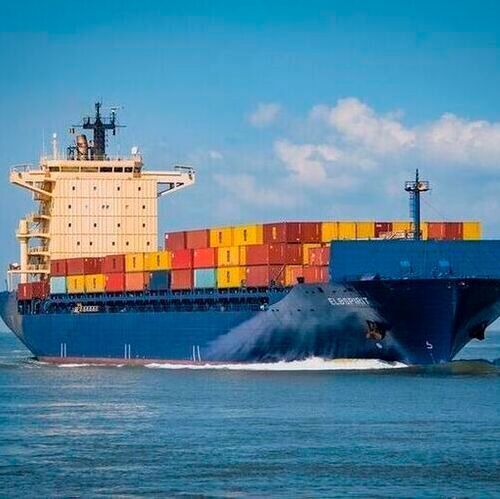
Topsoe Technology Chosen for New Blue Methanol Plant in USA
Today, methanol is primarily used within the chemical industry, but growing demand is coming from the shipping industry as it looks to lower emissions.
(Source: Pixabay)
October 07 – Topsoe has been selected as technology provider by Sandpiper Chemicals, for their new blue methanol plant in Texas City, Texas. Topsoe will license its Syncor technology that – when combined with carbon capture & storage (CCS) – enables the production of blue methanol. The project, when operational will produce 3,000 metric tons per day (MTPD) of blue methanol.
Demand for methanol is increasing, the IEA estimates that methanol demand is expected to grow to 120-150 million tons by 2030. Today, methanol is primarily used within the chemical industry, but growing demand is coming from the shipping industry as it looks to lower emissions.
Henrik Rasmussen, Managing Director of Topsoe Americas, said: “We believe that blue methanol is a proven way for industries, like maritime shipping to rapidly lower their emissions. Syncor technology in combination with carbon capture and storage is a cost-effective route to produce blue methanol at industrial scale. Topsoe’s collaboration with Energy Allied International has been going strong for almost a decade, and we’re thrilled that they have chosen our technology for their first blue methanol project.”
Rod J. Ragan, CEO Sandpiper Chemicals, added: “Our team has worked with Topsoe on several global projects. Given our history of successful collaboration, Sandpiper is pleased to have Topsoe as our technology provider once again. With its advantaged location on the U.S. Gulf Coast, our project is well positioned to meet the needs of our customers, both domestically and internationally”.
Blue methanol is a critical component of the energy transition. Blue Methanol incorporates carbon capture technology to enable CO₂ sequestration, making it a lower carbon intensity alternative to grey methanol. Due to the chemical structure of the methanol molecule, the remaining CO₂ will eventually be emitted if used as a fuel.
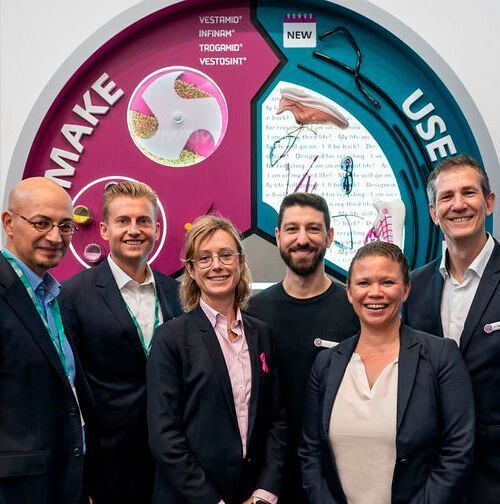
Schneider Electric, Evonik to Automate Thermoplastic Processing Plant in Germany
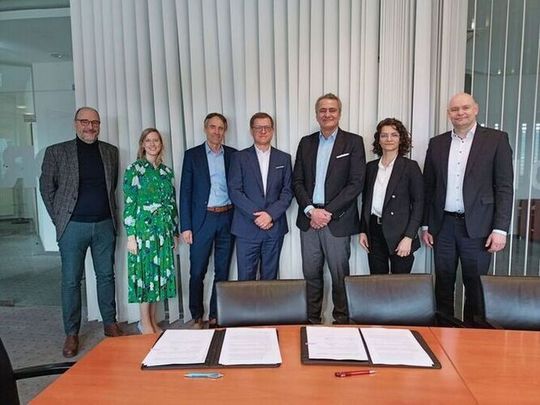
From left to right: Gianluca Merola (Schneider Electric), Hendrik Rasch (Evonik), Delphine Largeteau (Schneider Electric), Alper Aksit (Evonik), Jessica Bethune (Schneider Electric) and Patrick Glöckner (Evonik) at the K 2025.
(Source: Evonik)
October 10 – Schneider Electric and Evonik have partnered to automate a thermoplastic processing plant at Evonik’s Essen Goldschmidt site in Germany. This initiative was officially launched during the world's number one trade fair for the plastics and rubber industry, K in Düsseldorf, from October 8-15, 2025. The collaboration aims to enhance the efficiency of mechanical plastic recycling processes and improve the quality of recyclates, underscoring both companies' commitment to circular economy principles.
Evonik brings expertise in high-performance additives and a strong focus on circularity, while Schneider Electric contributes cutting-edge solutions in process automation and digitalization. Together, the two companies are well-positioned to drive innovation and transformation in recycling and thermoplastic processing.
“Digitalization is essential for advancing circularity. Our collaboration with Evonik demonstrates how automation can enhance recycling efficiency and quality, showcasing the power of teamwork in building a sustainable future,” said Jessica Bethune, VP Industrial Automation Dach at Schneider Electric.
“Our partnership with Schneider Electric highlights how digitalization and chemistry enable circularity in plastics. Combining Schneider Electric’s process automation with our innovative additives takes thermoplastic processing to the next level, aligning it with the principles of a circular economy,” said Patrick Glöckner, Head of the recently announced Next Markets Program at Evonik.
The first step of the new partnership is the digitization of an existing pilot plant at Evonik’s Goldschmidt site. This facility will be equipped with an open automation approach, enabling the collection and contextualization of data from various machines into a central access point. This data-driven strategy aims to analyze performance, reduce or eliminate manual work, and streamline separate calculation steps.
The long-term objectives of the collaboration include leveraging laboratory experiences, improving the positioning of existing solutions supported by quantified data, decreasing time to market for new additive developments, and enhancing scalability from pilot plants to commercial units.
The scope of this cooperation extends beyond plastic recycling; it encompasses the overall processing of plastics with a strong emphasis on circularity.
Date: 08.12.2025
Naturally, we always handle your personal data responsibly. Any personal data we receive from you is processed in accordance with applicable data protection legislation. For detailed information please see our privacy policy.
Consent to the use of data for promotional purposes
I hereby consent to Vogel Communications Group GmbH & Co. KG, Max-Planck-Str. 7-9, 97082 Würzburg including any affiliated companies according to §§ 15 et seq. AktG (hereafter: Vogel Communications Group) using my e-mail address to send editorial newsletters. A list of all affiliated companies can be found here
Newsletter content may include all products and services of any companies mentioned above, including for example specialist journals and books, events and fairs as well as event-related products and services, print and digital media offers and services such as additional (editorial) newsletters, raffles, lead campaigns, market research both online and offline, specialist webportals and e-learning offers. In case my personal telephone number has also been collected, it may be used for offers of aforementioned products, for services of the companies mentioned above, and market research purposes.
Additionally, my consent also includes the processing of my email address and telephone number for data matching for marketing purposes with select advertising partners such as LinkedIn, Google, and Meta. For this, Vogel Communications Group may transmit said data in hashed form to the advertising partners who then use said data to determine whether I am also a member of the mentioned advertising partner portals. Vogel Communications Group uses this feature for the purposes of re-targeting (up-selling, cross-selling, and customer loyalty), generating so-called look-alike audiences for acquisition of new customers, and as basis for exclusion for on-going advertising campaigns. Further information can be found in section “data matching for marketing purposes”.
In case I access protected data on Internet portals of Vogel Communications Group including any affiliated companies according to §§ 15 et seq. AktG, I need to provide further data in order to register for the access to such content. In return for this free access to editorial content, my data may be used in accordance with this consent for the purposes stated here. This does not apply to data matching for marketing purposes.
Right of revocation
I understand that I can revoke my consent at will. My revocation does not change the lawfulness of data processing that was conducted based on my consent leading up to my revocation. One option to declare my revocation is to use the contact form found at https://contact.vogel.de. In case I no longer wish to receive certain newsletters, I have subscribed to, I can also click on the unsubscribe link included at the end of a newsletter. Further information regarding my right of revocation and the implementation of it as well as the consequences of my revocation can be found in the data protection declaration, section editorial newsletter.
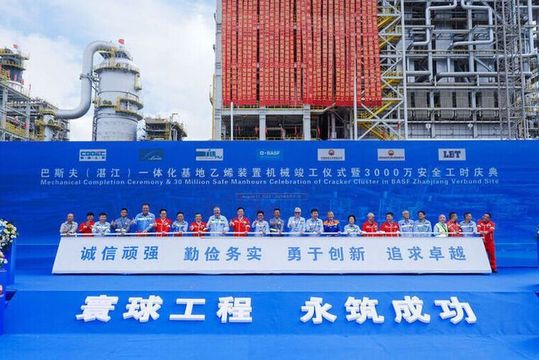
BASF Reaches Two Major Milestones at Zhanjiang Verbund Site in China
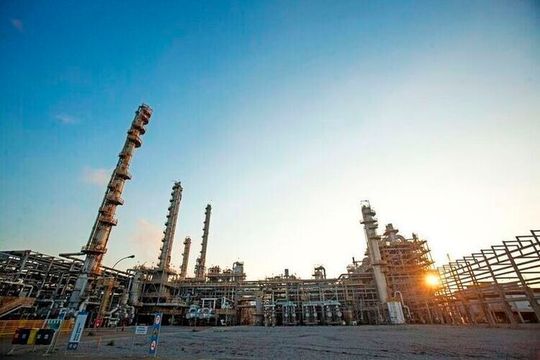
BASF has successfully achieved mechanical completion of the steam cracker at the Zhanjiang Verbund site.
(Source: BASF)
October 17 – BASF has reached two significant milestones at its Zhanjiang Verbund site: the successful start-up of the butyl acrylate (BA) plant and the mechanical completion of the steam cracker and all integrated petrochemical plants. These achievements mark steady progress toward the site’s full operational start-up by the end of 2025, reinforcing BASF’s commitment to meeting the growing demand for high-quality petrochemical products across the Asia Pacific region.
The butyl acrylate plant commenced operations on August 11, 2025, ahead of schedule and with an exemplary safety record. The first shipment was successfully delivered via tanker trucks on August 17, 2025, marking the plant's inaugural customer delivery. With an annual capacity of approximately 400,000 metric tons, the plant further solidifies BASF’s leadership in the acrylics market, supplying essential materials to customers in the adhesives, industrial coatings, and architectural coatings industries.
Moreover, BASF has achieved mechanical completion of the steam cracker and all downstream petrochemical plants, including ethylene oxide, oxo alcohols, syngas, and high-density polyethylene, at the Zhanjiang Verbund site, transitioning the project from construction to operational readiness. This milestone ensures all systems are installed, connected, and tested, paving the way for commissioning and start-up activities scheduled for the end of 2025.
“The progress at the Zhanjiang Verbund site demonstrates BASF’s commitment to strengthening our presence in the Asia Pacific region and creating long-term value for our customers,” said Bir Darbar Mehta, Senior Vice President of Petrochemicals Asia Pacific at BASF. “This world-class integrated site will significantly enhance our production capabilities and supply chain resilience, enabling us to offer a broad portfolio of high-quality, reliable, and competitive solutions. With the site on track for start-up by end of 2025, we are well-positioned to fulfill the growing market needs and support our customers’ success with greater efficiency and shorter lead times.”
“The remarkable achievements at our Zhanjiang Verbund site reflect the close collaboration between BASF, our partners, and local authorities. Their strong support has been crucial for us to achieve these key milestones safely, efficiently, and ahead of schedule. With this solid foundation, we are poised to drive sustainable growth and deliver high-quality made in Zhanjiang products to customers in both local and global markets,” said Marko Murtonen, Senior Vice President, New Verbund Site China, BASF & General Manager, BASF Integrated Site (Guangdong) Co.
Strategically located close to customers, the Zhanjiang Verbund site is a cornerstone of BASF’s strategy to drive growth in the petrochemicals industry across Asia Pacific. As a fully backward integrated complex, the site includes a steam cracker with an annual capacity of one million metric tons of ethylene, along with downstream petrochemical plants. These facilities are scheduled to begin operations by the end of 2025, providing a wide range of petrochemical products to cater to the diverse needs of industries across the region.
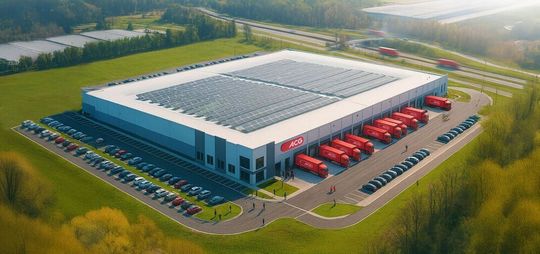
ACG to Expand Hard-Shell Capsule Manufacturing in the USA
ACG has recently announced a 200 million dollar phased investment to establish its first empty-capsule manufacturing operations in the United States.
(Source: ACG Group)
October 22 – ACG has recently announced a 200 million dollar phased investment to establish its first empty-capsule manufacturing operations in the United States. The initial 100 million dollars will fund a state-of-the-art hard-shell capsule facility in Atlanta, Georgia, with a second phase of 100 million dollars planned to expand capacity and capabilities in the region. The investment is expected to create more than 200 jobs, with operations targeted to begin in early 2027.
"ACG has served North America for over 25 years. This facility strengthens our ties with customers across the region—bringing us closer to them, enabling faster lead times, higher-quality service, and a more resilient, de-risked supply chain. Just as importantly, it lets us respond more quickly and co-develop new innovations through tighter R&D partnerships. It's been a long time coming, and we're glad to say it's here," said Karan Singh, Managing Director, ACG.
ACG will establish dedicated facilities to manufacture gelatin and vegetarian (HPMC) hard-shell capsules, designed and operated to the highest global standards of quality, safety, and regulatory compliance. The program advances ACG's ‘Make it Better’ commitment and complements the company's U.S. ecosystem spanning capsules, barrier packaging materials, processing and encapsulation machinery, visual inspection, and traceability solutions—supported by nationwide sales and service.
"Atlanta is the right location to execute at scale," said Selwyn Noronha, CEO, ACG Capsules. "Georgia and the City of Atlanta offer a pro-business environment, a strong talent pipeline, world-class connectivity, and reliable infrastructure. Combined with ACG's recent facility builds in Aurangabad (HPMC), Thailand (gelatin), and expansions in Brazil, Croatia and India, we have the operating discipline to begin production quickly and deliver reliable supply for North American customers."
ACG has operated in the United States for more than 25 years, with North American headquarters in Piscataway, N.J., manufacturing liquid fill capsules in Chadds Ford, Pa., with several warehouses across the United States, and sales and service teams nationwide.
BASF’s Gas Treatment Technology Selected for Carbon Capture Project
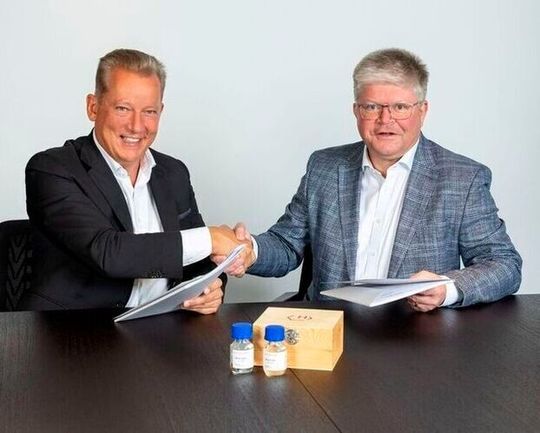
Signing the license agreement.
(Source: BASF)
October 24 – BASF and Andritz Group have recently signed a license agreement for the use of BASF’s proprietary gas treatment technology, OASE blue, in a carbon capture project planned to be implemented in the city of Aarhus, Denmark. The project aims to capture approximately 435,000 tons of CO2 annually from the flue gases of a waste-to-energy plant for sequestration; the city of Aarhus has set itself the goal of becoming CO2-neutral by 2030. Andritz, the selected supplier for the carbon capture plant, is currently conducting pre-engineering. The project’s implementation is contingent upon the customer receiving funding from the Danish CCS fund.
As a supplier of complete carbon capture plants, Andritz selected the proven OASE blue technology based on BASF’s extensive track record and deep chemical expertise. This expertise is needed because of the increasing focus on emission limits for post-combustion carbon capture units, where evolving regulations and complex flue gas compositions pose significant challenges.
“We are excited to partner with BASF on this important carbon capture project in Aarhus. This collaboration reflects our commitment to providing innovative carbon capture solutions tailored to customers’ needs. By combining our plant engineering know-how with BASF’s chemical expertise, we are well-positioned to support sustainability in waste management,” said Klaus Bärnthaler, Vice President at Andritz Clean Air Technologies.
“From the very beginning, our collaboration with Andritz has been marked by a strong partnership between engineering and chemical expertise. Together, we identified effective solutions to address the project’s complex emission challenges. This project underscores the strength of our continued engagement in the waste-to-energy sector, highlights the versatility of OASE blue, and reinforces our commitment to delivering sustainable gas treatment solutions,” added Vasilios Galanos, Senior Vice President Europe, Intermediates division, BASF.
Braskem to Expand Ethylene, Polyethylene Production at Brazil Facility
The project marks another step in the company's strategy for industrial transformation and competitiveness and is part of its Transformation Program.
(Source: Braskem)
October 28 – Braskem has recently announced that its Board of Directors has approved an estimated investment of R$ 4.2 billion to increase the capacity of its petrochemical complex in Rio de Janeiro by 220,000 tons of ethylene per year, along with equivalent volumes of polyethylene. The initial phase of basic engineering, with a budget of R$ 233 million, had already been approved in February of this year.
The project marks another step in the company's strategy for industrial transformation and competitiveness and is part of its Transformation Program. Scheduled for completion by the end of 2028, the project is subject to securing additional financing beyond the resources already approved under the Reiq Investments - Special Regime for the Chemical Industry - for the years 2025 and 2026. This strategy is part of ongoing analyses and discussions regarding the ideal capital structure for the company.
"Despite the current challenging global scenario, we must ensure that Braskem remains competitive in the new global petrochemical landscape, securing its survival and long-term sustainability. The investment in the Rio de Janeiro petrochemical complex demonstrates our confidence in Brazil's potential and Braskem's commitment to contributing to a sustainable reindustrialization of the sector, driven by innovation and value creation," says Stefan Lepecki, Vice President of South America Business at Braskem.
To enable the project, the Board also approved the procurement of additional volumes of ethane through a long-term supply agreement with Petrobras, which is currently in the final stages of negotiation. This measure ensures supply security and operational competitiveness, strengthening the strategic partnership between the two companies.
The project aims to increase the use of gas in Braskem's feedstock matrix, reducing costs and emissions, and making the company's industrial park more modern, sustainable, and competitive. "We are taking an important step in Braskem's energy transition and in the transformation of the chemical industry in Brazil. This is an investment focused on the future-with efficiency, sustainability, and value generation at its core," concludes the executive.
Topsoe Technology Chosen for Forestal’s E-Methanol Plant in Spain
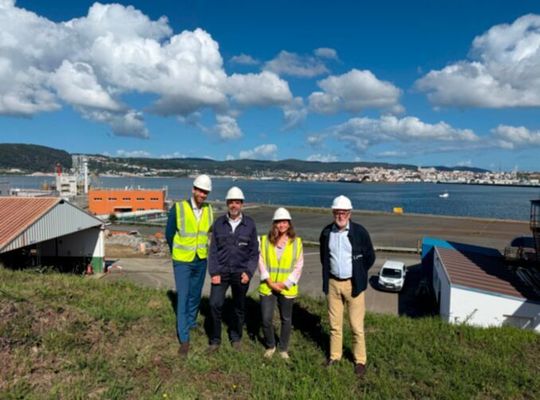
Forestal here represented by CFO Alberto López Pampín (second from left) and Topsoe by CCO Power-to-X, Sundus Cordelia Ramli (second from right).
(Source: Topsoe)
October 29 – Topsoe has signed an offtake agreement to provide its state-of-the-art Solid Oxide Electrolyzer Cell (SOEC) technology for Forestal’s Triskelion e-methanol plant in Galicia, Spain. The SOEC’s will be delivered from Topsoe’s manufacturing facility in Herning, Denmark, which is nearing the final stage of readiness for industrial-scale production.
The agreement, which includes a 10-year service warranty program, builds on Topsoe’s existing agreement with Forestal, announced in December 2024, to provide its e-methanol synthesis technology, catalysts and engineering for highly efficient e-methanol production.
By providing a single, integrated hydrogen-to-methanol pathway, the solution minimizes interface risk, improves overall efficiency by up to 30 % compared to conventional electrolysis systems and removes the need for intermediate hydrogen storage. This ensures stable operations even during renewable power fluctuations, a crucial requirement for Forestal when assessing project risks.
Sundus Cordelia Ramli, CCO Power-to-X, at Topsoe, said: “We are thrilled to announce this next step in our collaboration with Forestal and to secure an additional order for our SOEC electrolyzers. Our integrated SOEC and e-methanol technology will enable Forestal to decarbonize its chemical production value chain. This project further demonstrates how combining electrolysis and synthesis technologies in a bankable, end-to-end solution can help decarbonize energy-intensive industries. We’re proud to be providing an advanced, deeply integrated solution to one of Europe’s trailblazing e-methanol plants.”
Andrés Fuentes, General Manager at Forestal, said: “The strategic alliance with Topsoe and the incorporation of their SOEC technology places the Triskelion project in a leading competitive position within the e-methanol sector. This collaboration allows us to optimize operational efficiency, strengthening our ability to compete in the international renewable fuels market. At Forestal del Atlántico, we are committed to innovative solutions that set us apart and enable us to advance towards a more sustainable and resilient industry. Thanks to this technology, the project not only meets the highest environmental standards but also becomes a benchmark of competitiveness for Galicia and all of Europe.”
The Triskelion project is among Europe’s most advanced e-methanol projects. Owned by the Spanish shipping and chemicals company Forestal, it was a recipient of a 49 million euro grant from the European Innovation Fund in 2023. The plant has a design capacity of 156 metric tons per day (MTPD) of e-methanol.
The e-methanol produced is intended for applications in the shipping industry and in the chemicals industry for formaldehyde, glue and more.
Griesemann Gruppe Secures Contracts for Green Hydrogen Project
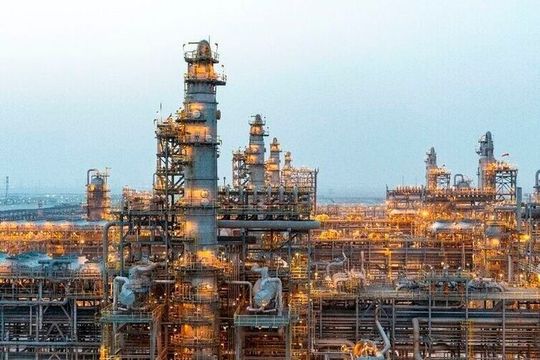
Hydrogenious LOHC Technologies has signed a contract with the Griesemann Gruppe for the Feed and the subsequent EPCM phase for its “Green Hydrogen @ Blue Danube” project.
(Source: Hydrogenious LOHC Technologies)
October 29 – Hydrogenious LOHC Technologies, German pioneer in the field of liquid organic hydrogen carriers (LOHC), has signed a contract with the Griesemann Gruppe for the Front End Engineering and Design (Feed) and the subsequent EPCM phase (Engineering, Procurement and Construction Management) for its “Green Hydrogen @ Blue Danube” project.
The scope of work includes engineering, procurement and construction services for the world’s largest LOHC release plant at the Bayernoil refinery in Vohburg, with a release capacity of up to five tons of RFNBO-certified hydrogen from LOHC per day. Corresponding to 1,800 tons of green hydrogen per year, this can replace grey hydrogen produced from natural gas and thus save up to 16,000 tons of CO2 annually. A potential expansion of the dehydrogenation plant could further contribute to a secure hydrogen supply and future decarbonization of industries in the Danube region.
The Feed phase is planned to be completed in the second half of 2026 which will represent an important milestone to reach FID (Final Investment Decision) of the “Green Hydrogen @ Blue Danube” project. Following a positive FID, the construction phase will begin on site. Start of commercial operations is planned for mid-2028.
Hydrogenious' project “Hector” demonstrates the large-scale storage of RFNBO-certified hydrogen in LOHC with a storage plant at Chempark Dormagen, North Rhine-Westphalia. The “Green Hydrogen @ Blue Danube” project will establish a corresponding release plant on the offtaker side. Combined, the two projects form the “LOHC Link” - a comprehensive and sustainable hydrogen value chain including storage in LOHC, safe transport, and the release and supply of RFNBO hydrogen to industrial offtakers.
The “Green Hydrogen @ Blue Danube” project has been notified as an “Important Project of Common European Interest” (IPCEI) by the European Commission and receives funding from the German Federal Government and the Bavarian State Government.
The plant will be operated based on Hydrogenious' innovative Liquid Organic Hydrogen Carrier (LOHC) technology, which uses the thermal oil benzyl toluene (LOHC-BT) as a carrier material to store hydrogen safely, efficiently, and flexibly. The LOHC-BT can be transported by deploying already established infrastructure for conventional mineral oil products. As part of the “LOHC Link” supply chain, hydrogen-loaded BT will be transported by truck at ambient conditions.
Following a tender process, Hydrogenious selected the Griesemann Gruppe as its engineering partner for the Feed phase, with the aim of developing the project to FID. Given the Griesemann Gruppe's project execution capabilities for complex process plants, Hydrogenious intends to entrust the Griesemann Gruppe with the EPCM services of the world’s first industrial-scale LOHC release plant.
Dr. Stefan Bürkle, Chief Operating Officer, Hydrogenious LOHC: “Launching the Feed phase, is a strong sign of scaling-up our LOHC technology to an industrial level – and will kick-start the implementation of the first commercial LOHC value chain of a material size. The storage and release plants combined will demonstrate how hydrogen can be stored, transported, and supplied safely and efficiently – decarbonizing industries and ensuring security of hydrogen supply.”
Dr. Andreas Lehmann, Chief Executive Officer, Hydrogenious LOHC : “At a time when the hydrogen economy is facing uncertainties, we need tangible projects and technology-neutral approaches. The Feed phase for “Green Hydrogen @ Blue Danube” is not only a technical milestone - it is a signal to policymakers and industry to stay on track and actively shape the ramp-up of the hydrogen economy based on innovative solutions such as LOHC.”
Endress+Hauser Inaugurates New Facility in Germany
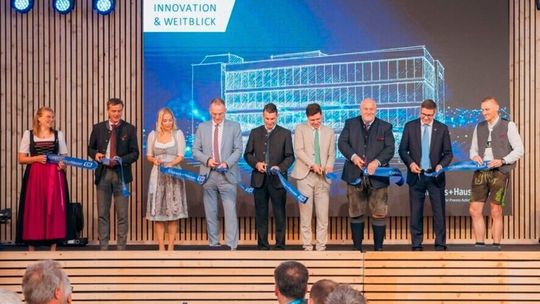
Official ribbon-cut in Nesselwang: Endress+Hauser inaugurates the new building.
(Source: Endress+Hauser)
October 29 – The Endress+Hauser Group has opened a new development and production center for temperature measurement and system products at its Nesselwang site in southern Germany’s Allgäu region. The new addition further solidifies the family-owned company’s commitment to the region and expands its global network.
Endress+Hauser Temperature+System Products has invested approximately 17 million euros in the new facility. The four-story building is operationally carbon neutral thanks to climate-friendly energy systems based on geothermal heat and solar power. This demonstrates the company’s long-term focus and represents an active contribution to responsible resource management.
The facility’s newly built offices accommodate around 150 employees. They are versatile by design, offering a mix of quiet retreat options and collaborative workspaces. For employees, they are the ideal environment for developing ideas and bringing innovations to fruition. Further space for fruitful interaction is provided by the new staff restaurant on the ground floor. The new facility as a whole has increased the site’s usable floor area by 3,500 square meters.
“This investment is part of our strategy to expand our market position as a global player and further enhance our attractiveness as an innovative employer in the Allgäu region,” said Endress+Hauser Temperature+System Products managing director Harald Hertweck.
Endress+Hauser Group CEO Dr Peter Selders offered the following comment: “As a family-owned company, we think and act long term. We strive for sustainable success. That is why we are constantly investing in our global production and sales network.”
Yokogawa Deploys Multiple Autonomous Control AI Agents at Saudi Gas Plant
Multiple autonomous control AI agents have been successfully implemented by Yokogawa at Aramco’s Fadhili Gas Plant in the Kingdom of Saudi Arabia to enhance operational efficiency.
(Source: Aramco)
October 30 – Yokogawa Electric Corporation has achieved a historic milestone in the deployment of industrial artificial intelligence (AI) solutions with Aramco. Multiple autonomous control AI*1 agents have been successfully implemented by Yokogawa at Aramco’s Fadhili Gas Plant in the Kingdom of Saudi Arabia to enhance operational efficiency.
The AI solution developed by Yokogawa uses multiple, coordinated AI agents of the Factorial Kernel Dynamic Policy Programming (FKDPP)*2 reinforcement learning-based AI algorithm to directly and autonomously control and optimize acid gas removal (AGR) operations at the Fadhili Gas Plant.
The solution was introduced in three phases, progressively optimizing various sections until autonomous control of the core process in the AGR unit was achieved. To ensure safety, Yokogawa first created a simulator of the plant to train AI agents, and then evaluated their reliability and validity. Subsequently, they were integrated with Yokogawa's Centum VP integrated production control system to leverage the safety functions of the existing plant.
Implementation is currently undergoing a detailed evaluation, but initial results from Fadhili Gas Plant demonstrate a 10 % to 15 % reduction in its amine and steam usage, around 5 % reduction in power usage, improved process stability, and a significant decrease in operator manual intervention, despite ambient condition changes.
Aramco Engineering Services Senior Vice President, Khalid Y. Al Qahtani, said: “Aramco has embarked on an ambitious plan to unlock value by deploying a wide range of industrial AI applications across our operations. The collaboration with Yokogawa is one of many initiatives that focus on improving efficiency, enhancing sustainability, and generating more value for our shareholders. It reflects how the company is harnessing advanced technology, including AI, to elevate its performance and reinforce its position as a technology leader in the energy sector. We look forward to building on this important milestone, as we explore further adoption of cutting-edge solutions that will contribute to a new era of industrial innovation.”
Kunimasa Shigeno, Director, President & CEO, and Representative Executive Officer of Yokogawa Electric, said: “We are honored that Yokogawa was entrusted by Aramco to implement such ground-breaking technology in one of its major facilities. We are very pleased that the results have already exceeded expectations. Yokogawa is advocating the transition from industrial automation to industrial autonomy (IA2IA), and this deployment proves that we are ready to lead the way towards safe and secure autonomous operations for plants in the energy sector.”
*1 Yokogawa defines autonomous control AI as AI that deduces the optimum method for control independently and has a high level of robustness enabling it to autonomously handle, to a certain extent, situations that it has not previously encountered.
*2 A reinforcement learning AI algorithm jointly developed by Yokogawa Electric and the Nara Institute of Science and Technology (Naist). FKDPP received the Prime Minister's Prize at the 2023 Japan Industrial Technology Awards (Nihon Sangyo Gijyutsu Taisho).




:quality(80)/p7i.vogel.de/wcms/54/f4/54f4b4e2a86b203e0dfd84221602bdb5/0130367283v2.jpeg "Anybotics' Anymal robot combines depth cameras, LiDAR, thermal imaging, acoustic sensors, and gas detectors into a single inspection round. (Source: Anybotics)")
:quality(80)/p7i.vogel.de/wcms/e9/64/e964996410967c124c2cf01a8623068e/0130285341v1.jpeg "Geht unter die Oberfläche: Die Offshore-Ölförderung erfordert hochenergetische Pumpen – doch diese sind im Wesentlichen eine Black Box. Bisher zumindest. (Source: Kistler Group)")
:quality(80)/p7i.vogel.de/wcms/54/ae/54aece5dff672ce1651470eecd9f2589/0130138090v2.jpeg "The new Ionchromatograph “Nexera IC“ (Source: Shimadzu)")
:quality(80)/p7i.vogel.de/wcms/49/5c/495c651fabd24a437c98bde6a3d71ecc/0130060419v2.jpeg "Enfinium has successfully piloted Wasteer’s groundbreaking visual AI technology at its Ferrybridge 2 facility in West Yorkshire and Parc Adfer facility in North Wales. (Source: Chris Parkes Photographer Ltd.)")
:quality(80)/p7i.vogel.de/wcms/64/bb/64bb4812390b6491ce0bd4fe53597086/0130333812v2.jpeg "The solar power plant produces 30 GWh per year of renewable electricity, which is self-consumed by Holcim’s industrial facilities, making it the largest floating solar power plant in Europe dedicated to self-consumption. (Source: Pixabay)")
:quality(80)/p7i.vogel.de/wcms/32/06/320643bfb6b509933012a2fd9c42504d/0130333498v2.jpeg "BASF’s X3D catalysts combine high mechanical stability with an open structure. (Source: BASF)")
:quality(80)/p7i.vogel.de/wcms/1b/ca/1bca61c846359bfd9e7998fb30b662c6/0130333482v2.jpeg "Total Energies has launched France’s first advanced plastics recycling plant, with an annual capacity of 15,000 tons, at its Grandpuits site southeast of Paris. (Source: Pixabay)")
:quality(80)/p7i.vogel.de/wcms/09/e3/09e378194b496921d2a267a6752322eb/0130333473v2.jpeg "Under the terms of the contract, KBR will provide contract management, project management and supporting technical services throughout the EPC phases of the project. (Source: KBR)")
:quality(80)/p7i.vogel.de/wcms/7a/50/7a501f6d8f87a4524dc3aaceb04eacb4/0130333829v2.jpeg "The Clear Lake facility represents Clariant's first U.S. manufacturing site dedicated to producing pharmaceutical-grade PEG excipients, marking a pivotal milestone in the company's healthcare growth strategy. (Source: Clariant)")
:quality(80)/p7i.vogel.de/wcms/26/12/261210e5920899e5c35c4f905d3be8bd/0129399814v2.jpeg "Powders used in DPI formulations are often highly potent and administered in very low doses. (Source: Ima)")
:quality(80)/p7i.vogel.de/wcms/6b/3f/6b3f057c83c494e4732337d870d52b21/0130006927v2.jpeg "Lonza will realize upfront cash proceeds of 2.2 billion dollars and retain a 40 % stake in the business, with additional preferential participation in its future exit. (Source: Lonza)")
:quality(80)/p7i.vogel.de/wcms/df/cd/dfcd0c2e0eb4b554f956e0161ae08519/0129794328v1.jpeg "The plasma fractionation facility at CSL Behring, viewed from the outside. (Source: CSL Behring)")
:quality(80)/p7i.vogel.de/wcms/df/35/df3526a6f7aba41fdd2bb2051954e0d8/0130163620v2.jpeg "The SPA, valued at more than 3 billion dollars, is one of the largest binding long-term green ammonia off-take agreements globally. (Source: Pixabay)")
:quality(80)/p7i.vogel.de/wcms/af/73/af7394d9f8900024c5ee7fca459c4eeb/0130080328v2.jpeg "Axens has signed a MOU with Airbus to strengthen their cooperation in the development and deployment of SAF, a key pillar for decarbonizing the aviation sector. (Source: Pixabay)")
:quality(80)/p7i.vogel.de/wcms/0e/19/0e19f0cf0379c3af4c2fe02629db63f1/0130079229v2.jpeg "Thyssenkrupp Uhde has been selected by CSBP to deliver its patented Envinox technology for two nitric acid plants at CSBP’s Kwinana site in Western Australia. (Source: Thyssenkrupp Uhde)")
:quality(80)/p7i.vogel.de/wcms/a6/84/a68477d4ef879cc9cedeae332ca57c49/0129893677v2.jpeg "Siemens and Caphenia sign the partnership agreement. From left to right: Nicky Ahnert, Jürgen Giegerich, Frank Knauf (all Siemens), Dr. Mark Misselhorn, Dr. Andreas Waibel (both Caphenia) (Source: Siemens)")
:quality(80)/p7i.vogel.de/wcms/1c/39/1c39433f4bb4de2e5e6c5311c3236d09/0130110254v2.jpeg "The new pumps of the Omega type series have been designed for handling water and fluids with a low solids content efficiently. (Source: KSB)")
:quality(80)/p7i.vogel.de/wcms/be/e1/bee13b8d51a419b9b8f0685e2b9d47bf/0128917673v1.jpeg "The Centerwave 6000 measures pipes from 32 to 1,600 mm. (Source: Maag Group)")
:quality(80)/p7i.vogel.de/wcms/51/7a/517a4e83c5827663b4839f5ddb98f434/0128872953v1.jpeg "The Tigron in SIL version can be flexibly configured for different safety requirements. (Source: Auma)")
:quality(80)/p7i.vogel.de/wcms/60/ef/60efa975d1dd123c1afbfb6ccc060461/0130263955v2.jpeg "Aquaclean (Source: Oko-tech)")
:quality(80)/p7i.vogel.de/wcms/07/62/0762f20b1821ee2724c97989374d6397/0130257651v2.jpeg "Oleksandr Sadchykov in front of the water treatment unit (Source: Grundfos)")
:quality(80)/p7i.vogel.de/wcms/98/98/989863664c7b65e87caf74a08239d487/0130167217v2.jpeg "Keller 26KyX Level Probe (Source: © Keller Pressure)")
:quality(80)/p7i.vogel.de/wcms/64/4e/644e22b71e8d35a63f051f781eb13886/0130163451v2.jpeg "Vega will present level and pressure measurement technology for the water industry at Ifat 2026. (Source: Vega)")
:quality(80)/p7i.vogel.de/wcms/6b/cc/6bcc3d26e1c7c74d90a10bc3ca296ae1/0128362351v2.jpeg "A look into Bayer's new tablet production, Solida 1, during construction: The robots and lift columns for material handling are being installed. (Source: Bayer)")
:quality(80)/p7i.vogel.de/wcms/24/c8/24c84ab6b1bcd24468a87820a07a85aa/0128194707v2.jpeg "Ajax Equipment has supplied Binding Solutions with a feed system comprising buffer hopper, screw feeder and agitated screw feeder for a pilot plant handling iron ore and additives. (Source: Ajax Equipment )")
:quality(80)/p7i.vogel.de/wcms/1d/3e/1d3e2788eb37c1e974f36337c8d33cb5/0128191010v2.jpeg "Ajax Equipment has supplied IGI Systems with a stainless-steel conical hopper with gas purge capability, as part of a prototype Sublimation System for a low-pressure chemical vapour deposition application. (Source: Ajax Equipment)")
:quality(80)/p7i.vogel.de/wcms/19/76/1976928d7d0a2ed7c1eeba7ade8552c8/0126365603v1.jpeg "Detail of Valvedesign: It has an aktiv amd passive part (Bild: Italvacuum)")
:quality(80)/p7i.vogel.de/wcms/0c/a1/0ca135e0486c9af90a0552aea85de88c/0130439525v2.jpeg "Qatar Energy expects the damage to its Ras Laffan Industrial City caused by missile strikes, which occurred on Wednesday 18 March 2026, and in the early hours of Thursday 19 March 2026, to cost about 20 billion dollars a year in lost revenue. (Source: Pixabay)")
:quality(80)/p7i.vogel.de/wcms/d0/f7/d0f7d560dfce37c8371442d5b6120e3c/0130182478v1.jpeg "The Gelsenkirchen refinery primarily manufactures fuels for vehicles and aircraft, processing roughly 12 million tonnes of crude oil per year. (Source: BP)")
:quality(80)/p7i.vogel.de/wcms/7f/96/7f9628e43c99564fa6dfd8e76149425d/0130165852v2.jpeg "Pure titanium recycling process for chlor-alkali electrolysis cells. (Source: Asahi Kasei)")
:quality(80)/p7i.vogel.de/wcms/f8/29/f8298429c1638b949a6f76346f6709c7/0118701710v2.jpeg "Bosch Industrial Heat will be presenting sustainable steam and heat solutions for global industrial use at the Achema trade fair in Frankfurt, Germany. (Source: Bosch Industriekessel)")
:quality(80)/p7i.vogel.de/wcms/07/24/07242664ab2b1c7841c9d9d0a127670c/0116045959.jpeg "A look inside the GEA machine room. (Bild: Magnavale)")
:quality(80)/p7i.vogel.de/wcms/c9/79/c979a20b32395ddfa93fe7ead90578a0/0108386061.jpeg "Production residues, lime, salt and suspended solids quickly clog the pipes. (Source:©Tanakorn - stock.adobe.com)")
:quality(80)/p7i.vogel.de/wcms/9e/5c/9e5c92d942ed046a27562d6e3d730c92/0103483548.jpeg "It is almost ten metres high and extends over three floors: the world's first multiple dividing wall column is located in the new technical centre at the University of Ulm. (Bild: Eberhardt, kiz Universität Ulm)")
:quality(80)/p7i.vogel.de/wcms/7c/77/7c77e24fdcc9e1511e8e711eff161e28/0130175489v2.jpeg "The milestone confirms the fast pace of development of Eni’s deep water gas projects offshore East Kalimantan. (Source: Unsplash )")
:quality(80)/p7i.vogel.de/wcms/b3/2f/b32fb9f5aa54e9cb6c92e4b6c8665263/0130163018v2.jpeg "The decision to take emergency collective action was made following an extraordinary meeting of IEA Member governments, convened by the IEA Executive Director to assess market conditions amid the conflict in the Middle East and consider the options to address supply disruptions. (Source: © Sashkin - stock.adobe.com)")
:quality(80)/p7i.vogel.de/wcms/85/d2/85d2cb02c4ae45a99454b5405b0f2489/0130149909v2.jpeg "IEA Executive Director Fatih Birol issued a statement on the meeting of G7 Energy Ministers at its IEA headquarters in Paris. (Source: © Marko - stock.adobe.com)")
:quality(80)/p7i.vogel.de/wcms/a8/4e/a84e8039a90a5cf4751d01ebcf6ba1a9/0127510172v2.jpeg "After six years, Achemasia, the international trade fair and innovation forum for sustainable chemical production, has returned with renewed vigor, bringing together global expertise, Chinese innovation, and a shared commitment to a greener industrial future—according to the organizers of the fair. (Source:PROCESS China)")
:quality(80)/p7i.vogel.de/wcms/17/c7/17c703445f134eb3d7ecc7918dda2762/0124596096v2.jpeg "Achema Middle East will launch in Saudi Arabia in 2026. (Bild: Dechema/ Hannibal)")
:quality(80)/p7i.vogel.de/wcms/2a/2c/2a2cffc07f51019065387cd63241b5ce/0119463370v1.jpeg "The Injecta 36 fills and seals RTU (Ready-to-Use) syringes at high speed. The image shows the robotic arm. (Source: IMA)")
:quality(80)/p7i.vogel.de/wcms/b1/7e/b17ea8c62ccafad1d1fb072d6199bbd6/0118578446.jpeg "“Star in the ring”: Vegapuls 6X radar level sensors are the solution of choice for Renolit for many applications on the way to the perfect plastic product. (Source: © MR Design - stock.adobe.com; Vega)")
:quality(80)/p7i.vogel.de/wcms/77/9d/779db435e7f9d79bafe16101008a9cfa/0130263548v2.jpeg "The Kingdom of Saudi Arabia, the UAE and Turkey are three core countries in the region that are actively incorporating the plastics circular economy with the assistance of the chemical recycling technology. (Source: © Anastasiia - stock.adobe.com)")
:fill(fff,0)/p7i.vogel.de/companies/61/f9/61f9439b7cbe4/logo-edl.png "logo-edl (EDL Anlagenbau Gesellschaft mbH)")
:fill(fff,0)/p7i.vogel.de/companies/66/9f/669f700d3b118/cac-2023-poslogo-idea-ahead.png "cac-2023-poslogo-idea-ahead (CAC ENGINEERING GMBH)")
:fill(fff,0)/p7i.vogel.de/companies/68/c8/68c815bc8fe81/prominent-logo-300x300.jpeg "prominent-logo-300x300 (ProMinent GmBH)")
:quality(80)/p7i.vogel.de/wcms/ff/d2/ffd2d2da1c40fe2aadf2e8d453cfb049/0127641402v2.jpeg "Hydrogenious LOHC Technologies has signed a contract with the Griesemann Gruppe for the Feed and the subsequent EPCM phase for its “Green Hydrogen @ Blue Danube” project. (Source: Hydrogenious LOHC Technologies)")
:quality(80)/p7i.vogel.de/wcms/76/fe/76fe84a799d68423b1649020bb7b66b5/0128258448v3.jpeg "At a glance: Plant engineering projects from across the globe. (Source: © EUT - stock.adobe.com)")