PROCESS Worldwide brings to you the ‘Top 10 plant engineering projects of October 2024’ from all over the world. Right from Thyssenkrupp being awarded a feed contract for one of the largest carbon capture projects in Europe to BASF securing funding for the world’s largest industrial heat pump for CO2-free steam generation, find out all the projects making headlines here.
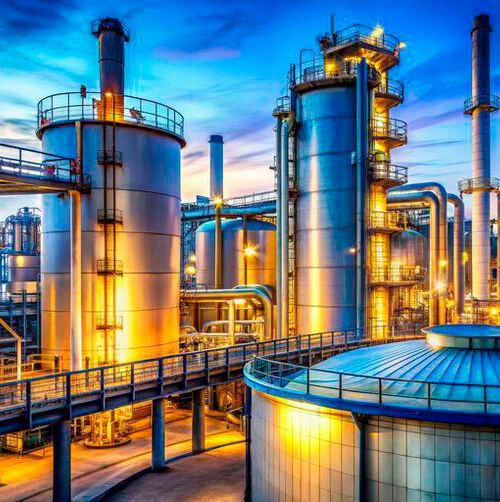
At a glance: Plant engineering projects from across the globe.
(Source: InspireStock Gallery - stock.adobe.com)
Thyssenkrupp Awarded Feed Contract for One of the Largest Carbon Capture Projects in Europe
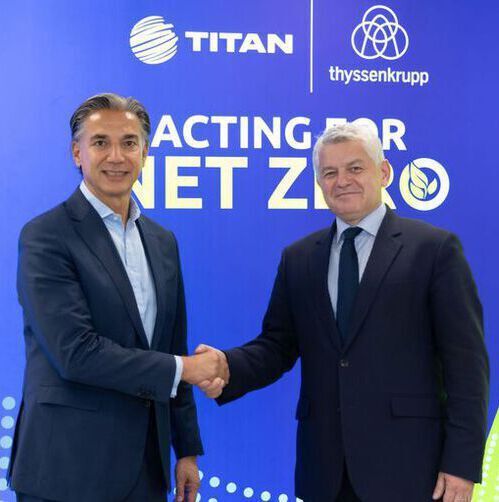
Thyssenkrupp and Titan Group recently signed a Front-End Engineering Design contract for the Carbon Capture Project Ifestos.
(Source: Thyssenkrupp)
Oct 11 – Thyssenkrupp and Titan Group recently signed in the Greek capital Athens a Front-End Engineering Design (Feed) contract for the Carbon Capture Project Ifestos. Ifestos is one of the largest carbon capture projects in Europe, enabling the production of zero-carbon cement and concrete. The signing ceremony was attended by Marcel Cobuz, Chairman of Titan Group Executive Committee; Samir Cairae, Chief Technology Officer of Titan Group; Leonidas Canellopoulos, Chief Sustainability and Innovation Officer of Titan Group; Dr. Cetin Nazikkol, Chief Strategy Officer at thyssenkrupp Decarbon Technologies and Christian Myland, CEO thyssenkrupp Polysius. The engineering contract provides for thyssenkrupp to design and equip the two kiln lines of the Kamari cement plant with oxyfuel systems for CO2 capture. This technology will enable the plant's CO2 emissions to be reduced almost completely. The plant is scheduled to go into full operation at the end of 2029.
“With the oxyfuel technology we have developed, around 1.9 million tons of CO2 can be captured annually at the Kamari plant alone”, says Dr. Cetin Nazikkol, Chief Strategy Officer at thyssenkrupp Decarbon Technologies. “This corresponds to around twelve percent of all greenhouse gas emissions from Greek industry. We are thus making a significant contribution to one of the largest CO2 capture projects in Europe.”
The captured CO2 is then liquefied and transported to a permanent storage site in the Mediterranean region. This makes thyssenkrupp’s technology the starting point for the development of important CCS value chains in southern Europe. “For our customer Titan Group, we will be using the latest CO2 separation technology. We will design and equip the first kiln line with the proven oxyfuel technology. When modernizing the second kiln line, the latest generation of this technology will be used with the pure oxyfuel system. Overall, this will enable us to capture almost 100 percent of CO2 emissions”, adds Christian Myland, CEO of thyssenkrupp.
Marcel Cobuz, Chairman of Titan Group Executive Committee, states: “This partnership further advances our efforts to achieve net-zero emissions and produce zero-carbon cement. We are committed to driving meaningful decarbonization initiatives that align with our vision for a sustainable future. Ifestos is a complex project and we are aligning multiple stake-holders across the value chain at fast pace. It is currently the largest carbon capture project in Europe and is expected to have a highly positive impact in advancing our sustainability targets and offering green cements as modern materials for infrastructure and housing.”
The basic principle of the pure oxyfuel technology developed by thyssenkrupp Polysius is to separate the CO2 produced in a kiln plant from the exhaust gases of cement factories and thus prevent it from being released into the atmosphere. To achieve this, pure oxygen is used in the combustion process instead of ambient air. In combination with downstream treatment, almost 100 percent of CO2 emissions from cement clinker production can be captured.
The separated process gas is then treated to produce high-purity CO2 and can then be used as a feedstock in the chemical industry or as a raw material in other industries, or alternatively stored.
BASF Secures Funding for World’s Largest Industrial Heat Pump for CO2-Free Steam Generation
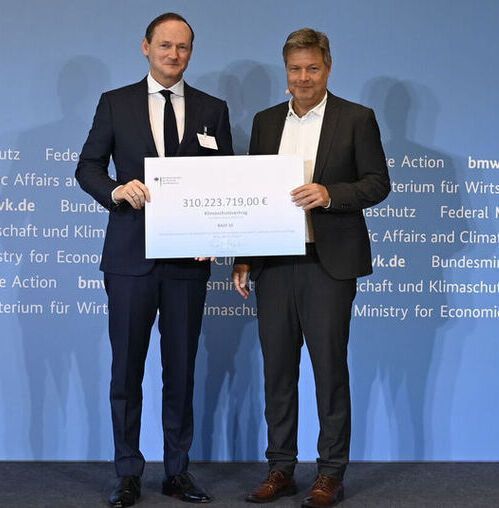
Robert Habeck, Federal Minister for Economic Affairs and Climate Action, presented the official notification of funding to Uwe Liebelt, President European Verbund Sites, BASF.
(Source: BMWK / Andreas Mertens)
Oct 16 – BASF has received funding approval from the German Federal Ministry for Economic Affairs and Climate Action for the construction of the world’s most powerful industrial heat pump. In the coming months, the company will therefore be able to start the preparatory construction work for the project at its Ludwigshafen site. The project is intended to make an important contribution to reducing CO2 emissions. Robert Habeck, Federal Minister for Economic Affairs and Climate Action, recently presented the funding approval to Uwe Liebelt, President European Verbund Sites, BASF.
“Incorporating new technologies into our chemical production processes is one of the key components of the green transformation at BASF. And our heat pump even has a unique selling point: the planned plant will be the first of its kind to be used for steam generation – there are no comparable industrial pilot projects anywhere in the world,” says Markus Kamieth, Chairman of the Board of Executive Directors of BASF. “That’s why we are thrilled that the Federal Ministry is supporting our project and thus investing in new processes that play an important role in the development of sustainable value chains in the chemical industry.”
Date: 08.12.2025
Naturally, we always handle your personal data responsibly. Any personal data we receive from you is processed in accordance with applicable data protection legislation. For detailed information please see our privacy policy.
Consent to the use of data for promotional purposes
I hereby consent to Vogel Communications Group GmbH & Co. KG, Max-Planck-Str. 7-9, 97082 Würzburg including any affiliated companies according to §§ 15 et seq. AktG (hereafter: Vogel Communications Group) using my e-mail address to send editorial newsletters. A list of all affiliated companies can be found here
Newsletter content may include all products and services of any companies mentioned above, including for example specialist journals and books, events and fairs as well as event-related products and services, print and digital media offers and services such as additional (editorial) newsletters, raffles, lead campaigns, market research both online and offline, specialist webportals and e-learning offers. In case my personal telephone number has also been collected, it may be used for offers of aforementioned products, for services of the companies mentioned above, and market research purposes.
Additionally, my consent also includes the processing of my email address and telephone number for data matching for marketing purposes with select advertising partners such as LinkedIn, Google, and Meta. For this, Vogel Communications Group may transmit said data in hashed form to the advertising partners who then use said data to determine whether I am also a member of the mentioned advertising partner portals. Vogel Communications Group uses this feature for the purposes of re-targeting (up-selling, cross-selling, and customer loyalty), generating so-called look-alike audiences for acquisition of new customers, and as basis for exclusion for on-going advertising campaigns. Further information can be found in section “data matching for marketing purposes”.
In case I access protected data on Internet portals of Vogel Communications Group including any affiliated companies according to §§ 15 et seq. AktG, I need to provide further data in order to register for the access to such content. In return for this free access to editorial content, my data may be used in accordance with this consent for the purposes stated here. This does not apply to data matching for marketing purposes.
Right of revocation
I understand that I can revoke my consent at will. My revocation does not change the lawfulness of data processing that was conducted based on my consent leading up to my revocation. One option to declare my revocation is to use the contact form found at https://contact.vogel.de. In case I no longer wish to receive certain newsletters, I have subscribed to, I can also click on the unsubscribe link included at the end of a newsletter. Further information regarding my right of revocation and the implementation of it as well as the consequences of my revocation can be found in the data protection declaration, section editorial newsletter.
The planned heat pump will have a capacity of up to 500,000 metric tons of steam per year. The waste heat, which is used as a thermal energy source, is generated during the cooling and cleaning of process gases in one of the two steam crackers at the site. Powered by electricity from renewable energy, CO2-free steam is thus generated, and most of this steam is to be used in the production of formic acid. Here, the heat pump has the potential to reduce greenhouse gas emissions by up to 98 percent. A smaller proportion of the CO2-free steam is supplied to other BASF production plants via the steam network at the site. In total, the heat pump will reduce greenhouse gas emissions at the company’s headquarters by up to 100,000 metric tons per year.
“We are sticking to our climate protection goals: BASF aims to achieve net-zero CO2 emissions by 2050. We also aim to provide our customers with the best possible support on their transformation journey. Our Ludwigshafen site plays a key role in this regard. We want to turn it into a leading, sustainable chemical production site for Europe,” says Uwe Liebelt, President European Verbund Sites, BASF. “Electrifying steam generation is a crucial step towards generating the energy we so urgently need in the chemical industry in a more sustainable way. Our integrated Production Verbund is ideally suited to implementing and scaling up new technologies, such as the planned heat pump, on an industrial scale.”
The plant is scheduled to be commissioned in 2027. The German Federal Ministry for Economic Affairs and Climate Action is contributing up to around 310 million to the project as part of the Carbon Contracts for Difference funding program.
Lyten to Develop World’s First Lithium-Sulfur Battery Gigafactory in USA
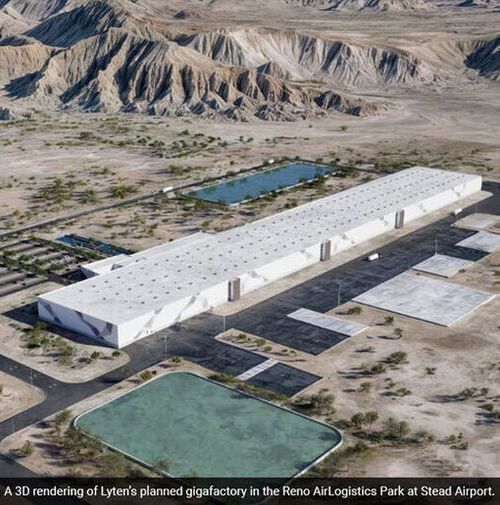
A 3D rendering of Lyten's planned gigafactory in the Reno Airlogistics Park at Stead Airport.
(Source: Lyten)
Oct 17 – Lyten, the supermaterial applications company and global leader in Lithium-Sulfur batteries, has recently announced plans to invest more than 1 billion dollars to build the world’s first Lithium-Sulfur battery gigafactory. The facility will be located near Reno, Nevada, and will have the capability to produce up to 10 GWh of batteries annually at full scale. Phase 1 of the facility is scheduled to come online in 2027.
Lyten’s factory will manufacture cathode active materials (CAM) and lithium metal anodes and complete assembly of lithium-sulfur battery cells in both cylindrical and pouch formats. Lyten has been manufacturing CAM and lithium metal anodes and assembling batteries at its semi-automated pilot facility in San Jose, California, since May 2023.
“Today is the latest milestone in Lyten’s nine-year history. Lithium-sulfur is a leap in battery technology, delivering a high energy density, light weight battery built with abundantly available local materials and 100 % U.S. manufacturing,” stated Dan Cook, Lyten Co-Founder and CEO.
Celina Mikolajczak, Lyten Chief Battery Technology Officer, added, “Nevada has been our preferred location from the start. We have continuously felt welcomed by the leaders of Reno and Washoe County. We need a talented, innovative workforce and this partnership will deliver just that.”
“Nevada is emerging as a key hub for U.S. battery manufacturing, and Lyten’s choice to build the world’s first lithium-sulfur battery gigafactory here underscores the strategic advantages our state offers to leading tech companies,” said Nevada Governor Joe Lombardo. “With our robust infrastructure and skilled workforce, Nevada is well-positioned for continued growth and job creation well into the future.”
Lyten’s Lithium-Sulfur cells feature high energy density, which will enable up to 40 % lighter weight than lithium-ion and 60 % lighter weight than lithium iron phosphate (LFP) batteries. Lyten’s cells are fully manufactured in the U.S. and utilize abundantly available local materials, eliminating the need for the mined minerals nickel, cobalt, manganese, and graphite. Lyten’s use of low cost, local materials make Lyten lithium-sulfur a lower cost battery than lithium-ion at scale.
Lyten’s lithium-sulfur batteries are entering the micromobility, space, drone, and defense markets in 2024 and 2025. Lyten already has a pipeline of hundreds of potential customers, and the Nevada gigafactory is part of Lyten’s strategy to meet this growing demand.
The planned 1.25 million square foot facility, located on a 125-acre campus in the Reno AirLogistics Park, initially will employ 200 people, growing to more than 1,000 at full capacity, including researchers, manufacturing engineers, battery engineers, technicians and operators, in addition to administrative and support personnel. Lyten has signed an MOU with industrial developer Dermody Properties to locate the facility on land owned by the Reno-Tahoe Airport Authority.
“We are proud to be part of Lyten’s clean-energy, advanced-manufacturing facility,” said Michael Dermody, Executive Chairman at Dermody Properties. “Lyten’s sustainable lithium sulfur battery technology emphasizing net-zero decarbonization, coupled with its strong community support, is a perfect complement to the vision of the Reno Air Logistics Park.”
Lyten is working closely with local universities, including the University of Nevada-Reno (UNR) and Truckee Meadows Community College, and the Nevada Native American and Tribal members to foster the training and talent that will be required to scale Lyten’s gigafactory operations.
Lyten is working with Dermody Properties and the Reno-Tahoe Airport Authority to finalize contractual terms to support breaking ground in early 2025. The Nevada factory will produce lithium-sulfur battery cells that are fully compliant with the Inflation Reduction Act, National Defense Appropriations Act (NDAA), and will not be subject to Section 301 tariffs.
Jacobs Bags Engineering Design Contract for CG Semi's New Facility in India
Jacobs has been appointed by CG Semi for engineering design of CG Semi's new Outsourced Semiconductor Assembly and Test (OSAT) facility at Sanand, Gujrat in India.
(Source: Pixabay)
Oct 21 – Jacobs has been appointed by CG Semi, a joint venture between CG, Renesas Electronics Corporation, and Stars Microelectronics (Thailand), for engineering design of CG Semi's new Outsourced Semiconductor Assembly and Test (OSAT) facility at Sanand, Gujrat in India. Serving as the engineering, procurement and construction services (EPCS) partner on the Mini Line, and engineering partner on the Main Line, Jacobs will support CG Semi in its endeavor to establish a world-class OSAT facility.
"Jacobs partnering with CG Semi on this pivotal project underscores our commitment to delivering innovative and sustainable solutions in the rapidly expanding semiconductor market in India," said Chair and CEO Bob Pragada. "With our extensive experience in the U.S., Europe and Asia, and proven capabilities, we are eager to contribute to the success of their new facility, helping to drive growth and technological advancement in the region."
The main facility is planned to be built on more than 28 acres. The OSAT facility will manufacture a variety of advanced and legacy packages for industries such as automotive, consumer, industrial and 5G.
Lummus, Braskem to Decarbonize Brazil Site with Electric Cracking Heater
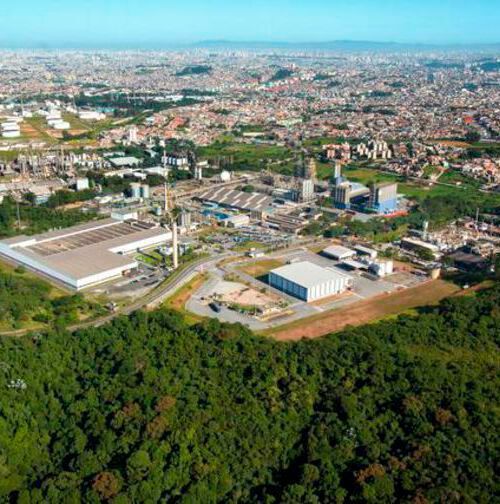
Lummus Technology and Braskem have announced that the companies will carry out joint studies related to the industrial demonstration of Lummus' SRT-etm electric cracking heater to decarbonize one of Braskem's sites in Brazil.
(Source: Braskem)
Oct 22 – Lummus Technology (Lummus) and Braskem have recently announced that the companies will carry out joint studies (the "Joint Study") related to the industrial demonstration of Lummus' SRT-etm electric cracking heater to decarbonize one of Braskem's sites in Brazil. The Joint Study will set the basis for the eventual negotiation between Lummus and Braskem of a definitive agreement that will, among other things, establish the general guidelines by which such implementation will take place.
"The selection of Lummus' SRT-e electric cracking heater as a means to decarbonize Braskem' ethylene plants are founded on a shared commitment to develop and implement profitable sustainable technologies and solutions," said Jose de Barros, Vice President and Managing Director of Ethylene, Lummus Technology. "We look forward to demonstrating our breakthrough electrification technology that drastically reduces greenhouse gas emissions."
The SRT-e electric cracking heater leverages Lummus' proven Short Residence Time (SRT) technology modified to operate using electricity and incorporates a modular unit-cell design that can be replicated for plants to accommodate any commercial capacity. The technology uses all commercially demonstrated components, plus an optimum heat flux profile leading to a longer radiant coil life and longer run length. In addition, decoking can be carried out on a unit-cell basis so maintaining a spare heater is not required.
This initiative is part of Braskem's ambitions to combat climate change, which includes reducing its greenhouse gas emissions by 15 percent by 2030 and attaining carbon neutrality by 2050.
"Our ambition is to considerably reduce CO2 emissions and increase the sustainability of our products through innovation, in-house developments, and important partnerships. Lummus' SRT-e technology will help Braskem achieve its goal of carbon neutrality by 2050, which will help increase energy efficiency at our crackers," said Antonio Queiroz, Braskem VP for Innovation, Technology and Sustainable Development. "Expanding the use of renewable electricity and renewable materials will enable Braskem to reduce its carbon footprint in the production of ethylene, propylene and other chemicals."
Gea Secures New Order for Second Denox Plant at Pilkington Italy’s Site
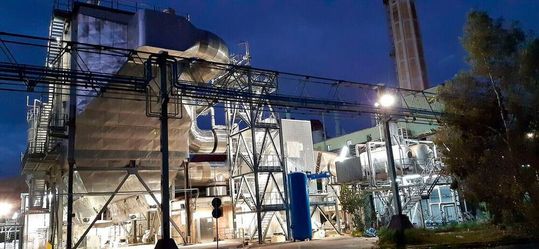
The photo shows the plant and the Denox solution that Gea has successfully developed and installed in 2020 at San Salvo.
(Source: Gea)
Oct 23 – As one of the world's largest manufacturers of glass and glazing products for the architectural, automotive and technology industries, plant engineering and system supplier Gea developed and installed a high-performance gas purification system for glass line production “Line I” at the San Salvo site of Pilkington Italy in 2020. In July 2024, a new order was placed for “Line II”.
Gea's "state-of-the-art" gas cleaning system included a Denox reactor and the associated components for storage, transport and dosing of reagent. The new Gea gas cleaning plant reduces emissions for Nox down to 500 mg/Nm, this is an extremely significant reduction in the environmentally harmful emissions that occur during energy-intensive glass production. This way, Gea solutions make a significant contribution to meeting the customer's environmental regulation compliance and sustainability targets.
Gea assisted Pilkington with the technical and process definitions, resulting in a plant that is readily equipped for a potential further energetical upgrade with a waste heat recovery system.
Metso Inaugurates Direct Reduced Iron Smelting Furnace Pilot Facility in Finland
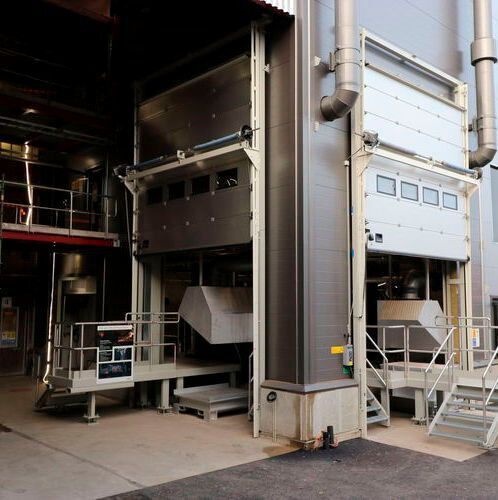
Metso has opened a state-of-the-art DRI (direct reduced iron) Smelting Furnace pilot facility in Pori, Finland.
(Source: Metso)
Oct 28 – Metso has opened a state-of-the-art DRI (direct reduced iron) Smelting Furnace pilot facility in Pori, Finland. The new facility, opened on October 25, 2024, will allow customer-specific pilot-scale testing to demonstrate the applicability and results of industrial-scale DRI smelting with Metso’s Outotec DRI Smelting Furnace technology.
“This new pilot facility is yet another example of Metso’s cutting-edge solutions that support the minerals and metals processing industry in the quest to implement new sustainable technologies. Metso’s DRI Smelting Furnace substitutes traditional blast furnaces used in iron and steel making and enables a significant reduction of emissions when combined with a direct reduction plant,” notes Jyrki Makkonen, Vice President, Smelting at Metso.
“The investment into the DRI Smelting Furnace pilot facility supports the rapidly increasing customer demand for reliable testing when planning a transition to emissions-free smelting. With the pilot facility, we can reliably test various types of customer materials for industrial scale-up. The construction of the pilot plant and equipment installations have gone extremely rapidly and smoothly. Hot commissioning of the equipment will take place soon, and then we will be ready for customer testing,” explains Mari Lindgren, Director, Smelting Research & Development at Metso.
The new high-capacity DRI Smelting Furnace, launched in 2022, is one of Metso’s breakthrough technologies and a major Planet Positive solution to support decarbonizing the iron and steel industry.
Combined with a direct reduction plant, Metso’s DRI Smelting Furnace substitutes traditional blast furnaces in the production of hot metal, making it an optimal solution for primary steel producers who are aiming for a significant reduction in their CO2 emissions with minimal changes to the rest of the steel plant. The furnace can be integrated with Metso’s hydrogen-based Circored process or other direct reduction processes.
BASF Petronas Chemicals Launches Second 2-Ehacid Production Line at Malaysian Site
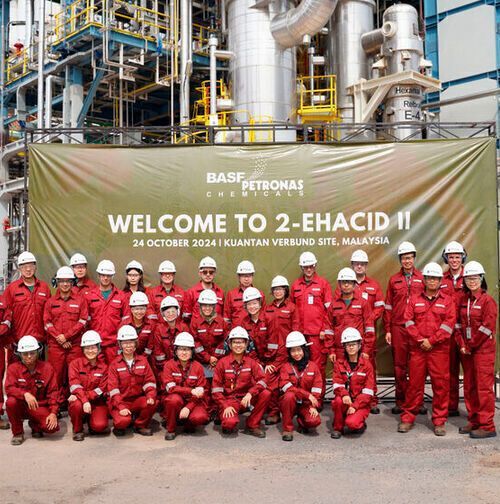
Customers join the celebration and visit the new plant at the Kuantan Verbund site.
(Source: BASF Petronas Chemicals)
Oct 29 – BASF Petronas Chemicals (BPC) celebrates the inauguration of its second 2-ethylhexanoic acid (2-Ehacid) production line at the integrated site in Kuantan, Malaysia. This expansion directly responds to the rapidly growing demand for high-quality 2-Ehacid, reaffirming BPC’s commitment to serving its valued regional customers.
“This expansion is a significant step in our commitment to profitable growth and value creation. As part of our new strategy, we are dedicated to enhancing the footprint of our core businesses in high-growth Asian markets, ensuring that we meet the increasing needs of our customers with high-quality products,” said Stephan Kothrade, member of the Board of Executive Directors and Chief Technology Officer of BASF.
“This expansion enables us to better meet the rapidly growing demand for high-quality 2-ethylhexanoic acid in the Asia Pacific region. By enhancing our capacity, we strengthen our responsiveness to customer needs and solidify our position as a leading supplier in the market. We are committed to our vision to be the preferred partner for sustainable intermediates,” said Michael Becker, Senior Vice President, Intermediates Asia Pacific, BASF.
“This successful expansion signifies the ongoing strength of our partnership and shared commitment to growth and collaboration. We are excited about the future of this plant, as the increased capacity strategically positions BPC to capitalize on growth opportunities in the region. With demand for our product continuing to rise, we are well-equipped to meet it efficiently and effectively, ensuring our customers receive top-quality products promptly,” said Mazuin Ismail, Managing Director/ Chief Executive Officer, Petronas Chemicals Group Berhad and Chairman of BPC.
“I want to express my appreciation for the strong partnership with our parent companies, Petronas and BASF. Their support has been invaluable in executing this project successfully. I also commend the project team for their excellent work, which has been instrumental in achieving this important capacity enhancement,” added Tan Aik Meam, Managing Director, BPC.
This significant occasion also highlights the organization’s ongoing dedication to customer centricity, as customers joined in celebrating the inauguration of the expansion at the Kuantan Verbund site.
Since its establishment in 2016, the 2-Ehacid plant has played an important role in supporting growth in Southeast Asia region. The groundbreaking for a second production line took place in Q1 2023. As of Q3 2024, the new production line is fully operational, doubling the annual production capacity to 60,000 metric tons, further reinforcing BPC’s dedication to driving innovation and meeting the evolving needs of customers worldwide.
Hystar Awards Feed Contract for Automated Electrolyzer Production Line
The new production line will significantly improve efficiency, increasing capacity from today’s 100 MW.
(Source: Hystar)
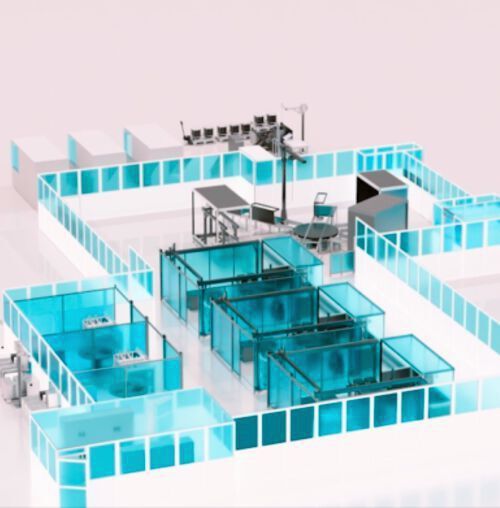
Oct 29 – Hystar has recently awarded German industrial engineering company Thyssenkrupp Automation Engineering with the Front-End Engineering Design (Feed) contract for the supply of Hystar’s automated electrolyzer manufacturing line for its GW factory in Høvik, Norway. The contract marks a significant milestone in Hystar’s expansion plans and will encompass detailed planning and design. The new production line will significantly improve efficiency, increasing capacity from today’s 100 MW.
Uniquely for a GW electrolyzer factory, the total footprint required is only 2,500 m2, which includes stack assembly, quality control, and testing. The stack components are supplied by strategic suppliers from an established, high-volume supply chain. Utilizing this existing supply chain allows Hystar to quickly scale up production capacity.
Fredrik Mowill, CEO of Hystar, comments: “Implementing our automated GW factory further strengthens Hystar’s ability to deliver competitive and efficient solutions to our customers for large-scale green hydrogen projects. We look forward to working closely with Thyssenkrupp on this state-of-the-art automated production line, as we support the global energy transition.”
Michael Menneking, CEO of Thyssenkrupp Automation Engineering, says: “We are very pleased that Hystar has placed its trust in us to cooperate in the planning of its factory. Our solutions will support Hystar’s journey to become a major player in the hydrogen industry.”
TE H2, CIP, A.P. Møller Capital Collaborate for Green Hydrogen Production
TE H2 and CIP will be responsible for the development of renewable energy production while A.P. Møller Capital will develop the port and associated infrastructure.
(Source: Pcess609 - stock.adobe.com)
Oct 30 – Under the presidency of His Majesty King Mohammed VI of Morocco and His Excellency Emmanuel Macron, President of the French Republic, the government of the Kingdom of Morocco and TE H2, along with its partners, signed a Preliminary Contract for Land Reservation for the ‘Chbika’ project.
This agreement will allow TE H2, a joint venture between Total Energies and the EREN Group, together with the two Danish companies, Copenhagen Infrastructure Partners (CIP), through its Energy Transition Fund, and A.P. Møller Capital, through its Emerging Markets Infrastructure Fund, to launch the pre-Feed studies.
Located near the Atlantic coast in the Guelmim-Oued Noun region, the ‘Chbika’ project aims to build 1 GW of onshore solar and wind capacities that will power the production of green hydrogen through the electrolysis of desalinated seawater and its transformation into 200,000 tons per year of green ammonia for the European market. This project will constitute the first phase of a development program aimed at creating a world-scale green hydrogen production hub.
TE H2 and CIP will be responsible for the development of renewable energy production (solar, wind, green hydrogen, and its derivatives), while A.P. Møller Capital will develop the port and associated infrastructure. This contract, a first in Morocco, will highlight the country’s exceptional renewable potential and contribute to the economic development of the Kingdom.
Patrick Pouyanné, Chairman and CEO of Total Energies, stated: “I would like to thank the Moroccan authorities for awarding the ‘Chbika’ project and for the trust they have shown in our subsidiary TE H2 and our partners. This agreement is part of our strategy to develop production in countries with the most competitive renewable resources, such as Morocco. Thanks to its geographical proximity and the quality of its wind and solar resources, Morocco indeed has the best assets to become a major partner for Europe in achieving the goals of the Green Deal, and Total Energies aims to contribute to this ambition.”
David Corchia, CEO of TE H2, added: “The signing of this Preliminary Contract for Land Reservation is a decisive first step for the launch of our investment program in Morocco. It demonstrates our commitment to developing green hydrogen initiatives that support the country’s energy transition, industrialization and job creation. The Kingdom has the potential to supply affordable and clean energy to Europe while serving its own decarbonized industrial development. Our consortium is strong, our overall Moroccan plan is very ambitious, and I look forward to reinforcing further our collaboration with local authorities and stakeholders and pursuing the work on this promising project.”
Philip Christiani, partner at CIP, commented: “Morocco stands at the forefront of the global energy transition equipped with all the essential fundamentals to emerge as a key partner for Europe and the world in achieving net zero targets. At Copenhagen Infrastructure Partners, we’re extremely proud to be a part of this initiative with TE H2 and A.P. Møller Capital and to be selected for the development of the first green hydrogen project under the “Offre Maroc” framework.”




:quality(80)/p7i.vogel.de/wcms/54/f4/54f4b4e2a86b203e0dfd84221602bdb5/0130367283v2.jpeg "Anybotics' Anymal robot combines depth cameras, LiDAR, thermal imaging, acoustic sensors, and gas detectors into a single inspection round. (Source: Anybotics)")
:quality(80)/p7i.vogel.de/wcms/e9/64/e964996410967c124c2cf01a8623068e/0130285341v1.jpeg "Geht unter die Oberfläche: Die Offshore-Ölförderung erfordert hochenergetische Pumpen – doch diese sind im Wesentlichen eine Black Box. Bisher zumindest. (Source: Kistler Group)")
:quality(80)/p7i.vogel.de/wcms/54/ae/54aece5dff672ce1651470eecd9f2589/0130138090v2.jpeg "The new Ionchromatograph “Nexera IC“ (Source: Shimadzu)")
:quality(80)/p7i.vogel.de/wcms/49/5c/495c651fabd24a437c98bde6a3d71ecc/0130060419v2.jpeg "Enfinium has successfully piloted Wasteer’s groundbreaking visual AI technology at its Ferrybridge 2 facility in West Yorkshire and Parc Adfer facility in North Wales. (Source: Chris Parkes Photographer Ltd.)")
:quality(80)/p7i.vogel.de/wcms/7e/1f/7e1f3996f5b0ceaa2cd63e8f42c46e8b/0130491098v2.jpeg "At a glance: Plant engineering projects from across the globe. (Source: © Andi - stock.adobe.com)")
:quality(80)/p7i.vogel.de/wcms/1e/15/1e15b0e20cf5ede83e0749260dfda733/0130465044v2.jpeg "Energy X has recently announced the successful commissioning of a first-of-its-kind, U.S.-based lithium production facility at Project Lonestar, marking a major milestone toward commercial-scale domestic lithium production. (Source: Pixabay)")
:quality(80)/p7i.vogel.de/wcms/36/36/36369e6e59d4c660893cc04a4d257cfc/0130465035v2.jpeg "Wacker has successfully completed the second expansion phase at its production site in Panagarh, India. In addition to silicone rubber, the site now also operates a production complex (left) for silicone emulsions. (Source: Wacker)")
:quality(80)/p7i.vogel.de/wcms/1f/1e/1f1eba3731af22e1d9946e2897f134da/0130464799v2.jpeg "Aerial view of the BASF production site in Zhanjiang, China. (Source: BASF )")
:quality(80)/p7i.vogel.de/wcms/3b/86/3b86c49f99e3638ed9f42c6cc7732950/0130491017v2.jpeg "Turning liquids into powders enables storage at room-temperature. (Source: Glatt)")
:quality(80)/p7i.vogel.de/wcms/84/78/8478fcee08360056b226cb8d5032d50c/0130489771v2.jpeg "Saharsh Davuluri will assume the role of Chief Executive Officer and Managing Director, effective immediately, as the company moves into its next stage of CDMO growth. (Source: Neuland Laboratories)")
:quality(80)/p7i.vogel.de/wcms/ab/c2/abc21b4affa79498712fe95c16991828/0130489183v2.jpeg "Prange Pharma recently announced the successful completion of the acquisition of the MSD Animal Health manufacturing site in Aprilia, Italy. (Source: Pixabay)")
:quality(80)/p7i.vogel.de/wcms/41/c9/41c96e0244221ad38daa73bdd8231477/0130477173v2.jpeg "The „ORBITA‑L“-system is designed for filling and capping non‑injectable liquid products. (Source: Marchesini)")
:quality(80)/p7i.vogel.de/wcms/4c/05/4c05e753794ab348734a3b8f64091196/0130549487v2.jpeg "The new unit will replace the existing Battery #3A at the Pohang site. (Source: Thyssenkrupp Uhde)")
:quality(80)/p7i.vogel.de/wcms/ce/a0/cea0130be5857132356c9915ff9b35b7/0130548375v2.jpeg "Phelan efuels will deploy Honeywell UOP’s Fischer Tropsch Unicracking process technology, which uses FT liquids and waxes made from CO2 to create eSAF that complies with aviation industry standards. (Source: Pixabay)")
:quality(80)/p7i.vogel.de/wcms/80/ae/80ae5dcaef8b78989454ddba5eb2f6a7/0130485693v2.jpeg "The Global Impact Coalition has recently announced that Siemens has joined the coalition as a member. (Source: Siemens)")
:quality(80)/p7i.vogel.de/wcms/df/35/df3526a6f7aba41fdd2bb2051954e0d8/0130163620v2.jpeg "The SPA, valued at more than 3 billion dollars, is one of the largest binding long-term green ammonia off-take agreements globally. (Source: Pixabay)")
:quality(80)/p7i.vogel.de/wcms/1c/39/1c39433f4bb4de2e5e6c5311c3236d09/0130110254v2.jpeg "The new pumps of the Omega type series have been designed for handling water and fluids with a low solids content efficiently. (Source: KSB)")
:quality(80)/p7i.vogel.de/wcms/be/e1/bee13b8d51a419b9b8f0685e2b9d47bf/0128917673v1.jpeg "The Centerwave 6000 measures pipes from 32 to 1,600 mm. (Source: Maag Group)")
:quality(80)/p7i.vogel.de/wcms/51/7a/517a4e83c5827663b4839f5ddb98f434/0128872953v1.jpeg "The Tigron in SIL version can be flexibly configured for different safety requirements. (Source: Auma)")
:quality(80)/p7i.vogel.de/wcms/60/ef/60efa975d1dd123c1afbfb6ccc060461/0130263955v2.jpeg "Aquaclean (Source: Oko-tech)")
:quality(80)/p7i.vogel.de/wcms/07/62/0762f20b1821ee2724c97989374d6397/0130257651v2.jpeg "Oleksandr Sadchykov in front of the water treatment unit (Source: Grundfos)")
:quality(80)/p7i.vogel.de/wcms/98/98/989863664c7b65e87caf74a08239d487/0130167217v2.jpeg "Keller 26KyX Level Probe (Source: © Keller Pressure)")
:quality(80)/p7i.vogel.de/wcms/64/4e/644e22b71e8d35a63f051f781eb13886/0130163451v2.jpeg "Vega will present level and pressure measurement technology for the water industry at Ifat 2026. (Source: Vega)")
:quality(80)/p7i.vogel.de/wcms/79/31/7931cc94924b4c2ebc7087e9cec2f801/0130490720v2.jpeg "The new Pulsar Model R80 solids antenna delivers improved measurement capability through its high-frequency signal, narrow beam angle, and advanced configuration software. (Source: Ametek )")
:quality(80)/p7i.vogel.de/wcms/6b/cc/6bcc3d26e1c7c74d90a10bc3ca296ae1/0128362351v2.jpeg "A look into Bayer's new tablet production, Solida 1, during construction: The robots and lift columns for material handling are being installed. (Source: Bayer)")
:quality(80)/p7i.vogel.de/wcms/24/c8/24c84ab6b1bcd24468a87820a07a85aa/0128194707v2.jpeg "Ajax Equipment has supplied Binding Solutions with a feed system comprising buffer hopper, screw feeder and agitated screw feeder for a pilot plant handling iron ore and additives. (Source: Ajax Equipment )")
:quality(80)/p7i.vogel.de/wcms/1d/3e/1d3e2788eb37c1e974f36337c8d33cb5/0128191010v2.jpeg "Ajax Equipment has supplied IGI Systems with a stainless-steel conical hopper with gas purge capability, as part of a prototype Sublimation System for a low-pressure chemical vapour deposition application. (Source: Ajax Equipment)")
:quality(80)/p7i.vogel.de/wcms/8e/f9/8ef9bb7b46f133439b299c2ea2f4bac4/0130548981v2.jpeg "The Rockville site comprises two cGMP manufacturing plants with a combined 60,000-liter drug substance capacity, supporting both clinical and commercial biologics production across multiple manufacturing scales. (Source: Samsung Biologics)")
:quality(80)/p7i.vogel.de/wcms/0f/11/0f11c60729f25db0ca0d301d9d4ca0ee/0130485703v2.jpeg "The signatories of the Joint Biomethane Declaration, leading European industry associations, are calling to scale biomethane as an important building block of the EU’s reindustrialization, energy security, and transition to climate neutrality. (Source: Pixabay)")
:quality(80)/p7i.vogel.de/wcms/0c/a1/0ca135e0486c9af90a0552aea85de88c/0130439525v2.jpeg "Qatar Energy expects the damage to its Ras Laffan Industrial City caused by missile strikes, which occurred on Wednesday 18 March 2026, and in the early hours of Thursday 19 March 2026, to cost about 20 billion dollars a year in lost revenue. (Source: Pixabay)")
:quality(80)/p7i.vogel.de/wcms/f8/29/f8298429c1638b949a6f76346f6709c7/0118701710v2.jpeg "Bosch Industrial Heat will be presenting sustainable steam and heat solutions for global industrial use at the Achema trade fair in Frankfurt, Germany. (Source: Bosch Industriekessel)")
:quality(80)/p7i.vogel.de/wcms/07/24/07242664ab2b1c7841c9d9d0a127670c/0116045959.jpeg "A look inside the GEA machine room. (Bild: Magnavale)")
:quality(80)/p7i.vogel.de/wcms/c9/79/c979a20b32395ddfa93fe7ead90578a0/0108386061.jpeg "Production residues, lime, salt and suspended solids quickly clog the pipes. (Source:©Tanakorn - stock.adobe.com)")
:quality(80)/p7i.vogel.de/wcms/9e/5c/9e5c92d942ed046a27562d6e3d730c92/0103483548.jpeg "It is almost ten metres high and extends over three floors: the world's first multiple dividing wall column is located in the new technical centre at the University of Ulm. (Bild: Eberhardt, kiz Universität Ulm)")
:quality(80)/p7i.vogel.de/wcms/20/36/20366ffa57a841882fd165e4dc885c09/0130491929v2.jpeg "With the US and Israel jointly firing the first shot on Iran, the world is now witnessing major cascading effects—from soaring global oil and gas prices, to industry leaders declaring force majeure, and even predictions that the war could trigger a global economic recession! (Source: © FOYSAL - stock.adobe.com)")
:quality(80)/p7i.vogel.de/wcms/d0/f7/d0f7d560dfce37c8371442d5b6120e3c/0130182478v1.jpeg "The Gelsenkirchen refinery primarily manufactures fuels for vehicles and aircraft, processing roughly 12 million tonnes of crude oil per year. (Source: BP)")
:quality(80)/p7i.vogel.de/wcms/7c/77/7c77e24fdcc9e1511e8e711eff161e28/0130175489v2.jpeg "The milestone confirms the fast pace of development of Eni’s deep water gas projects offshore East Kalimantan. (Source: Unsplash )")
:quality(80)/p7i.vogel.de/wcms/b3/2f/b32fb9f5aa54e9cb6c92e4b6c8665263/0130163018v2.jpeg "The decision to take emergency collective action was made following an extraordinary meeting of IEA Member governments, convened by the IEA Executive Director to assess market conditions amid the conflict in the Middle East and consider the options to address supply disruptions. (Source: © Sashkin - stock.adobe.com)")
:quality(80)/p7i.vogel.de/wcms/a8/4e/a84e8039a90a5cf4751d01ebcf6ba1a9/0127510172v2.jpeg "After six years, Achemasia, the international trade fair and innovation forum for sustainable chemical production, has returned with renewed vigor, bringing together global expertise, Chinese innovation, and a shared commitment to a greener industrial future—according to the organizers of the fair. (Source:PROCESS China)")
:quality(80)/p7i.vogel.de/wcms/17/c7/17c703445f134eb3d7ecc7918dda2762/0124596096v2.jpeg "Achema Middle East will launch in Saudi Arabia in 2026. (Bild: Dechema/ Hannibal)")
:quality(80)/p7i.vogel.de/wcms/2a/2c/2a2cffc07f51019065387cd63241b5ce/0119463370v1.jpeg "The Injecta 36 fills and seals RTU (Ready-to-Use) syringes at high speed. The image shows the robotic arm. (Source: IMA)")
:quality(80)/p7i.vogel.de/wcms/b1/7e/b17ea8c62ccafad1d1fb072d6199bbd6/0118578446.jpeg "“Star in the ring”: Vegapuls 6X radar level sensors are the solution of choice for Renolit for many applications on the way to the perfect plastic product. (Source: © MR Design - stock.adobe.com; Vega)")
:quality(80)/p7i.vogel.de/wcms/09/e3/09e378194b496921d2a267a6752322eb/0130333473v2.jpeg "Under the terms of the contract, KBR will provide contract management, project management and supporting technical services throughout the EPC phases of the project. (Source: KBR)")
:quality(80)/p7i.vogel.de/wcms/77/9d/779db435e7f9d79bafe16101008a9cfa/0130263548v2.jpeg "The Kingdom of Saudi Arabia, the UAE and Turkey are three core countries in the region that are actively incorporating the plastics circular economy with the assistance of the chemical recycling technology. (Source: © Anastasiia - stock.adobe.com)")
:fill(fff,0)/images.vogel.de/vogelonline/companyimg/2000/2093/65.jpg "Glatt_Logo_ND4c-RGB (5x3cm).jpg ()")
:fill(fff,0)/p7i.vogel.de/companies/61/f9/61f9439b7cbe4/logo-edl.png "logo-edl (EDL Anlagenbau Gesellschaft mbH)")
:fill(fff,0)/p7i.vogel.de/companies/5f/98/5f98fbb2e7bf2/05-trm-filter-logo-with-slogan-en-alt.png "05_TRM_Filter_LOGO_with_slogan_EN_ALT.png (www.trm-filter.com)")

:quality(80)/p7i.vogel.de/wcms/9f/bc/9fbcff62c6ca8d6b26e74aa896df834b/0124467383v2.jpeg "At a glance: Plant engineering projects from across the globe. (Source: Pixabay)")
:quality(80)/p7i.vogel.de/wcms/98/0a/980ab5e1075241126f114841fd52021a/0125418733v2.jpeg "At a glance: Plant engineering projects from across the globe. (Source: © Pravinrus - stock.adobe.com)")