PROCESS Worldwide brings to you the ‘Top 10 plant engineering projects of November 2023’ from all over the world. Right from OMV, Interzero developing Europe’s largest sorting facility for chemical recycling to inaugurating the world’s first pilot plant for green methanol in Germany, find out all the projects making headlines here.
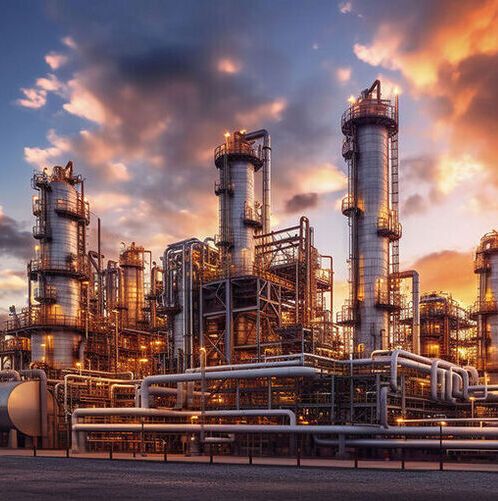
At a glance: Plant engineering projects from across the globe.
(Source: vectorizer88 - stock.adobe.com)
OMV, Interzero to Develop Europe’s Largest Sorting Facility for Chemical Recycling
November 02 – OMV has recently announced the final investment decision to build an innovative sorting plant developed by Interzero to produce feedstock for chemical recycling. In total, OMV will invest an amount of over 170 million euros to build this state-of-the-art facility in Walldürn, southern Germany. OMV will hold 89.9 percent of the shares in the joint venture and 10.1 per cent of the shares will belong to Interzero, Europe’s leading provider of circular economy solutions.
Production start of the new plant is expected to take place in 2026. Around 120 new jobs will be created at the new site. The groundbreaking ceremony is already scheduled for November 20, 2023, with guests from politics expected to attend.
The sorting facility will be the first of its kind to produce feedstock for OMV’s chemical recycling on a large industrial scale. The Reoil technology developed and
patented by OMV is a chemical recycling innovation that converts plastic waste that cannot be mechanically recycled into pyrolysis oil – a valuable resource. The input for the sorting plant essentially involves mixed plastics that have not been recyclable until now, especially those collected separately from the yellow bag and the yellow bin recycling system in Germany.
The cooperation between OMV and Interzero will ensure the supply of sustainable and high-quality feedstock for OMV’s chemical recycling, helping to close the loop for plastics. The innovative, state-of-the-art sorting facility developed by Interzero will be capable of processing up to 260,000 tonnes of mixed waste plastics per year, providing the raw materials for the production of virgin polyolefins. This innovative sorting process will make it possible to recover a polyolefin-rich fraction from a waste stream that currently ends up in thermal recycling.
In terms of the waste hierarchy, the focus is on waste plastics that are not suitable for mechanical recycling. This ensures that chemical recycling does not compete with mechanical recycling. The sorting process used in the new facility has already been tested on an industrial scale and the product has been successfully processed as feedstock in OMV’s Reoil pilot plant.
Lummus Technologies Chosen for India’s First On-Purpose Propylene Plant
Once Haldia Petrochemicals' plant is complete, it will be India’s largest cumene and phenol plant and the nation’s first on-purpose propylene plant.
(Source: Pixabay)
November 02 – Lummus Technology has recently announced that Haldia Petrochemicals (HPL) will license its olefins conversion technology (OCT) and the Lummus/Versalis cumene and phenol technologies for a new plant in West Bengal, India.
Once HPL’s plant is complete, it will be India’s largest cumene and phenol plant and the nation’s first on-purpose propylene plant. The milestone will also help HPL become India’s first integrated operator in the phenolics value chain and a leader in the niche specialty chemicals segment. The integration of OCT will strengthen India’s petrochemical market by allowing production of more phenol products locally rather than by importing them.
“With the commissioning of these plants, the overall chemical business portfolio is expected to increase by an additional Rs. 5,000 crores. The company has ambitious targets to complete the project by Q1 2026,” said Navanit Narayan, Chief Executive Officer of Haldia Petrochemicals. “As the plans move towards fruition, there will be advancement in areas such as digitization. This will generate direct and indirect employment in the downstream chemical industry. The total industrial scenario evolving around chemicals will witness tremendous growth within a very short period.”
Lummus’ scope includes the technology license for OCT and cumene and phenol technologies, basic design engineering, site services, advisory services and training.
OCT is the only commercially demonstrated route to propylene using metathesis chemistry, and it produces propylene from reacting ethylene with C4 and/or C5 olefins. In addition, Lummus and Versalis have partnered to license phenol and cumene technologies since 2007. The phenol technology is the lowest carbon footprint among available phenol technologies and provides a safe, reliable process that maximizes product yields and produces high purity products. The cumene process is a liquid-phase alkylation technology using a proprietary zeolite catalyst and is characterized by a very high cumene yield, ultra-high purity cumene product and a long catalyst run length.
Date: 08.12.2025
Naturally, we always handle your personal data responsibly. Any personal data we receive from you is processed in accordance with applicable data protection legislation. For detailed information please see our privacy policy.
Consent to the use of data for promotional purposes
I hereby consent to Vogel Communications Group GmbH & Co. KG, Max-Planck-Str. 7-9, 97082 Würzburg including any affiliated companies according to §§ 15 et seq. AktG (hereafter: Vogel Communications Group) using my e-mail address to send editorial newsletters. A list of all affiliated companies can be found here
Newsletter content may include all products and services of any companies mentioned above, including for example specialist journals and books, events and fairs as well as event-related products and services, print and digital media offers and services such as additional (editorial) newsletters, raffles, lead campaigns, market research both online and offline, specialist webportals and e-learning offers. In case my personal telephone number has also been collected, it may be used for offers of aforementioned products, for services of the companies mentioned above, and market research purposes.
Additionally, my consent also includes the processing of my email address and telephone number for data matching for marketing purposes with select advertising partners such as LinkedIn, Google, and Meta. For this, Vogel Communications Group may transmit said data in hashed form to the advertising partners who then use said data to determine whether I am also a member of the mentioned advertising partner portals. Vogel Communications Group uses this feature for the purposes of re-targeting (up-selling, cross-selling, and customer loyalty), generating so-called look-alike audiences for acquisition of new customers, and as basis for exclusion for on-going advertising campaigns. Further information can be found in section “data matching for marketing purposes”.
In case I access protected data on Internet portals of Vogel Communications Group including any affiliated companies according to §§ 15 et seq. AktG, I need to provide further data in order to register for the access to such content. In return for this free access to editorial content, my data may be used in accordance with this consent for the purposes stated here. This does not apply to data matching for marketing purposes.
Right of revocation
I understand that I can revoke my consent at will. My revocation does not change the lawfulness of data processing that was conducted based on my consent leading up to my revocation. One option to declare my revocation is to use the contact form found at https://contact.vogel.de. In case I no longer wish to receive certain newsletters, I have subscribed to, I can also click on the unsubscribe link included at the end of a newsletter. Further information regarding my right of revocation and the implementation of it as well as the consequences of my revocation can be found in the data protection declaration, section editorial newsletter.
Solvay to Develop Largest North American Production Facility for Electric Vehicle Materials
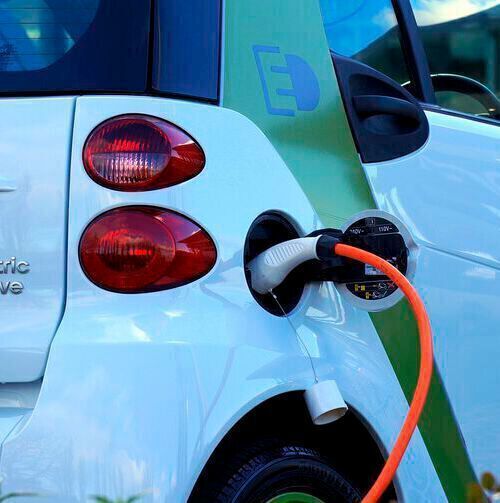
The new operations will provide material for more than 5 million EV batteries per year at full capacity.
(Source: Pixabay)
November 06 – Solvay confirms its plans to build a new battery-grade PVDF facility in Augusta, Georgia, USA. With more than half of U.S. car sales projected to be electric by 2030, the U.S. produced PVDF - a thermoplastic fluoropolymer - will allow supply for the rapidly growing EV battery market, meeting the growing needs of U.S. domestic energy storage markets. The new operations will provide material for more than 5 million EV batteries per year at full capacity and create hundreds of jobs throughout the value chain.
Solvay and Orbia have just signed their joint venture agreement for this project. The partnership secures the supply by Orbia of needed materials for Solvay to manufacture its suspension-grade polyvinylidene fluoride (PVDF) production, which is used as a lithium-ion binder and separator coating in electric vehicle batteries. Solvay, on the other hand, will bring its process technology and global market know-how to this venture. In combination, Solvay’s Solef PVDF innovations and Orbia’s raw material assets and production expertise will enable delivery of PVDF that enables electric vehicles to go farther on each charge, extends battery life and improves battery safety.
Solvay and Orbia intend to use two production sites in the southeastern U.S., one for raw materials and the other for finished products. Both plants are expected to be operational in 2026.
Solvay and the U.S. Department of Energy’s Office of Manufacturing and Energy Supply Chains also finalized their agreement for a 178-million-dollar grant to Solvay to help build this facility at its site in Augusta, GA. The grant was awarded to Solvay as part of the U.S. Infrastructure Investment and Jobs Act (IIJA) to expand U.S. domestic manufacturing of batteries for electric vehicles and the electrical grid - as the project will fill a significant supply gap, building upon favorable regulatory conditions that promote regional production and material security.
Air Products to Develop Europe’s Largest Blue Hydrogen Facility
The carbon capture retrofit will capture CO2 from Air Products' existing hydrogen plant and Exxonmobil’s Rotterdam refinery.
(Source: Air Products)
November 08 – Air Products has recently announced that it will build, own and operate a state-of-the-art carbon capture and carbon dioxide (CO2) treatment facility at its existing hydrogen production plant in Rotterdam, the Netherlands. The facility is expected to be on-stream in 2026, and the resulting "blue" hydrogen product to serve Exxonmobil’s (Esso) Rotterdam refinery and additional customers via Air Products' hydrogen pipeline network system. This will be the largest blue hydrogen plant in Europe once operational.
The carbon capture retrofit will capture CO2 from Air Products' existing hydrogen plant and Exxonmobil’s Rotterdam refinery. The plant will be connected to the Porthos system, a consortium developing the first large-scale CO2 transport and storage system in the Netherlands which recently reached final investment decision approval. Along with CO2 from other industry in the port of Rotterdam, the captured CO2 will be transported to depleted gas fields in the North Sea, approximately 20 kilometers off the coast, where it will be permanently stored at a depth of more than three kilometers beneath the seabed.
Porthos allows Air Products to more than halve its CO2 emissions in the port of Rotterdam. This represents a substantial step for reducing Air Products’ direct emissions in the short term and contributes to meeting the Dutch National Climate Agreement targets. At the same time, Air Products is working hard to further decarbonize its own activities and those of its customers by realizing plans to make green hydrogen available from imported renewable energy in the port of Rotterdam.
The project is being undertaken as part of long-term agreements with Exxonmobil and the Dutch State. Blue hydrogen from Air Products’ hydrogen production plant will help customers in industry and mobility transition, whilst also creating and retaining jobs in an important industrial area.
Veolia Offers Technological Know-How for South Korea’s First Lithium Hydroxide Plant
As the world's second-largest producer of batteries for electric vehicles, South Korea aims to develop domestic production of lithium hydroxide.
(Source: Pixabay)
November 15 – Veolia, via its subsidiary Veolia Water Technologies, has signed a contract with Posco Lithium Solution (Posco Holdings) to design and deliver an integrated conversion system featuring its high purification and HPD crystallization technology, a key process used in the refining of battery material salts required for the manufacture of advanced electric batteries. With an annual production capacity of 25,000 tonnes, the facility will supply enough quality lithium to design around 600,000 electric vehicle batteries.
The lithium market is growing rapidly, particularly in terms of demand for lithium hydroxide, produced from lithium carbonate and used in high-density, high-capacity batteries. As the world's second-largest producer of batteries for electric vehicles, South Korea aims to develop domestic production of lithium hydroxide, a key component in the production of lithium-ion batteries.
As the world leader in water technologies, Veolia has cutting-edge HPD crystallization technology for converting lithium carbonate into lithium hydroxide, which it is
using to support South Korea's ambitions in the transition to cleaner mobility. This advanced technology will make the production process more sustainable and water-efficient. The patented chemical conversion maximizes reuse of the condensate generated, with a recovery rate of over 94 %, significantly reducing the water footprint of the industrial process.
"As the world leader in lithium evaporation and crystallization technologies, Veolia plays a central role in this strategic market, essential to the development of sustainable mobility. From the technological treatment of lithium to the recovery of battery materials during the recycling process, Veolia will now share its unique industrial and technological know-how with Posco Lithium Solution to optimize the amount of lithium hydroxide recovered while minimizing the amount of water used in battery production," said Estelle Brachlianoff, Estelle Brachlianoff, CEO of Veolia.
World’s First Pilot Plant for Green Methanol Inaugurated in Germany
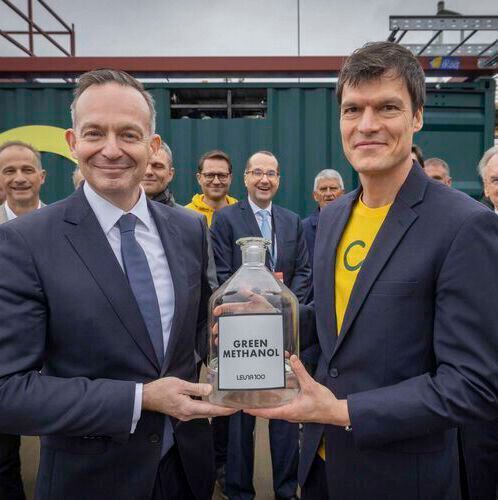
All guests of honor were symbolically presented with a bottle of green methanol, thus honoring the 100-year tradition at the Leuna chemical site.
November 22 – Green methanol production is based on a synthesis gas of carbon monoxide and green hydrogen – hydrogen produced with renewable energy. The process for green methanol production in the Leuna100 project is composed of three steps: synthesis gas production, methanol production, and purification of the crude methanol produced. The innovative technology developed by C1 enables efficient low temperature- and low pressure-based methanol production. The process is made possible by the use of a homogeneous, manganese-based catalysis technology that C1 has developed in cooperation with Leibniz-Institut für Katalyse (Leibniz Institute for Catalysis). The electricity-based and load-flexible utilization of synthesis gas production and the homogeneous catalysis for the methanol production together form the key innovation.
The pilot plant sees two different technologies coupled for the CO2-based production of synthesis gas: Fraunhofer Umsicht is providing new, low-temperature co-electrolysis, while DBI – Gastechnologisches Institut Freiberg utilizes a reverse water gas shift (RWGS) unit. C1 is delivering the groundbreaking catalyst as well as a reactor developed in-house for the homogeneous catalysis of methanol. Fraunhofer IWES is providing the location and infrastructure at the Hydrogen Lab Leuna and evaluating the load flexibility. TU Berlin is developing an efficient, load-flexible operating concept on the basis of a dynamic overall process model.
The Leuna100 project was launched in the Leuna Chemical Park in August 2023 and is set to run for three years. It is being funded with a total of 10.4 million euros by the German Federal Ministry for Digital and Transport (BMDV) as part of the Renewable Fuels Funding Program. The funding guideline for the development of renewable fuels is being coordinated by NOW and implemented by the project management agencies VDI/VDE Innovation + Technik and Fachagentur Nachwachsende Rohstoffe.
The working group headed by Prof. Dr. Matthias Beller at Leibniz-Institut für Katalyse (Likat), Rostock, is supporting the Leuna100 project as a research partner.
H2site Validates First Ammonia Cracker to Produce H2 for Onboard Power Generation
Maritime transport is responsible for 2 % of global greenhouse gas emissions, presenting significant potential for emission reduction by transitioning from hydrocarbons to green fuel options, such as hydrogen.
(Source: Pixabay)
November 23 – H2site has successfully validated the first ammonia cracker to produce high-purity hydrogen for onboard power generation using a PEM fuel cell. An integrated membrane reactor has been installed and operated on board of the Bertha B supply ship, sailing the shores of the Gulf of Biscay. Maritime transport is responsible for 2 % of global greenhouse gas emissions, presenting significant potential for emission reduction by transitioning from hydrocarbons to green fuel options, such as hydrogen.
Ammonia cracking is gaining traction as a potential hydrogen carrier for onboard applications. It can be used directly in engines, or it can be cracked into hydrogen and used in fuel cells. Before hydrogen is used, purification is necessary, especially if traces of ammonia are present. H2site’s membrane reactors make sure all the ammonia is transformed, while delivering a high purity hydrogen to the fuel cell in a single process step. During navigation, as part of the H2ocean project, H2site’s cracker has successfully powered the ship's auxiliary services. This achievement was made possible thanks to the collaboration with players active in the maritime decarbonization segment such as Zumaia Offshore, Erhardt Offshore, Ajusa, and Tecnalia, along with the participation of Enagas and ABS.
“Our innovative membrane reactor technology not only brings an improvement in system efficiency but also reduces the footprint of the installation. This is especially important in applications where space is limited, such as onboard a vessel," shares Jose Medrano, Technical Director at H2site. “We have focused our design efforts on minimizing the ammonia consumption, which will be key for the scale up to suit higher power output units.”
This project is a steppingstone for H2site in the decarbonization of maritime transport.
Orion Completes its First Greenfield Project in China
The facility in the city of Huaibei in Anhui province will produce carbon black for a variety of applications.
(Source: Pixabay)
November 23 – Orion has recently celebrated the completion of its first greenfield project – a carbon black plant in eastern China that will supply fast-growing demand in Asia. The facility in the city of Huaibei in Anhui province will produce carbon black for a variety of applications, including coatings, printing inks, rubber, polymers, fiber and rubber. The site’s two production lines have a total capacity of 70 kilotons per year.
“The Huaibei facility is a huge milestone for Orion. The state-of-the-art plant enables us to better support our Chinese customers with products that are made in China,” Orion CEO Corning Painter said. “Now we can reallocate production lines in the U.S. and Europe so that we can increase supply to customers in those markets.”
Orion’s other plant in China is in Qingdao in the eastern province of Shandong. The facility, built in 1994, produces carbon black grades for tires, mechanical rubber goods and specialty applications.
Ineos Styrolution, Sinopec Launch New ABS Unit in China
The facility has an annual nameplate capacity of 600,000 tonnes.
(Source: Ineos Styrolution)
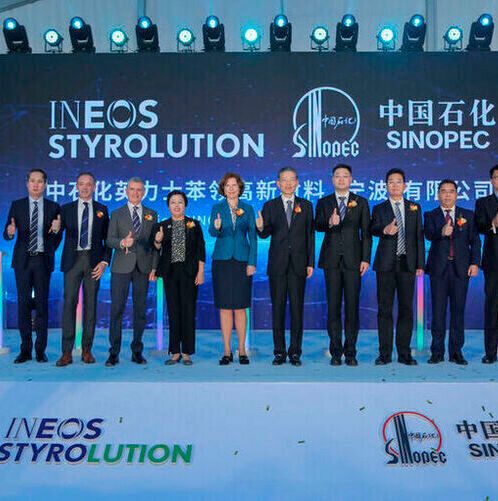
November 27 – Ineos Styrolution has recently announced the official opening of a new world-scale ABS facility located in Ningbo, China, together with its joint venture partner Sinopec. The facility has an annual nameplate capacity of 600,000 tonnes. The official opening ceremony was attended by Caroline Wilson DCMG, British Ambassador to China and Hua Wei, Executive Vice Mayor, Ningbo Municipal People's Government, among other institutional representatives.
“Ineos Styrolution is committed to growing in China, the world’s largest ABS market,” said Steve Harrington, CEO Ineos Styrolution. “The completion of our new ABS facility in Ningbo using our world class Terluran ABS technology is an important milestone, as we embark on a new stage in this exciting journey with Sinopec to further strengthen our position in the Chinese ABS market.”
“This facility was constructed under a challenging environment in the midst of a global pandemic. Its successful unveiling today reflects the unwavering support from the Government authorities and the tenacious “can-do” attitude of the entire project and operations team,” added Meizhu Fang, CEO, Ineos Styrolution Sinopec Advanced Materials (Ningbo).
The construction of this ABS facility in Ningbo started in end 2020. Spanning across 26.7 hectares, with more than 360 employees and contractors, this facility will produce high-end ABS materials that advance the design and functionality of many applications across numerous industry sectors including automotive, electronics, household, healthcare and toys/sports/leisure, for the rapidly growing domestic market in China.
BASF Secures Funding for Water Electrolysis Plant
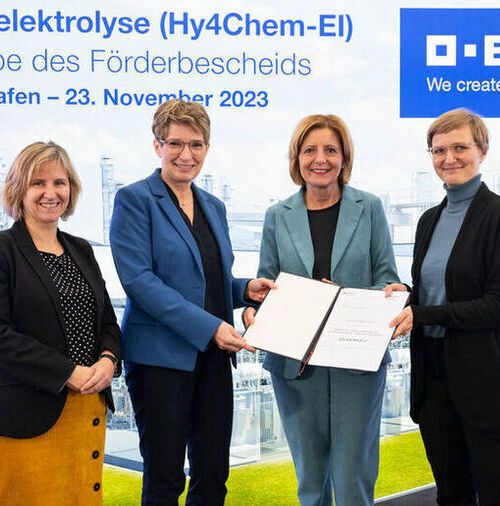
Dr. Franziska Brantner, Parliamentary State Secretary at the Federal Ministry for Economic Affairs and Climate Action, presented the official notification of funding to Dr. Melanie Maas-Brunner, member of the Board of Executive Directors of BASF and Site Director Ludwigshafen, in the presence of Malu Dreyer, Minister-President of Rhineland-Palatinate and Katrin Eder, Rhineland-Palatinate’s State Minister for Climate Protection, Environment, Energy, and Mobility.
(Source: BASF)
November 27 – With the approval of funding from the German Federal Ministry for Economic Affairs and Climate Action and the State of Rhineland-Palatinate, BASF has come a major step closer in building a proton exchange membrane electrolyzer. In cooperation with Siemens Energy, work on the water electrolysis at the Ludwigshafen site – the so-called Hy4Chem-EI project – is now entering the next phase of construction.
Dr. Franziska Brantner, Parliamentary State Secretary at the Federal Ministry for Economic Affairs and Climate Action, presented the official notification of funding to Dr. Melanie Maas-Brunner, member of the Board of Executive Directors of BASF and Site Director Ludwigshafen, in the presence of Malu Dreyer, Minister-President of Rhineland-Palatinate.
With an output of 54 megawatts (MW) and a capacity of up to 8,000 metric tons of hydrogen per year, the PEM electrolyzer will be one of the largest of its kind in Germany once it is operational. Powered using electricity from renewable energy sources, the system will produce CO2-free hydrogen and thereby reduce greenhouse gas emissions at the site by up to 72,000 metric tons annually. BASF will primarily use this hydrogen as a raw material in the manufacture of products with a reduced carbon footprint. In addition, the company will supply hydrogen for mobility in the Rhine-Neckar Metropolitan Region to support the ramp-up of a hydrogen economy in the area.
BASF and Siemens Energy plan to begin operating the water electrolysis plant in 2025. In cooperation with the State of Rhineland-Palatinate, the German Federal Ministry for Economic Affairs and Climate Protection is contributing up to 124.3 million euros to the project – up to 37.3 million euros of which will be financed by the government of Rhineland-Palatinate.




:quality(80)/p7i.vogel.de/wcms/54/f4/54f4b4e2a86b203e0dfd84221602bdb5/0130367283v2.jpeg "Anybotics' Anymal robot combines depth cameras, LiDAR, thermal imaging, acoustic sensors, and gas detectors into a single inspection round. (Source: Anybotics)")
:quality(80)/p7i.vogel.de/wcms/e9/64/e964996410967c124c2cf01a8623068e/0130285341v1.jpeg "Geht unter die Oberfläche: Die Offshore-Ölförderung erfordert hochenergetische Pumpen – doch diese sind im Wesentlichen eine Black Box. Bisher zumindest. (Source: Kistler Group)")
:quality(80)/p7i.vogel.de/wcms/54/ae/54aece5dff672ce1651470eecd9f2589/0130138090v2.jpeg "The new Ionchromatograph “Nexera IC“ (Source: Shimadzu)")
:quality(80)/p7i.vogel.de/wcms/49/5c/495c651fabd24a437c98bde6a3d71ecc/0130060419v2.jpeg "Enfinium has successfully piloted Wasteer’s groundbreaking visual AI technology at its Ferrybridge 2 facility in West Yorkshire and Parc Adfer facility in North Wales. (Source: Chris Parkes Photographer Ltd.)")
:quality(80)/p7i.vogel.de/wcms/1e/15/1e15b0e20cf5ede83e0749260dfda733/0130465044v2.jpeg "Energy X has recently announced the successful commissioning of a first-of-its-kind, U.S.-based lithium production facility at Project Lonestar, marking a major milestone toward commercial-scale domestic lithium production. (Source: Pixabay)")
:quality(80)/p7i.vogel.de/wcms/36/36/36369e6e59d4c660893cc04a4d257cfc/0130465035v2.jpeg "Wacker has successfully completed the second expansion phase at its production site in Panagarh, India. In addition to silicone rubber, the site now also operates a production complex (left) for silicone emulsions. (Source: Wacker)")
:quality(80)/p7i.vogel.de/wcms/1f/1e/1f1eba3731af22e1d9946e2897f134da/0130464799v2.jpeg "Aerial view of the BASF production site in Zhanjiang, China. (Source: BASF )")
:quality(80)/p7i.vogel.de/wcms/64/bb/64bb4812390b6491ce0bd4fe53597086/0130333812v2.jpeg "The solar power plant produces 30 GWh per year of renewable electricity, which is self-consumed by Holcim’s industrial facilities, making it the largest floating solar power plant in Europe dedicated to self-consumption. (Source: Pixabay)")
:quality(80)/p7i.vogel.de/wcms/41/c9/41c96e0244221ad38daa73bdd8231477/0130477173v2.jpeg "The „ORBITA‑L“-system is designed for filling and capping non‑injectable liquid products. (Source: Marchesini)")
:quality(80)/p7i.vogel.de/wcms/7a/50/7a501f6d8f87a4524dc3aaceb04eacb4/0130333829v2.jpeg "The Clear Lake facility represents Clariant's first U.S. manufacturing site dedicated to producing pharmaceutical-grade PEG excipients, marking a pivotal milestone in the company's healthcare growth strategy. (Source: Clariant)")
:quality(80)/p7i.vogel.de/wcms/26/12/261210e5920899e5c35c4f905d3be8bd/0129399814v2.jpeg "Powders used in DPI formulations are often highly potent and administered in very low doses. (Source: Ima)")
:quality(80)/p7i.vogel.de/wcms/6b/3f/6b3f057c83c494e4732337d870d52b21/0130006927v2.jpeg "Lonza will realize upfront cash proceeds of 2.2 billion dollars and retain a 40 % stake in the business, with additional preferential participation in its future exit. (Source: Lonza)")
:quality(80)/p7i.vogel.de/wcms/df/35/df3526a6f7aba41fdd2bb2051954e0d8/0130163620v2.jpeg "The SPA, valued at more than 3 billion dollars, is one of the largest binding long-term green ammonia off-take agreements globally. (Source: Pixabay)")
:quality(80)/p7i.vogel.de/wcms/af/73/af7394d9f8900024c5ee7fca459c4eeb/0130080328v2.jpeg "Axens has signed a MOU with Airbus to strengthen their cooperation in the development and deployment of SAF, a key pillar for decarbonizing the aviation sector. (Source: Pixabay)")
:quality(80)/p7i.vogel.de/wcms/0e/19/0e19f0cf0379c3af4c2fe02629db63f1/0130079229v2.jpeg "Thyssenkrupp Uhde has been selected by CSBP to deliver its patented Envinox technology for two nitric acid plants at CSBP’s Kwinana site in Western Australia. (Source: Thyssenkrupp Uhde)")
:quality(80)/p7i.vogel.de/wcms/a6/84/a68477d4ef879cc9cedeae332ca57c49/0129893677v2.jpeg "Siemens and Caphenia sign the partnership agreement. From left to right: Nicky Ahnert, Jürgen Giegerich, Frank Knauf (all Siemens), Dr. Mark Misselhorn, Dr. Andreas Waibel (both Caphenia) (Source: Siemens)")
:quality(80)/p7i.vogel.de/wcms/1c/39/1c39433f4bb4de2e5e6c5311c3236d09/0130110254v2.jpeg "The new pumps of the Omega type series have been designed for handling water and fluids with a low solids content efficiently. (Source: KSB)")
:quality(80)/p7i.vogel.de/wcms/be/e1/bee13b8d51a419b9b8f0685e2b9d47bf/0128917673v1.jpeg "The Centerwave 6000 measures pipes from 32 to 1,600 mm. (Source: Maag Group)")
:quality(80)/p7i.vogel.de/wcms/51/7a/517a4e83c5827663b4839f5ddb98f434/0128872953v1.jpeg "The Tigron in SIL version can be flexibly configured for different safety requirements. (Source: Auma)")
:quality(80)/p7i.vogel.de/wcms/60/ef/60efa975d1dd123c1afbfb6ccc060461/0130263955v2.jpeg "Aquaclean (Source: Oko-tech)")
:quality(80)/p7i.vogel.de/wcms/07/62/0762f20b1821ee2724c97989374d6397/0130257651v2.jpeg "Oleksandr Sadchykov in front of the water treatment unit (Source: Grundfos)")
:quality(80)/p7i.vogel.de/wcms/98/98/989863664c7b65e87caf74a08239d487/0130167217v2.jpeg "Keller 26KyX Level Probe (Source: © Keller Pressure)")
:quality(80)/p7i.vogel.de/wcms/64/4e/644e22b71e8d35a63f051f781eb13886/0130163451v2.jpeg "Vega will present level and pressure measurement technology for the water industry at Ifat 2026. (Source: Vega)")
:quality(80)/p7i.vogel.de/wcms/6b/cc/6bcc3d26e1c7c74d90a10bc3ca296ae1/0128362351v2.jpeg "A look into Bayer's new tablet production, Solida 1, during construction: The robots and lift columns for material handling are being installed. (Source: Bayer)")
:quality(80)/p7i.vogel.de/wcms/24/c8/24c84ab6b1bcd24468a87820a07a85aa/0128194707v2.jpeg "Ajax Equipment has supplied Binding Solutions with a feed system comprising buffer hopper, screw feeder and agitated screw feeder for a pilot plant handling iron ore and additives. (Source: Ajax Equipment )")
:quality(80)/p7i.vogel.de/wcms/1d/3e/1d3e2788eb37c1e974f36337c8d33cb5/0128191010v2.jpeg "Ajax Equipment has supplied IGI Systems with a stainless-steel conical hopper with gas purge capability, as part of a prototype Sublimation System for a low-pressure chemical vapour deposition application. (Source: Ajax Equipment)")
:quality(80)/p7i.vogel.de/wcms/19/76/1976928d7d0a2ed7c1eeba7ade8552c8/0126365603v1.jpeg "Detail of Valvedesign: It has an aktiv amd passive part (Bild: Italvacuum)")
:quality(80)/p7i.vogel.de/wcms/0c/a1/0ca135e0486c9af90a0552aea85de88c/0130439525v2.jpeg "Qatar Energy expects the damage to its Ras Laffan Industrial City caused by missile strikes, which occurred on Wednesday 18 March 2026, and in the early hours of Thursday 19 March 2026, to cost about 20 billion dollars a year in lost revenue. (Source: Pixabay)")
:quality(80)/p7i.vogel.de/wcms/d0/f7/d0f7d560dfce37c8371442d5b6120e3c/0130182478v1.jpeg "The Gelsenkirchen refinery primarily manufactures fuels for vehicles and aircraft, processing roughly 12 million tonnes of crude oil per year. (Source: BP)")
:quality(80)/p7i.vogel.de/wcms/7f/96/7f9628e43c99564fa6dfd8e76149425d/0130165852v2.jpeg "Pure titanium recycling process for chlor-alkali electrolysis cells. (Source: Asahi Kasei)")
:quality(80)/p7i.vogel.de/wcms/f8/29/f8298429c1638b949a6f76346f6709c7/0118701710v2.jpeg "Bosch Industrial Heat will be presenting sustainable steam and heat solutions for global industrial use at the Achema trade fair in Frankfurt, Germany. (Source: Bosch Industriekessel)")
:quality(80)/p7i.vogel.de/wcms/07/24/07242664ab2b1c7841c9d9d0a127670c/0116045959.jpeg "A look inside the GEA machine room. (Bild: Magnavale)")
:quality(80)/p7i.vogel.de/wcms/c9/79/c979a20b32395ddfa93fe7ead90578a0/0108386061.jpeg "Production residues, lime, salt and suspended solids quickly clog the pipes. (Source:©Tanakorn - stock.adobe.com)")
:quality(80)/p7i.vogel.de/wcms/9e/5c/9e5c92d942ed046a27562d6e3d730c92/0103483548.jpeg "It is almost ten metres high and extends over three floors: the world's first multiple dividing wall column is located in the new technical centre at the University of Ulm. (Bild: Eberhardt, kiz Universität Ulm)")
:quality(80)/p7i.vogel.de/wcms/7c/77/7c77e24fdcc9e1511e8e711eff161e28/0130175489v2.jpeg "The milestone confirms the fast pace of development of Eni’s deep water gas projects offshore East Kalimantan. (Source: Unsplash )")
:quality(80)/p7i.vogel.de/wcms/b3/2f/b32fb9f5aa54e9cb6c92e4b6c8665263/0130163018v2.jpeg "The decision to take emergency collective action was made following an extraordinary meeting of IEA Member governments, convened by the IEA Executive Director to assess market conditions amid the conflict in the Middle East and consider the options to address supply disruptions. (Source: © Sashkin - stock.adobe.com)")
:quality(80)/p7i.vogel.de/wcms/85/d2/85d2cb02c4ae45a99454b5405b0f2489/0130149909v2.jpeg "IEA Executive Director Fatih Birol issued a statement on the meeting of G7 Energy Ministers at its IEA headquarters in Paris. (Source: © Marko - stock.adobe.com)")
:quality(80)/p7i.vogel.de/wcms/a8/4e/a84e8039a90a5cf4751d01ebcf6ba1a9/0127510172v2.jpeg "After six years, Achemasia, the international trade fair and innovation forum for sustainable chemical production, has returned with renewed vigor, bringing together global expertise, Chinese innovation, and a shared commitment to a greener industrial future—according to the organizers of the fair. (Source:PROCESS China)")
:quality(80)/p7i.vogel.de/wcms/17/c7/17c703445f134eb3d7ecc7918dda2762/0124596096v2.jpeg "Achema Middle East will launch in Saudi Arabia in 2026. (Bild: Dechema/ Hannibal)")
:quality(80)/p7i.vogel.de/wcms/2a/2c/2a2cffc07f51019065387cd63241b5ce/0119463370v1.jpeg "The Injecta 36 fills and seals RTU (Ready-to-Use) syringes at high speed. The image shows the robotic arm. (Source: IMA)")
:quality(80)/p7i.vogel.de/wcms/b1/7e/b17ea8c62ccafad1d1fb072d6199bbd6/0118578446.jpeg "“Star in the ring”: Vegapuls 6X radar level sensors are the solution of choice for Renolit for many applications on the way to the perfect plastic product. (Source: © MR Design - stock.adobe.com; Vega)")
:quality(80)/p7i.vogel.de/wcms/09/e3/09e378194b496921d2a267a6752322eb/0130333473v2.jpeg "Under the terms of the contract, KBR will provide contract management, project management and supporting technical services throughout the EPC phases of the project. (Source: KBR)")
:quality(80)/p7i.vogel.de/wcms/77/9d/779db435e7f9d79bafe16101008a9cfa/0130263548v2.jpeg "The Kingdom of Saudi Arabia, the UAE and Turkey are three core countries in the region that are actively incorporating the plastics circular economy with the assistance of the chemical recycling technology. (Source: © Anastasiia - stock.adobe.com)")
:fill(fff,0)/images.vogel.de/vogelonline/companyimg/2000/2093/65.jpg "Glatt_Logo_ND4c-RGB (5x3cm).jpg ()")
:fill(fff,0)/p7i.vogel.de/companies/61/f9/61f9439b7cbe4/logo-edl.png "logo-edl (EDL Anlagenbau Gesellschaft mbH)")
:fill(fff,0)/p7i.vogel.de/companies/5f/98/5f98fbb2e7bf2/05-trm-filter-logo-with-slogan-en-alt.png "05_TRM_Filter_LOGO_with_slogan_EN_ALT.png (www.trm-filter.com)")


:quality(80)/p7i.vogel.de/wcms/e3/e1/e3e1dfe95f20f2b6288c48a365b91a03/0125956476v3.jpeg "At a glance: Plant engineering projects from across the globe. (Source: © suphamit - stock.adobe.com)")
:quality(80)/p7i.vogel.de/wcms/d5/0a/d50a48ba8079516a21b5ed40f882f7de/0124001601v2.jpeg "At a glance: Plant engineering projects from across the globe. (Source: Sasint - stock.adobe.com)")