PROCESS Worldwide brings to you the ‘Top 10 plant engineering projects of June 2024’ from all over the world. Right from Cepsa beginning construction of Spain’s first isopropyl alcohol plant to H2Site developing an ammonia cracker to produce fuel cell-grade hydrogen, find out all the projects making headlines here.
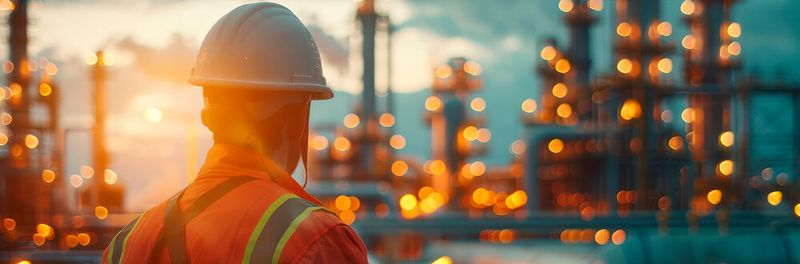
At a glance: Plant engineering projects from across the globe.
(Source: dinastya - stock.adobe.com)
Ineos Unit Chosen for Building World’s First Demo Plant for Sustainable Acrylonitrile Production
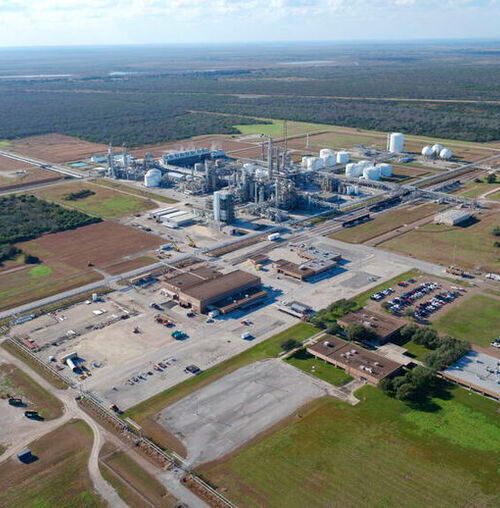
Trillium has announced the selection of Ineos Nitriles’ Green Lake facility in Port Lavaca, Texas to establish the world’s first demonstration plant for converting plant-based glycerol into acrylonitrile.
(Source: Trillium Renewable Chemicals)
June 05 – Trillium Renewable Chemicals (Trillium) has announced the selection of Ineos Nitriles’ Green Lake facility in Port Lavaca, Texas to establish the world’s first demonstration plant for converting plant-based glycerol into acrylonitrile. The demonstration plant is named ‘Project Falcon.’
Trillium Renewable Chemicals has developed a groundbreaking technology for producing sustainable acrylonitrile, a key raw material in numerous industries, including toys, auto parts, aerospace components, medical supplies, and apparel. Selecting Ineos – the world’s leading global manufacturer of petrochemicals, underscores Trillium’s ambition to scale up its technology in an industrial environment to accelerate progress.
“Trillium is thrilled that Ineos Nitriles Green Lake, home to America’s largest acrylonitrile production plant, will serve as the home for Project Falcon,” said Corey Tyree, CEO of Trillium Renewable Chemicals. “This milestone is a significant step forward in bringing our technology to market and producing sustainable bio-based acrylonitrile at scale.”
Following a 10.6-million-dollar Series A financing round in December 2022 and 2.5-million-dollar award from the Department of Energy’s Advanced Manufacturing Office in June 2022, Trillium constructed a pilot plant that successfully produced acrylonitrile from glycerol. Trillium’s sustainable acrylonitrile offers a lower carbon footprint than standard acrylonitrile based on the Sohio propylene process. The company’s innovative approach addresses growing customer demand for greener bio based raw materials.
Trillium continues to operate a pilot plant and has successfully provided samples to customers. Pilot operations have also contributed valuable insights for the design of the Falcon plant, which will be operated at the Ineos Nitriles Green Lake site.
The operation of Project Falcon will help to validate commercial-scale economics and product carbon footprint at scale. Emphasis will be placed on achieving process performance criteria such as plant uptime, demonstrating key equipment in its final form, and securing qualification as a supplier of bio-based acrylonitrile. Set to commence operations in early 2025, the project will run through early 2026.
Air Liquide to Invest 250+ Million Dollars for New Industrial Gas Production Unit
This investment will briThis investment will bring hundreds of direct and indirect jobs to Idaho during construction and operation, and the facility is expected to be operational by the end of 2025.
(Source: Pixabay)
June 07 – Air Liquide will build, own and operate a new industrial gas production facility in Idaho which will produce large volumes of ultra-pure nitrogen and other gases for Micron Technology, as well as for other customers of the area. This investment will bring hundreds of direct and indirect jobs to Idaho during construction and operation, and the facility is expected to be operational by the end of 2025.
This innovative plant is part of a complete Carrier Gas solution designed by Air Liquide for large customers, with an optimized land footprint and total cost of ownership. The use of digital technologies, standardization and modularization will bring exceptional value to local customers in terms of reliability, short delivery time and efficient project execution.
This project is a concrete example of how Air Liquide is contributing to technological progress while optimizing the semiconductor sector’s environmental footprint. The advanced design of this next generation high efficiency Carrier Gas Facility, produces the full range of critical gases required on site with reduced energy and logistics requirements. The new production unit is 5 % more power efficient than the previous generation plants. Producing most of the gases onsite will also avoid transporting them by trucks. In addition, the electricity for the facility is targeted to be 100 % from renewable sources within the next five years.
Date: 08.12.2025
Naturally, we always handle your personal data responsibly. Any personal data we receive from you is processed in accordance with applicable data protection legislation. For detailed information please see our privacy policy.
Consent to the use of data for promotional purposes
I hereby consent to Vogel Communications Group GmbH & Co. KG, Max-Planck-Str. 7-9, 97082 Würzburg including any affiliated companies according to §§ 15 et seq. AktG (hereafter: Vogel Communications Group) using my e-mail address to send editorial newsletters. A list of all affiliated companies can be found here
Newsletter content may include all products and services of any companies mentioned above, including for example specialist journals and books, events and fairs as well as event-related products and services, print and digital media offers and services such as additional (editorial) newsletters, raffles, lead campaigns, market research both online and offline, specialist webportals and e-learning offers. In case my personal telephone number has also been collected, it may be used for offers of aforementioned products, for services of the companies mentioned above, and market research purposes.
Additionally, my consent also includes the processing of my email address and telephone number for data matching for marketing purposes with select advertising partners such as LinkedIn, Google, and Meta. For this, Vogel Communications Group may transmit said data in hashed form to the advertising partners who then use said data to determine whether I am also a member of the mentioned advertising partner portals. Vogel Communications Group uses this feature for the purposes of re-targeting (up-selling, cross-selling, and customer loyalty), generating so-called look-alike audiences for acquisition of new customers, and as basis for exclusion for on-going advertising campaigns. Further information can be found in section “data matching for marketing purposes”.
In case I access protected data on Internet portals of Vogel Communications Group including any affiliated companies according to §§ 15 et seq. AktG, I need to provide further data in order to register for the access to such content. In return for this free access to editorial content, my data may be used in accordance with this consent for the purposes stated here. This does not apply to data matching for marketing purposes.
Right of revocation
I understand that I can revoke my consent at will. My revocation does not change the lawfulness of data processing that was conducted based on my consent leading up to my revocation. One option to declare my revocation is to use the contact form found at https://contact.vogel.de. In case I no longer wish to receive certain newsletters, I have subscribed to, I can also click on the unsubscribe link included at the end of a newsletter. Further information regarding my right of revocation and the implementation of it as well as the consequences of my revocation can be found in the data protection declaration, section editorial newsletter.
Cepsa Begins Construction of Spain’s First Isopropyl Alcohol Plant
The new IPA plant, backed by a 75-million-euro investment, will be located in Palos de la Frontera (Huelva), Spain.
(Source: Cepsa)
June 10 – Cepsa continues to develop and diversify its chemicals business by starting the construction of a new isopropyl alcohol (IPA) plant, the first of its kind in Spain. This product is used not only in hydroalcoholic gels, but also in household and industrial cleaning products.
The new IPA plant, backed by a 75-million-euro investment, will be located in Palos de la Frontera (Huelva) and will be the first plant of its kind in Spain to use green hydrogen and capable to replace fossil-based raw materials in the production of isopropyl alcohol with sustainable alternatives. This will expand Cepsa Química's range of more sustainable products, in line with Cepsa's Positive Motion energy transition strategy.
For José María Solana, CEO of Cepsa Química, the IPA project “is a very important step in our Next Chemicals in Positive Motion strategy. The plant will be linked to our Andalusian Green Hydrogen Valley, ensuring that our activities are fully in line with our commitment to advance the fight against climate change and accelerate the ecological transition. It will also strengthen Spain's supply autonomy in these types of products.”
This new plant will guarantee our country consistent and high-quality access to this essential product, which is critical to sectors such as the medical and pharmaceutical industries. It will also reduce our dependence on isopropyl alcohol-based disinfectants from third countries.
In Jorge Paradela's words, with this investment by Cepsa, "it is demonstrated that energy at competitive prices is a factor in industrial location," and he highlighted that it will contribute decisively to "Spain gaining strategic autonomy by being the first facility in the country to produce the raw material for making renewable-origin hydroalcoholic gel."
The new facility, scheduled for completion by the end of 2025, will have a production capacity of 80,000 tons per year. It’s estimated that approximately 400,000 hours of work will be required to build this new plant, including both direct and indirect labor.
Synergies with the Andalusian Green Hydrogen Valley
Cepsa's chemical business – and the new IPA plant – will benefit from its proximity to the Andalusian Green Hydrogen Valley and the largest second-generation biofuels plant that Cepsa is building, as part of a joint venture with Bio-Oils, next to the La Rábida Energy Park in Huelva. The location of the new facility adjacent to the chemical plant and the La Rábida Energy Park will allow the three facilities to be highly integrated, creating strong industrial and economic synergies. In this regard, it is worth noting that the supply of acetone required for IPA production will come from Cepsa's chemical plant, thus increasing its added value. In addition, the hydrogen (raw material) will be provided by the Andalusian Green Hydrogen Valley.
From the start, the plant will be able to use both renewable energy and raw materials, in line with Cepsa's commitments and the development of its "Positive Motion" strategy. The energy supply (thermal and electrical) required for IPA production is thus planned to come from renewable sources.
The construction of this new plant will strengthen the new chemical industry in Spain and allow Cepsa to diversify its product portfolio, positioning the company as a leader in the Iberian Peninsula market and making it one of the main producers and references of isopropyl alcohol in the European Union.
Adnoc Awards Major EPC Contract to Technip Energies, JGC and NMDC Energy
The project will more than double Adnoc's LNG production capacity aligning with global natural gas demand and the shift towards decarbonization.
(Source: Adnoc)
June 13 – Technip Energies, leader of a joint venture (TJN Ruwais JV) with JGC and NMDC Energy, have been awarded a major contract by Adnoc for the engineering, procurement and construction (EPC) of the lower-carbon Ruwais LNG project, located in Al Ruwais Industrial City, Abu Dhabi.
The project will consist of two natural gas liquefaction trains with a total LNG production capacity of 9.6 Mtpa. The plant will use electric-driven motors instead of conventional gas turbines and will be powered by clean energy. The plant is set to be the first LNG export facility in the Middle East and North Africa (MENA) region to run on clean power, making it one of the lowest-carbon intensity LNG plants in the world.
The project will more than double Adnoc's LNG production capacity aligning with global natural gas demand and the shift towards decarbonization. Ahmed Al Dhaheri, CEO of NMDC Energy, commented, "We are proud to be entrusted by Adnoc with the Ruwais LNG project, which strengthens our position in the UAE’s energy landscape and underscores our dedication to advancing the country’s sustainable development. Utilizing nuclear energy for LNG production not only sets a new international standard for low-emission energy but also aligns with the UAE’s strategy for a sustainable future.”
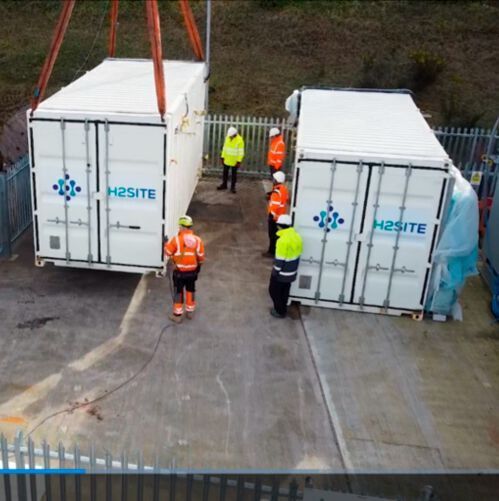
H2Site Develops Ammonia Cracker to Produce Fuel Cell-Grade Hydrogen
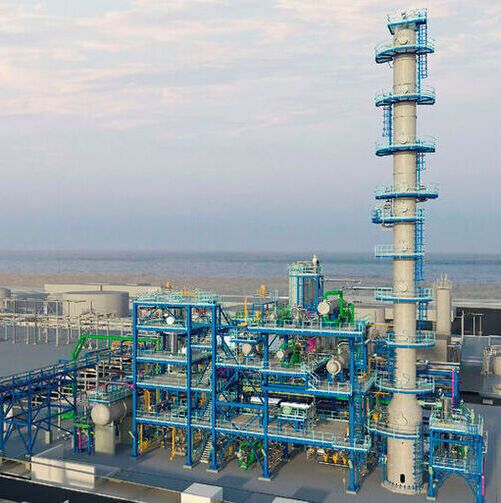
H2Site builds the most efficient ammonia cracker to produce fuel-cell purity hydrogen for the Ammogen Project in the UK.
(Source: H2Site)
June 14 – H2Site has designed and constructed the most efficient ammonia cracker utilizing membrane reactor technology to produce fuel cell-grade hydrogen for the Ammogen Project located at Tyseley Energy Park (TEP). This innovative project will use ammonia to store hydrogen and convert it to hydrogen in one step. Ammonia is becoming the carrier of choice worldwide to transport hydrogen.
The system designed and assembled by H2Site will produce 200 kg of green hydrogen per day. The hydrogen produced will be ready for mobility applications in the Birmingham area.
H2Site's ammonia cracking and separation technology consists of the integration of H2-selective membranes immersed in a catalytic bed where ammonia is cracked into its products. As the reaction produces hydrogen, the technology separates the hydrogen in-situ through these membranes, eliminating the need for downstream separation units. The selective separation of hydrogen in H2Site's membrane reactors results in virtually complete ammonia conversions at mild temperatures, with over 98 % hydrogen recovery, always meeting fuel-cell grade standards.
"This project is a steppingstone for us, as it validates the technology of the membrane reactor for ammonia cracking. We plan to scale it up to process tons per day within the next two years for use in import hubs and maritime applications" according to Jose Medrano, Technical Director at H2Site.
In collaboration with partners such as the Tyseley Energy Park (TEP), Department for Energy Security and Net Zero (DESNZ), Gemserv (Talan), Equans, Yara International, and the University of Birmingham, the Ammogen project aims to promote the international hydrogen trade.
Mc Dermott Chosen for Canada's First Commercial Green H2, Ammonia Production Unit
The project represents Canada's first commercial green hydrogen and ammonia production facility.
(Source: Pixabay)
June 18 – Mc Dermott has been awarded an Early Contractor Involvement (ECI) agreement from Abraxas Power Corporation for the Exploits Valley Renewable Energy Corporation (EVREC) project located in Central Newfoundland, Canada.
The project represents Canada's first commercial green hydrogen and ammonia production facility and will include the development of up to 530-turbine wind farm with the ability to generate 3.5 gigawatt (GW) of electricity and 150 megawatt (MW) solar photo voltaic (PV). The facility will have the capacity to produce 165 kta of hydrogen and 5000 metric tons per day of ammonia.
"The agreement is testament to Mc Dermott's industry-leading delivery and installation expertise, and the breadth of our capabilities across the energy transition," said Rob Shaul, Mc Dermott's Senior Vice President, Low Carbon Solutions. "Our century of experience, from concept to completion, and integrated delivery model, means we can offer Abraxas a repeatable modular implementation solution that is expected to drive cost savings, reduce risk and provide quality assurance."
Under the scope of the agreement, Mc Dermott will provide front-end engineering design (Feed), engineering, procurement, and construction (EPC) execution planning services, and open book EPC cost estimate for the hydrogen production, ammonia processing, and product storage portion of the project.
The work will be led from Mc Dermott's Houston office with support from its Gurgaon office in India.
OMV Petrom to Invest 750 Million Euros at Petrobrazi Refinery
OMV Petrom will invest approximately 750 million euros at Petrobrazi to transform the refinery into the first major producer of sustainable fuels in the region.
(Source: Pixabay)
June 20 – OMV Petrom, the largest integrated energy producer in Southeast Europe, will invest approximately 750 million euros at Petrobrazi to transform the refinery into the first major producer of sustainable fuels in the region. The company has made the final investment decision to build a SAF/HVO facility along with two facilities for green hydrogen which will be used in the production of biofuels.
Radu Căprău, OMV Petrom Executive Board Member responsible for Refining and Marketing: "Together with electro-mobility, biofuels are the answer to low carbon transport, and we expect a gradual increase in demand for these products. Thanks to the investments we announced today, we will be able to replace imports with biofuels produced here in Romania. For our customers, this means product certainty and less carbon emissions. We want to continue to be our customers’ first choice in the future by offering them the products they need".
The investments for this unit amount to 560 million euros. The plant will have a production capacity of 250 kt/year, of SAF and HVO as well as by-products like bio-naphtha and bio-LPG, which are used in the chemical industry. The high flexibility of the installation allows adjusting the products mix according to market demand and the available feedstock mix. The plant will have an annual consumption of ~11 kt of hydrogen, most of which will be provided by the two new green hydrogen production units.
The investment for the two green hydrogen units is estimated at ~190 million euros, of which up to 50 million euros is from European funds, through the National Plan for Recovery and Resilience (NPRR). OMV Petrom and the Ministry of Energy signed the financing contracts at the beginning of this year.
The two units will have a total capacity of 55 MW, with a total annual production of green hydrogen estimated at around 8 kt. Integrating green hydrogen into sustainable fuels, such as sustainable aviation fuel and renewable diesel, will result in at least a 70 % reduction in CO2 emissions compared to conventional fuels.
Petrobrazi is the first refinery in the country certified to produce SAF and HVO through the co-processing of biological raw materials.
In order to ensure access to a safe source of raw materials to produce biofuels, OMV Petrom has acquired a 50 % stake in "Respiră Verde", a leader in the collection of used cooking oil in Romania. "Respiră Verde” collects up to 10 kt of used edible oil per year from economic agents in fields such as the hospitality industry (hotels, restaurants) and retail.
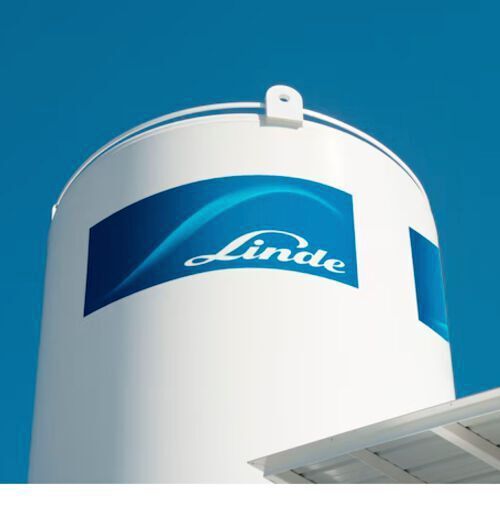
Linde Collaborates with Heidelberg Materials for Large-Scale Carbon Capture Project
Through the use of carbon capture, Linde and Heidelberg Materials will aim to reduce carbon emissions at Heidelberg’s Lengfurt plant in Germany.
(Source: Linde)
June 24 – Linde has signed an agreement with Heidelberg Materials, one of the world's largest building materials companies, to jointly build, own and operate a large-scale carbon capture and liquefaction facility.
Carbon dioxide (CO2) is a by-product of cement production and is estimated to be responsible for around 7 % of global carbon emissions. Through the use of carbon capture, Linde and Heidelberg Materials will aim to reduce carbon emissions at Heidelberg’s Lengfurt plant in Germany. The new plant will capture, liquefy and purify around 70,000 tons of CO2 per year, with the majority of the resulting liquid CO2 to be marketed by Linde as feedstock for the chemicals and food & beverage end markets.
"For many of Linde’s customers in the heavy industrial sector, improving the environmental performance of their operations is a priority," said Sean Durbin, Executive Vice President EMEA, Linde. "Our innovative project with Heidelberg Materials is one of the first large-scale plants of its kind for the cement industry. Considering current market constraints, it is also a welcome new source of CO2 that will help ensure supply for the merchant market."
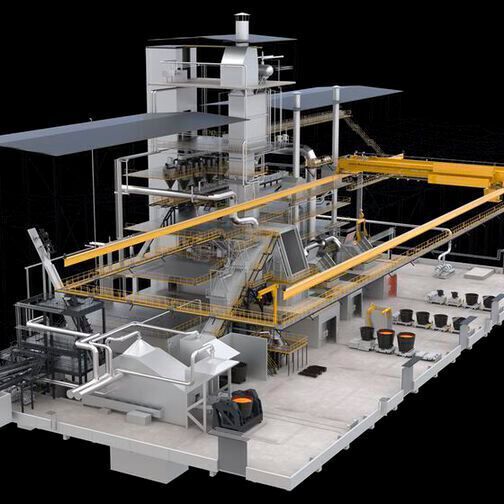
Metso Wins Order for India’s First Large-Scale Electronic Waste Recycling Unit
Metso's Outotec escrap solutions unlock the value of Waste Electrical and Electronic Equipment using Metso’s proven smelting, refining, hydrometallurgy, and gas-cleaning technologies.
(Source: Metso)
June 24 – Hindalco Industries, a global leader in aluminum and copper, and a flagship company of the Aditya Birla Group, has awarded Metso an order for the delivery of a large integrated electronic waste recycling process to be built nearby their Birla copper unit in Pakhajan, in the State of Gujarat in India. The greenfield facility, which will be the first of its kind in India, is planned to produce 50 kt of low-carbon copper annually. The majority of the order value, which is not disclosed, is booked in the Minerals segment’s second-quarter 2024 orders received.
The Metso scope of delivery consists of three Kaldo furnaces, an anode furnace and an anode casting shop, gas cleaning, and supporting equipment. Metso will also deliver basic engineering for the plant. The new facility is expected to be built and commissioned within two years.
“We are excited and honored to have been trusted with this order. Hindalco is the world’s second largest copper rod player and India’s largest copper manufacturer. The Planet Positive process to be delivered by Metso is energy-efficient and allows high metal recoveries. It also conforms to tight emission controls with zero liquid discharge,” explains Jyrki Makkonen, Vice President, Smelting at Metso.
Metso's Outotec escrap solutions unlock the value of Waste Electrical and Electronic Equipment (Weee) using Metso’s proven smelting, refining, hydrometallurgy, and gas-cleaning technologies.
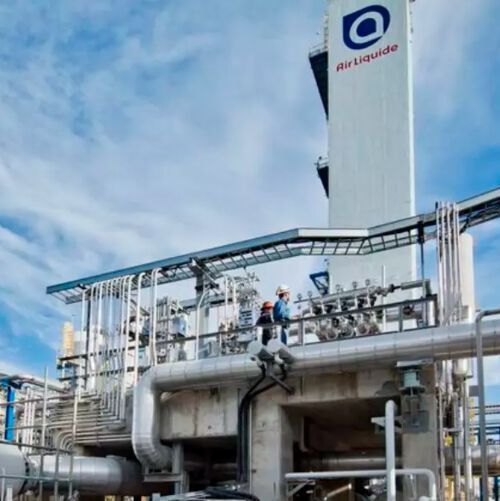
Air Liquide to Invest 850 Million Dollars for Developing Four Large ASUs
Air Liquide plans to invest up to 850 million dollars to build, own and operate four Large Modular Air separation units in the framework of a long-term binding agreement with Exxonmobil for its planned low-carbon hydrogen project in Baytown, Texas.
(Source: Air Liquide)
June 25 – Air Liquide plans to invest up to 850 million dollars to build, own and operate four Large Modular Air separation units as well as related infrastructure in the framework of a long-term binding agreement with Exxonmobil for its planned low-carbon hydrogen project in Baytown, Texas. This will enable Air Liquide to increase its oxygen production capacity by 50 % in Texas. Pending final investment decision, this major project would mark the largest industrial investment in the history of the Air Liquide Group.
This new Air Liquide Baytown low-carbon platform would serve primarily Exxonmobil with vast amounts of low-carbon oxygen and nitrogen, as well as significant volumes of argon and rare gases such as krypton and xenon for Air Liquide’s other customers. Thanks to low carbon electricity supply and Air Liquide’s innovative solution, the CO2 footprint of oxygen production will be reduced by two-thirds. In line with Air Liquide’s Advance strategic plan, this decarbonization project will also contribute to enhancing the Group’s Industrial Merchant footprint in the U.S.
Triggered by Exxonmobil’s enormous need for oxygen at their low-carbon hydrogen project in Baytown, Texas, Air Liquide has been selected to establish a low-carbon industrial gas platform. Pending the project’s final investment decision, Air Liquide would build, own and operate four new Large Modular Air (LMA) separation units at Exxonmobil’s site in Baytown, in order to produce and supply:
a record volume of 9,000 metric tons per day of oxygen for the production of low-carbon hydrogen
and up to 6,500 metric tons per day of nitrogen to support the synthesis of low-carbon hydrogen into low-carbon ammonia as a source of low-carbon energy for the export market.
The agreement also enables leveraging on Air Liquide’s existing pipeline infrastructure to foster the development of low-carbon hydrogen.
In addition, thanks to large volumes, the LMA units will also produce high amounts of argon, as well as krypton and xenon, enabling the Group to strengthen its offering to customers in the rare gases market.
These LMA plants provide a step-change both in terms of production output and energy consumption optimization, as they use 25 % less electricity to make each tonne of oxygen. In addition, these LMA plants are planned to be primarily powered by renewable and low-carbon electricity, further reducing the carbon footprint of the project.
The investment decision for Air Liquide’s Baytown Low Carbon Platform will be linked to the development of Exxonmobil’s low-carbon hydrogen project which is subject to supportive government policy, necessary regulatory permits and market conditions. Exxonmobil’s project is expected to capture and permanently store 7 million tons of CO2 per year.




:quality(80)/p7i.vogel.de/wcms/54/f4/54f4b4e2a86b203e0dfd84221602bdb5/0130367283v2.jpeg "Anybotics' Anymal robot combines depth cameras, LiDAR, thermal imaging, acoustic sensors, and gas detectors into a single inspection round. (Source: Anybotics)")
:quality(80)/p7i.vogel.de/wcms/e9/64/e964996410967c124c2cf01a8623068e/0130285341v1.jpeg "Geht unter die Oberfläche: Die Offshore-Ölförderung erfordert hochenergetische Pumpen – doch diese sind im Wesentlichen eine Black Box. Bisher zumindest. (Source: Kistler Group)")
:quality(80)/p7i.vogel.de/wcms/54/ae/54aece5dff672ce1651470eecd9f2589/0130138090v2.jpeg "The new Ionchromatograph “Nexera IC“ (Source: Shimadzu)")
:quality(80)/p7i.vogel.de/wcms/49/5c/495c651fabd24a437c98bde6a3d71ecc/0130060419v2.jpeg "Enfinium has successfully piloted Wasteer’s groundbreaking visual AI technology at its Ferrybridge 2 facility in West Yorkshire and Parc Adfer facility in North Wales. (Source: Chris Parkes Photographer Ltd.)")
:quality(80)/p7i.vogel.de/wcms/1e/15/1e15b0e20cf5ede83e0749260dfda733/0130465044v2.jpeg "Energy X has recently announced the successful commissioning of a first-of-its-kind, U.S.-based lithium production facility at Project Lonestar, marking a major milestone toward commercial-scale domestic lithium production. (Source: Pixabay)")
:quality(80)/p7i.vogel.de/wcms/36/36/36369e6e59d4c660893cc04a4d257cfc/0130465035v2.jpeg "Wacker has successfully completed the second expansion phase at its production site in Panagarh, India. In addition to silicone rubber, the site now also operates a production complex (left) for silicone emulsions. (Source: Wacker)")
:quality(80)/p7i.vogel.de/wcms/1f/1e/1f1eba3731af22e1d9946e2897f134da/0130464799v2.jpeg "Aerial view of the BASF production site in Zhanjiang, China. (Source: BASF )")
:quality(80)/p7i.vogel.de/wcms/64/bb/64bb4812390b6491ce0bd4fe53597086/0130333812v2.jpeg "The solar power plant produces 30 GWh per year of renewable electricity, which is self-consumed by Holcim’s industrial facilities, making it the largest floating solar power plant in Europe dedicated to self-consumption. (Source: Pixabay)")
:quality(80)/p7i.vogel.de/wcms/41/c9/41c96e0244221ad38daa73bdd8231477/0130477173v2.jpeg "The „ORBITA‑L“-system is designed for filling and capping non‑injectable liquid products. (Source: Marchesini)")
:quality(80)/p7i.vogel.de/wcms/7a/50/7a501f6d8f87a4524dc3aaceb04eacb4/0130333829v2.jpeg "The Clear Lake facility represents Clariant's first U.S. manufacturing site dedicated to producing pharmaceutical-grade PEG excipients, marking a pivotal milestone in the company's healthcare growth strategy. (Source: Clariant)")
:quality(80)/p7i.vogel.de/wcms/26/12/261210e5920899e5c35c4f905d3be8bd/0129399814v2.jpeg "Powders used in DPI formulations are often highly potent and administered in very low doses. (Source: Ima)")
:quality(80)/p7i.vogel.de/wcms/6b/3f/6b3f057c83c494e4732337d870d52b21/0130006927v2.jpeg "Lonza will realize upfront cash proceeds of 2.2 billion dollars and retain a 40 % stake in the business, with additional preferential participation in its future exit. (Source: Lonza)")
:quality(80)/p7i.vogel.de/wcms/df/35/df3526a6f7aba41fdd2bb2051954e0d8/0130163620v2.jpeg "The SPA, valued at more than 3 billion dollars, is one of the largest binding long-term green ammonia off-take agreements globally. (Source: Pixabay)")
:quality(80)/p7i.vogel.de/wcms/af/73/af7394d9f8900024c5ee7fca459c4eeb/0130080328v2.jpeg "Axens has signed a MOU with Airbus to strengthen their cooperation in the development and deployment of SAF, a key pillar for decarbonizing the aviation sector. (Source: Pixabay)")
:quality(80)/p7i.vogel.de/wcms/0e/19/0e19f0cf0379c3af4c2fe02629db63f1/0130079229v2.jpeg "Thyssenkrupp Uhde has been selected by CSBP to deliver its patented Envinox technology for two nitric acid plants at CSBP’s Kwinana site in Western Australia. (Source: Thyssenkrupp Uhde)")
:quality(80)/p7i.vogel.de/wcms/a6/84/a68477d4ef879cc9cedeae332ca57c49/0129893677v2.jpeg "Siemens and Caphenia sign the partnership agreement. From left to right: Nicky Ahnert, Jürgen Giegerich, Frank Knauf (all Siemens), Dr. Mark Misselhorn, Dr. Andreas Waibel (both Caphenia) (Source: Siemens)")
:quality(80)/p7i.vogel.de/wcms/1c/39/1c39433f4bb4de2e5e6c5311c3236d09/0130110254v2.jpeg "The new pumps of the Omega type series have been designed for handling water and fluids with a low solids content efficiently. (Source: KSB)")
:quality(80)/p7i.vogel.de/wcms/be/e1/bee13b8d51a419b9b8f0685e2b9d47bf/0128917673v1.jpeg "The Centerwave 6000 measures pipes from 32 to 1,600 mm. (Source: Maag Group)")
:quality(80)/p7i.vogel.de/wcms/51/7a/517a4e83c5827663b4839f5ddb98f434/0128872953v1.jpeg "The Tigron in SIL version can be flexibly configured for different safety requirements. (Source: Auma)")
:quality(80)/p7i.vogel.de/wcms/60/ef/60efa975d1dd123c1afbfb6ccc060461/0130263955v2.jpeg "Aquaclean (Source: Oko-tech)")
:quality(80)/p7i.vogel.de/wcms/07/62/0762f20b1821ee2724c97989374d6397/0130257651v2.jpeg "Oleksandr Sadchykov in front of the water treatment unit (Source: Grundfos)")
:quality(80)/p7i.vogel.de/wcms/98/98/989863664c7b65e87caf74a08239d487/0130167217v2.jpeg "Keller 26KyX Level Probe (Source: © Keller Pressure)")
:quality(80)/p7i.vogel.de/wcms/64/4e/644e22b71e8d35a63f051f781eb13886/0130163451v2.jpeg "Vega will present level and pressure measurement technology for the water industry at Ifat 2026. (Source: Vega)")
:quality(80)/p7i.vogel.de/wcms/6b/cc/6bcc3d26e1c7c74d90a10bc3ca296ae1/0128362351v2.jpeg "A look into Bayer's new tablet production, Solida 1, during construction: The robots and lift columns for material handling are being installed. (Source: Bayer)")
:quality(80)/p7i.vogel.de/wcms/24/c8/24c84ab6b1bcd24468a87820a07a85aa/0128194707v2.jpeg "Ajax Equipment has supplied Binding Solutions with a feed system comprising buffer hopper, screw feeder and agitated screw feeder for a pilot plant handling iron ore and additives. (Source: Ajax Equipment )")
:quality(80)/p7i.vogel.de/wcms/1d/3e/1d3e2788eb37c1e974f36337c8d33cb5/0128191010v2.jpeg "Ajax Equipment has supplied IGI Systems with a stainless-steel conical hopper with gas purge capability, as part of a prototype Sublimation System for a low-pressure chemical vapour deposition application. (Source: Ajax Equipment)")
:quality(80)/p7i.vogel.de/wcms/19/76/1976928d7d0a2ed7c1eeba7ade8552c8/0126365603v1.jpeg "Detail of Valvedesign: It has an aktiv amd passive part (Bild: Italvacuum)")
:quality(80)/p7i.vogel.de/wcms/0c/a1/0ca135e0486c9af90a0552aea85de88c/0130439525v2.jpeg "Qatar Energy expects the damage to its Ras Laffan Industrial City caused by missile strikes, which occurred on Wednesday 18 March 2026, and in the early hours of Thursday 19 March 2026, to cost about 20 billion dollars a year in lost revenue. (Source: Pixabay)")
:quality(80)/p7i.vogel.de/wcms/d0/f7/d0f7d560dfce37c8371442d5b6120e3c/0130182478v1.jpeg "The Gelsenkirchen refinery primarily manufactures fuels for vehicles and aircraft, processing roughly 12 million tonnes of crude oil per year. (Source: BP)")
:quality(80)/p7i.vogel.de/wcms/7f/96/7f9628e43c99564fa6dfd8e76149425d/0130165852v2.jpeg "Pure titanium recycling process for chlor-alkali electrolysis cells. (Source: Asahi Kasei)")
:quality(80)/p7i.vogel.de/wcms/f8/29/f8298429c1638b949a6f76346f6709c7/0118701710v2.jpeg "Bosch Industrial Heat will be presenting sustainable steam and heat solutions for global industrial use at the Achema trade fair in Frankfurt, Germany. (Source: Bosch Industriekessel)")
:quality(80)/p7i.vogel.de/wcms/07/24/07242664ab2b1c7841c9d9d0a127670c/0116045959.jpeg "A look inside the GEA machine room. (Bild: Magnavale)")
:quality(80)/p7i.vogel.de/wcms/c9/79/c979a20b32395ddfa93fe7ead90578a0/0108386061.jpeg "Production residues, lime, salt and suspended solids quickly clog the pipes. (Source:©Tanakorn - stock.adobe.com)")
:quality(80)/p7i.vogel.de/wcms/9e/5c/9e5c92d942ed046a27562d6e3d730c92/0103483548.jpeg "It is almost ten metres high and extends over three floors: the world's first multiple dividing wall column is located in the new technical centre at the University of Ulm. (Bild: Eberhardt, kiz Universität Ulm)")
:quality(80)/p7i.vogel.de/wcms/7c/77/7c77e24fdcc9e1511e8e711eff161e28/0130175489v2.jpeg "The milestone confirms the fast pace of development of Eni’s deep water gas projects offshore East Kalimantan. (Source: Unsplash )")
:quality(80)/p7i.vogel.de/wcms/b3/2f/b32fb9f5aa54e9cb6c92e4b6c8665263/0130163018v2.jpeg "The decision to take emergency collective action was made following an extraordinary meeting of IEA Member governments, convened by the IEA Executive Director to assess market conditions amid the conflict in the Middle East and consider the options to address supply disruptions. (Source: © Sashkin - stock.adobe.com)")
:quality(80)/p7i.vogel.de/wcms/85/d2/85d2cb02c4ae45a99454b5405b0f2489/0130149909v2.jpeg "IEA Executive Director Fatih Birol issued a statement on the meeting of G7 Energy Ministers at its IEA headquarters in Paris. (Source: © Marko - stock.adobe.com)")
:quality(80)/p7i.vogel.de/wcms/a8/4e/a84e8039a90a5cf4751d01ebcf6ba1a9/0127510172v2.jpeg "After six years, Achemasia, the international trade fair and innovation forum for sustainable chemical production, has returned with renewed vigor, bringing together global expertise, Chinese innovation, and a shared commitment to a greener industrial future—according to the organizers of the fair. (Source:PROCESS China)")
:quality(80)/p7i.vogel.de/wcms/17/c7/17c703445f134eb3d7ecc7918dda2762/0124596096v2.jpeg "Achema Middle East will launch in Saudi Arabia in 2026. (Bild: Dechema/ Hannibal)")
:quality(80)/p7i.vogel.de/wcms/2a/2c/2a2cffc07f51019065387cd63241b5ce/0119463370v1.jpeg "The Injecta 36 fills and seals RTU (Ready-to-Use) syringes at high speed. The image shows the robotic arm. (Source: IMA)")
:quality(80)/p7i.vogel.de/wcms/b1/7e/b17ea8c62ccafad1d1fb072d6199bbd6/0118578446.jpeg "“Star in the ring”: Vegapuls 6X radar level sensors are the solution of choice for Renolit for many applications on the way to the perfect plastic product. (Source: © MR Design - stock.adobe.com; Vega)")
:quality(80)/p7i.vogel.de/wcms/09/e3/09e378194b496921d2a267a6752322eb/0130333473v2.jpeg "Under the terms of the contract, KBR will provide contract management, project management and supporting technical services throughout the EPC phases of the project. (Source: KBR)")
:quality(80)/p7i.vogel.de/wcms/77/9d/779db435e7f9d79bafe16101008a9cfa/0130263548v2.jpeg "The Kingdom of Saudi Arabia, the UAE and Turkey are three core countries in the region that are actively incorporating the plastics circular economy with the assistance of the chemical recycling technology. (Source: © Anastasiia - stock.adobe.com)")
:fill(fff,0)/images.vogel.de/vogelonline/companyimg/2000/2093/65.jpg "Glatt_Logo_ND4c-RGB (5x3cm).jpg ()")
:fill(fff,0)/p7i.vogel.de/companies/61/f9/61f9439b7cbe4/logo-edl.png "logo-edl (EDL Anlagenbau Gesellschaft mbH)")
:fill(fff,0)/p7i.vogel.de/companies/66/9f/669f700d3b118/cac-2023-poslogo-idea-ahead.png "cac-2023-poslogo-idea-ahead (CAC ENGINEERING GMBH)")



:quality(80)/p7i.vogel.de/wcms/98/0a/980ab5e1075241126f114841fd52021a/0125418733v2.jpeg "At a glance: Plant engineering projects from across the globe. (Source: © Pravinrus - stock.adobe.com)")
:quality(80)/p7i.vogel.de/wcms/76/fe/76fe84a799d68423b1649020bb7b66b5/0128258448v3.jpeg "At a glance: Plant engineering projects from across the globe. (Source: © EUT - stock.adobe.com)")