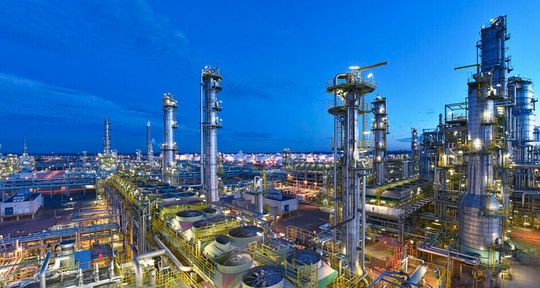
PROCESS Worldwide brings to you the ‘Top 10 plant engineering projects of February 2026’ from all over the world. Right from Bilfinger winning a contract for BP’s new green hydrogen project to Ineos securing a 300 million euro grant to decarbonize the Lavera site in France, find out all the projects making headlines here.
At a glance: Plant engineering projects from across the globe.
Sika has expanded its global manufacturing network with the opening of five new sites located in the United States, Argentina, Colombia, Bangladesh, and Tanzania.
(Source: Sika)
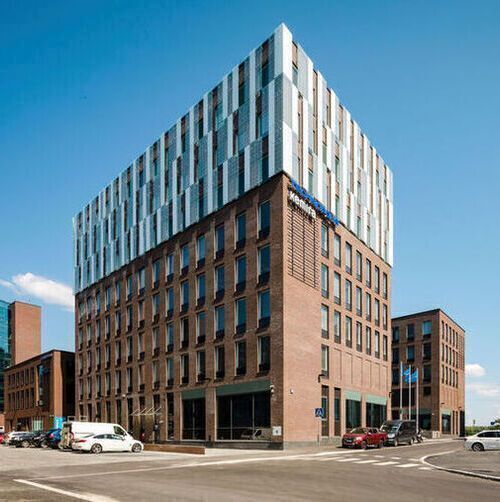
Feb 04 – Sika has expanded its global manufacturing network with the opening of five new sites located in the United States, Argentina, Colombia, Bangladesh, and Tanzania. These facilities mark an important step in increasing the company’s production capacity and further strengthening its global supply chain in key growth markets. Each site is strategically located and designed to efficiently meet rising regional demand for high-performance construction materials, while reinforcing Sika’s commitment to customer proximity and supply chain flexibility.
United States: Strengthening position in a core market
Sika has opened a new state of the art concrete admixture facility in Haines City, Florida, further strengthening its position in one of the company’s largest markets. The plant, which utilizes the highest level of automation of any Sika admixture site in the country, will efficiently produce a full range of Sika technologies that enhance concrete performance, durability, and sustainability. The facility also contributes to Sika’s sustainability goals: Due to its water- and waste-reduction systems, it is expected to reduce carbon emissions by approximately 8,000 tons by 2032.
Argentina: Expanding market penetration in the northeast region
A new manufacturing facility has been inaugurated in Puerto Tirol, Chaco, which will produce dry mortar products for the Northeast region of Argentina. With more than 80 years of presence in the country, the new site becomes Sika’s eighth production facility, reinforcing its long-standing commitment to growth and innovation in the region. Following several challenging years, the Argentinian construction market has returned to a growth path, creating opportunities for Sika to achieve greater market penetration and strengthen customer engagement.
Colombia: Growing footprint in a key industrial hub
Sika has opened a modern manufacturing site in Cali, Colombia, a region that generates 30 % of the nation’s GDP and is home to 20 % of its population. The new facility will produce mortars, tile adhesives, interior wall finishing, acrylic coatings, and concrete admixtures to meet Colombia’s growing construction and infrastructure demands. The Cali plant will also enhance the company’s ability to serve both domestic and export markets with greater efficiency.
Bangladesh: Supporting a fast-growing construction market
Sika’s new site in Narayanganj, Bangladesh, manufactures concrete admixtures and mortars that enhance performance, durability, and sustainability of buildings and infrastructure in this market. This site will also help to service demand for Sika’s recently launched high-performance tile adhesive in Bangladesh and across the region. The Bangladeshi construction market is a high growth market and is expected to continue to grow at a CAGR of more than seven percent for the period 2026–2029, driven by continued strength across key development sectors such as infrastructure, energy, education, housing, and further supported by major state funded investment programs.
Tanzania: Expanding reach across East Africa
Sika has established a new production site in Mwanza — a fast growing economic region, major mining hub, and one of Africa’s most populous areas. This facility manufactures mortars, admixtures, specialized grouts for mining and construction, as well as grinding aids for cement plants. Thanks to its strategic location, it serves local demand and exports to Burundi, Rwanda, and the Democratic Republic of Congo, further strengthening Sika’s presence in East Africa amid strong industrial and infrastructure growth. Tanzania’s construction market is growing rapidly and expected to continue expanding by a mid-high single digit over the coming years.
Bilfinger Secures Contract for BP’s New Green Hydrogen Project
With a planned capacity of 100 megawatts, the new production facility is expected to become the largest of its kind for green hydrogen from BP and the first to be fully owned and operated by the energy company.
(Source: Bilfinger)
Feb 10 – Bilfinger has been awarded a contract as part of a consortium to deliver the prefabrication, assembly and installation of plant components for BP’s new green hydrogen electrolyzer. With a planned capacity of 100 megawatts, the new production facility is expected to become the largest of its kind for green hydrogen from BP and the first to be fully owned and operated by the energy company.
Once the implementation is complete, the plant is expected to generate up to 11,000 tons of green hydrogen annually. Commissioning is planned for 2027. The plant will be powered by electricity from renewable energy sources. The green hydrogen produced could then be made available to industrial customers via a connection to the hydrogen core network and also be used in the neighboring refinery to produce lower-emission fuels. Based on their many years of comprehensive hydrogen expertise, Bilfinger was tasked with the prefabrication, assembly, and installation of piping and plant components, thermal and cold insulation, and the installation of HVAC systems, among others. A team of over 200 Bilfinger experts will be at work on site during peak periods.
Date: 08.12.2025
Naturally, we always handle your personal data responsibly. Any personal data we receive from you is processed in accordance with applicable data protection legislation. For detailed information please see our privacy policy.
Consent to the use of data for promotional purposes
I hereby consent to Vogel Communications Group GmbH & Co. KG, Max-Planck-Str. 7-9, 97082 Würzburg including any affiliated companies according to §§ 15 et seq. AktG (hereafter: Vogel Communications Group) using my e-mail address to send editorial newsletters. A list of all affiliated companies can be found here
Newsletter content may include all products and services of any companies mentioned above, including for example specialist journals and books, events and fairs as well as event-related products and services, print and digital media offers and services such as additional (editorial) newsletters, raffles, lead campaigns, market research both online and offline, specialist webportals and e-learning offers. In case my personal telephone number has also been collected, it may be used for offers of aforementioned products, for services of the companies mentioned above, and market research purposes.
Additionally, my consent also includes the processing of my email address and telephone number for data matching for marketing purposes with select advertising partners such as LinkedIn, Google, and Meta. For this, Vogel Communications Group may transmit said data in hashed form to the advertising partners who then use said data to determine whether I am also a member of the mentioned advertising partner portals. Vogel Communications Group uses this feature for the purposes of re-targeting (up-selling, cross-selling, and customer loyalty), generating so-called look-alike audiences for acquisition of new customers, and as basis for exclusion for on-going advertising campaigns. Further information can be found in section “data matching for marketing purposes”.
In case I access protected data on Internet portals of Vogel Communications Group including any affiliated companies according to §§ 15 et seq. AktG, I need to provide further data in order to register for the access to such content. In return for this free access to editorial content, my data may be used in accordance with this consent for the purposes stated here. This does not apply to data matching for marketing purposes.
Right of revocation
I understand that I can revoke my consent at will. My revocation does not change the lawfulness of data processing that was conducted based on my consent leading up to my revocation. One option to declare my revocation is to use the contact form found at https://contact.vogel.de. In case I no longer wish to receive certain newsletters, I have subscribed to, I can also click on the unsubscribe link included at the end of a newsletter. Further information regarding my right of revocation and the implementation of it as well as the consequences of my revocation can be found in the data protection declaration, section editorial newsletter.
Bilfinger Group CEO Thomas Schulz comments: “We are glad that BP has entrusted us with supporting them in the implementation of their hydrogen initiative. Together with our valued customer, we are in a position to contribute further to the development of Germany’s hydrogen infrastructure. This collaboration represents a milestone in our strategy of becoming the number 1 for our customers in enhancing efficiency and sustainability.”
In addition to the BP contract, Bilfinger is currently integrating a 100-MW electrolysis plant for RWE at the Lingen site, further supporting the development of the city of Lingen into a leading hydrogen location in Germany.
Taqa Morocco, Moeve to Develop Large-Scale Green Ammonia Project in Morocco
Taqa Morocco and Moeve have announced the signing of a preliminary land reservation agreement with the Government of Morocco, as part of the country’s Green Hydrogen Offer to develop a large-scale project for the production of green ammonia and industrial fuel.
(Source: Moeve)
Feb 11 – Taqa Morocco and Moeve have announced the signing of a preliminary land reservation agreement with the Government of Morocco, as part of the country’s Green Hydrogen Offer to develop a large-scale project for the production of green ammonia and industrial fuel.
The project is being carried out through a consortium between Taqa Morocco, a major operator in the energy, water and infrastructure sectors in the Kingdom of Morocco, and Moeve, an international player committed to sustainable energy and mobility based on green molecules. Each consortium member will be responsible for its respective scope, with Taqa Morocco supplying the renewable-energy components of the project, which will be developed in a site located in the Dakhla region, and Moeve leading the e-fuels production and marketing at the Port of Jorf Lasfar.
This project, selected by the steering committee of Morocco’s Green Hydrogen Offer, now enters a key phase with the launch of feasibility studies.
Abdelmajid Iraqui Houssaini CEO and Chairman of the Management Board of Taqa Morocco, said: “This strategic partnership with Moeve will contribute to the decarbonization journey of Taqa Morocco’s portfolio and support green mobility by fostering the development of hydrogen-derived products essential for industry and transport.”
“This agreement marks an important step in bringing large-scale green molecule production to Morocco. By combining our expertise in green fuels with Taqa Morocco’s strong renewable energy capabilities, we are laying the groundwork for a project that will accelerate the decarbonization of industry and heavy transport,” shares Maarten Wetselaar, CEO of Moeve.
Fluor Wins Multi-Year Contract for Expansion of Uranium Enrichment Plant
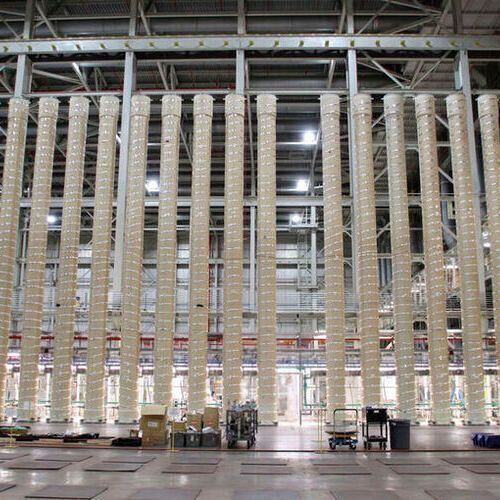
Ground floor-side view of the Haleu cascade centrifuges.
(Source: Fluor Corporation)
Feb 16 – Fluor Corporation has recently been awarded a multi-year contract by Centrus Energy’s subsidiary, American Centrifuge Operating. Fluor will serve as the integrated engineering, procurement and construction partner to expand its low-enriched uranium (LEU) and high-assay low-enriched uranium (Haleu) enrichment facility in Piketon, Ohio.
This contract is part of a multi-billion dollar public and private investment plan to add thousands of additional centrifuges at Centrus’ American Centrifuge Plant. Fluor will lead engineering and design of the expanded capacity in Ohio, manage the supply chain and procurement of key materials and services, oversee construction at the site, and support the commissioning of the new capacity.
“This project secures Fluor's foundational position in the critical U.S. uranium enrichment market by supporting the re-establishment of a domestic low-enriched uranium and high-assay low-enriched uranium capability,” said Al Collins, Business Group President, Mission Solutions. “We are proud of our long-term relationship with Centrus and to be a part of a team that supports the revitalization of the United States’ nuclear fuel supply chain.”
“This is another critical milestone for us as we begin our expansion in earnest,” said Centrus President and CEO Amir Vexler. “Fluor is a global leader with decades of experience managing complex nuclear construction projects and is an ideal partner as we transition to a large-scale deployment. With centrifuge manufacturing already underway, we are moving full speed ahead with our expansion.”
The expansion project will establish Centrus as a leading LEU provider for existing reactors. It will also expand its current capacity to produce Haleu, which will be needed in the next few years to power a new generation of advanced reactors to meet the world’s growing need for carbon-free electricity. The Piketon, Ohio plant is one of two licensed LEU-production facilities in the United States and the only licensed Haleu-production facility in the Western world.
The project is expected to create more than 1,300 Ohio jobs during construction and operation, contribute to local economic growth, and serve as a critical asset in the nation’s energy infrastructure and national security.
Technip Energies Secures Major Contract for SAF Project
Technip Energies has been awarded a substantial contract by Skynrg for the DSL-01 project, a new SAF production facility to be developed in Delfzijl, the Netherlands.
(Source: Pixabay)
Feb 17 – Technip Energies has been awarded a substantial[1] contract by Skynrg for the DSL-01 project, a new Sustainable Aviation Fuel (SAF) production facility to be developed in Delfzijl, the Netherlands.
The award covers Engineering, Procurement, Construction and Commissioning (EPCC) for Europe’s first standalone greenfield SAF production facility. It follows the successful completion of the Front-End Engineering & Design (Feed) phase by Technip Energies and marks a significant step in the long-standing collaboration with Skynrg. The DSL-01 project is designed to produce 100,000 tons per annum of SAF using the Hydroprocessed Esters and Fatty Acids (Hefa) pathway, processing sustainable waste feedstocks such as used cooking oil.
The project integrates an advanced feedstock pre-treatment unit and an on-site hydrogen plant based on Technip Energies’ proprietary Steam Methane Reforming (SMR) technology. This configuration is intended to improve cost efficiency and minimize lifecycle emissions, thereby enabling large-scale competitive production of SAF.
This contract represents Technip Energies' sixth Hefa-based SAF project in Europe, reinforcing its position as a key enabler for sustainable aviation fuel capacities in the region.
Sylvain Cabalery, Head of Commercial, Project Delivery & Services business unit at Technip Energies, stated: “We are pleased to have been entrusted by Skynrg to deliver this important sustainable aviation fuel project. With a planned capacity of 100,000 tons per year, this initiative marks a significant advancement in scaling SAF production across Europe. Technip Energies has delivered more than 60 % of the installed SAF production capacity globally. This award reinforces our leadership in this strategic market and underscores our continued commitment towards a more sustainable future.”
Maarten van Dijk, Chief Executive Officer and Co-founder of Skynrg, stated: “Reaching this milestone for DSL-01 is a defining step in our journey towards operating our own SAF production capacity. Together with Technip Energies as our trusted and expert EPCC partner, we can now turn years of development into a physical facility. Scaling SAF is essential for the future of aviation, and this project is a concrete contribution to its decarbonization.”
[1] A “substantial” award for Technip Energies is a contract award representing between 500 million euros and 1 billion euros of revenue. This award was recorded in Q1 2026 in the Project Delivery and Technology, Products & Services segments.
Kemira to Develop Activated Carbon Reactivation Plant in Spain
The new plant would add significant capacity to reactivate activated carbon for the region’s drinking water and wastewater market.
(Source: Kemira)
Feb 20 – Kemira plans to expand its Tarragona manufacturing site in Spain by building a plant to reactivate spent activated carbon for the drinking water business in Iberia. The new plant would add significant capacity to reactivate activated carbon for the region’s drinking water and wastewater market.
This strategic expansion project is yet another step towards Kemira’s long-term ambition to double the water-related revenue. The pre-engineering phase of the project is currently starting, and the new plant is expected to be operational at the end of 2029, depending on the timeline of the final investment decision and environmental permitting process. The total value of the investment is expected to be around 20 million euros.
“Tightening regulation drives the demand for efficient PFAS and other micropollutants removal from drinking water and wastewater. Kemira supports its customers with new water treatment solutions, including reactivation services. Building this new capacity in Spain will strengthen our local water treatment offering, allowing us to capitalize on increasing demand in the region”, says Tuija Pohjolainen-Hiltunen, Executive Vice President, Water Solutions at Kemira.
Activated carbon is the most common technology to remove odor and taste in drinking water, as well as micropollutants, including the harmful per- and polyfluoroalkyl substances (PFAS) in water treatment applications. Reactivation regenerates spent granular or pelletized activated carbons, making them ready for reuse.
Ineos Secures 300 Million Euro Grant to Decarbonize Lavera site in France
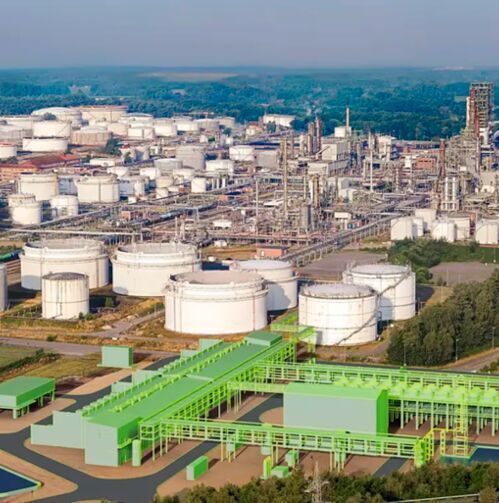
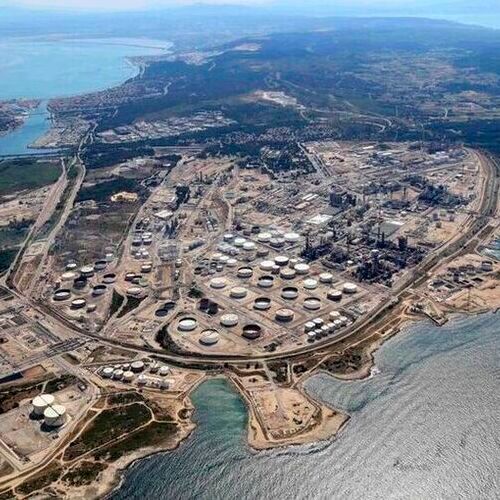
Lavera is a central pillar of French manufacturing. Its products and pipelines, feed directly into essential value chains across pharmaceuticals, healthcare, aerospace, transport, clean energy, food packaging and defence.
(Source: Ineos)
Feb 23 – Ineos has recently announced a 300-million-euro investment supported by French government grants that will deliver the next phase of its Lavera regeneration plan and cut carbon dioxide emissions by 331,000 tonnes per annum, the equivalent of taking over 70,000 cars off the road each year. The programme will also improve the long-term competitiveness of one of France’s most important industrial assets, securing thousands of skilled jobs.
The French government is providing support under the ‘Appel d’Offres Grands Projects Industriels de Décarbonation’ (AO GPID) scheme, part of the France 2030 investment plan and operated by Ademe. AO GPID provides annual grants to support large industrial decarbonization projects that deliver verifiable emissions reductions over a 15-year period to reduce France’s reliance on fossil-based energy.
At a time when chemical plants are closing across Europe due to pressure from high energy costs and global competition, this investment will provide stability for around 2,000 direct employees and more than 10,000 workers across the wider supply chain.
Lavera is a central pillar of French manufacturing. Its products and pipelines, feed directly into essential value chains across pharmaceuticals, healthcare, aerospace, transport, clean energy, food packaging and defence. Maintaining these capabilities inside France is vital for industrial strength, economic resilience and the country’s long-term technological leadership, particularly at a time when Europe faces rising dependence on imports from China and the United States.
The upgrades will make Lavera a profitable, lower-carbon facility with a clear pathway to net zero as electrification and carbon capture technologies mature. The investment will also support French circular economy objectives by enabling the Lavera cracker to process more sustainable feedstocks made from recycled plastics and bio-sourced materials, replacing fossil-based inputs.
Combined with the 250-million-euro investment announced in November 2025, this takes the total planned investment in the Lavera site to more than 550 million euros.
Ineos continues to call for urgent political action to restore competitiveness in Europe’s strategically vital chemical sector. Without this, millions of jobs will be lost, emissions will rise, and key European industries will become dangerously dependent on imports.
The recent announcement underlines Ineos’ long-term commitment to France. Ineos will work closely with the French Government throughout this investment programme, from planning through to delivery, to ensure Lavera remains competitive, resilient and aligned with France’s industrial and climate objectives.
JM-BP, Honeywell Technologies Chosen for CNF’s Power-to-Liquid E-Fuels Unit
Construction is planned to begin in 2028, with production targeted for 2031.
(Source: Pixabay)
Feb 24 – Carbon Neutral Fuels (CNF) has recently announced the selection of Johnson Matthey (JM) and BP’s FT Cans technology and Honeywell UOP’s Fischer-Tropsch (FT) Unicracking process technology for its flagship Power-to-Liquid e-fuels facility in Workington, U.K.
The project, known as Project Starling, will convert captured carbon dioxide and water into synthetic kerosene (FT-SPK), which, when blended with conventional jet fuel, will produce up to 25,000 tons of sustainable aviation fuel (SAF) annually.
Construction is planned to begin in 2028, with production targeted for 2031. Project Starling represents a major step forward for the UK’s e-fuels sector and is the first project in the country to evaluate the use of wastewater as a feedstock for SAF production. Johnson Matthey and BP’s FT Cans technology converts synthesis gas derived from captured carbon dioxide into a synthetic crude oil. This intermediate product is then upgraded using Honeywell’s FT Unicracking technology to produce synthetic kerosene suitable for SAF blending.
“Project Starling is central to Carbon Neutral Fuels’ mission to prove that large-scale decarbonization of aviation is both technically and economically viable,” said Sophie Zienkiewicz, Co-founder of Carbon Neutral Fuels. “By working with world-class technology partners such as Honeywell and Johnson Matthey, we are building a facility capable of delivering more than 95 % lifecycle emissions* savings compared with conventional jet fuel, while helping to establish the UK as a leader in sustainable e-fuels.”
The collaboration brings together complementary technologies designed to support efficient, scalable SAF production as global demand accelerates.
“Deploying FT Cans technology at Project Starling demonstrates how advanced process and catalyst solutions can enable the next generation of sustainable aviation fuels,” said Alberto Giovanzana, Managing Director, Licensing at Johnson Matthey. “Working alongside Carbon Neutral Fuels and Honeywell highlights how collaboration across the value chain can help accelerate the transition to lower carbon aviation.”
With global SAF demand projected to grow from 344 million gallons to 7.6 billion gallons over the next decade, Carbon Neutral Fuels is actively engaging with airlines, fuel suppliers and strategic partners to develop long-term offtake agreements and joint development opportunities.
“Honeywell’s FT Unicracking technology is designed to provide flexibility, efficiency and cost-effective upgrading of synthetic feedstocks into high quality transportation fuels,” said Rajesh Gattupalli, President of Honeywell UOP. “We are pleased to support Carbon Neutral Fuels as it advances Project Starling and contributes to the expansion of sustainable aviation fuel production.”
Zeon Begins Construction of New Cyclo-Olefin Polymers Production Plant in Japan
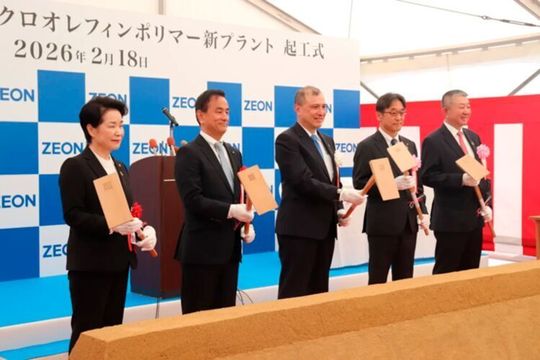
A groundbreaking ceremony was held at the site on February 18, 2026.
(Source: Zeon Corporation)
Feb 24 – Zeon Corporation will begin construction of a new production plant for Cyclo-Olefin Polymers (COP) at its business site in Yuka Town, Shunan City, Yamaguchi Prefecture. The new plant will produce COP in anticipation of growing demand based on its expanding use in medical and semiconductor applications in addition to its optical applications. Full-scale construction will begin in March 2026 toward completion in the first half of fiscal 2028, increasing Zeon’s annual production capacity for COP by about 30 % from current levels.
In addition, we’ve decided to name this new site the Tokuyama East Plant, and together with our existing Tokuyma Plant, we aim to further expand our operations in the Shunan area.
A groundbreaking ceremony was held at the site on February 18, 2026, with guests from Yamaguchi Prefecture, Shunan City, and the local community, as well as representatives from the construction contractor and other related companies, along with Zeon officials including President Tetsuya Toyoshima and Plant Manager Akira Honma. A total of 63 people attended the event to pray for safety on the construction site.
At a press conference held the same day, President Toyoshima said: “Meeting the robust demand for COP has been a long-held dream, so it is deeply moving to begin construction in such an optimal location. We intend to further expand our operations in the Shunan area, including this plant, and continue to meet society's expectations by providing our proprietary materials.”
COP is a highly transparent plastic developed independently by Zeon, featuring diverse characteristics including advanced optical properties, low water absorption, and high purity. In addition to optical applications such as films and lenses, other uses are being rapidly developed, encompassing medical applications such as syringes and cell culture plates as well as semiconductor transfer containers. We continue to see steady growth in demand for COP.
In Phase 3 of the Stage30 medium-term management plan (FY2025-2028), Zeon will promote a restructuring of its business portfolio by concentrating management resources in the four growth areas of Mobility, Healthcare and Life Science, Telecommunications, and GX. In particular, COP is positioned as a growth driver that promises a steady increase, and we will seek to expand the business by leveraging its superior material properties as well as its longstanding track record of being adopted for use as a competitive advantage. The new plant is to become the second production base for COP after Zeon’s existing Mizushima Plant in Kurashiki City, Okayama Prefecture, and we will endeavor to further stabilize COP supply based on multiple production bases.
Zeon remains committed to advancing a sustainable Earth and a safe, comfortable life for people by contributing to a sustainable society and delivering technologies, products, and services that are indispensable.
AGC Vinythai to Expand Capacity of Chlor Alkali Business in Thailand
AGC Vinythai has commenced commercial operations following the planned capacity expansion at its chlor-alkali plant in Map Ta Phut, Thailand.
(Source: Pixabay)
Feb 26 – AGC Vinythai has commenced commercial operations following the planned capacity expansion at its chlor-alkali plant in Map Ta Phut, Thailand. This project represents one of the largest deployments of Thyssenkrupp Nucera’s e-Bitac v7 technology (bipolar ion exchange membrane process electrolyzer) for safe and efficient chlor-alkali electrolysis in a vinyl production chain.
The newly installed e-Bitac v7 electrolyzer has an annual production capacity of 220,000 tons of caustic soda. The chlorine produced at the expanded chlor-alkali plant will supply AGC Vinythai’s vinyl plant facilities, enabling an increase in PVC production capacity from 300,000 tons to 700,000 tons per year. This expansion marks the largest investment in AGC Vinythai’s history and reinforces its position as Thailand’s leading supplier of caustic soda and PVC.
This expansion enables the Thai company to meet the rapidly growing demand for caustic soda and PVC in Southeast Asia, further strengthening its position in the chlor-alkali business. These chemical products are essential inputs for key industrial and development sectors in Southeast Asia, including construction, packaging, automotive, pulp and paper, and textiles.
“Our decades of experience in filter press technology ensure an even pressure distribution across the membrane, providing our customers with more stable and efficient chlor-alkali electrolysis,” said Keisho Cho, CEO of Thyssenkrupp Nucera Japan. He added: “This optimizes energy consumption and reduces membrane stress. This project represents a significant milestone for AGC Vinythai in expanding the production of key chemical products in Southeast Asia and we are pleased to have successfully implemented it.”
Thyssenkrupp Nucera was commissioned to supply an e-Bitac v7 electrolyzer in 2025. The scope of the project was subsequently expanded to include balance-of-plant services, such as basic engineering and other unit systems apart from the electrolyzer.




:quality(80)/p7i.vogel.de/wcms/54/ae/54aece5dff672ce1651470eecd9f2589/0130138090v2.jpeg "The new Ionchromatograph “Nexera IC“ (Source: Shimadzu)")
:quality(80)/p7i.vogel.de/wcms/49/5c/495c651fabd24a437c98bde6a3d71ecc/0130060419v2.jpeg "Enfinium has successfully piloted Wasteer’s groundbreaking visual AI technology at its Ferrybridge 2 facility in West Yorkshire and Parc Adfer facility in North Wales. (Source: Chris Parkes Photographer Ltd.)")
:quality(80)/p7i.vogel.de/wcms/77/1c/771c3d385d46ede7ab736f3f7d63cb62/0130007313v2.jpeg "The laser perforated filter elements for Eaton’s DCF series enable retention ratings that were previously unattainable with conventional manufacturing methods. Thanks to automatic self-cleaning, they also provide uninterrupted operation with long service life and minimal maintenance requirements. (Source: Eaton )")
:quality(80)/p7i.vogel.de/wcms/0b/33/0b3359449325c4e66cffdb41fce11683/0129956557v2.jpeg "Aramco Senior Vice President of Digital & Information Technology Sami A. Al Ajmi, sitting right, and President of Microsoft Arabia Turki Badhris, sitting left, at a signing ceremony attended by Aramco Executive Vice President of Technology & Innovation Ahmad O. Al Khowaiter, standing right, and Vice Chair and President of Microsoft Brad Smith, standing left. (Source: Aramco )")
:quality(80)/p7i.vogel.de/wcms/64/bb/64bb4812390b6491ce0bd4fe53597086/0130333812v2.jpeg "The solar power plant produces 30 GWh per year of renewable electricity, which is self-consumed by Holcim’s industrial facilities, making it the largest floating solar power plant in Europe dedicated to self-consumption. (Source: Pixabay)")
:quality(80)/p7i.vogel.de/wcms/32/06/320643bfb6b509933012a2fd9c42504d/0130333498v2.jpeg "BASF’s X3D catalysts combine high mechanical stability with an open structure. (Source: BASF)")
:quality(80)/p7i.vogel.de/wcms/1b/ca/1bca61c846359bfd9e7998fb30b662c6/0130333482v2.jpeg "Total Energies has launched France’s first advanced plastics recycling plant, with an annual capacity of 15,000 tons, at its Grandpuits site southeast of Paris. (Source: Pixabay)")
:quality(80)/p7i.vogel.de/wcms/09/e3/09e378194b496921d2a267a6752322eb/0130333473v2.jpeg "Under the terms of the contract, KBR will provide contract management, project management and supporting technical services throughout the EPC phases of the project. (Source: KBR)")
:quality(80)/p7i.vogel.de/wcms/7a/50/7a501f6d8f87a4524dc3aaceb04eacb4/0130333829v2.jpeg "The Clear Lake facility represents Clariant's first U.S. manufacturing site dedicated to producing pharmaceutical-grade PEG excipients, marking a pivotal milestone in the company's healthcare growth strategy. (Source: Clariant)")
:quality(80)/p7i.vogel.de/wcms/26/12/261210e5920899e5c35c4f905d3be8bd/0129399814v2.jpeg "Powders used in DPI formulations are often highly potent and administered in very low doses. (Source: Ima)")
:quality(80)/p7i.vogel.de/wcms/6b/3f/6b3f057c83c494e4732337d870d52b21/0130006927v2.jpeg "Lonza will realize upfront cash proceeds of 2.2 billion dollars and retain a 40 % stake in the business, with additional preferential participation in its future exit. (Source: Lonza)")
:quality(80)/p7i.vogel.de/wcms/df/cd/dfcd0c2e0eb4b554f956e0161ae08519/0129794328v1.jpeg "The plasma fractionation facility at CSL Behring, viewed from the outside. (Source: CSL Behring)")
:quality(80)/p7i.vogel.de/wcms/df/35/df3526a6f7aba41fdd2bb2051954e0d8/0130163620v2.jpeg "The SPA, valued at more than 3 billion dollars, is one of the largest binding long-term green ammonia off-take agreements globally. (Source: Pixabay)")
:quality(80)/p7i.vogel.de/wcms/af/73/af7394d9f8900024c5ee7fca459c4eeb/0130080328v2.jpeg "Axens has signed a MOU with Airbus to strengthen their cooperation in the development and deployment of SAF, a key pillar for decarbonizing the aviation sector. (Source: Pixabay)")
:quality(80)/p7i.vogel.de/wcms/0e/19/0e19f0cf0379c3af4c2fe02629db63f1/0130079229v2.jpeg "Thyssenkrupp Uhde has been selected by CSBP to deliver its patented Envinox technology for two nitric acid plants at CSBP’s Kwinana site in Western Australia. (Source: Thyssenkrupp Uhde)")
:quality(80)/p7i.vogel.de/wcms/a6/84/a68477d4ef879cc9cedeae332ca57c49/0129893677v2.jpeg "Siemens and Caphenia sign the partnership agreement. From left to right: Nicky Ahnert, Jürgen Giegerich, Frank Knauf (all Siemens), Dr. Mark Misselhorn, Dr. Andreas Waibel (both Caphenia) (Source: Siemens)")
:quality(80)/p7i.vogel.de/wcms/1c/39/1c39433f4bb4de2e5e6c5311c3236d09/0130110254v2.jpeg "The new pumps of the Omega type series have been designed for handling water and fluids with a low solids content efficiently. (Source: KSB)")
:quality(80)/p7i.vogel.de/wcms/be/e1/bee13b8d51a419b9b8f0685e2b9d47bf/0128917673v1.jpeg "The Centerwave 6000 measures pipes from 32 to 1,600 mm. (Source: Maag Group)")
:quality(80)/p7i.vogel.de/wcms/51/7a/517a4e83c5827663b4839f5ddb98f434/0128872953v1.jpeg "The Tigron in SIL version can be flexibly configured for different safety requirements. (Source: Auma)")
:quality(80)/p7i.vogel.de/wcms/d5/72/d5728578b35b72f365f5086bc1d068da/0128662441v2.jpeg "Nikkiso Clean Energy & Industrial Gases Group has announced the launch of its new multistage process pump (MSPP 210), designed to enhance safety and reduce downtime on air separation equipment. (Source: Nikkiso Clean Energy & Industrial Gases Group)")
:quality(80)/p7i.vogel.de/wcms/60/ef/60efa975d1dd123c1afbfb6ccc060461/0130263955v2.jpeg "Aquaclean (Source: Oko-tech)")
:quality(80)/p7i.vogel.de/wcms/07/62/0762f20b1821ee2724c97989374d6397/0130257651v2.jpeg "Oleksandr Sadchykov in front of the water treatment unit (Source: Grundfos)")
:quality(80)/p7i.vogel.de/wcms/98/98/989863664c7b65e87caf74a08239d487/0130167217v2.jpeg "Keller 26KyX Level Probe (Source: © Keller Pressure)")
:quality(80)/p7i.vogel.de/wcms/64/4e/644e22b71e8d35a63f051f781eb13886/0130163451v2.jpeg "Vega will present level and pressure measurement technology for the water industry at Ifat 2026. (Source: Vega)")
:quality(80)/p7i.vogel.de/wcms/6b/cc/6bcc3d26e1c7c74d90a10bc3ca296ae1/0128362351v2.jpeg "A look into Bayer's new tablet production, Solida 1, during construction: The robots and lift columns for material handling are being installed. (Source: Bayer)")
:quality(80)/p7i.vogel.de/wcms/24/c8/24c84ab6b1bcd24468a87820a07a85aa/0128194707v2.jpeg "Ajax Equipment has supplied Binding Solutions with a feed system comprising buffer hopper, screw feeder and agitated screw feeder for a pilot plant handling iron ore and additives. (Source: Ajax Equipment )")
:quality(80)/p7i.vogel.de/wcms/1d/3e/1d3e2788eb37c1e974f36337c8d33cb5/0128191010v2.jpeg "Ajax Equipment has supplied IGI Systems with a stainless-steel conical hopper with gas purge capability, as part of a prototype Sublimation System for a low-pressure chemical vapour deposition application. (Source: Ajax Equipment)")
:quality(80)/p7i.vogel.de/wcms/19/76/1976928d7d0a2ed7c1eeba7ade8552c8/0126365603v1.jpeg "Detail of Valvedesign: It has an aktiv amd passive part (Bild: Italvacuum)")
:quality(80)/p7i.vogel.de/wcms/d0/f7/d0f7d560dfce37c8371442d5b6120e3c/0130182478v1.jpeg "The Gelsenkirchen refinery primarily manufactures fuels for vehicles and aircraft, processing roughly 12 million tonnes of crude oil per year. (Source: BP)")
:quality(80)/p7i.vogel.de/wcms/7f/96/7f9628e43c99564fa6dfd8e76149425d/0130165852v2.jpeg "Pure titanium recycling process for chlor-alkali electrolysis cells. (Source: Asahi Kasei)")
:quality(80)/p7i.vogel.de/wcms/4e/27/4e2797cb610f686f13355a5957190d92/0130164068v2.jpeg "Bilfinger experts install and inspect Electrical, Instrumentation and Control systems at customer sites. (Source: Bilfinger)")
:quality(80)/p7i.vogel.de/wcms/f8/29/f8298429c1638b949a6f76346f6709c7/0118701710v2.jpeg "Bosch Industrial Heat will be presenting sustainable steam and heat solutions for global industrial use at the Achema trade fair in Frankfurt, Germany. (Source: Bosch Industriekessel)")
:quality(80)/p7i.vogel.de/wcms/07/24/07242664ab2b1c7841c9d9d0a127670c/0116045959.jpeg "A look inside the GEA machine room. (Bild: Magnavale)")
:quality(80)/p7i.vogel.de/wcms/c9/79/c979a20b32395ddfa93fe7ead90578a0/0108386061.jpeg "Production residues, lime, salt and suspended solids quickly clog the pipes. (Source:©Tanakorn - stock.adobe.com)")
:quality(80)/p7i.vogel.de/wcms/9e/5c/9e5c92d942ed046a27562d6e3d730c92/0103483548.jpeg "It is almost ten metres high and extends over three floors: the world's first multiple dividing wall column is located in the new technical centre at the University of Ulm. (Bild: Eberhardt, kiz Universität Ulm)")
:quality(80)/p7i.vogel.de/wcms/7c/77/7c77e24fdcc9e1511e8e711eff161e28/0130175489v2.jpeg "The milestone confirms the fast pace of development of Eni’s deep water gas projects offshore East Kalimantan. (Source: Unsplash )")
:quality(80)/p7i.vogel.de/wcms/b3/2f/b32fb9f5aa54e9cb6c92e4b6c8665263/0130163018v2.jpeg "The decision to take emergency collective action was made following an extraordinary meeting of IEA Member governments, convened by the IEA Executive Director to assess market conditions amid the conflict in the Middle East and consider the options to address supply disruptions. (Source: © Sashkin - stock.adobe.com)")
:quality(80)/p7i.vogel.de/wcms/85/d2/85d2cb02c4ae45a99454b5405b0f2489/0130149909v2.jpeg "IEA Executive Director Fatih Birol issued a statement on the meeting of G7 Energy Ministers at its IEA headquarters in Paris. (Source: © Marko - stock.adobe.com)")
:quality(80)/p7i.vogel.de/wcms/a8/4e/a84e8039a90a5cf4751d01ebcf6ba1a9/0127510172v2.jpeg "After six years, Achemasia, the international trade fair and innovation forum for sustainable chemical production, has returned with renewed vigor, bringing together global expertise, Chinese innovation, and a shared commitment to a greener industrial future—according to the organizers of the fair. (Source:PROCESS China)")
:quality(80)/p7i.vogel.de/wcms/17/c7/17c703445f134eb3d7ecc7918dda2762/0124596096v2.jpeg "Achema Middle East will launch in Saudi Arabia in 2026. (Bild: Dechema/ Hannibal)")
:quality(80)/p7i.vogel.de/wcms/2a/2c/2a2cffc07f51019065387cd63241b5ce/0119463370v1.jpeg "The Injecta 36 fills and seals RTU (Ready-to-Use) syringes at high speed. The image shows the robotic arm. (Source: IMA)")
:quality(80)/p7i.vogel.de/wcms/b1/7e/b17ea8c62ccafad1d1fb072d6199bbd6/0118578446.jpeg "“Star in the ring”: Vegapuls 6X radar level sensors are the solution of choice for Renolit for many applications on the way to the perfect plastic product. (Source: © MR Design - stock.adobe.com; Vega)")
:quality(80)/p7i.vogel.de/wcms/77/9d/779db435e7f9d79bafe16101008a9cfa/0130263548v2.jpeg "The Kingdom of Saudi Arabia, the UAE and Turkey are three core countries in the region that are actively incorporating the plastics circular economy with the assistance of the chemical recycling technology. (Source: © Anastasiia - stock.adobe.com)")
:quality(80)/p7i.vogel.de/wcms/a0/a3/a0a3cec0d4f46ed33f66ac24b1e03938/0130149916v2.jpeg "Bapco Energies serves notice of Force Majeure on its Group operations. (Source: © Design_Stock - stock.adobe.com)")
:quality(80)/p7i.vogel.de/wcms/76/87/7687c53b1f8451b5d78ccb2254e5bcd9/0130080619v2.jpeg "The transaction marks a transformational milestone for Sidara and significantly advances its long-term strategic ambition to expand and elevate its energy offering to clients worldwide. (Source: Pixabay)")
:fill(fff,0)/images.vogel.de/vogelonline/companyimg/2000/2093/65.jpg "Glatt_Logo_ND4c-RGB (5x3cm).jpg ()")
:fill(fff,0)/p7i.vogel.de/companies/61/f9/61f9439b7cbe4/logo-edl.png "logo-edl (EDL Anlagenbau Gesellschaft mbH)")
:fill(fff,0)/p7i.vogel.de/companies/66/9f/669f700d3b118/cac-2023-poslogo-idea-ahead.png "cac-2023-poslogo-idea-ahead (CAC ENGINEERING GMBH)")



:quality(80)/p7i.vogel.de/wcms/69/08/6908c3bb3fba2484c5b541cb82c4e162/0129451354v2.jpeg "Taqa Morocco and Moeve have announced the signing of a preliminary land reservation agreement with the Government of Morocco, as part of the country’s Green Hydrogen Offer to develop a large-scale project for the production of green ammonia and industrial fuel. (Source: Moeve)")
:quality(80)/p7i.vogel.de/wcms/14/a2/14a2140b0cd6972b09f5f03e3395cf13/0125303441v2.jpeg "By expanding its footprint in these markets, Sika is actively executing its growth strategy — strengthening its global presence and laying the groundwork for future expansion. (Source: Sika)")