Plant Watch Top 10 Engineering Projects of August 2025
Source: Press release
Air Liquide, LG Chem, GEA, Topsoe, Linde, Thyssenkrupp , Asahi Kasei, John Wood, Thyssenkrupp Uhde, Lummus Technology
13 min Reading Time
PROCESS Worldwide brings to you the ‘Top 10 plant engineering projects of August 2025’ from all over the world. Right from LG Chem and Enilive setting up Korea’s first HVO/SAF plant to the Algerian Government, Baladna, and GEA developing the world’s largest integrated dairy facility, find out all the projects making headlines here.
At a glance: Plant engineering projects from across the globe.
Air Liquide to Build New Industrial Gas Production Units in Germany
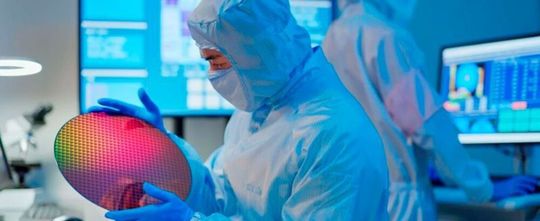
Under this new long-term contract, Air Liquide will supply large volumes of high-purity gases directly on the manufacturing site of a major customer in the semiconductor industry.
(Source: Air Liquide)
Aug 05 – Air Liquide has been awarded a long-term contract to build new state-of-the-art industrial gas production units in the heart of “Silicon Saxony” in Dresden, Germany. Under this new long-term contract, Air Liquide will supply large volumes of high-purity gases directly on the manufacturing site of a major customer in the semiconductor industry. This planned investment of over 250 million euros will be Air Liquide’s largest investment ever to support the electronics industry in Europe, thus strengthening the Group’s leadership on the continent. These new plants will support the growing needs of the semiconductor markets.
Air Liquide will build, own and operate three Air Separation Units (ASUs), two hydrogen production units and associated infrastructure to provide its customers with a large, continuous, stable and reliable supply of ultra-pure nitrogen, oxygen, argon, hydrogen, helium and CO2 at the heart of the German “Silicon Saxony”, the major European hub dedicated to semiconductor technologies and located in Dresden. The facility is expected to be operational in 2027.
These new state-of-the-art production units will rely on digital technologies, standardization and modularization to provide Air Liquide’s customers with outstanding value in terms of reliability and quality of supply. By producing on-site most of the carrier gases needed to manufacture semiconductors, this new facility will contribute to technological progress while reducing the environmental footprint by lowering the carbon emissions associated with the transportation of gases by truck. In addition, the electricity used to operate the facilities is targeted to be 100 % renewable.
LG Chem, Enilive to Set Up Korea’s First HVO/SAF Plant
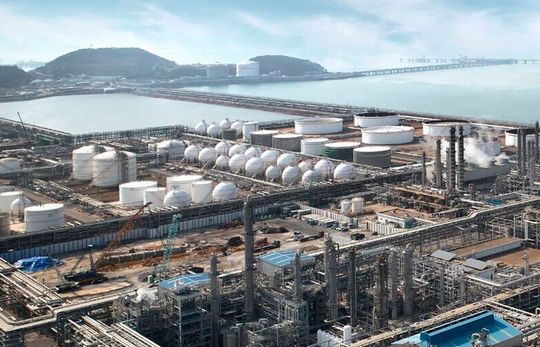
The plant is going to be constructed by the LG Chem and Enilive joint venture, called LG-Eni Biorefining, and it is scheduled for completion in 2027 and will annually process approximately 400,000 tons of renewable bio-feedstock.
(Source: LG Chem)
Aug 05 – LG Chem and Enilive have taken a major step toward biofuels growth by breaking ground on Korea’s first hydrotreated vegetable oil (HVO) and Sustainable Aviation Fuel (SAF) production plant in LG Chem’s Daesan Chemical Complex located in Seosan, Chungcheongnam-do, 80 kilometers southwest of Seoul. The plant is going to be constructed by the LG Chem and Enilive joint venture, called LG-Eni Biorefining, and it is scheduled for completion in 2027 and will annually process approximately 400,000 tons of renewable bio-feedstock.
HVO and SAF, whose demand is expected to surge driven by renewable fuel mandates, are made by hydrogenating more sustainable vegetable oils such as Used Cooking Oil (UCO) and other waste and residues through Ecofining, a technology developed by Eni in collaboration with Honeywell UOP. Taking into account the entire product value chain, HVO and SAF greenhouse gas (GHG) emissions are significantly reduced if compared to traditional fossil fuels.
“LG Chem is transforming its portfolio to build a low-carbon foundation that ensures both a progressively more sustainable growth and profitability,” said Shin Hak-cheol, CEO of LG Chem. “By advancing innovation in renewable fuels and bio-based feedstocks like HVO, we aim to strengthen our global competitiveness and meet our customers’ evolving needs efficiently.”
“The Seosan biorefinery breaking ground reaffirms Enilive’s strategy in offering increasingly sustainable products and our company’s position as a leader in biofuels production,” said Stefano Ballista, Enilive’s Chief Executive Officer. “Together with the plants that are already operational in Italy and in the United States of America, and with new biorefining plants under construction in Italy and Malaysia, the upcoming biorefining plant in Daesan will contribute to reach our 2030 target to increase our biorefining capacity to over 5 million tons per year, with the potential to produce more than 2 million tons per year of SAF.”
Algerian Govt, Baladna, GEA to Develop World’s Largest Integrated Dairy Facility
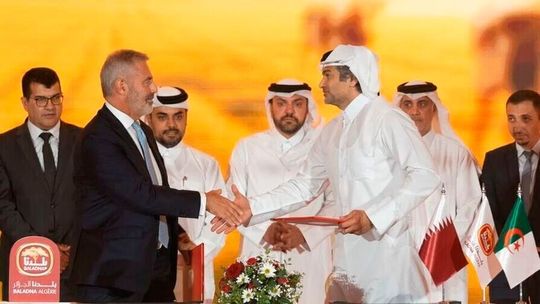
GEA CEO Stefan Klebert and Ali Al-Ali, Chairman of Baladna Algeria, at the contract signing ceremony for the world's largest integrated dairy facility.
(Source: Baladna/GEA)
Aug 05 – Today, Algeria is the world’s third largest importer of milk powder. To strengthen future autonomy and food security in dairy products, the Algerian Government – via its National Investment Fund – and Baladna Q.P.S.C. from Qatar entered a strategic partnership via the newly formed company subsidiary Baladna Algeria. The partnership’s purpose is to finance and manage the construction of a state-of-the-art integrated dairy farming and milk powder production facility in Algeria’s Adrar province. The locally produced milk powder is planned to meet about 50 % of Algeria's national milk powder needs, representing a significant step towards self-sufficiency. Additionally, the project will create approximately 5,000 job opportunities for local talents.
Date: 08.12.2025
Naturally, we always handle your personal data responsibly. Any personal data we receive from you is processed in accordance with applicable data protection legislation. For detailed information please see our privacy policy.
Consent to the use of data for promotional purposes
I hereby consent to Vogel Communications Group GmbH & Co. KG, Max-Planck-Str. 7-9, 97082 Würzburg including any affiliated companies according to §§ 15 et seq. AktG (hereafter: Vogel Communications Group) using my e-mail address to send editorial newsletters. A list of all affiliated companies can be found here
Newsletter content may include all products and services of any companies mentioned above, including for example specialist journals and books, events and fairs as well as event-related products and services, print and digital media offers and services such as additional (editorial) newsletters, raffles, lead campaigns, market research both online and offline, specialist webportals and e-learning offers. In case my personal telephone number has also been collected, it may be used for offers of aforementioned products, for services of the companies mentioned above, and market research purposes.
Additionally, my consent also includes the processing of my email address and telephone number for data matching for marketing purposes with select advertising partners such as LinkedIn, Google, and Meta. For this, Vogel Communications Group may transmit said data in hashed form to the advertising partners who then use said data to determine whether I am also a member of the mentioned advertising partner portals. Vogel Communications Group uses this feature for the purposes of re-targeting (up-selling, cross-selling, and customer loyalty), generating so-called look-alike audiences for acquisition of new customers, and as basis for exclusion for on-going advertising campaigns. Further information can be found in section “data matching for marketing purposes”.
In case I access protected data on Internet portals of Vogel Communications Group including any affiliated companies according to §§ 15 et seq. AktG, I need to provide further data in order to register for the access to such content. In return for this free access to editorial content, my data may be used in accordance with this consent for the purposes stated here. This does not apply to data matching for marketing purposes.
Right of revocation
I understand that I can revoke my consent at will. My revocation does not change the lawfulness of data processing that was conducted based on my consent leading up to my revocation. One option to declare my revocation is to use the contact form found at https://contact.vogel.de. In case I no longer wish to receive certain newsletters, I have subscribed to, I can also click on the unsubscribe link included at the end of a newsletter. Further information regarding my right of revocation and the implementation of it as well as the consequences of my revocation can be found in the data protection declaration, section editorial newsletter.
The facility will be the largest of its kind, located about 90 kilometers from the provincial capital. Construction will commence at the beginning of 2026, with first milk powder production scheduled to start in late 2027. Production volumes will be gradually expanded. When completed and fully supplied, this facility’s final capacity will amount to approximately 100,000 tons of milk powder per year.
“We are proud that Baladna and the Algerian Government are entrusting GEA to play a key part in this lighthouse project,” says Stefan Klebert, CEO GEA. “Not only are we building the world’s largest facility of its kind – we are also helping to strengthen regional food security and economic development. This project showcases the attractiveness of our technologies and products, underpinned by our extensive capabilities for large-scale process and plant engineering.”
“This engagement with GEA marks a milestone in the acceleration of the project. We are proud to attract the most prominent national and international expertise and renowned companies from all over the world to contribute to the completion of the project, following the highest international standards,” Mohamed Moutaz Al-Khayyat, Chairman of Baladna commented.
Leveraging its innovative portfolio of complementary engineering technologies, GEA will cover the entire value chain of milk powder production when constructing the facility – from dairy farming to processing and packaging of the final product.
Countrymark Selects Topsoe’s Innovative Technology for its US Refinery
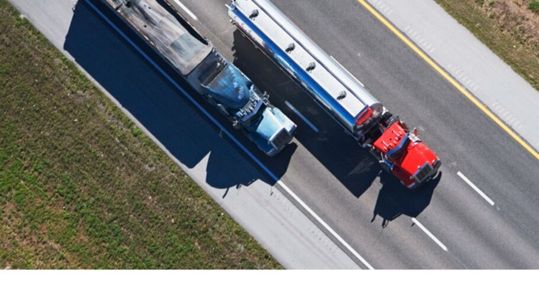
The new unit is expected to enable an annual emission avoidance of approximately 84,500 tons of CO2e – the equivalent of eliminating emissions from more than 186,000 commercial trucking roundtrips between Indianapolis and Washington D.C.
(Source: Topsoe)
Aug 06 – Topsoe has been selected as the renewable diesel technology partner for Countrymark’s Mount Vernon, Indiana refinery.
Located in southwestern Indiana, the refinery processes 35,000 barrels of crude oil per day. With the addition of Topsoe’s Hydroflex technology, Countrymark aims to produce up to 250,000 barrels of renewable diesel annually. The new unit is expected to enable an annual emission avoidance of approximately 84,500 tons of CO2e – the equivalent of eliminating emissions from more than 186,000 commercial trucking roundtrips between Indianapolis and Washington D.C.
Countrymark, a farmer-owned cooperative, will utilize local soybean oil as the primary feedstock to produce renewable diesel, helping create a locally sourced renewable fuel economy in Indiana.
Henrik Rasmussen, Managing Director of Topsoe Americas, said: “Our collaboration with Countrymark goes back many years. With demand for renewable diesel continuing to grow, we’re excited to partner with Countrymark on their journey to produce cleaner fuels and contribute to America’s low-carbon energy future.”
Matt Smorch, Countrymark President and CEO, added: “We saw this as an opportunity to deliver increased value to Countrymark diesel fuel buyers, increase the demand for Indiana agricultural products, and add value to our refining assets.”
Linde Commissions One of the World’s Largest Helium Storage Caverns
The storage facility, located in Beaumont, Texas, has a capacity of more than three billion cubic feet.
(Source: Linde)
Aug 07 – Linde has recently commissioned one of the world’s largest helium storage caverns, further strengthening long-term reliability in this critical global market. The storage facility, located in Beaumont, Texas, has a capacity of more than three billion cubic feet. As one of only three helium salt caverns in the world, it has the capability to store and extract helium helping to balance natural supply and demand cycles.
The cavern is the latest of Linde’s investments to further enhance its existing global helium infrastructure, as demand for the gas continues to grow. Beyond the storage cavern, Linde maintains proprietary technology related to the storage and production of helium. The company also has a diverse, global network of sources, production facilities and assets to supply customers across the world.
Helium plays a vital role in numerous applications, including the production of advanced semiconductor devices and serving as a critical material for nearly all space vehicle launches, as well as life-saving medical imaging equipment.
“Helium’s unique properties make it indispensable for our customers in vital industries, including aerospace, electronics, healthcare and manufacturing,” said Anshul Sarda, Managing Director Global Helium and Rare Gases, Linde. "With this investment, Linde is strengthening its global supply network to ensure our customers have reliable access to helium around the world."
Thyssenkrupp Polysius to Supply Electric Kiln for World’s First Zero-Emission Lime Plant
The facility will be based on the ZEQL (Zero Emission Quicklime) concept, developed by Swedish innovation company Saltx Technology.
(Source: Thyssenkrupp)
Aug 11 – Thyssenkrupp Polysius is set to provide the kiln system for SMA Mineral’s trailblazing quicklime plant in Norway – designed to operate entirely without CO2 emissions. Based on Saltx electric calcination technology, the project represents a global first in the decarbonization of lime production and marks a significant milestone in the transition to climate-neutral industrial processes.
The facility will be based on the ZEQL (Zero Emission Quicklime) concept, developed by Swedish innovation company Saltx Technology. The process electrifies the traditionally fossil-fueled lime calcination process, enabling the production of quicklime without any carbon dioxide emissions.
Thyssenkrupp Polysius will play a central role in scaling this technology to industrial level by delivering the kiln system and contributing its extensive engineering expertise.
“We are proud to contribute to this landmark project that sets a new standard for sustainable lime production”, says Christian Myland, CEO of Thyssenkrupp Polysius. “Our collaboration with SMA Mineral and Saltx Technology demonstrates how industrial partnerships can accelerate the transition to net-zero emissions. This project is a testament to our commitment to engineering solutions that drive decarbonization.”
The pilot plant is scheduled for completion in 2027 and will have an annual production capacity of 40,000 tons of ZEQL quicklime. The project has received 24 million euros (NOK 287 million) in funding from the Norwegian state enterprise Enova.
Asahi Kasei to Supply Alkaline-Water Electrolyzer for Cefmof’s Hydrogen Project
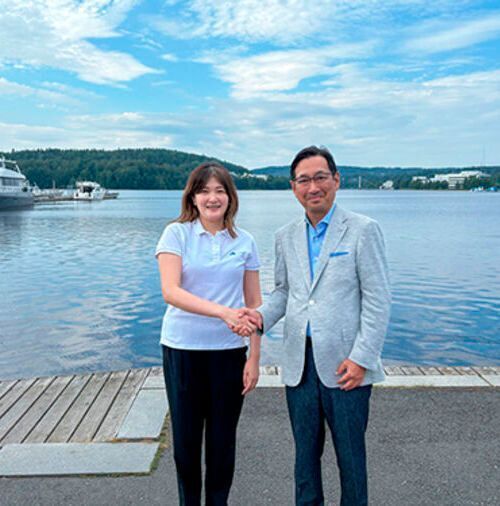
Haruka Arai, Executive Director of Cefmof (left), and Kenji Takeda, Executive Officer of Asahi Kasei (right), by Lake Jyväsjärvi.
(Source: Asahi Kasei)
Aug 11 – Diversified global manufacturer Asahi Kasei will supply its Aqualyzer-C3 containerized 1 MW-class alkaline-water electrolyzer to the Central Finland Mobility Foundation (Cefmof). The system will play an essential role in Central Finland’s hydrogen production and contribute to the region’s decarbonization efforts. Full operation is expected to begin in the first half of 2026.
Having launched its chlor-alkali electrolysis business in 1975, Asahi Kasei leveraged its technology and expertise to develop water electrolysis systems for hydrogen production. In 2020, the company installed its large-scale 10 MW-class Aqualyzer electrolyzer at the Fukushima Hydrogen Energy Research Field (FH2R) in Namie, Futaba, Fukushima, Japan. Following the success of the FH2R project, Aqualyzer-C3 was added to its portfolio in 2024 as a small-scale, containerized system in the range of 1 to 7.5 MW. This allows Asahi Kasei to meet emerging diversified needs of customers across the entire hydrogen market, with significant growth expected.
Cefmof is a foundation that accelerates the development of sustainable mobility and urban planning by harnessing green hydrogen — particularly in ways that are tangible and visible in people’s everyday lives. It was established by the City of Jyväskylä, Toyota Gazoo Racing World Rally Team, and the Toyota Mobility Foundation. The foundation supports projects such as hydrogen-powered transport and related infrastructure. Cefmof plans to use fuel cell vehicles and hydrogen buses, serving as a case model for the potential of hydrogen utilization in cold climates and the mobility industry.
For the reliable and efficient supply of hydrogen, Cefmof chose Asahi Kasei’s container-type Aqualyzer-C3 with a capacity of 1 MW. The installation in Jyväskylä is expected to commence towards the end of 2025, aiming for full-scale operation in the first half of 2026. The system will be able to produce enough hydrogen in an hour to refill approximately three fuel cell vehicles (FCVs).
Wood Secures PMC Services Contract for Turkey's Largest Polypropylene Plant
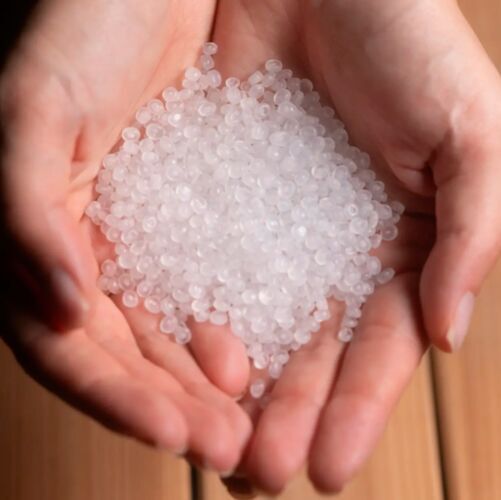
Wood is providing PMC services to develop Turkey’s largest polypropylene plant and associated terminal facility as part of the Ceyhan project.
(Source: Pixabay)
Aug 25 – Wood is providing project management consultancy (PMC) services to develop Turkey’s largest polypropylene plant and associated terminal facility as part of the Ceyhan project.
Wood is deploying over 70 project management experts to support the engineering, procurement and construction (EPC) phase for the polypropylene plant, as well as the engineering and procurement for the terminal facility under contracts valued at 18 million dollars, over three years.
Located in the Ceyhan industrial zone in the province of Adana, Turkey, the plant is designed to sustainably produce 472,500 tons of polypropylene annually, tripling Turkey’s annual polypropylene production capacity. The plant will use 100 % renewable electricity and internally produced hydrogen as fuel, significantly cutting carbon emissions.
Upon completion, the plant will meet 17 % of Turkey’s polypropylene demand, enhancing its self-sufficiency in petrochemical production. The terminal facility will handle propane storage and distribution, strategically positioned near major ports and high-demand petrochemical zones.
Gerry Traynor, President of Projects Eastern Hemisphere at Wood, said: “The Ceyhan project will play a significant role in strengthening Turkey’s economy by reducing reliance on imported polypropylene. As the PMC partner in this ambitious project, Wood is applying its project management expertise to support one of the largest industrial initiatives ever undertaken in the country.
“The demand for a more sustainable chemical industry is accelerating, and the Ceyhan Project is leading the way by powering the facility with renewable energy to reduce the carbon impact of critical chemicals production.”
The plant is a joint venture between Turkish investment and contracting firm, Rönesans Holding and Algerian national energy company Sonatrach. The terminal facility is a joint venture between Rönesans Holding and global storage leader Stolt-Nielsen.
Thyssenkrupp Uhde Completes Pre-Feed for HAMR Energy’s Renewable Fuels Project
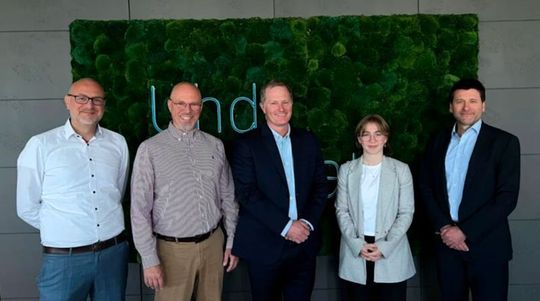
From left to right: Simon Hafner, Olaf Stellberger, Alex Smith, Charlie Singleton, Alexandar Schutz.
(Source: Thyssenkrupp Uhde)
Aug 25 – Thyssenkrupp Uhde has completed the Pre-Feed (Front-End Engineering Design) phase for the Portland Renewable Fuels Project in collaboration with HAMR Energy. The project, located in Victoria, Australia, will use biomass residues and renewable electricity to produce green methanol that can be used as a low carbon liquid fuel to power shipping and aviation.
In line with Australia’s plans to become a global hydrogen leader according to the country’s 2024 National Hydrogen Strategy, the project can contribute significantly to one of its key objectives: the decarbonization of long-haul transport. Green methanol can be used to fuel ships, or refined into sustainable aviation fuel (SAF), a direct substitute for fossil-based jet fuel and is considered a key enabler for reducing lifecycle emissions in aviation.
Nadja Håkansson, CEO, Thyssenkrupp Uhde: “We are proud to support HAMR Energy in shaping the future of renewable fuels in Australia. Our proven capabilities in process engineering, technology integration and project execution are the cornerstones of this collaboration.”
Richard Owen, Director and Chair, HAMR Energy: “This milestone reflects both our ambition and our strategy: to work with global technology leaders to deliver Australia’s next generation of clean fuels. The Pre-Feed phase marks an important step for a transformative project for our country’s energy future.”
With this lighthouse project Australia can make a major step towards becoming a regional leader in renewable fuel production. Thyssenkrupp Uhde will provide the biomass-to-methanol technology for the project.
Lummus Technology Selected for World's First Fossil-Free Plastics Production Complex
The first-of-its-kind plant will have a capacity of 200 KTA and will use 100 percent segregated green propylene and ethylene as feedstock to produce a wide range of polypropylene grades.
(Source: Vioneo)
Aug 25 – Lummus Technology has announced that Vioneo has selected its Novolen polypropylene (PP) technology for a new grassroots plant in Antwerp, Belgium. The plant will be part of Vioneo’s complex that, once complete, will be the world’s first industrial scale fossil-free plastics production complex, based on green methanol. The complex will also be highly electrified using renewable electricity and use renewable hydrogen as key components to its operations.
“Vioneo’s goal of delivering the world’s first fossil-free polypropylene plastics facility is bold, ambitious and one we are honored to support,” said Leon de Bruyn, President and Chief Executive Officer, Lummus Technology. “Our proven polypropylene polymerization technology will allow Vioneo to produce high-performance, drop-in polypropylene grades through a low-emissions process without compromising quality or flexibility.”
The first-of-its-kind plant will have a capacity of 200 KTA and will use 100 percent segregated green propylene and ethylene as feedstock to produce a wide range of polypropylene grades. With high-purity feedstock and proven technology, polypropylene will serve as a direct drop-in replacement for fossil-based alternatives. The plastics produced will be fully traceable and CO2 negative, allowing customers to reduce their Scope 3 emissions.
“Vioneo is driving the plastics industry’s transition by proving that large-scale, cleaner production with green methanol-derived feedstocks is economically viable,” said Alex Hogan, Chief Executive Officer, Vioneo. “Our collaboration with Lummus Technology to license their premier Novolen polypropylene technology for our Antwerp facility is fundamental to this vision. This world-first plant will use fully certified green propylene and ethylene from industrially proven Methanol-To-Olefins technology, to produce a broad range of high-quality, drop-in bio-polypropylene grades, significantly advancing a sustainable plastics economy.”
Lummus’ scope includes the technology license, process design package, support during the front-end engineering design phase and catalyst supply during ongoing operations.
Lummus’ Novolen PP technology is part of the Verdene technology suite, which is made up of proven technologies for sustainable polymer producers using bio-feedstock to produce fully bio-based polymers such as polyethylene, polypropylene and super absorbent polymers. The suite offers reduced to net-negative carbon dioxide emissions because of the sequestration of CO2-based carbon in the polymer itself. The polymer functions the same as polymers produced from traditional hydrocarbon sources.




:quality(80)/p7i.vogel.de/wcms/54/f4/54f4b4e2a86b203e0dfd84221602bdb5/0130367283v2.jpeg "Anybotics' Anymal robot combines depth cameras, LiDAR, thermal imaging, acoustic sensors, and gas detectors into a single inspection round. (Source: Anybotics)")
:quality(80)/p7i.vogel.de/wcms/e9/64/e964996410967c124c2cf01a8623068e/0130285341v1.jpeg "Geht unter die Oberfläche: Die Offshore-Ölförderung erfordert hochenergetische Pumpen – doch diese sind im Wesentlichen eine Black Box. Bisher zumindest. (Source: Kistler Group)")
:quality(80)/p7i.vogel.de/wcms/54/ae/54aece5dff672ce1651470eecd9f2589/0130138090v2.jpeg "The new Ionchromatograph “Nexera IC“ (Source: Shimadzu)")
:quality(80)/p7i.vogel.de/wcms/49/5c/495c651fabd24a437c98bde6a3d71ecc/0130060419v2.jpeg "Enfinium has successfully piloted Wasteer’s groundbreaking visual AI technology at its Ferrybridge 2 facility in West Yorkshire and Parc Adfer facility in North Wales. (Source: Chris Parkes Photographer Ltd.)")
:quality(80)/p7i.vogel.de/wcms/64/bb/64bb4812390b6491ce0bd4fe53597086/0130333812v2.jpeg "The solar power plant produces 30 GWh per year of renewable electricity, which is self-consumed by Holcim’s industrial facilities, making it the largest floating solar power plant in Europe dedicated to self-consumption. (Source: Pixabay)")
:quality(80)/p7i.vogel.de/wcms/32/06/320643bfb6b509933012a2fd9c42504d/0130333498v2.jpeg "BASF’s X3D catalysts combine high mechanical stability with an open structure. (Source: BASF)")
:quality(80)/p7i.vogel.de/wcms/1b/ca/1bca61c846359bfd9e7998fb30b662c6/0130333482v2.jpeg "Total Energies has launched France’s first advanced plastics recycling plant, with an annual capacity of 15,000 tons, at its Grandpuits site southeast of Paris. (Source: Pixabay)")
:quality(80)/p7i.vogel.de/wcms/09/e3/09e378194b496921d2a267a6752322eb/0130333473v2.jpeg "Under the terms of the contract, KBR will provide contract management, project management and supporting technical services throughout the EPC phases of the project. (Source: KBR)")
:quality(80)/p7i.vogel.de/wcms/7a/50/7a501f6d8f87a4524dc3aaceb04eacb4/0130333829v2.jpeg "The Clear Lake facility represents Clariant's first U.S. manufacturing site dedicated to producing pharmaceutical-grade PEG excipients, marking a pivotal milestone in the company's healthcare growth strategy. (Source: Clariant)")
:quality(80)/p7i.vogel.de/wcms/26/12/261210e5920899e5c35c4f905d3be8bd/0129399814v2.jpeg "Powders used in DPI formulations are often highly potent and administered in very low doses. (Source: Ima)")
:quality(80)/p7i.vogel.de/wcms/6b/3f/6b3f057c83c494e4732337d870d52b21/0130006927v2.jpeg "Lonza will realize upfront cash proceeds of 2.2 billion dollars and retain a 40 % stake in the business, with additional preferential participation in its future exit. (Source: Lonza)")
:quality(80)/p7i.vogel.de/wcms/df/cd/dfcd0c2e0eb4b554f956e0161ae08519/0129794328v1.jpeg "The plasma fractionation facility at CSL Behring, viewed from the outside. (Source: CSL Behring)")
:quality(80)/p7i.vogel.de/wcms/df/35/df3526a6f7aba41fdd2bb2051954e0d8/0130163620v2.jpeg "The SPA, valued at more than 3 billion dollars, is one of the largest binding long-term green ammonia off-take agreements globally. (Source: Pixabay)")
:quality(80)/p7i.vogel.de/wcms/af/73/af7394d9f8900024c5ee7fca459c4eeb/0130080328v2.jpeg "Axens has signed a MOU with Airbus to strengthen their cooperation in the development and deployment of SAF, a key pillar for decarbonizing the aviation sector. (Source: Pixabay)")
:quality(80)/p7i.vogel.de/wcms/0e/19/0e19f0cf0379c3af4c2fe02629db63f1/0130079229v2.jpeg "Thyssenkrupp Uhde has been selected by CSBP to deliver its patented Envinox technology for two nitric acid plants at CSBP’s Kwinana site in Western Australia. (Source: Thyssenkrupp Uhde)")
:quality(80)/p7i.vogel.de/wcms/a6/84/a68477d4ef879cc9cedeae332ca57c49/0129893677v2.jpeg "Siemens and Caphenia sign the partnership agreement. From left to right: Nicky Ahnert, Jürgen Giegerich, Frank Knauf (all Siemens), Dr. Mark Misselhorn, Dr. Andreas Waibel (both Caphenia) (Source: Siemens)")
:quality(80)/p7i.vogel.de/wcms/1c/39/1c39433f4bb4de2e5e6c5311c3236d09/0130110254v2.jpeg "The new pumps of the Omega type series have been designed for handling water and fluids with a low solids content efficiently. (Source: KSB)")
:quality(80)/p7i.vogel.de/wcms/be/e1/bee13b8d51a419b9b8f0685e2b9d47bf/0128917673v1.jpeg "The Centerwave 6000 measures pipes from 32 to 1,600 mm. (Source: Maag Group)")
:quality(80)/p7i.vogel.de/wcms/51/7a/517a4e83c5827663b4839f5ddb98f434/0128872953v1.jpeg "The Tigron in SIL version can be flexibly configured for different safety requirements. (Source: Auma)")
:quality(80)/p7i.vogel.de/wcms/60/ef/60efa975d1dd123c1afbfb6ccc060461/0130263955v2.jpeg "Aquaclean (Source: Oko-tech)")
:quality(80)/p7i.vogel.de/wcms/07/62/0762f20b1821ee2724c97989374d6397/0130257651v2.jpeg "Oleksandr Sadchykov in front of the water treatment unit (Source: Grundfos)")
:quality(80)/p7i.vogel.de/wcms/98/98/989863664c7b65e87caf74a08239d487/0130167217v2.jpeg "Keller 26KyX Level Probe (Source: © Keller Pressure)")
:quality(80)/p7i.vogel.de/wcms/64/4e/644e22b71e8d35a63f051f781eb13886/0130163451v2.jpeg "Vega will present level and pressure measurement technology for the water industry at Ifat 2026. (Source: Vega)")
:quality(80)/p7i.vogel.de/wcms/6b/cc/6bcc3d26e1c7c74d90a10bc3ca296ae1/0128362351v2.jpeg "A look into Bayer's new tablet production, Solida 1, during construction: The robots and lift columns for material handling are being installed. (Source: Bayer)")
:quality(80)/p7i.vogel.de/wcms/24/c8/24c84ab6b1bcd24468a87820a07a85aa/0128194707v2.jpeg "Ajax Equipment has supplied Binding Solutions with a feed system comprising buffer hopper, screw feeder and agitated screw feeder for a pilot plant handling iron ore and additives. (Source: Ajax Equipment )")
:quality(80)/p7i.vogel.de/wcms/1d/3e/1d3e2788eb37c1e974f36337c8d33cb5/0128191010v2.jpeg "Ajax Equipment has supplied IGI Systems with a stainless-steel conical hopper with gas purge capability, as part of a prototype Sublimation System for a low-pressure chemical vapour deposition application. (Source: Ajax Equipment)")
:quality(80)/p7i.vogel.de/wcms/19/76/1976928d7d0a2ed7c1eeba7ade8552c8/0126365603v1.jpeg "Detail of Valvedesign: It has an aktiv amd passive part (Bild: Italvacuum)")
:quality(80)/p7i.vogel.de/wcms/0c/a1/0ca135e0486c9af90a0552aea85de88c/0130439525v2.jpeg "Qatar Energy expects the damage to its Ras Laffan Industrial City caused by missile strikes, which occurred on Wednesday 18 March 2026, and in the early hours of Thursday 19 March 2026, to cost about 20 billion dollars a year in lost revenue. (Source: Pixabay)")
:quality(80)/p7i.vogel.de/wcms/d0/f7/d0f7d560dfce37c8371442d5b6120e3c/0130182478v1.jpeg "The Gelsenkirchen refinery primarily manufactures fuels for vehicles and aircraft, processing roughly 12 million tonnes of crude oil per year. (Source: BP)")
:quality(80)/p7i.vogel.de/wcms/7f/96/7f9628e43c99564fa6dfd8e76149425d/0130165852v2.jpeg "Pure titanium recycling process for chlor-alkali electrolysis cells. (Source: Asahi Kasei)")
:quality(80)/p7i.vogel.de/wcms/f8/29/f8298429c1638b949a6f76346f6709c7/0118701710v2.jpeg "Bosch Industrial Heat will be presenting sustainable steam and heat solutions for global industrial use at the Achema trade fair in Frankfurt, Germany. (Source: Bosch Industriekessel)")
:quality(80)/p7i.vogel.de/wcms/07/24/07242664ab2b1c7841c9d9d0a127670c/0116045959.jpeg "A look inside the GEA machine room. (Bild: Magnavale)")
:quality(80)/p7i.vogel.de/wcms/c9/79/c979a20b32395ddfa93fe7ead90578a0/0108386061.jpeg "Production residues, lime, salt and suspended solids quickly clog the pipes. (Source:©Tanakorn - stock.adobe.com)")
:quality(80)/p7i.vogel.de/wcms/9e/5c/9e5c92d942ed046a27562d6e3d730c92/0103483548.jpeg "It is almost ten metres high and extends over three floors: the world's first multiple dividing wall column is located in the new technical centre at the University of Ulm. (Bild: Eberhardt, kiz Universität Ulm)")
:quality(80)/p7i.vogel.de/wcms/7c/77/7c77e24fdcc9e1511e8e711eff161e28/0130175489v2.jpeg "The milestone confirms the fast pace of development of Eni’s deep water gas projects offshore East Kalimantan. (Source: Unsplash )")
:quality(80)/p7i.vogel.de/wcms/b3/2f/b32fb9f5aa54e9cb6c92e4b6c8665263/0130163018v2.jpeg "The decision to take emergency collective action was made following an extraordinary meeting of IEA Member governments, convened by the IEA Executive Director to assess market conditions amid the conflict in the Middle East and consider the options to address supply disruptions. (Source: © Sashkin - stock.adobe.com)")
:quality(80)/p7i.vogel.de/wcms/85/d2/85d2cb02c4ae45a99454b5405b0f2489/0130149909v2.jpeg "IEA Executive Director Fatih Birol issued a statement on the meeting of G7 Energy Ministers at its IEA headquarters in Paris. (Source: © Marko - stock.adobe.com)")
:quality(80)/p7i.vogel.de/wcms/a8/4e/a84e8039a90a5cf4751d01ebcf6ba1a9/0127510172v2.jpeg "After six years, Achemasia, the international trade fair and innovation forum for sustainable chemical production, has returned with renewed vigor, bringing together global expertise, Chinese innovation, and a shared commitment to a greener industrial future—according to the organizers of the fair. (Source:PROCESS China)")
:quality(80)/p7i.vogel.de/wcms/17/c7/17c703445f134eb3d7ecc7918dda2762/0124596096v2.jpeg "Achema Middle East will launch in Saudi Arabia in 2026. (Bild: Dechema/ Hannibal)")
:quality(80)/p7i.vogel.de/wcms/2a/2c/2a2cffc07f51019065387cd63241b5ce/0119463370v1.jpeg "The Injecta 36 fills and seals RTU (Ready-to-Use) syringes at high speed. The image shows the robotic arm. (Source: IMA)")
:quality(80)/p7i.vogel.de/wcms/b1/7e/b17ea8c62ccafad1d1fb072d6199bbd6/0118578446.jpeg "“Star in the ring”: Vegapuls 6X radar level sensors are the solution of choice for Renolit for many applications on the way to the perfect plastic product. (Source: © MR Design - stock.adobe.com; Vega)")
:quality(80)/p7i.vogel.de/wcms/77/9d/779db435e7f9d79bafe16101008a9cfa/0130263548v2.jpeg "The Kingdom of Saudi Arabia, the UAE and Turkey are three core countries in the region that are actively incorporating the plastics circular economy with the assistance of the chemical recycling technology. (Source: © Anastasiia - stock.adobe.com)")
:fill(fff,0)/images.vogel.de/vogelonline/companyimg/2000/2093/65.jpg "Glatt_Logo_ND4c-RGB (5x3cm).jpg ()")
:fill(fff,0)/p7i.vogel.de/companies/61/f9/61f9439b7cbe4/logo-edl.png "logo-edl (EDL Anlagenbau Gesellschaft mbH)")
:fill(fff,0)/p7i.vogel.de/companies/66/9f/669f700d3b118/cac-2023-poslogo-idea-ahead.png "cac-2023-poslogo-idea-ahead (CAC ENGINEERING GMBH)")



:quality(80)/p7i.vogel.de/wcms/f4/a7/f4a7eb09c74280bc32acee494f284b1c/0125978522v2.jpeg "GEA CEO Stefan Klebert and Ali Al-Ali, Chairman of Baladna Algeria, at the contract signing ceremony for the world's largest integrated dairy facility. (Source: Baladna/GEA)")
:quality(80)/p7i.vogel.de/wcms/51/c8/51c87a7e43ed898d6c9c4dc0fcfcb34a/0126327826v2.jpeg "Wood is providing PMC services to develop Turkey’s largest polypropylene plant and associated terminal facility as part of the Ceyhan project. (Source: Pixabay)")