A demonstration plant with a capacity of 28 tons of ammonia per day will first be built at Uniper’s Gelsenkirchen-Scholven site in Germany. This project will serve as the basis for the planned hydrogen import terminal in Wilhelmshaven, northwestern Germany, where the technology will be applied on a large industrial scale.
The aim of the partnership is to convert imported ammonia into hydrogen on an industrial scale and make it available for a wide range of industries such as energy, steel, and chemicals.
(Source: Thyssenkrupp Uhde)
Dortmund/Germany – Thyssenkrupp Uhde and Uniperare entering into a strategic partnership to bring a key technology for global hydrogen trading to industrial maturity: the large-scale ammonia cracker. In an ammonia cracker, ammonia is catalytically broken down into its components, hydrogen and nitrogen, at high temperatures, and pure hydrogen is then produced in a purification process. In a first step, a demonstration plant with a capacity of 28 tons of ammonia per day will be built at Uniper’s Gelsenkirchen-Scholven site in Germany. The plant will be one of the first of its kind in the world and will serve as the basis for the planned hydrogen import terminal in Wilhelmshaven, northwestern Germany, where the technology is to be applied on a large industrial scale in a second step.
The aim of the partnership is to convert imported ammonia into hydrogen on an industrial scale and make it available for a wide range of industries such as energy, steel, and chemicals. The cooperation marks an important step towards strengthening energy security and the sustainable transformation of energy-intensive industries. The use of ammonia as a transport and storage medium makes it possible to provide green or low-carbon hydrogen from global production sites in large quantities at low cost – a prerequisite for the successful ramp-up of the hydrogen economy.
Holger Kreetz, COO of Uniper: “Uniper is actively committed to establishing hydrogen as an important component of the future energy mix that combines security and sustainability. Our aim is to strengthen the resilience of the economy. In order to meet Germany’s future hydrogen needs, we are dependent on imports from abroad. The partnership between Uniper and Thyssenkrupp Uhde is therefore an important milestone for the hydrogen ramp-up and the decarbonization of industry. With the ammonia cracker in Scholven, we’re laying the groundwork to trade hydrogen internationally and making it available across industries.”
Nadja Håkansson, CEO of Thyssenkrupp Uhde: “Uniper’s position as a leader in the energy markets and experienced asset operator, combined with our proven track record as a global leader in ammonia technology and large-scale plant delivery, forms a strong foundation for success. This joint capability ensures that the cracker plant is optimized not only for performance and efficiency but also for safety, long-term reliability, and total lifecycle cost. This integrated approach ensures a high level of confidence across the industry that the plant will consistently deliver top-tier operational performance throughout its entire lifecycle.”
Stay up to Date
Do you want the latest news, specialist articles and information on new products? Then you can register for our free newsletter:
The project is supported by funding from the state of North Rhine-Westphalia to realize innovative components of the demonstration plant at the Scholven site. The plant serves to gain knowledge for the subsequent construction of a large-scale commercial plant. Both companies are also contributing significant funds of their own.
Mona Neubaur, Minister for Economic Affairs, Industry, Climate Protection, and Energy of the State of North Rhine-Westphalia: “Hydrogen is one of the key technologies for the future viability of our industry in North Rhine-Westphalia. Like no other federal state, we need energy and raw materials for our economy and prosperity. With the help of ammonia cracking technology, we are opening up the possibility of obtaining green energy from numerous regions around the world. In doing so, we are strengthening the resilience of our business location and demonstrating how sustainability and security of supply can work together.”
Ammonia cracking technology is regarded as the missing element for a functioning global hydrogen infrastructure. As ammonia has a significantly higher energy density by volume and is easier to transport than pure hydrogen, it is ideally suited as a carrier medium. As a raw material for fertilizers, ammonia has been traded worldwide in large quantities and transported by ship for decades. If low-carbon hydrogen is converted directly into ammonia at the production site, this infrastructure can be easily utilized. Cracking allows the hydrogen to be reconverted at the destination and used in a climate-friendly way.
Following successful development and tests on a laboratory scale, the construction and operation of the “demo cracker” are now important steps towards large-scale implementation. During operation, data is obtained that is needed for further optimization of the technology as well as for scaling up to industrial scale in order to build the first commercial plant.
Date: 08.12.2025
Naturally, we always handle your personal data responsibly. Any personal data we receive from you is processed in accordance with applicable data protection legislation. For detailed information please see our privacy policy.
Consent to the use of data for promotional purposes
I hereby consent to Vogel Communications Group GmbH & Co. KG, Max-Planck-Str. 7-9, 97082 Würzburg including any affiliated companies according to §§ 15 et seq. AktG (hereafter: Vogel Communications Group) using my e-mail address to send editorial newsletters. A list of all affiliated companies can be found here
Newsletter content may include all products and services of any companies mentioned above, including for example specialist journals and books, events and fairs as well as event-related products and services, print and digital media offers and services such as additional (editorial) newsletters, raffles, lead campaigns, market research both online and offline, specialist webportals and e-learning offers. In case my personal telephone number has also been collected, it may be used for offers of aforementioned products, for services of the companies mentioned above, and market research purposes.
Additionally, my consent also includes the processing of my email address and telephone number for data matching for marketing purposes with select advertising partners such as LinkedIn, Google, and Meta. For this, Vogel Communications Group may transmit said data in hashed form to the advertising partners who then use said data to determine whether I am also a member of the mentioned advertising partner portals. Vogel Communications Group uses this feature for the purposes of re-targeting (up-selling, cross-selling, and customer loyalty), generating so-called look-alike audiences for acquisition of new customers, and as basis for exclusion for on-going advertising campaigns. Further information can be found in section “data matching for marketing purposes”.
In case I access protected data on Internet portals of Vogel Communications Group including any affiliated companies according to §§ 15 et seq. AktG, I need to provide further data in order to register for the access to such content. In return for this free access to editorial content, my data may be used in accordance with this consent for the purposes stated here. This does not apply to data matching for marketing purposes.
Right of revocation
I understand that I can revoke my consent at will. My revocation does not change the lawfulness of data processing that was conducted based on my consent leading up to my revocation. One option to declare my revocation is to use the contact form found at https://contact.vogel.de. In case I no longer wish to receive certain newsletters, I have subscribed to, I can also click on the unsubscribe link included at the end of a newsletter. Further information regarding my right of revocation and the implementation of it as well as the consequences of my revocation can be found in the data protection declaration, section editorial newsletter.
The cracker will be built on Uniper’s power plant site in Gelsenkirchen-Scholven, where new, sustainable projects are to be developed. All official approvals required for the construction and operation of the demo cracker have been obtained. Construction has started, and commissioning is planned for the end of 2026.




:quality(80)/p7i.vogel.de/wcms/49/5c/495c651fabd24a437c98bde6a3d71ecc/0130060419v2.jpeg "Enfinium has successfully piloted Wasteer’s groundbreaking visual AI technology at its Ferrybridge 2 facility in West Yorkshire and Parc Adfer facility in North Wales. (Source: Chris Parkes Photographer Ltd.)")
:quality(80)/p7i.vogel.de/wcms/77/1c/771c3d385d46ede7ab736f3f7d63cb62/0130007313v2.jpeg "The laser perforated filter elements for Eaton’s DCF series enable retention ratings that were previously unattainable with conventional manufacturing methods. Thanks to automatic self-cleaning, they also provide uninterrupted operation with long service life and minimal maintenance requirements. (Source: Eaton )")
:quality(80)/p7i.vogel.de/wcms/0b/33/0b3359449325c4e66cffdb41fce11683/0129956557v2.jpeg "Aramco Senior Vice President of Digital & Information Technology Sami A. Al Ajmi, sitting right, and President of Microsoft Arabia Turki Badhris, sitting left, at a signing ceremony attended by Aramco Executive Vice President of Technology & Innovation Ahmad O. Al Khowaiter, standing right, and Vice Chair and President of Microsoft Brad Smith, standing left. (Source: Aramco )")
:quality(80)/p7i.vogel.de/wcms/60/25/60259e0165560492b717049a5006b5d2/0129719891v2.jpeg "Adnoc's panorama digital command center. (Source: Adnoc )")
:quality(80)/p7i.vogel.de/wcms/0e/19/0e19f0cf0379c3af4c2fe02629db63f1/0130079229v2.jpeg "Thyssenkrupp Uhde has been selected by CSBP to deliver its patented Envinox technology for two nitric acid plants at CSBP’s Kwinana site in Western Australia. (Source: Thyssenkrupp Uhde)")
:quality(80)/p7i.vogel.de/wcms/fd/61/fd617d02373498db1a96ba012e4cfdcd/0130026960v2.jpeg "Reliance Industries, one of India’s largest energy companies, will be investing in the new refinery at the Port of Brownsville in Texas, USA, according to Trump’s post. (Source: Unsplash )")
:quality(80)/p7i.vogel.de/wcms/93/9f/939fb603e5c2c60e52e4e92dd1de44e2/0129972638v2.jpeg "Shintech Louisiana has recently announced a 3.4-billion-dollar investment to bolster its manufacturing capabilities in the state. (Source: Pixabay)")
:quality(80)/p7i.vogel.de/wcms/0d/22/0d221bfb0debc81ac74afafc9cc632c2/0129972549v2.jpeg "The overall package is worth 485 million euros, of which 10 million euros related to engineering activities already started will be recognized in the pre-FID phase, while the remaining part at Final Investment Decision. (Source: Pixabay)")
:quality(80)/p7i.vogel.de/wcms/6b/3f/6b3f057c83c494e4732337d870d52b21/0130006927v2.jpeg "Lonza will realize upfront cash proceeds of 2.2 billion dollars and retain a 40 % stake in the business, with additional preferential participation in its future exit. (Source: Lonza)")
:quality(80)/p7i.vogel.de/wcms/df/cd/dfcd0c2e0eb4b554f956e0161ae08519/0129794328v1.jpeg "The plasma fractionation facility at CSL Behring, viewed from the outside. (Source: CSL Behring)")
:quality(80)/p7i.vogel.de/wcms/74/af/74af2b65341eeee13a44bc85eb759596/0129839901v2.jpeg "With around 6,000 European companies operating in India and an annual trade of 180 billion euros between the EU and India at present, the trade deal intends to double EU goods exports to India by 2032. (Source: © NazeerArt - stock.adobe.com)")
:quality(80)/p7i.vogel.de/wcms/26/12/261210e5920899e5c35c4f905d3be8bd/0129399814v2.jpeg "Powders used in DPI formulations are often highly potent and administered in very low doses. (Source: Ima)")
:quality(80)/p7i.vogel.de/wcms/af/73/af7394d9f8900024c5ee7fca459c4eeb/0130080328v2.jpeg "Axens has signed a MOU with Airbus to strengthen their cooperation in the development and deployment of SAF, a key pillar for decarbonizing the aviation sector. (Source: Pixabay)")
:quality(80)/p7i.vogel.de/wcms/a6/84/a68477d4ef879cc9cedeae332ca57c49/0129893677v2.jpeg "Siemens and Caphenia sign the partnership agreement. From left to right: Nicky Ahnert, Jürgen Giegerich, Frank Knauf (all Siemens), Dr. Mark Misselhorn, Dr. Andreas Waibel (both Caphenia) (Source: Siemens)")
:quality(80)/p7i.vogel.de/wcms/42/67/42671f576c7f8a1284b54bc8f92cce02/0129864175v2.jpeg "Honeywell’s advanced technologies and standardized design will help Verso Energy reduce capital expenses, accelerate speed to market and increase global SAF capacity. (Source: Pixabay)")
:quality(80)/p7i.vogel.de/wcms/be/e1/bee13b8d51a419b9b8f0685e2b9d47bf/0128917673v1.jpeg "The Centerwave 6000 measures pipes from 32 to 1,600 mm. (Source: Maag Group)")
:quality(80)/p7i.vogel.de/wcms/51/7a/517a4e83c5827663b4839f5ddb98f434/0128872953v1.jpeg "The Tigron in SIL version can be flexibly configured for different safety requirements. (Source: Auma)")
:quality(80)/p7i.vogel.de/wcms/d5/72/d5728578b35b72f365f5086bc1d068da/0128662441v2.jpeg "Nikkiso Clean Energy & Industrial Gases Group has announced the launch of its new multistage process pump (MSPP 210), designed to enhance safety and reduce downtime on air separation equipment. (Source: Nikkiso Clean Energy & Industrial Gases Group)")
:quality(80)/p7i.vogel.de/wcms/a9/69/a96920e47e362a9cf0b9916b7ad3d30a/0128071795v2.jpeg "Nine partners from six European countries are working on the 36-month project to determine where heat pumps can achieve the greatest efficiency gains in the food and beverage sector and to develop reproducible and market-ready solutions. (Source: EU project Exquisheat)")
:quality(80)/p7i.vogel.de/wcms/c2/08/c2089104ef8928a971945a0197f3b372/0130079797v2.jpeg "Valued at nearly 100 million dollars, the investment will add approximately 27 million pounds of annual drinking water carbon reactivation capacity, with operations expected to begin in 2028. (Source: Pixabay)")
:quality(80)/p7i.vogel.de/wcms/c4/54/c454c7d8fd344c0ffc2ef5db00ad632f/0129728429v2.jpeg "Liqtech International recently launched its Qureflow Max produced-water treatment system. (Source: Liqtech International )")
:quality(80)/p7i.vogel.de/wcms/18/47/1847e6b1456c96f04bd511bbd21f3779/0129039479v2.jpeg "Jacobs has been selected as the progressive design-build contractor for upgrades to the San José–Santa Clara Regional Wastewater Facility in California. (Source: Jacobs)")
:quality(80)/p7i.vogel.de/wcms/3b/fd/3bfda4bbcb1a60004c330bde3b705109/0128453300v2.jpeg "In the Jiangsu province, Suez will partner with Lianyun Economic Development Zone to jointly study the investment in, build, and operate a new industrial water treatment plant. (Source: Pixabay)")
:quality(80)/p7i.vogel.de/wcms/6b/cc/6bcc3d26e1c7c74d90a10bc3ca296ae1/0128362351v2.jpeg "A look into Bayer's new tablet production, Solida 1, during construction: The robots and lift columns for material handling are being installed. (Source: Bayer)")
:quality(80)/p7i.vogel.de/wcms/24/c8/24c84ab6b1bcd24468a87820a07a85aa/0128194707v2.jpeg "Ajax Equipment has supplied Binding Solutions with a feed system comprising buffer hopper, screw feeder and agitated screw feeder for a pilot plant handling iron ore and additives. (Source: Ajax Equipment )")
:quality(80)/p7i.vogel.de/wcms/1d/3e/1d3e2788eb37c1e974f36337c8d33cb5/0128191010v2.jpeg "Ajax Equipment has supplied IGI Systems with a stainless-steel conical hopper with gas purge capability, as part of a prototype Sublimation System for a low-pressure chemical vapour deposition application. (Source: Ajax Equipment)")
:quality(80)/p7i.vogel.de/wcms/19/76/1976928d7d0a2ed7c1eeba7ade8552c8/0126365603v1.jpeg "Detail of Valvedesign: It has an aktiv amd passive part (Bild: Italvacuum)")
:quality(80)/p7i.vogel.de/wcms/76/87/7687c53b1f8451b5d78ccb2254e5bcd9/0130080619v2.jpeg "The transaction marks a transformational milestone for Sidara and significantly advances its long-term strategic ambition to expand and elevate its energy offering to clients worldwide. (Source: Pixabay)")
:quality(80)/p7i.vogel.de/wcms/c0/f1/c0f1dc3ee8414e8768d9c92f7884ed67/0130060528v2.jpeg "Air BP will support a wide spectrum of Airbus' operations, including its commercial aircraft, helicopters, and military aircraft divisions. (Source: Air BP)")
:quality(80)/p7i.vogel.de/wcms/ef/81/ef81cdf2881a358f8743c07eae68e428/0130060283v2.jpeg "BASF has recently announced a price increase of up to 100 dollars per metric ton for butyl acrylate and 2-ethylhexyl acrylate across Asia-Pacific. (Source: BASF)")
:quality(80)/p7i.vogel.de/wcms/51/38/51382cd4287d6372a6f9648c25de55bf/0130024254v2.jpeg "On March 4, 2026, Qatar Energy declared force majeure to its buyers due to military attacks on its operating facilities in Ras Laffan Industrial City and Mesaieed Industrial City in Qatar. (Source: © Fahad - stock.adobe.com)")
:quality(80)/p7i.vogel.de/wcms/f8/29/f8298429c1638b949a6f76346f6709c7/0118701710v2.jpeg "Bosch Industrial Heat will be presenting sustainable steam and heat solutions for global industrial use at the Achema trade fair in Frankfurt, Germany. (Source: Bosch Industriekessel)")
:quality(80)/p7i.vogel.de/wcms/07/24/07242664ab2b1c7841c9d9d0a127670c/0116045959.jpeg "A look inside the GEA machine room. (Bild: Magnavale)")
:quality(80)/p7i.vogel.de/wcms/c9/79/c979a20b32395ddfa93fe7ead90578a0/0108386061.jpeg "Production residues, lime, salt and suspended solids quickly clog the pipes. (Source:©Tanakorn - stock.adobe.com)")
:quality(80)/p7i.vogel.de/wcms/9e/5c/9e5c92d942ed046a27562d6e3d730c92/0103483548.jpeg "It is almost ten metres high and extends over three floors: the world's first multiple dividing wall column is located in the new technical centre at the University of Ulm. (Bild: Eberhardt, kiz Universität Ulm)")
:quality(80)/p7i.vogel.de/wcms/1f/60/1f608b1d7b9fe0abab30d68341eaefc7/0130031208v2.jpeg "Adnoc suspends operations at the Ruwais oil refinery following a fire triggered by a drone attack on March 10, 2026. (Source: Adnoc)")
:quality(80)/p7i.vogel.de/wcms/1d/33/1d33cbe43461f24175e18aa01a426840/0129971592v2.jpeg "KBR has been awarded a major contract by Basra Oil Company to provide Integrated Field Management Services for the Majnoon Oil Field in Iraq. (Source: KBR)")
:quality(80)/p7i.vogel.de/wcms/a8/4e/a84e8039a90a5cf4751d01ebcf6ba1a9/0127510172v2.jpeg "After six years, Achemasia, the international trade fair and innovation forum for sustainable chemical production, has returned with renewed vigor, bringing together global expertise, Chinese innovation, and a shared commitment to a greener industrial future—according to the organizers of the fair. (Source:PROCESS China)")
:quality(80)/p7i.vogel.de/wcms/17/c7/17c703445f134eb3d7ecc7918dda2762/0124596096v2.jpeg "Achema Middle East will launch in Saudi Arabia in 2026. (Bild: Dechema/ Hannibal)")
:quality(80)/p7i.vogel.de/wcms/2a/2c/2a2cffc07f51019065387cd63241b5ce/0119463370v1.jpeg "The Injecta 36 fills and seals RTU (Ready-to-Use) syringes at high speed. The image shows the robotic arm. (Source: IMA)")
:quality(80)/p7i.vogel.de/wcms/b1/7e/b17ea8c62ccafad1d1fb072d6199bbd6/0118578446.jpeg "“Star in the ring”: Vegapuls 6X radar level sensors are the solution of choice for Renolit for many applications on the way to the perfect plastic product. (Source: © MR Design - stock.adobe.com; Vega)")
:fill(fff,0)/images.vogel.de/vogelonline/companyimg/2000/2093/65.jpg "Glatt_Logo_ND4c-RGB (5x3cm).jpg ()")
:fill(fff,0)/p7i.vogel.de/companies/61/f9/61f9439b7cbe4/logo-edl.png "logo-edl (EDL Anlagenbau Gesellschaft mbH)")
:fill(fff,0)/p7i.vogel.de/companies/68/c8/68c815bc8fe81/prominent-logo-300x300.jpeg "prominent-logo-300x300 (ProMinent GmBH)")
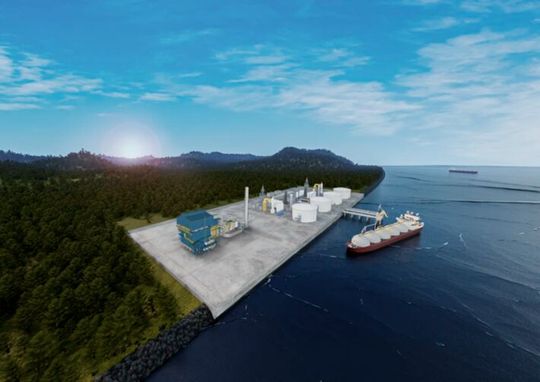
:quality(80)/p7i.vogel.de/wcms/97/ea/97eafe03fcf42cd003fe1ae65a306b09/0128187171v2.jpeg "Uniper and Thyssenkrupp Uhde have signed a framework agreement that lays the foundation for the construction of commercial ammonia cracking plants. (Source: Thyssenkrupp Uhde )")
:quality(80)/p7i.vogel.de/wcms/76/fe/76fe84a799d68423b1649020bb7b66b5/0128258448v3.jpeg "At a glance: Plant engineering projects from across the globe. (Source: © EUT - stock.adobe.com)")