Siemens is driving digital transformation: a new business unit pools key software areas contributing to digitalization of the process industry. Bart Moors, Head of the new unit and Head of Portfolio Management Dr. Uschi Mitsching are focusing on comprehensive support for customers and their plants across the entire lifecycle, regardless of where they join the digitalization journey.
(Source: Siemens)
When Bart Moors talks about projects and potential, he literally brings the digital twin to life. Software in and for the process industry, from design and engineering to simulation and optimization — somehow, he always manages to take everything into consideration at the same time.
And it doesn’t matter where his starting point is. Ultimately, everything leads to the digital twin. During our discussion, he will go even further, namely to the business ecosystem known as Siemens Xcelerator, which will enable co-creation between Siemens and its customers or partners in the future.
Gallery
Must-have Digitalization From a Single Source
Since the beginning of 2023, Bart Moors has headed the new Process Automation Software portfolio unit at Siemens Digital Industries. With this unit Siemens will optimally support its customers during their digital transformation — based on an integrated software landscape containing key software solutions, applications and services. As Head of Portfolio Management, Dr. Uschi Mitsching is setting the course together with Bart Moors.
Smart Process Manufacturing Kongress
Beim Smart Process Manufacturing Kongress vom 13. bis 14. September 2023 dreht sich alles um die Digitalisierung in der Prozessindustrie. Wo steht die Branche? Welche neuen Best Cases gibt es? Was sagen die Experten? Erleben Sie zukunftsweisende Impulse und lösungsorientierte Best Practice-Beispiele. Lassen Sie sich inspirieren und nutzen Sie den Austausch auf der Netzwerkplattform Nummer 1.
She recalls, “When I started at Siemens twelve years ago in the area of Comos engineering software, paper was still the predominant medium at all plants. Our first app broke new ground at that time.” Things have changed since then. “Without exception, digitalization is now a must-have for all our customers from the process industry,” says Moors. However, the focus varies depending on the industry. For example, in the chemical industry with its numerous brownfield plants, the emphasis is largely on the sustainability, safety, and optimization of plants.
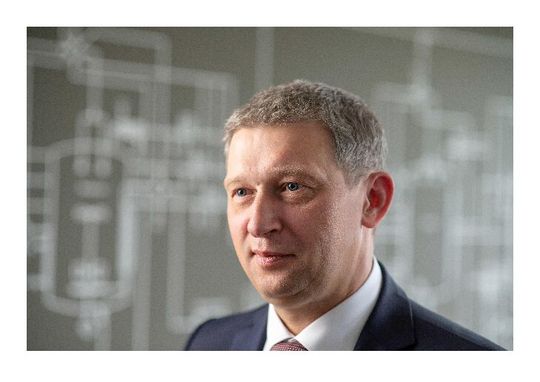
Bart Moors heads the new Process Automation Software portfolio unit at Siemens Digital Industries.
(Source: Siemens)
For the pharmaceutical industry, the priorities are time to market and the rapid commissioning of plants. Surprising for Moors was the high level of interest in digitalization shown by the water/wastewater sector. However, what all industries have in common is that they are asking more or less the same questions: Where is the best place to start? How can we achieve a rapid ROI, save costs, and reduce our CO2 footprint?
Without exception, digitalization is now a must-have for all our customers from the process industry.
Bart Moors, Head of Process Automation Software Unit
According to Mitsching, customers now approach the topic of digitalization much more strategically and systematically then they did just a few years ago: “Most of them come to us with a whole package of ideas — and they’ve already taken the first steps.” In the energy and hydrogen industries, completely new business models are among the drivers of digitalization.
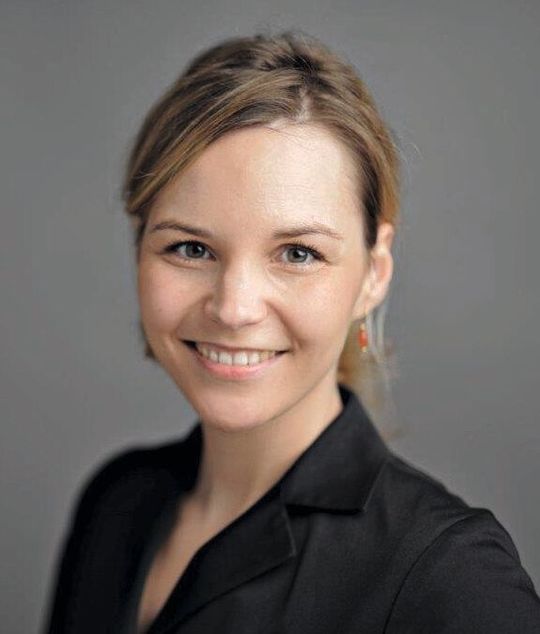
Sets the course together with Bart Moors: Dr. Uschi Mitsching, Head of Portfolio Management.
(Source: Siemens)
Very often, though, the motivation simply comes from younger employees who expect good digital tools — or from companies wanting to attract such employees. For many customers, knowledge retention in the context of generational change is one of the top issues in their digitalization strategy. “Tied to this is the aspect of performance reliability,” Mitsching explains. After all, only if a young team is well supported in solving problems and finding documents will it work at its best.
Different Maturity Levels In Several Dimensions
The idea of end-to-end integration is what led to pooling the various software options offered by Siemens. Moors outlines several dimensions: “In our digital maturity checks, we look at the extent to which the customer has already completed horizontal integration — and whether many individual data silos exist side by side in the value chain.
With every new tool that is to be introduced, a change project is created.
Dr. Uschi Mitsching, Head of Portfolio Management, about the variety of possibilities
This also includes the interaction with partners, customers, and suppliers. If company leaders are already thinking in terms of ecosystems, that speaks for a far advanced level of digitalization.” At least as important is vertical integration within the classic automation pyramid — and beyond, for instance the integration of edge devices. “Many of our customers have implemented the latter only in a rudimentary form, even though there are, of course, some early adopters. A number of users also have a lot of catching up to do when it comes to the integration of level 3, the MES layer,” Moors says.
He also cites the lifecycle approach as the third dimension, covering everything from engineering to operation and maintenance: “Sometimes we see that even though the maintenance team is using an asset management tool, it later transfers the data available there manually to the ERP system. In such cases, it’s clear that there is still room for improvement.” For Moors, another sign of a mature level of digitalization is the use of virtual training environments.
When faced with this variety of possibilities, the change manager in Uschi Mitsching comes to life: “With every new tool that is to be introduced, a change project is created. The new tool can only work if employees at all levels of the company understand why digitalization is taking place as well as what will be tackled first and what later.”
In addition, she says that issues such as the impact on competitiveness or on the company’s ability to attract new employees need to be addressed. “In view of this, it is important to set long-term goals while, at the same time, breaking down the journey towards these goals into manageable steps. That way, everyone will see rapid success,” she says.
Yet what happens if something doesn’t turn out as planned? What if mistakes happen? “That’s quite possible — you can always come up against challenges,” explains Mitsching, adding, “Then it’s a matter of going back a step, reflecting once more, adjusting the procedure — and then continuing towards the goal.
Serving The Dynamically Growing Digitalization Market
Now Siemens can consistently support an integrated approach. Providing comprehensive answers to the digitalization issues driving the different sectors of the process industry succeeds even better when working as a unit. “We’re not only aiming at the interoperability of our own products within a coordinated model,” explains Moors. “Instead, we’re going beyond that and building an open ecosystem that takes into account the installed basis and, at the same time, integrates add-on modules from partners.”
According to Moors, the roadmap of software product developments is designed to ensure that Siemens can sustainably support the long-term digitalization visions of its customers from the process industry. Furthermore, he sees the imminent consolidation of the software environments leading to benefits in terms of user experience: “By continuing to strengthen our software portfolio, we will succeed in optimally serving the dynamically growing process IoT market,” he says.
It is clear to see how inspiring the first time has been for Mitsching and Moors. “We’ve met so many great new colleagues – AI experts from the labs, SaaS professionals, outstanding architects, all of whom perfectly complement the industry expertise of the Comos teams in engineering and operations. Our colleagues from gPROMS with their know-how in process simulation and modelling, the employees from Simit with their marked aptitude for combining hardware and software – they all enrich our ecosystem mindset,” says Mitsching. “It’s now a matter of committing to a common way of working, then we can really play out our huge benefits on the market, namely the continuity and comprehensiveness of the portfolio across all lifecycles.”
With this consolidated strength in conjunction with a modular approach and the open ecosystem based on standards such as DEXPI, OPC-UA, and MTP, Siemens aims to serve the process industry in an optimum way — better than any competitor. And this despite — or rather because of — the open concept that does not exclude third-party suppliers. An important role is played by coordinators who support customers in strategy development and who have direct access to the project or product development level if necessary.
The benefits of all this for the customer should, of course, also have a positive effect for Siemens. “We want to grow fast,” says Moors when explaining the overarching goal. To this end, focus areas with high potential and strong customer interest have been identified for each portfolio segment and initiatives have been launched. However, it is not only products such as gPROMS in design, Comos in engineering, Simit for simulation, PlantSight for the digital twin, or XHQ for analysis and visualization that need to evolve. A further push should come from competence teams that promote the operability of the products within the user industries. Moors refers to these as ‘growth initiatives’. “They are intended to show customers the path within the open ecosystem along which they can generate added value,” says Moors, adding, “Our focus here goes first in the direction of managed service and ultimately towards software-as-a-service.”
Artificial Intelligence Makes Its Way Into Engineering And Operations
Mitsching and her portfolio team are responsible for driving interoperability for all products and thus, for example, making simulation and AI components easier to use in engineering and operations. Modularity and scalability are additional aspects. “We want to give the customer the possibility to enter at any point, for example with Comos Mobile Worker, which supports maintenance staff and plant technicians with up-to-date information,” Mitsching points out. Subsequent re-engineering projects would then be relatively easy thanks to the integration of Comos. “In the medium term, we want to increase the availability of the knowledge contained in the customers’ data, supported by AI,” says Mitsching. Moors adds that there is a lot of potential in this: “Everyone benefits from this — the end customer who no longer has to worry about things such as spare parts inventory, and the process machine builder, who gains more knowledge about the plant and its operation and can use this as a basis for identifying optimization potential.”
Platform Facilitates Cooperation Across Company Boundaries
Excellent results come from synergies and cooperation. “That’s why we want to offer a collaborative platform and invite people to help build the future of digital transformation for us all. The expertise to do this does not come from us alone, but also from our customers and partners,” says Moors, envisioning a globe where everything is connected to everything else. With the Siemens Xcelerator, Siemens has created a platform that enables customers to drive forward their digital transformation. Mitsching explains, “The SaaS trend and reusability through APIs are core elements here.”
The success of this interplay between Siemens expertise and software as well as the knowledge of its customers is verified by a number of projects. One example is the strategic partnership with Zeta, a general planner and system integrator for the biopharmaceutical industry. Based on Comos, Simit, as well as automation, qualification, and diagnostic software, a continuous and comprehensive system landscape is being created that will allow Zeta to develop completely integrated digital pharmaceutical plants based on a digital twin in the future.
Success Storys In Plant Engineering
Success stories in the plant engineering, chemicals, pharmaceutical, and water industries, to name a few. Wacker is also setting out to support the digital transformation with a central platform. Besides Comos Mobile Worker and Simit, the platform also incorporates PlantSight for creating digital twins. Lanxess, on the other hand, has found its entry into digital transformation via the planning tool and simulation.
For the cellulose and fibre manufacturer, Lenzing, Siemens has already developed a tool that supports the design of a digital twin. Several oil and gas customers use the data from plant planning for the immersive training of their operating teams. Also, well advanced in the use of the new digital possibilities is a mining company that makes extensive use of Siemens software to carry out planning, simulation, and automation tasks, and that uses the digital twin during operation to optimize sustainability KPIs and make plant operation safer and more reliable.
Another example is a Swiss food plant manufacturer that initially needed a collaboration platform for its engineering staff. Now the company is moving towards offering customers services such as spare parts management. Two customers from the water industry show how different the approach can be. While one is focusing on optimizing a pumping plant, the other is taking measures to make the status of its plant transparent as a first step.
This list of example projects is far from exhaustive. What is particularly important to Moors is the flexible approach: “One company creates a digital twin and then ensures that it’s always up to date, in other words, that changes made in the real plant are also reflected in the digital twin — and then uses this for modern maintenance strategies, for optimizing operations, and so on. But it also works the other way round, too.”
The future Is Foreseen
Once the data is available and contextualized, it can be used in many different ways. In the future, artificial intelligence will play an increasingly important role here. It already makes things much easier today, for instance when P&IDs, which are only available in paper form in the archive for brownfield plants, are scanned in so that they can ultimately be used to “build” a digital twin. Moors expects AI to grow in significance when it comes to anomaly detection for improving processes. However, he says that the technology is not yet ready for the use of augmented reality glasses in an industrial environment, adding, “But we are already building interfaces today to take advantage of these opportunities when the time comes.” For that is what lies at the heart of Siemen’s ambition: to enable both itself and its customers to embrace the challenges of the future. (agk)
(ID:49547473)
Date: 08.12.2025
Naturally, we always handle your personal data responsibly. Any personal data we receive from you is processed in accordance with applicable data protection legislation. For detailed information please see our privacy policy.
Consent to the use of data for promotional purposes
I hereby consent to Vogel Communications Group GmbH & Co. KG, Max-Planck-Str. 7-9, 97082 Würzburg including any affiliated companies according to §§ 15 et seq. AktG (hereafter: Vogel Communications Group) using my e-mail address to send editorial newsletters. A list of all affiliated companies can be found here
Newsletter content may include all products and services of any companies mentioned above, including for example specialist journals and books, events and fairs as well as event-related products and services, print and digital media offers and services such as additional (editorial) newsletters, raffles, lead campaigns, market research both online and offline, specialist webportals and e-learning offers. In case my personal telephone number has also been collected, it may be used for offers of aforementioned products, for services of the companies mentioned above, and market research purposes.
Additionally, my consent also includes the processing of my email address and telephone number for data matching for marketing purposes with select advertising partners such as LinkedIn, Google, and Meta. For this, Vogel Communications Group may transmit said data in hashed form to the advertising partners who then use said data to determine whether I am also a member of the mentioned advertising partner portals. Vogel Communications Group uses this feature for the purposes of re-targeting (up-selling, cross-selling, and customer loyalty), generating so-called look-alike audiences for acquisition of new customers, and as basis for exclusion for on-going advertising campaigns. Further information can be found in section “data matching for marketing purposes”.
In case I access protected data on Internet portals of Vogel Communications Group including any affiliated companies according to §§ 15 et seq. AktG, I need to provide further data in order to register for the access to such content. In return for this free access to editorial content, my data may be used in accordance with this consent for the purposes stated here. This does not apply to data matching for marketing purposes.
Right of revocation
I understand that I can revoke my consent at will. My revocation does not change the lawfulness of data processing that was conducted based on my consent leading up to my revocation. One option to declare my revocation is to use the contact form found at https://contact.vogel.de. In case I no longer wish to receive certain newsletters, I have subscribed to, I can also click on the unsubscribe link included at the end of a newsletter. Further information regarding my right of revocation and the implementation of it as well as the consequences of my revocation can be found in the data protection declaration, section editorial newsletter.




:quality(80)/p7i.vogel.de/wcms/77/1c/771c3d385d46ede7ab736f3f7d63cb62/0130007313v2.jpeg "The laser perforated filter elements for Eaton’s DCF series enable retention ratings that were previously unattainable with conventional manufacturing methods. Thanks to automatic self-cleaning, they also provide uninterrupted operation with long service life and minimal maintenance requirements. (Source: Eaton )")
:quality(80)/p7i.vogel.de/wcms/0b/33/0b3359449325c4e66cffdb41fce11683/0129956557v2.jpeg "Aramco Senior Vice President of Digital & Information Technology Sami A. Al Ajmi, sitting right, and President of Microsoft Arabia Turki Badhris, sitting left, at a signing ceremony attended by Aramco Executive Vice President of Technology & Innovation Ahmad O. Al Khowaiter, standing right, and Vice Chair and President of Microsoft Brad Smith, standing left. (Source: Aramco )")
:quality(80)/p7i.vogel.de/wcms/60/25/60259e0165560492b717049a5006b5d2/0129719891v2.jpeg "Adnoc's panorama digital command center. (Source: Adnoc )")
:quality(80)/p7i.vogel.de/wcms/40/8f/408f074f8094bca2cd9bb078e79eccb0/0129580192v2.jpeg "The Anymal robot undertaking gas leak detection in the field. (Source: Anybotics)")
:quality(80)/p7i.vogel.de/wcms/93/9f/939fb603e5c2c60e52e4e92dd1de44e2/0129972638v2.jpeg "Shintech Louisiana has recently announced a 3.4-billion-dollar investment to bolster its manufacturing capabilities in the state. (Source: Pixabay)")
:quality(80)/p7i.vogel.de/wcms/0d/22/0d221bfb0debc81ac74afafc9cc632c2/0129972549v2.jpeg "The overall package is worth 485 million euros, of which 10 million euros related to engineering activities already started will be recognized in the pre-FID phase, while the remaining part at Final Investment Decision. (Source: Pixabay)")
:quality(80)/p7i.vogel.de/wcms/1d/da/1ddaee208ed26c1ad241f3b8fb216afe/0129956568v2.jpeg "Inox Air Products has entered into a long-term partnership with TACC for the supply of nitrogen through a dedicated onsite nitrogen plant for their upcoming greenfield manufacturing facility in Dewas, Madhya Pradesh, India. (Source: Pixabay)")
:quality(80)/p7i.vogel.de/wcms/e9/14/e9149b52a5cf436e6fe6743e491037ac/0129926282v2.jpeg "At a glance: Plant engineering projects from across the globe. (Source: © industrieblick - stock.adobe.com)")
:quality(80)/p7i.vogel.de/wcms/6b/3f/6b3f057c83c494e4732337d870d52b21/0130006927v2.jpeg "Lonza will realize upfront cash proceeds of 2.2 billion dollars and retain a 40 % stake in the business, with additional preferential participation in its future exit. (Source: Lonza)")
:quality(80)/p7i.vogel.de/wcms/df/cd/dfcd0c2e0eb4b554f956e0161ae08519/0129794328v1.jpeg "The plasma fractionation facility at CSL Behring, viewed from the outside. (Source: CSL Behring)")
:quality(80)/p7i.vogel.de/wcms/74/af/74af2b65341eeee13a44bc85eb759596/0129839901v2.jpeg "With around 6,000 European companies operating in India and an annual trade of 180 billion euros between the EU and India at present, the trade deal intends to double EU goods exports to India by 2032. (Source: © NazeerArt - stock.adobe.com)")
:quality(80)/p7i.vogel.de/wcms/26/12/261210e5920899e5c35c4f905d3be8bd/0129399814v2.jpeg "Powders used in DPI formulations are often highly potent and administered in very low doses. (Source: Ima)")
:quality(80)/p7i.vogel.de/wcms/a6/84/a68477d4ef879cc9cedeae332ca57c49/0129893677v2.jpeg "Siemens and Caphenia sign the partnership agreement. From left to right: Nicky Ahnert, Jürgen Giegerich, Frank Knauf (all Siemens), Dr. Mark Misselhorn, Dr. Andreas Waibel (both Caphenia) (Source: Siemens)")
:quality(80)/p7i.vogel.de/wcms/42/67/42671f576c7f8a1284b54bc8f92cce02/0129864175v2.jpeg "Honeywell’s advanced technologies and standardized design will help Verso Energy reduce capital expenses, accelerate speed to market and increase global SAF capacity. (Source: Pixabay)")
:quality(80)/p7i.vogel.de/wcms/f7/70/f770417abff565b1743068fa37d21266/0129833262v2.jpeg "Under the agreement, Air Liquide will supply the necessary oxygen for Holcim’s oxyfuel-ready clinker production line, as well as provide its innovative and proprietary Cryocap Oxy technology to enable the capture of CO₂ emissions with high efficiency. (Source: Air Liquide )")
:quality(80)/p7i.vogel.de/wcms/9f/7c/9f7cd6c9dcb679827c4c2c10f116c8b9/0129832882v2.jpeg "The extended agreement helps support World Fuel's ability to secure SAF supply and comply with regulatory requirements, including the Refuel EU Aviation Regulation and the UK SAF mandate. (Source: World Fuel Services)")
:quality(80)/p7i.vogel.de/wcms/be/e1/bee13b8d51a419b9b8f0685e2b9d47bf/0128917673v1.jpeg "The Centerwave 6000 measures pipes from 32 to 1,600 mm. (Source: Maag Group)")
:quality(80)/p7i.vogel.de/wcms/51/7a/517a4e83c5827663b4839f5ddb98f434/0128872953v1.jpeg "The Tigron in SIL version can be flexibly configured for different safety requirements. (Source: Auma)")
:quality(80)/p7i.vogel.de/wcms/d5/72/d5728578b35b72f365f5086bc1d068da/0128662441v2.jpeg "Nikkiso Clean Energy & Industrial Gases Group has announced the launch of its new multistage process pump (MSPP 210), designed to enhance safety and reduce downtime on air separation equipment. (Source: Nikkiso Clean Energy & Industrial Gases Group)")
:quality(80)/p7i.vogel.de/wcms/a9/69/a96920e47e362a9cf0b9916b7ad3d30a/0128071795v2.jpeg "Nine partners from six European countries are working on the 36-month project to determine where heat pumps can achieve the greatest efficiency gains in the food and beverage sector and to develop reproducible and market-ready solutions. (Source: EU project Exquisheat)")
:quality(80)/p7i.vogel.de/wcms/c4/54/c454c7d8fd344c0ffc2ef5db00ad632f/0129728429v2.jpeg "Liqtech International recently launched its Qureflow Max produced-water treatment system. (Source: Liqtech International )")
:quality(80)/p7i.vogel.de/wcms/18/47/1847e6b1456c96f04bd511bbd21f3779/0129039479v2.jpeg "Jacobs has been selected as the progressive design-build contractor for upgrades to the San José–Santa Clara Regional Wastewater Facility in California. (Source: Jacobs)")
:quality(80)/p7i.vogel.de/wcms/3b/fd/3bfda4bbcb1a60004c330bde3b705109/0128453300v2.jpeg "In the Jiangsu province, Suez will partner with Lianyun Economic Development Zone to jointly study the investment in, build, and operate a new industrial water treatment plant. (Source: Pixabay)")
:quality(80)/p7i.vogel.de/wcms/cc/19/cc19aa5fec6f6f2b25dbd9516efed735/0128077403v2.jpeg "Distinguished guests at the ceremony included senior government officials, Japan’s Ambassador, and local business leaders. (Source: Toray)")
:quality(80)/p7i.vogel.de/wcms/6b/cc/6bcc3d26e1c7c74d90a10bc3ca296ae1/0128362351v2.jpeg "A look into Bayer's new tablet production, Solida 1, during construction: The robots and lift columns for material handling are being installed. (Source: Bayer)")
:quality(80)/p7i.vogel.de/wcms/24/c8/24c84ab6b1bcd24468a87820a07a85aa/0128194707v2.jpeg "Ajax Equipment has supplied Binding Solutions with a feed system comprising buffer hopper, screw feeder and agitated screw feeder for a pilot plant handling iron ore and additives. (Source: Ajax Equipment )")
:quality(80)/p7i.vogel.de/wcms/1d/3e/1d3e2788eb37c1e974f36337c8d33cb5/0128191010v2.jpeg "Ajax Equipment has supplied IGI Systems with a stainless-steel conical hopper with gas purge capability, as part of a prototype Sublimation System for a low-pressure chemical vapour deposition application. (Source: Ajax Equipment)")
:quality(80)/p7i.vogel.de/wcms/19/76/1976928d7d0a2ed7c1eeba7ade8552c8/0126365603v1.jpeg "Detail of Valvedesign: It has an aktiv amd passive part (Bild: Italvacuum)")
:quality(80)/p7i.vogel.de/wcms/1d/33/1d33cbe43461f24175e18aa01a426840/0129971592v2.jpeg "KBR has been awarded a major contract by Basra Oil Company to provide Integrated Field Management Services for the Majnoon Oil Field in Iraq. (Source: KBR)")
:quality(80)/p7i.vogel.de/wcms/e6/e1/e6e126a90647ced00f744126dd914531/0129956040v2.jpeg "BASF’s dispersion-production building at the Durban site, South Africa — exterior view showing the facility and surrounding site infrastructure. (Source: BASF )")
:quality(80)/p7i.vogel.de/wcms/a7/f3/a7f381d9a908136cf391070bcb069eae/0129925612v2.jpeg "Thyssenkrupp Uhde has been awarded a contract by Halifax-based Nova Sustainable Fuels to perform an integration and optimization study for NSF’s biomass-to-methanol project in Nova Scotia, Canada. (Source: Thyssenkrupp Uhde)")
:quality(80)/p7i.vogel.de/wcms/f8/29/f8298429c1638b949a6f76346f6709c7/0118701710v2.jpeg "Bosch Industrial Heat will be presenting sustainable steam and heat solutions for global industrial use at the Achema trade fair in Frankfurt, Germany. (Source: Bosch Industriekessel)")
:quality(80)/p7i.vogel.de/wcms/07/24/07242664ab2b1c7841c9d9d0a127670c/0116045959.jpeg "A look inside the GEA machine room. (Bild: Magnavale)")
:quality(80)/p7i.vogel.de/wcms/c9/79/c979a20b32395ddfa93fe7ead90578a0/0108386061.jpeg "Production residues, lime, salt and suspended solids quickly clog the pipes. (Source:©Tanakorn - stock.adobe.com)")
:quality(80)/p7i.vogel.de/wcms/9e/5c/9e5c92d942ed046a27562d6e3d730c92/0103483548.jpeg "It is almost ten metres high and extends over three floors: the world's first multiple dividing wall column is located in the new technical centre at the University of Ulm. (Bild: Eberhardt, kiz Universität Ulm)")
:quality(80)/p7i.vogel.de/wcms/2a/07/2a07c1b62903e380aa62e7a581d4a9d1/0129925640v2.jpeg "This will contribute to Aramco’s plan to increase sales gas production capacity by approximately 80 % by 2030, over 2021 production levels. (Source: Aramco )")
:quality(80)/p7i.vogel.de/wcms/16/3d/163da381529db3a47348a9440655529b/0125732969v2.jpeg "Dirk Elvermann, CFO and CDO of BASF, and Anders Opedal, President and CEO of Equinor, sign the ten-year natural gas supply agreement. (Source: Equinor and BASF)")
:quality(80)/p7i.vogel.de/wcms/e7/82/e782bbbf96e4971c22241d76e5de1720/0124855387v2.jpeg "Subsea 7 has been selected to conduct a front-end engineering study for a new subsea project in the Greater Ekofisk Area. (symbolic image) (Source: free licensed)")
:quality(80)/p7i.vogel.de/wcms/a8/4e/a84e8039a90a5cf4751d01ebcf6ba1a9/0127510172v2.jpeg "After six years, Achemasia, the international trade fair and innovation forum for sustainable chemical production, has returned with renewed vigor, bringing together global expertise, Chinese innovation, and a shared commitment to a greener industrial future—according to the organizers of the fair. (Source:PROCESS China)")
:quality(80)/p7i.vogel.de/wcms/17/c7/17c703445f134eb3d7ecc7918dda2762/0124596096v2.jpeg "Achema Middle East will launch in Saudi Arabia in 2026. (Bild: Dechema/ Hannibal)")
:quality(80)/p7i.vogel.de/wcms/2a/2c/2a2cffc07f51019065387cd63241b5ce/0119463370v1.jpeg "The Injecta 36 fills and seals RTU (Ready-to-Use) syringes at high speed. The image shows the robotic arm. (Source: IMA)")
:quality(80)/p7i.vogel.de/wcms/b1/7e/b17ea8c62ccafad1d1fb072d6199bbd6/0118578446.jpeg "“Star in the ring”: Vegapuls 6X radar level sensors are the solution of choice for Renolit for many applications on the way to the perfect plastic product. (Source: © MR Design - stock.adobe.com; Vega)")
:quality(80)/p7i.vogel.de/wcms/01/9b/019b59f3ef2e852ec5058ba18f323af2/0129651573v2.jpeg "With its strategic ‘Vision 2030’ plan announced in 2016, Saudi Arabia aims to diversify its economy by investing in sectors such as tourism, technology and industry, reduce its reliance on oil, and transform the country into a cleaner and more sustainable economy. (Source: © Peter Hermes Furian - stock.adobe.com)")
:quality(80)/p7i.vogel.de/wcms/99/d2/99d2e5e83062b4cf2aa3dc0a60d15f23/0129624804v2.jpeg "The heaviest and tallest unit – a Process Gas Cooling Module – weighed 2,464t and measured 38 meters long, 23 meters wide, and 32 meters high. (Source: Mammoet)")
:quality(80)/p7i.vogel.de/wcms/d1/a8/d1a83b822e16733380268322d033abdc/0129239584v2.jpeg "MOL Group has entered into a new strategic partnership with Libya’s National Oil Corporation. (Source: Pixabay)")

:quality(80)/p7i.vogel.de/wcms/58/9a/589a2b59bc7943071c9df60f68c90d98/0111580354.jpeg "To power an entire plant life cycle, and designed for maximum efficiency and productivity, the wide range of products and solutions suites perfectly for digital transformation. (Source: Siemens)")
:quality(80)/p7i.vogel.de/wcms/c3/a7/c3a780e1529fd24fead7e0c3297746cc/0111577025.jpeg "Artificial Intelligence for comprehensive engineering along the life cycle e.g. with Comos Mobile worker for providing up-to-date information at any point.(Source: Siemens)")
:quality(80):fill(efefef,0)/p7i.vogel.de/wcms/64/64/64646baab4a5a/siemens-web2-376627-kampagnenbild.jpeg "Siemens WEB2 376627 Kampagnenbild (Siemens AG)")
:quality(80):fill(efefef,0)/p7i.vogel.de/wcms/64/4a/644a5b520fdd8/siemens-web-comos-kampagnenbild.jpeg "Siemens WEB Comos Kampagnenbild (Siemens)")
:quality(80)/p7i.vogel.de/wcms/01/15/0115415d906c21a45a3843617426db74/0125679758v3.jpeg "With the power to replicate the physical assets of a system or production process into a virtual system, the digital twin enables industry players to make informed decisions about the lifecycle of plants, optimization of processes as well as enhancing production based on real-time data. (Source: © EmmaStock - stock.adobe.com)")
:quality(80)/p7i.vogel.de/wcms/a6/84/a68477d4ef879cc9cedeae332ca57c49/0129893677v2.jpeg "Siemens and Caphenia sign the partnership agreement. From left to right: Nicky Ahnert, Jürgen Giegerich, Frank Knauf (all Siemens), Dr. Mark Misselhorn, Dr. Andreas Waibel (both Caphenia) (Source: Siemens)")