BASF intends to increase the capacity of its key specialty amines – polyetheramines and tertiary at its Geismar site in the USA. The capacity expansion is expected to be completed by mid-2023.
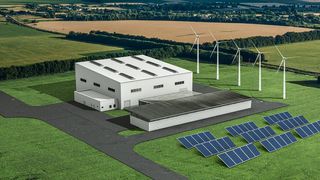
BASF has plans to construct a commercial-scale battery recycling black mass plant in Schwarzheide, Germany. With a processing capacity of 15,000 tons of EV batteries and production scrap every year, the plant is expected to be built to the highest EHS standards.
BASF’s Puristar R0-20 catalyst and Sorbead Adsorption Technology is being assessed by Shell for producing green hydrogen. Both the technologies are now under Shell’s portfolio for potential use across its global green hydrogen projects.
With an aim to increase production capacity for optical brighteners amidst growing demand across the globe, BASF made the hefty investment at its Monthey site. The significant increase in production capacity at the site has now been achieved.
BASF has added an additional production line to its existing facilities with an aim to expand its antioxidant production capacity in Singapore. The additional capacity will cater to the rapidly-growing Asia Pacific and Middle East markets.
With an action plan to promote ‘green petrochemical clusters’, the Chinese southern province of Guangdong wants to encourage further growth in the industry. The ambitious plans are valid up to 2025, i.e. parallel to the People's Republic's new five-year plan, which is currently being tied up in the corridors of power in Beijing. What is the industry’s future in the region?
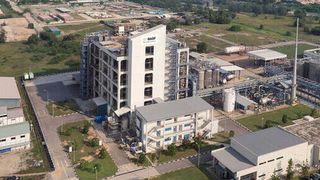
BASF has started up a new methane sulfonic acid (MSA) plant at its Verbund site in Ludwigshafen, Germany in the background of growing demand for MSA across the globe. The investment is expected to increase capacity at the site to a total of 50,000 metric tons annually.
BASF Venture Capital is investing $ 2 million into Alchemist Accelerator’s fund, allocating at least half towards investments in 3D printing, agtech, material informatics, nutrition, and technology game-changers.
In a recent announcement by BASF, the company has undertaken the decision to wind down its operations in Russia, Belarus due to the ongoing conflict between Russia and Ukraine. However, the food production business will be sparred as the firm fears a global food crisis in the midst of the war.
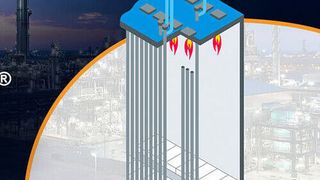
The proprietary ‘Star’ dehydrogenation process which can produce propylene from propane feedstocks or iso-butylene from iso-butane feedstocks has been optimized by thyssenkrupp Uhde and BASF. The technology is now capable of reducing CO2 emissions and operating costs through lower energy consumption by up to 30 %.