The revised Hazardous Substances Ordinance raises the bar for closed systems in tablet production and promotes system integration. Containment is becoming the new standard for highly active ingredients. How Fette Compacting is dealing with the increasing requirements for active ingredient safety and process control.
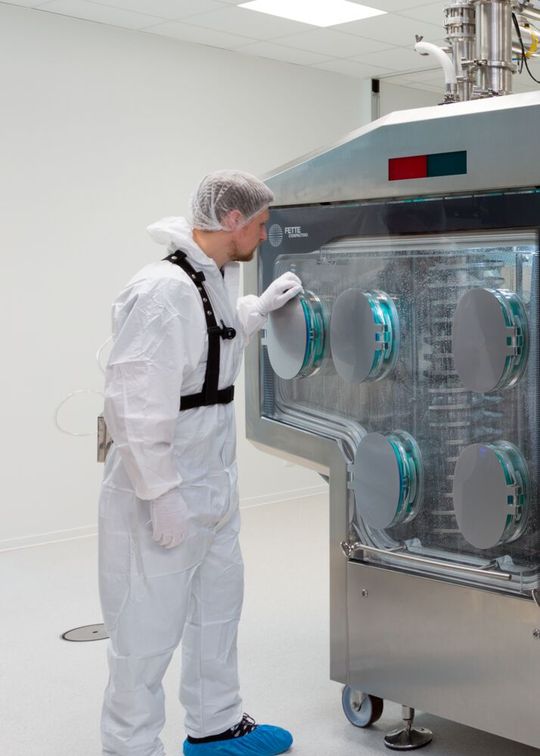
The SMEPAC guideline requires that containment performance is not only ensured and validated during operation but also during cleaning, conversion, and maintenance.
(Source: Fette Compacting)
The market for highly active pharmaceutical ingredients is growing rapidly. With the triumph of innovative therapies – for example, in oncology and precision medicine – and the continuous development of regulatory guidelines, the demands on containment solutions in tablet production are becoming increasingly complex. The focus is no longer on individual machines but on the interaction of entire plant networks. Their process reliability and efficiency must be guaranteed throughout their entire life cycle.
With the amendment to the Hazardous Substances Ordinance (GefStoffV) in December 2024, German legislation has significantly strengthened the principle of integration. Of particular importance is the adoption of the risk-based approach from the Technical Rules for Hazardous Substances (TRGS). For carcinogenic, mutagenic, and reprotoxic substances (CMR categories Ia and Ib), the use of closed systems is explicitly specified as the preferred protective measure for the first time. This makes containment the new standard and reference for all further measures as a technical solution.
Gallery
A key innovation also concerns the introduction of clear acceptance and tolerance concentrations as exposure limits. If these values are exceeded, technical or organizational corrections must be initiated immediately. The regulation also revises access, training, and reporting requirements: entry to production areas where highly potent substances are processed must be strictly controlled. Training becomes mandatory, and reporting procedures in the event of an incident are clearly defined and linked to threshold values. This means for operators: A coherent, comprehensive containment concept that includes all interfaces, maintenance, and cleaning processes is required as early as the planning stage.
SMEPAC: Focus on Life Cycle and System Integration
The SMEPAC (Standardized Methodology for the Evaluation of Pharmaceutical Ergonomic Particle Emission from Containment Systems) practical guide from the ISPE (International Society for Pharmaceutical Engineering), also updated in 2024, accompanies the regulatory changes and has evolved from the evaluation of individual components to a holistic view of complex production systems. The guide requires that containment performance is not only ensured and validated during operation but also during cleaning, changeovers, and maintenance. The focus is particularly on continuous production lines with multiple containment levels and transfer sections. Test protocols that previously applied to individual machines are now designed for entire plant networks – a decisive change for practitioners and authorities.
Another new feature: the selection and handling of surrogates are regulated practically. Mixtures with excipients are permitted, and statistical methods for evaluation are adapted to real production conditions. Containment measurements should already be carried out during factory acceptance testing. Repetitions after maintenance or modifications are recommended. In this way, performance is documented from the very beginning and remains verifiable throughout the life cycle.
System Integration: Fewer Interfaces, Greater Safety
Practical experience shows that it is not leaks but transfer points between process steps that pose the greatest risk of exposure. Every material transfer and every change between systems carries potential hazards for operators and the environment. Modern plant concepts therefore rely on end-to-end integration: as few technically secure interfaces as possible are crucial.
The greatest risk of exposure is not leaks but transfer points between process steps.
A clear example of the advantages of modern system integration is continuous direct compression: in this closed system, material feeding, dosing, mixing, tableting, and quality control are combined into a continuous process line. The modular design not only enables a compact plant structure, but also ensures that all process steps are directly integrated into the containment and that validation is carried out as a complete system.
The importance of this approach is also highlighted in the current SMEPAC guideline, which explicitly mentions continuous manufacturing.
Test Laboratories and Exposure Measurements as Success Factors
The importance of practical test environments at containment system manufacturers is growing steadily. To ensure the safe processing of active to highly active substances, extensive tests are carried out even before commissioning at the customer’s site. The current SMEPAC guideline also recommends that the initial verification of containment performance should be carried out during the factory acceptance test (FAT) at the manufacturer’s plant. This early qualification allows potential weak points to be identified and rectified immediately. Standardized methods are used here with both substitute substances and real active ingredients, always with the aim of maximizing reliability and safety in later operation.
The focus is on a comprehensive analysis of the containment performance. Tools such as the Containment Guard enable precise measurements in various practical situations – from routine processes and maintenance work to the simulation of disruptions or power failures. The test protocols developed in accordance with SMEPAC ensure reproducible results, which in turn serve as a solid basis for the approval of the system.
A New Level in Containment Systems
Considering stricter requirements for active ingredient safety and process control, Fette Compacting is increasingly focusing on highly developed, fully integrated containment solutions. Even the basic equipment of modern tablet presses is designed to be dust-tight and operates with negative pressure to prevent active ingredients from being released. Additional protective barriers are available as optional containment packages – for example, glove ports and transfer systems (Rapid Transfer Ports, RTP) ensure safe and contamination-free handling during operation. For the highest safety requirements, high-containment systems with isolators, integrated wash-in-place technology, and air management are used.
A new innovation coming in 2025 is washable air management. This advanced system not only ensures constant negative pressure in the plant, but can now also be cleaned and validated automatically. Flow simulations are used to position the wash nozzles optimally along the air ducts so that all areas are reliably decontaminated. This significantly reduces manual intervention and the associated exposure risk for operators, while at the same time strengthening compliance with regulatory requirements and operational safety.
The amended Hazardous Substances Ordinance and the revised SMEPAC practical guide mark the beginning of a new era in containment: complex, integrated production systems must be viewed holistically, validated, and continuously monitored digitally – throughout their entire life cycle. The close interlinking of process technology, cleaning, data analysis, and system integration forms the basis for sustainable safety and efficiency. Future-proof containment solutions are increasingly being developed in close partnership between plant manufacturers and pharmaceutical companies.
(ID:50614611)
Date: 08.12.2025
Naturally, we always handle your personal data responsibly. Any personal data we receive from you is processed in accordance with applicable data protection legislation. For detailed information please see our privacy policy.
Consent to the use of data for promotional purposes
I hereby consent to Vogel Communications Group GmbH & Co. KG, Max-Planck-Str. 7-9, 97082 Würzburg including any affiliated companies according to §§ 15 et seq. AktG (hereafter: Vogel Communications Group) using my e-mail address to send editorial newsletters. A list of all affiliated companies can be found here
Newsletter content may include all products and services of any companies mentioned above, including for example specialist journals and books, events and fairs as well as event-related products and services, print and digital media offers and services such as additional (editorial) newsletters, raffles, lead campaigns, market research both online and offline, specialist webportals and e-learning offers. In case my personal telephone number has also been collected, it may be used for offers of aforementioned products, for services of the companies mentioned above, and market research purposes.
Additionally, my consent also includes the processing of my email address and telephone number for data matching for marketing purposes with select advertising partners such as LinkedIn, Google, and Meta. For this, Vogel Communications Group may transmit said data in hashed form to the advertising partners who then use said data to determine whether I am also a member of the mentioned advertising partner portals. Vogel Communications Group uses this feature for the purposes of re-targeting (up-selling, cross-selling, and customer loyalty), generating so-called look-alike audiences for acquisition of new customers, and as basis for exclusion for on-going advertising campaigns. Further information can be found in section “data matching for marketing purposes”.
In case I access protected data on Internet portals of Vogel Communications Group including any affiliated companies according to §§ 15 et seq. AktG, I need to provide further data in order to register for the access to such content. In return for this free access to editorial content, my data may be used in accordance with this consent for the purposes stated here. This does not apply to data matching for marketing purposes.
Right of revocation
I understand that I can revoke my consent at will. My revocation does not change the lawfulness of data processing that was conducted based on my consent leading up to my revocation. One option to declare my revocation is to use the contact form found at https://contact.vogel.de. In case I no longer wish to receive certain newsletters, I have subscribed to, I can also click on the unsubscribe link included at the end of a newsletter. Further information regarding my right of revocation and the implementation of it as well as the consequences of my revocation can be found in the data protection declaration, section editorial newsletter.




:quality(80)/p7i.vogel.de/wcms/97/ff/97ffc5d8894eaaabac89fa86c88b5c04/0130558883v2.jpeg "BASF and Sevnce Robotics have signed a MOU to advance smart transformation of the chemical industry. (Source: BASF )")
:quality(80)/p7i.vogel.de/wcms/54/f4/54f4b4e2a86b203e0dfd84221602bdb5/0130367283v2.jpeg "Anybotics' Anymal robot combines depth cameras, LiDAR, thermal imaging, acoustic sensors, and gas detectors into a single inspection round. (Source: Anybotics)")
:quality(80)/p7i.vogel.de/wcms/e9/64/e964996410967c124c2cf01a8623068e/0130285341v1.jpeg "Geht unter die Oberfläche: Die Offshore-Ölförderung erfordert hochenergetische Pumpen – doch diese sind im Wesentlichen eine Black Box. Bisher zumindest. (Source: Kistler Group)")
:quality(80)/p7i.vogel.de/wcms/54/ae/54aece5dff672ce1651470eecd9f2589/0130138090v2.jpeg "The new Ionchromatograph “Nexera IC“ (Source: Shimadzu)")
:quality(80)/p7i.vogel.de/wcms/f6/42/f64217521bd12e4cf6dc3396bb7691be/0130557840v2.jpeg "The commissioning marks a significant milestone in strengthening India’s advanced manufacturing ecosystem, especially for the sunrise sectors like semiconductor and solar cell manufacturing. (Source: Pixabay)")
:quality(80)/p7i.vogel.de/wcms/7e/1f/7e1f3996f5b0ceaa2cd63e8f42c46e8b/0130491098v2.jpeg "At a glance: Plant engineering projects from across the globe. (Source: © Andi - stock.adobe.com)")
:quality(80)/p7i.vogel.de/wcms/1e/15/1e15b0e20cf5ede83e0749260dfda733/0130465044v2.jpeg "Energy X has recently announced the successful commissioning of a first-of-its-kind, U.S.-based lithium production facility at Project Lonestar, marking a major milestone toward commercial-scale domestic lithium production. (Source: Pixabay)")
:quality(80)/p7i.vogel.de/wcms/36/36/36369e6e59d4c660893cc04a4d257cfc/0130465035v2.jpeg "Wacker has successfully completed the second expansion phase at its production site in Panagarh, India. In addition to silicone rubber, the site now also operates a production complex (left) for silicone emulsions. (Source: Wacker)")
:quality(80)/p7i.vogel.de/wcms/3b/86/3b86c49f99e3638ed9f42c6cc7732950/0130491017v2.jpeg "Turning liquids into powders enables storage at room-temperature. (Source: Glatt)")
:quality(80)/p7i.vogel.de/wcms/84/78/8478fcee08360056b226cb8d5032d50c/0130489771v2.jpeg "Saharsh Davuluri will assume the role of Chief Executive Officer and Managing Director, effective immediately, as the company moves into its next stage of CDMO growth. (Source: Neuland Laboratories)")
:quality(80)/p7i.vogel.de/wcms/ab/c2/abc21b4affa79498712fe95c16991828/0130489183v2.jpeg "Prange Pharma recently announced the successful completion of the acquisition of the MSD Animal Health manufacturing site in Aprilia, Italy. (Source: Pixabay)")
:quality(80)/p7i.vogel.de/wcms/41/c9/41c96e0244221ad38daa73bdd8231477/0130477173v2.jpeg "The „ORBITA‑L“-system is designed for filling and capping non‑injectable liquid products. (Source: Marchesini)")
:quality(80)/p7i.vogel.de/wcms/99/11/9911a2263913a34bd9b8275de32ce657/0130557422v2.jpeg "This allocation will enable Total Energies to cover around 60 % of the electricity needs of its refining and chemicals sites in France, estimated at 400 MW. (Source: Pixabay)")
:quality(80)/p7i.vogel.de/wcms/4c/05/4c05e753794ab348734a3b8f64091196/0130549487v2.jpeg "The new unit will replace the existing Battery #3A at the Pohang site. (Source: Thyssenkrupp Uhde)")
:quality(80)/p7i.vogel.de/wcms/ce/a0/cea0130be5857132356c9915ff9b35b7/0130548375v2.jpeg "Phelan efuels will deploy Honeywell UOP’s Fischer Tropsch Unicracking process technology, which uses FT liquids and waxes made from CO2 to create eSAF that complies with aviation industry standards. (Source: Pixabay)")
:quality(80)/p7i.vogel.de/wcms/80/ae/80ae5dcaef8b78989454ddba5eb2f6a7/0130485693v2.jpeg "The Global Impact Coalition has recently announced that Siemens has joined the coalition as a member. (Source: Siemens)")
:quality(80)/p7i.vogel.de/wcms/1c/39/1c39433f4bb4de2e5e6c5311c3236d09/0130110254v2.jpeg "The new pumps of the Omega type series have been designed for handling water and fluids with a low solids content efficiently. (Source: KSB)")
:quality(80)/p7i.vogel.de/wcms/be/e1/bee13b8d51a419b9b8f0685e2b9d47bf/0128917673v1.jpeg "The Centerwave 6000 measures pipes from 32 to 1,600 mm. (Source: Maag Group)")
:quality(80)/p7i.vogel.de/wcms/51/7a/517a4e83c5827663b4839f5ddb98f434/0128872953v1.jpeg "The Tigron in SIL version can be flexibly configured for different safety requirements. (Source: Auma)")
:quality(80)/p7i.vogel.de/wcms/60/ef/60efa975d1dd123c1afbfb6ccc060461/0130263955v2.jpeg "Aquaclean (Source: Oko-tech)")
:quality(80)/p7i.vogel.de/wcms/07/62/0762f20b1821ee2724c97989374d6397/0130257651v2.jpeg "Oleksandr Sadchykov in front of the water treatment unit (Source: Grundfos)")
:quality(80)/p7i.vogel.de/wcms/98/98/989863664c7b65e87caf74a08239d487/0130167217v2.jpeg "Keller 26KyX Level Probe (Source: © Keller Pressure)")
:quality(80)/p7i.vogel.de/wcms/64/4e/644e22b71e8d35a63f051f781eb13886/0130163451v2.jpeg "Vega will present level and pressure measurement technology for the water industry at Ifat 2026. (Source: Vega)")
:quality(80)/p7i.vogel.de/wcms/79/31/7931cc94924b4c2ebc7087e9cec2f801/0130490720v2.jpeg "The new Pulsar Model R80 solids antenna delivers improved measurement capability through its high-frequency signal, narrow beam angle, and advanced configuration software. (Source: Ametek )")
:quality(80)/p7i.vogel.de/wcms/6b/cc/6bcc3d26e1c7c74d90a10bc3ca296ae1/0128362351v2.jpeg "A look into Bayer's new tablet production, Solida 1, during construction: The robots and lift columns for material handling are being installed. (Source: Bayer)")
:quality(80)/p7i.vogel.de/wcms/24/c8/24c84ab6b1bcd24468a87820a07a85aa/0128194707v2.jpeg "Ajax Equipment has supplied Binding Solutions with a feed system comprising buffer hopper, screw feeder and agitated screw feeder for a pilot plant handling iron ore and additives. (Source: Ajax Equipment )")
:quality(80)/p7i.vogel.de/wcms/1d/3e/1d3e2788eb37c1e974f36337c8d33cb5/0128191010v2.jpeg "Ajax Equipment has supplied IGI Systems with a stainless-steel conical hopper with gas purge capability, as part of a prototype Sublimation System for a low-pressure chemical vapour deposition application. (Source: Ajax Equipment)")
:quality(80)/p7i.vogel.de/wcms/8e/f9/8ef9bb7b46f133439b299c2ea2f4bac4/0130548981v2.jpeg "The Rockville site comprises two cGMP manufacturing plants with a combined 60,000-liter drug substance capacity, supporting both clinical and commercial biologics production across multiple manufacturing scales. (Source: Samsung Biologics)")
:quality(80)/p7i.vogel.de/wcms/0f/11/0f11c60729f25db0ca0d301d9d4ca0ee/0130485703v2.jpeg "The signatories of the Joint Biomethane Declaration, leading European industry associations, are calling to scale biomethane as an important building block of the EU’s reindustrialization, energy security, and transition to climate neutrality. (Source: Pixabay)")
:quality(80)/p7i.vogel.de/wcms/0c/a1/0ca135e0486c9af90a0552aea85de88c/0130439525v2.jpeg "Qatar Energy expects the damage to its Ras Laffan Industrial City caused by missile strikes, which occurred on Wednesday 18 March 2026, and in the early hours of Thursday 19 March 2026, to cost about 20 billion dollars a year in lost revenue. (Source: Pixabay)")
:quality(80)/p7i.vogel.de/wcms/f8/29/f8298429c1638b949a6f76346f6709c7/0118701710v2.jpeg "Bosch Industrial Heat will be presenting sustainable steam and heat solutions for global industrial use at the Achema trade fair in Frankfurt, Germany. (Source: Bosch Industriekessel)")
:quality(80)/p7i.vogel.de/wcms/07/24/07242664ab2b1c7841c9d9d0a127670c/0116045959.jpeg "A look inside the GEA machine room. (Bild: Magnavale)")
:quality(80)/p7i.vogel.de/wcms/c9/79/c979a20b32395ddfa93fe7ead90578a0/0108386061.jpeg "Production residues, lime, salt and suspended solids quickly clog the pipes. (Source:©Tanakorn - stock.adobe.com)")
:quality(80)/p7i.vogel.de/wcms/9e/5c/9e5c92d942ed046a27562d6e3d730c92/0103483548.jpeg "It is almost ten metres high and extends over three floors: the world's first multiple dividing wall column is located in the new technical centre at the University of Ulm. (Bild: Eberhardt, kiz Universität Ulm)")
:quality(80)/p7i.vogel.de/wcms/20/36/20366ffa57a841882fd165e4dc885c09/0130491929v2.jpeg "With the US and Israel jointly firing the first shot on Iran, the world is now witnessing major cascading effects—from soaring global oil and gas prices, to industry leaders declaring force majeure, and even predictions that the war could trigger a global economic recession! (Source: © FOYSAL - stock.adobe.com)")
:quality(80)/p7i.vogel.de/wcms/d0/f7/d0f7d560dfce37c8371442d5b6120e3c/0130182478v1.jpeg "The Gelsenkirchen refinery primarily manufactures fuels for vehicles and aircraft, processing roughly 12 million tonnes of crude oil per year. (Source: BP)")
:quality(80)/p7i.vogel.de/wcms/7c/77/7c77e24fdcc9e1511e8e711eff161e28/0130175489v2.jpeg "The milestone confirms the fast pace of development of Eni’s deep water gas projects offshore East Kalimantan. (Source: Unsplash )")
:quality(80)/p7i.vogel.de/wcms/b3/2f/b32fb9f5aa54e9cb6c92e4b6c8665263/0130163018v2.jpeg "The decision to take emergency collective action was made following an extraordinary meeting of IEA Member governments, convened by the IEA Executive Director to assess market conditions amid the conflict in the Middle East and consider the options to address supply disruptions. (Source: © Sashkin - stock.adobe.com)")
:quality(80)/p7i.vogel.de/wcms/a8/4e/a84e8039a90a5cf4751d01ebcf6ba1a9/0127510172v2.jpeg "After six years, Achemasia, the international trade fair and innovation forum for sustainable chemical production, has returned with renewed vigor, bringing together global expertise, Chinese innovation, and a shared commitment to a greener industrial future—according to the organizers of the fair. (Source:PROCESS China)")
:quality(80)/p7i.vogel.de/wcms/17/c7/17c703445f134eb3d7ecc7918dda2762/0124596096v2.jpeg "Achema Middle East will launch in Saudi Arabia in 2026. (Bild: Dechema/ Hannibal)")
:quality(80)/p7i.vogel.de/wcms/2a/2c/2a2cffc07f51019065387cd63241b5ce/0119463370v1.jpeg "The Injecta 36 fills and seals RTU (Ready-to-Use) syringes at high speed. The image shows the robotic arm. (Source: IMA)")
:quality(80)/p7i.vogel.de/wcms/b1/7e/b17ea8c62ccafad1d1fb072d6199bbd6/0118578446.jpeg "“Star in the ring”: Vegapuls 6X radar level sensors are the solution of choice for Renolit for many applications on the way to the perfect plastic product. (Source: © MR Design - stock.adobe.com; Vega)")
:quality(80)/p7i.vogel.de/wcms/09/e3/09e378194b496921d2a267a6752322eb/0130333473v2.jpeg "Under the terms of the contract, KBR will provide contract management, project management and supporting technical services throughout the EPC phases of the project. (Source: KBR)")
:quality(80)/p7i.vogel.de/wcms/77/9d/779db435e7f9d79bafe16101008a9cfa/0130263548v2.jpeg "The Kingdom of Saudi Arabia, the UAE and Turkey are three core countries in the region that are actively incorporating the plastics circular economy with the assistance of the chemical recycling technology. (Source: © Anastasiia - stock.adobe.com)")
:fill(fff,0)/images.vogel.de/vogelonline/companyimg/63900/63919/65.jpg "fette_com_ohne_rgb_72dpi.jpg ()")
:quality(80)/p7i.vogel.de/wcms/77/89/77890d15d94ad6a39d701a8a583abf7f/0125904856v1.jpeg "Example of a dust-tight tablet press with containment option: The F10i from Fette Compacting's new i-series offers high basic dust tightness and flexible containment barriers – pictured here with integrated process equipment. (Source: Fette Compacting)")
:quality(80)/p7i.vogel.de/wcms/e8/79/e8799dba9bc7cceacab4d3079789b67b/0125904876v1.jpeg "Integrated system components and minimized transfer points are essential for the containment performance of modern containment systems. (Source: Fette Compacting)")
:quality(80)/p7i.vogel.de/wcms/c3/7e/c37e1dd6c7052d67331e7081b919a7f9/0125911146v1.jpeg "With the help of standardized procedures such as Containment Guard, the containment performance of systems can be reliably tested and documented under a wide variety of operating and cleaning scenarios. (Source: Fette Compacting)")
:quality(80)/p7i.vogel.de/wcms/19/76/1976928d7d0a2ed7c1eeba7ade8552c8/0126365603v1.jpeg "Detail of Valvedesign: It has an aktiv amd passive part (Bild: Italvacuum)")
:quality(80)/p7i.vogel.de/wcms/42/88/4288caa94fcb17380a9d1b5ac82b638a/0128488355v1.jpeg "During a tour with live demonstrations, Bausch+Ströbel showcases GMP-compliant solutions in filling technology. (Source: Bausch+Ströbel)")