



:quality(80)/p7i.vogel.de/wcms/49/5c/495c651fabd24a437c98bde6a3d71ecc/0130060419v2.jpeg "Enfinium has successfully piloted Wasteer’s groundbreaking visual AI technology at its Ferrybridge 2 facility in West Yorkshire and Parc Adfer facility in North Wales. (Source: Chris Parkes Photographer Ltd.)")
:quality(80)/p7i.vogel.de/wcms/77/1c/771c3d385d46ede7ab736f3f7d63cb62/0130007313v2.jpeg "The laser perforated filter elements for Eaton’s DCF series enable retention ratings that were previously unattainable with conventional manufacturing methods. Thanks to automatic self-cleaning, they also provide uninterrupted operation with long service life and minimal maintenance requirements. (Source: Eaton )")
:quality(80)/p7i.vogel.de/wcms/0b/33/0b3359449325c4e66cffdb41fce11683/0129956557v2.jpeg "Aramco Senior Vice President of Digital & Information Technology Sami A. Al Ajmi, sitting right, and President of Microsoft Arabia Turki Badhris, sitting left, at a signing ceremony attended by Aramco Executive Vice President of Technology & Innovation Ahmad O. Al Khowaiter, standing right, and Vice Chair and President of Microsoft Brad Smith, standing left. (Source: Aramco )")
:quality(80)/p7i.vogel.de/wcms/60/25/60259e0165560492b717049a5006b5d2/0129719891v2.jpeg "Adnoc's panorama digital command center. (Source: Adnoc )")
:quality(80)/p7i.vogel.de/wcms/64/bb/64bb4812390b6491ce0bd4fe53597086/0130333812v2.jpeg "The solar power plant produces 30 GWh per year of renewable electricity, which is self-consumed by Holcim’s industrial facilities, making it the largest floating solar power plant in Europe dedicated to self-consumption. (Source: Pixabay)")
:quality(80)/p7i.vogel.de/wcms/32/06/320643bfb6b509933012a2fd9c42504d/0130333498v2.jpeg "BASF’s X3D catalysts combine high mechanical stability with an open structure. (Source: BASF)")
:quality(80)/p7i.vogel.de/wcms/1b/ca/1bca61c846359bfd9e7998fb30b662c6/0130333482v2.jpeg "Total Energies has launched France’s first advanced plastics recycling plant, with an annual capacity of 15,000 tons, at its Grandpuits site southeast of Paris. (Source: Pixabay)")
:quality(80)/p7i.vogel.de/wcms/09/e3/09e378194b496921d2a267a6752322eb/0130333473v2.jpeg "Under the terms of the contract, KBR will provide contract management, project management and supporting technical services throughout the EPC phases of the project. (Source: KBR)")
:quality(80)/p7i.vogel.de/wcms/7a/50/7a501f6d8f87a4524dc3aaceb04eacb4/0130333829v2.jpeg "The Clear Lake facility represents Clariant's first U.S. manufacturing site dedicated to producing pharmaceutical-grade PEG excipients, marking a pivotal milestone in the company's healthcare growth strategy. (Source: Clariant)")
:quality(80)/p7i.vogel.de/wcms/26/12/261210e5920899e5c35c4f905d3be8bd/0129399814v2.jpeg "Powders used in DPI formulations are often highly potent and administered in very low doses. (Source: Ima)")
:quality(80)/p7i.vogel.de/wcms/6b/3f/6b3f057c83c494e4732337d870d52b21/0130006927v2.jpeg "Lonza will realize upfront cash proceeds of 2.2 billion dollars and retain a 40 % stake in the business, with additional preferential participation in its future exit. (Source: Lonza)")
:quality(80)/p7i.vogel.de/wcms/df/cd/dfcd0c2e0eb4b554f956e0161ae08519/0129794328v1.jpeg "The plasma fractionation facility at CSL Behring, viewed from the outside. (Source: CSL Behring)")
:quality(80)/p7i.vogel.de/wcms/df/35/df3526a6f7aba41fdd2bb2051954e0d8/0130163620v2.jpeg "The SPA, valued at more than 3 billion dollars, is one of the largest binding long-term green ammonia off-take agreements globally. (Source: Pixabay)")
:quality(80)/p7i.vogel.de/wcms/af/73/af7394d9f8900024c5ee7fca459c4eeb/0130080328v2.jpeg "Axens has signed a MOU with Airbus to strengthen their cooperation in the development and deployment of SAF, a key pillar for decarbonizing the aviation sector. (Source: Pixabay)")
:quality(80)/p7i.vogel.de/wcms/0e/19/0e19f0cf0379c3af4c2fe02629db63f1/0130079229v2.jpeg "Thyssenkrupp Uhde has been selected by CSBP to deliver its patented Envinox technology for two nitric acid plants at CSBP’s Kwinana site in Western Australia. (Source: Thyssenkrupp Uhde)")
:quality(80)/p7i.vogel.de/wcms/a6/84/a68477d4ef879cc9cedeae332ca57c49/0129893677v2.jpeg "Siemens and Caphenia sign the partnership agreement. From left to right: Nicky Ahnert, Jürgen Giegerich, Frank Knauf (all Siemens), Dr. Mark Misselhorn, Dr. Andreas Waibel (both Caphenia) (Source: Siemens)")
:quality(80)/p7i.vogel.de/wcms/1c/39/1c39433f4bb4de2e5e6c5311c3236d09/0130110254v2.jpeg "The new pumps of the Omega type series have been designed for handling water and fluids with a low solids content efficiently. (Source: KSB)")
:quality(80)/p7i.vogel.de/wcms/be/e1/bee13b8d51a419b9b8f0685e2b9d47bf/0128917673v1.jpeg "The Centerwave 6000 measures pipes from 32 to 1,600 mm. (Source: Maag Group)")
:quality(80)/p7i.vogel.de/wcms/51/7a/517a4e83c5827663b4839f5ddb98f434/0128872953v1.jpeg "The Tigron in SIL version can be flexibly configured for different safety requirements. (Source: Auma)")
:quality(80)/p7i.vogel.de/wcms/d5/72/d5728578b35b72f365f5086bc1d068da/0128662441v2.jpeg "Nikkiso Clean Energy & Industrial Gases Group has announced the launch of its new multistage process pump (MSPP 210), designed to enhance safety and reduce downtime on air separation equipment. (Source: Nikkiso Clean Energy & Industrial Gases Group)")
:quality(80)/p7i.vogel.de/wcms/60/ef/60efa975d1dd123c1afbfb6ccc060461/0130263955v2.jpeg "Aquaclean (Source: Oko-tech)")
:quality(80)/p7i.vogel.de/wcms/07/62/0762f20b1821ee2724c97989374d6397/0130257651v2.jpeg "Oleksandr Sadchykov in front of the water treatment unit (Source: Grundfos)")
:quality(80)/p7i.vogel.de/wcms/98/98/989863664c7b65e87caf74a08239d487/0130167217v2.jpeg "Keller 26KyX Level Probe (Source: © Keller Pressure)")
:quality(80)/p7i.vogel.de/wcms/64/4e/644e22b71e8d35a63f051f781eb13886/0130163451v2.jpeg "Vega will present level and pressure measurement technology for the water industry at Ifat 2026. (Source: Vega)")
:quality(80)/p7i.vogel.de/wcms/6b/cc/6bcc3d26e1c7c74d90a10bc3ca296ae1/0128362351v2.jpeg "A look into Bayer's new tablet production, Solida 1, during construction: The robots and lift columns for material handling are being installed. (Source: Bayer)")
:quality(80)/p7i.vogel.de/wcms/24/c8/24c84ab6b1bcd24468a87820a07a85aa/0128194707v2.jpeg "Ajax Equipment has supplied Binding Solutions with a feed system comprising buffer hopper, screw feeder and agitated screw feeder for a pilot plant handling iron ore and additives. (Source: Ajax Equipment )")
:quality(80)/p7i.vogel.de/wcms/1d/3e/1d3e2788eb37c1e974f36337c8d33cb5/0128191010v2.jpeg "Ajax Equipment has supplied IGI Systems with a stainless-steel conical hopper with gas purge capability, as part of a prototype Sublimation System for a low-pressure chemical vapour deposition application. (Source: Ajax Equipment)")
:quality(80)/p7i.vogel.de/wcms/19/76/1976928d7d0a2ed7c1eeba7ade8552c8/0126365603v1.jpeg "Detail of Valvedesign: It has an aktiv amd passive part (Bild: Italvacuum)")
:quality(80)/p7i.vogel.de/wcms/d0/f7/d0f7d560dfce37c8371442d5b6120e3c/0130182478v1.jpeg "The Gelsenkirchen refinery primarily manufactures fuels for vehicles and aircraft, processing roughly 12 million tonnes of crude oil per year. (Source: BP)")
:quality(80)/p7i.vogel.de/wcms/7f/96/7f9628e43c99564fa6dfd8e76149425d/0130165852v2.jpeg "Pure titanium recycling process for chlor-alkali electrolysis cells. (Source: Asahi Kasei)")
:quality(80)/p7i.vogel.de/wcms/4e/27/4e2797cb610f686f13355a5957190d92/0130164068v2.jpeg "Bilfinger experts install and inspect Electrical, Instrumentation and Control systems at customer sites. (Source: Bilfinger)")
:quality(80)/p7i.vogel.de/wcms/f8/29/f8298429c1638b949a6f76346f6709c7/0118701710v2.jpeg "Bosch Industrial Heat will be presenting sustainable steam and heat solutions for global industrial use at the Achema trade fair in Frankfurt, Germany. (Source: Bosch Industriekessel)")
:quality(80)/p7i.vogel.de/wcms/07/24/07242664ab2b1c7841c9d9d0a127670c/0116045959.jpeg "A look inside the GEA machine room. (Bild: Magnavale)")
:quality(80)/p7i.vogel.de/wcms/c9/79/c979a20b32395ddfa93fe7ead90578a0/0108386061.jpeg "Production residues, lime, salt and suspended solids quickly clog the pipes. (Source:©Tanakorn - stock.adobe.com)")
:quality(80)/p7i.vogel.de/wcms/9e/5c/9e5c92d942ed046a27562d6e3d730c92/0103483548.jpeg "It is almost ten metres high and extends over three floors: the world's first multiple dividing wall column is located in the new technical centre at the University of Ulm. (Bild: Eberhardt, kiz Universität Ulm)")
:quality(80)/p7i.vogel.de/wcms/7c/77/7c77e24fdcc9e1511e8e711eff161e28/0130175489v2.jpeg "The milestone confirms the fast pace of development of Eni’s deep water gas projects offshore East Kalimantan. (Source: Unsplash )")
:quality(80)/p7i.vogel.de/wcms/b3/2f/b32fb9f5aa54e9cb6c92e4b6c8665263/0130163018v2.jpeg "The decision to take emergency collective action was made following an extraordinary meeting of IEA Member governments, convened by the IEA Executive Director to assess market conditions amid the conflict in the Middle East and consider the options to address supply disruptions. (Source: © Sashkin - stock.adobe.com)")
:quality(80)/p7i.vogel.de/wcms/85/d2/85d2cb02c4ae45a99454b5405b0f2489/0130149909v2.jpeg "IEA Executive Director Fatih Birol issued a statement on the meeting of G7 Energy Ministers at its IEA headquarters in Paris. (Source: © Marko - stock.adobe.com)")
:quality(80)/p7i.vogel.de/wcms/a8/4e/a84e8039a90a5cf4751d01ebcf6ba1a9/0127510172v2.jpeg "After six years, Achemasia, the international trade fair and innovation forum for sustainable chemical production, has returned with renewed vigor, bringing together global expertise, Chinese innovation, and a shared commitment to a greener industrial future—according to the organizers of the fair. (Source:PROCESS China)")
:quality(80)/p7i.vogel.de/wcms/17/c7/17c703445f134eb3d7ecc7918dda2762/0124596096v2.jpeg "Achema Middle East will launch in Saudi Arabia in 2026. (Bild: Dechema/ Hannibal)")
:quality(80)/p7i.vogel.de/wcms/2a/2c/2a2cffc07f51019065387cd63241b5ce/0119463370v1.jpeg "The Injecta 36 fills and seals RTU (Ready-to-Use) syringes at high speed. The image shows the robotic arm. (Source: IMA)")
:quality(80)/p7i.vogel.de/wcms/b1/7e/b17ea8c62ccafad1d1fb072d6199bbd6/0118578446.jpeg "“Star in the ring”: Vegapuls 6X radar level sensors are the solution of choice for Renolit for many applications on the way to the perfect plastic product. (Source: © MR Design - stock.adobe.com; Vega)")
:quality(80)/p7i.vogel.de/wcms/77/9d/779db435e7f9d79bafe16101008a9cfa/0130263548v2.jpeg "The Kingdom of Saudi Arabia, the UAE and Turkey are three core countries in the region that are actively incorporating the plastics circular economy with the assistance of the chemical recycling technology. (Source: © Anastasiia - stock.adobe.com)")
:quality(80)/p7i.vogel.de/wcms/a0/a3/a0a3cec0d4f46ed33f66ac24b1e03938/0130149916v2.jpeg "Bapco Energies serves notice of Force Majeure on its Group operations. (Source: © Design_Stock - stock.adobe.com)")
:quality(80)/p7i.vogel.de/wcms/76/87/7687c53b1f8451b5d78ccb2254e5bcd9/0130080619v2.jpeg "The transaction marks a transformational milestone for Sidara and significantly advances its long-term strategic ambition to expand and elevate its energy offering to clients worldwide. (Source: Pixabay)")
Germany: VCI Annual Report German Chemical Pharmaceutical Industry Increases Production by 4.5 % in 2021
The German chemical industry association 'Verband der Chemischen Industrie e.V.' (VCI) has reported that production in the German chemical pharmaceutical industry rose by 4.5 % compared to the previous year, and turnover increased by 15.5 % to approximately 247 billion dollars (220 billion euros) due to the significant increase in producer prices (+ 8.5 %). The VCI also predicts that production is expected to increase by 2 % and the turnover by 5 % to 260 billion dollars (231 billion euros) in 2022.
Related Vendors
:fill(fff,0)/images.vogel.de/vogelonline/companyimg/113800/113818/65.jpg "Turck_Your_Global_Automation_Partner.jpg ()")
:fill(fff,0)/images.vogel.de/vogelonline/companyimg/101800/101879/65.jpg "ITV_LogoOrizzontale-per-il-web.jpg ()")
:fill(fff,0)/p7i.vogel.de/companies/5f/98/5f98fbb2e7bf2/05-trm-filter-logo-with-slogan-en-alt.png "05_TRM_Filter_LOGO_with_slogan_EN_ALT.png (www.trm-filter.com)")
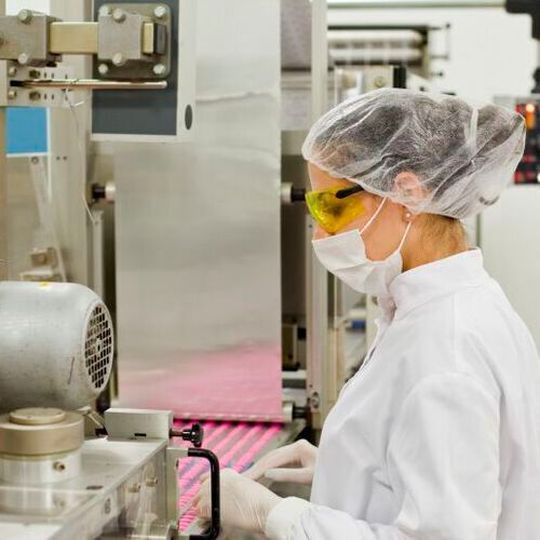
Frankfurt/Germany – Despite the Coronavirus pandemic and the associated supply bottlenecks, as well as the recent surge in prices affecting energy and raw materials, the chemical-pharmaceutical industry delivered a strong performance in 2021. This successful result extends to almost all product areas:
Production rose by 4.5 percent compared to the previous year, and turnover increased by 15.5 percent to approximately 220 billion euros thanks to a solid rise in producer prices (+ 8.5 percent), according to the German chemical industry association Verband der Chemischen Industrie (VCI). Simultaneously, the cost of naphtha alone increased by 70 percent, and renewable raw materials, metals or minerals were also many times more expensive than in the previous year.
The underlying basis for this result was that the industry’s industrial customers continued their recovery course on all continents. Global demand for chemicals – and for vaccines produced in Germany – developed with a correspondingly positive trend. The number of employees increased slightly (0.5 percent) by roughly 2,000 jobs, to 466,500.
Despite various adverse factors, the majority of our companies expect to achieve growth, both at home and abroad, in 2022.
“Our industry has withstood significant headwind and achieved a remarkable result. This underscores how important a strong chemical industry is for Germany as an industrialized country. Without us, no one gets by; but with us, everyone gets ahead,” said VCI President Christian Kullmann.
Forecast for 2022: The VCI also anticipates a positive development in the industry for the coming year. The chemical association considers an increase in production of 2 percent and an increase in turnover of 5 percent – to 231 billion euros – to be possible. “Despite various adverse factors, the majority of our companies expect to achieve growth, both at home and abroad, in 2022. Especially overseas, they expect increased sales,” emphasized VCI President Kullmann.
More than 35 percent of companies have had to reduce their production, while 10 percent have temporarily shut down plants.
The VCI’s forecast takes into account the results of a recent member survey. It revealed that the overriding situation has deteriorated in recent months: 30 percent of companies are already reporting slight cuts, while 5 percent are even making significant cuts. There is no shortage of orders, but the bottlenecks in primary products and logistics have worsened. Due to supply chain issues, 35 percent of companies have had to reduce their production, while 10 percent have temporarily shut down plants.
However, the bottlenecks have consequences above all for the industry’s customers: Over 70 percent of companies can only process orders with delays, while 39 percent cannot fulfil them at all. According to the VCI, companies do not expect the situation to ease until the summer of 2022.
The rapid increase in gas and electricity prices in recent months is also causing problems for the industry: 61 percent of those companies surveyed reported that energy prices currently represent a significant hindrance for their operations. Companies are trying to pass on the rising costs to the customers in a timely manner. However, 16 percent do not see themselves in a position to do so. 67 percent said they would be able to pass on at least some of the costs. “The situation is likely to remain critical for some time. The majority of our companies do not believe that energy costs will ease significantly in the coming year,” explained the VCI’s President.
:quality(80)/images.vogel.de/vogelonline/bdb/1810100/1810132/original.jpg "VCI report on the economic situation of the chemical industry in the 4th quarter of 2020. (Deposit Photos)")
Germany: Industry Insight
German Chemical Industry: Production Rose 7.4 % Compared to Previous Quarter
With the coalition agreement, the new federal government has presented a host of suitable approaches to transformation, but the real test for this tripartite alliance will be to translate these into political action. Now, after the word must come the deed, emphasized Kullmann. Therefore, the VCI President welcomes the announced abolition of the EEG levy at the beginning of 2023, in order to reduce the price of electricity. “It is high time to muzzle this bureaucratic monster,” Kullmann emphasized. Above all, small and medium-sized businesses would benefit from this. In the chemical industry, this levy adds up to roughly 1.2 billion euros per year.
:quality(80)/images.vogel.de/vogelonline/bdb/1754900/1754932/original.jpg "The task of the three EU institutions involved - Parliament, Commission and Council - must be to develop a concrete and realistic package of measures parallel to the target discussion. (Deposit Photos )")
Germany: Market Scenario
60 % Reduction in Emissions by 2030 Ambitious: German Chemical Industry Association
In the view of the VCI, a massive and significantly accelerated expansion of wind power and photovoltaics is also indispensable for achieving the goal of climate neutrality. However, it must be accompanied by the construction of modern gas-fired power plants because of the political push to phase out coal-fired power generation. “We must not jeopardize the security of supply that we need every hour of every day,” warned the VCI President.
With more than 120 terawatt hours per year, natural gas is not only the most important energy source for the chemical industry, but also an essential raw material: Just under one-third of the natural gas it consumes per year flows into the production plants as raw material. This corresponds to approximately 3.2 million tons or 16 percent of all raw materials used by the industry for organic production purposes. In order to achieve carbon neutrality by the middle of the century, the industry wants to adopt a cyclical approach to the use of carbon.
The chemical recycling of plastic waste is an important part of this strategy, along with the direct use of CO2 from the air. The VCI, therefore, welcomes the fact that the current federal coalition government is taking a differentiated approach to the importance of chemical recycling and wants to include it as a recycling option in the German Packaging Act (Verpackungsgesetz). The VCI views this step as a paradigm shift for climate policy and the circular economy.
For more private and public investment, however, faster and more efficient approval procedures are needed. The coalition wants to act here and at least halve the length of time needed for this procedure. “We welcome this very much. Approvals are the driving force for innovation and investment.” The idea that less bureaucracy creates more growth is also proven by a recent study by the institute “IW” on behalf of the VCI. If, for example, a company could be incorporated in Germany one day faster than at present, according to one of the results of the IW’s analysis, this could trigger roughly 2 billion euros in additional direct investment.
The VCI also welcomes the fact that the German government wishes to play a constructive role in the debate on the EU chemicals strategy. “It is good and right that the coalition wants to focus on data, figures, facts and on the scientifically prudent principle of risk in this topic,” said Kullmann. “We support the goals of the sustainability strategy for chemicals. But these must be designed in such a way that they are practicable and capable of being planned for companies – especially for our SMEs – and can be implemented in a resource- and cost-efficient manner. Few things are worse for business than uncertainty. We, therefore, need a clear and solid transitional framework.”
(ID:47903032)
:quality(80)/p7i.vogel.de/wcms/10/8f/108f98e468e0b4d2e71292d16f02aea6/0126122707v2.jpeg "EU Commission President Ursula von der Leyen and US President Donald Trump shake hands after reaching an agreement in the tariff dispute. (Source: © picture alliance / ASSOCIATED PRESS)")
:quality(80)/p7i.vogel.de/wcms/1c/54/1c54529ad2e254318bf3a529ee169b65/0124967840v2.jpeg "Europe’s chemical recycling sector faces a 400 billion dollar challenge to compete with virgin plastics. (Source: free licensed)")